Château d’Héricourt: A Medieval Fortified Castle in France


Site at a Glance
- Rating
- 4
- Popularity
- Very Low
- Country
- France
- Primary era
- Medieval
- Eras represented
- Medieval
- Civilizations
- Holy Roman Empire
- Site type
- Military
- Remains
- Castle
On this page7 sections
History
Château d’Héricourt is a medieval fortified castle in Héricourt, France, first mentioned in the twelfth century and thought to date from that period. Built as a defensive stronghold, it belonged to the House of Montfaucon until 1397, when it passed to the House of Württemberg, a German dynasty that ruled territory in southwestern Germany.
Württemberg Rule and the Sixteenth Century
In 1561, troops of Ulrich VI of Württemberg captured the castle. The stronghold was then described as having four substantial towers, massive walls, a moat, a drawbridge, and securely closed double gates. Its fourteen furnished rooms contained silk beds, tapestries, valuable furnishings, and a silk canopy decorated with small silver bells.
The castle was also supplied with artillery, ammunition, grain, and wine. One cannon carried to Montbéliard was known as the “Shepherdess of Héricourt.” It was said to be large enough for a man to sit inside and measured five feet in length.
Later History
From 1663 until his death in 1667, the German composer and keyboard musician Johann Jakob Froberger lived at Château d’Héricourt. Princess Sybilla of Württemberg hosted him there, and he served as her music teacher. The castle was largely dismantled during the eighteenth century. The commune of Héricourt owns the property, which has been protected as a French historic monument since 15 November 1913.
Remains
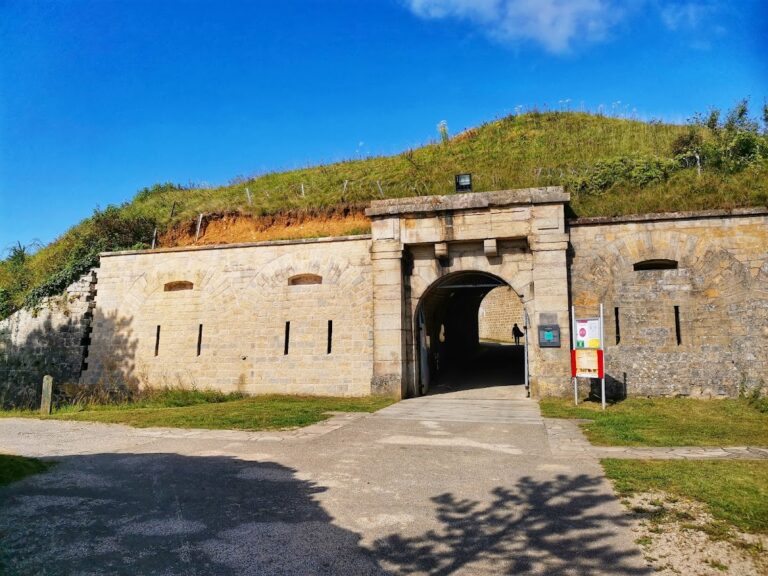
Château d’Héricourt was built on a limestone hill in the northern part of Héricourt and covered approximately 3,290 square metres. Its defensive enclosure included a wall about 12 metres high and 4 metres thick, with towers at the corners. A spring-fed moat surrounded the castle, and a drawbridge led to double gates at the entrance.
Water Supply and Surviving Tower
Castle Well
The castle contained a water well approximately 26 metres deep and 2.5 metres wide, providing an internal water source within the fortified enclosure.
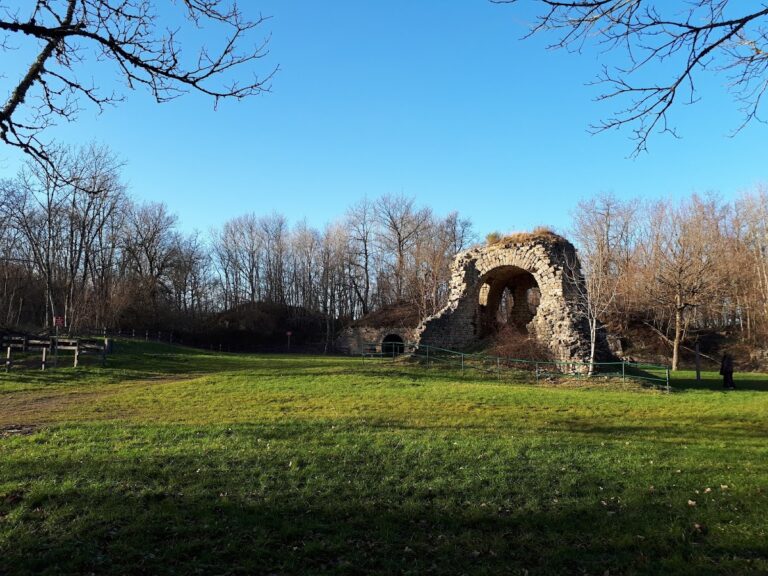
Large or Spanish Tower
The visible surviving tower is the large tower, also called the Spanish Tower. It contains halls on three levels, each fitted with a fireplace, preserving a substantial part of the castle’s vertical architectural fabric.