Château de Montriou: A Fortified Residence in Feneu, France
Site at a Glance
- Rating
- 3.5
- Popularity
- Very Low
- Country
- France
- Primary era
- Medieval
- Eras represented
- Medieval, Modern
- Civilizations
- French
- Site type
- Military
- Remains
- Castle
On this page12 sections
History
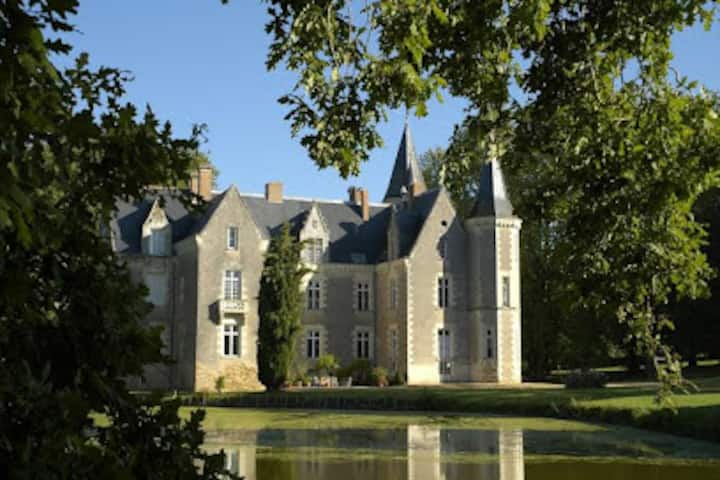
Château de Montriou is a fortified residence at Feneu in France, with a surviving core that predates the fifteenth century. Its fifteenth-century Chapel of the Three Marys was commissioned in honor of René of Anjou, the prince known as King René, by his seneschal Bertrand de Beauvau, a senior administrative and judicial officer. The estate later passed through several prominent families before undergoing a major nineteenth-century expansion.
The medieval chapel
Bertrand de Beauvau died in 1474, while his daughter Charlotte completed the chapel. She died in 1493 and had been married first to Yves, or Yvon, de Scépeaux, and later to Jean Rabaud. Around 1484, the couple associated with the chapel commissioned frescoes showing angels carrying the Instruments of the Passion, the objects traditionally linked with the suffering and crucifixion of Jesus.
Ownership under the French monarchy
Mathurin de Pincé was lord of Montriou in 1540. In 1552, his daughter Etiennette transferred the estate to her husband, Jean de Brie. Emmanuel Brahier sold the lordship and château in 1595 to Robert Constantin, a councillor of the presidial court of Angers. This was a senior judicial office under the French monarchy.
The property passed from Robert Constantin, who died in 1608, to his son Jacques Constantin, a councillor of the Chamber of Accounts of Nantes, and then to his grandson Gabriel Constantin, a councillor of the king. Gabriel sold the estate in 1663 to Hercule de Launay, husband of Suzanne Le Roux. Renée Thyreau acquired it shortly afterward.
Inheritance brought the estate to Jeanne Levenier in 1692 and then to Françoise Levenier, wife of Pierre-Gabriel Guérin, a bourgeois of Angers. Their son Charles Guérin sold the entire property in 1740 to Michel Mauvif de la Plante, an alderman of Angers, meaning an official who administered the town.
Family continuity and nineteenth-century expansion
From 1740, Château de Montriou remained in the same family. Michel Mauvif de la Plante’s daughter Claude-Renée brought the estate into her marriage to Pierre Toutblanc, a councillor of the Chamber of Accounts of Nantes. Their daughter Renée married René Cassin de la Loge, treasurer of finances at Tours, in 1781.
Their grandson Ferdinand Cassin de la Loge enlarged the residential building during the nineteenth century and added a farm, service buildings, a lower courtyard, and a kitchen garden. His daughter Louise inherited the château. She married Robert de Lille de Loture at Feneu in 1893, and the property subsequently remained in the Loture family.
Heritage protection
Château de Montriou was classified as a French Monument historique in 1964. This is a high-level legal heritage designation intended to protect historically or architecturally important buildings and sites. The Chapel of the Three Marys also benefits from historic-monument protection.
Remains
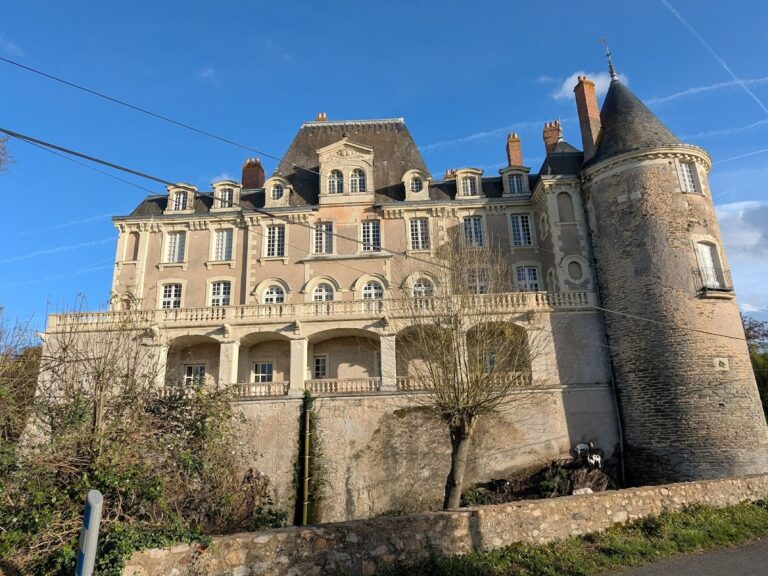
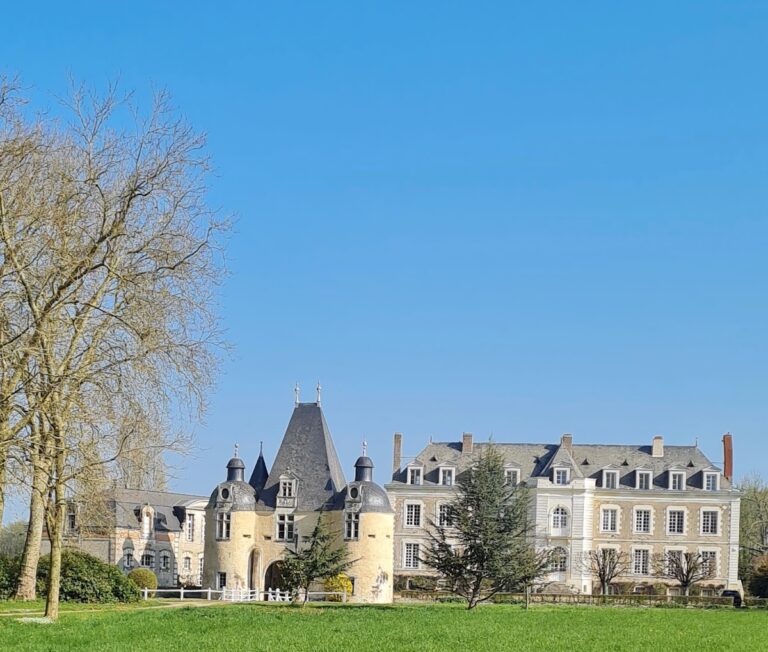
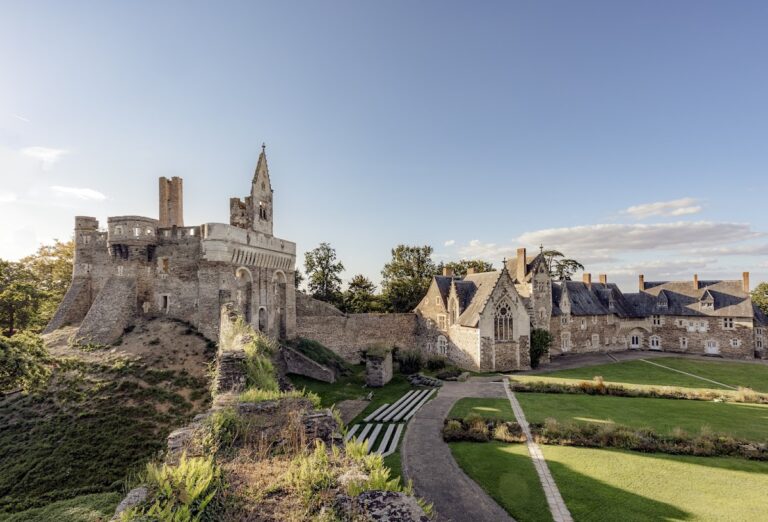
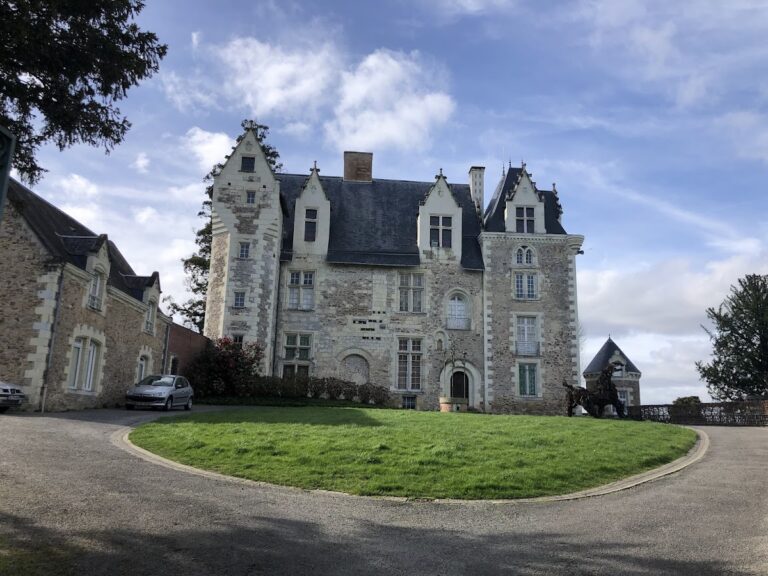
The surviving estate combines a fortified residence with the Chapel of the Three Marys and the buildings added during its nineteenth-century enlargement. Its physical organization includes the residential building, agricultural and service structures, a lower courtyard, and a kitchen garden, preserving the arrangement created through successive phases of domestic and estate development.
Medieval buildings and decoration
Fortified residence
The château is a fortified residence whose oldest surviving portion predates the fifteenth century. This earlier fabric forms the medieval foundation of the complex, while the later residential building incorporates the enlargement carried out by Ferdinand Cassin de la Loge in the nineteenth century.
Chapel of the Three Marys
The fifteenth-century Chapel of the Three Marys stands within the château complex. Its walls retain frescoes made around 1484, with angels bearing the Instruments of the Passion. The chapel is separately protected as a historic monument, and its decoration preserves the religious character associated with its foundation.
Nineteenth-century estate additions
Farm and service buildings
Ferdinand Cassin de la Loge’s nineteenth-century improvements extended beyond the residence. He constructed the farm and service buildings and laid out the lower courtyard, adding working and support spaces to the fortified château complex.
Kitchen garden
The same expansion included the creation of a kitchen garden. Together with the farm, service buildings, and lower courtyard, it forms part of the estate arrangement associated with the nineteenth-century development of Château de Montriou.
Nearby sites