Château de Montcléra: A Fifteenth-Century Château in France

Site at a Glance
- Rating
- 4.5
- Popularity
- Very Low
- Country
- France
- Primary era
- Medieval
- Eras represented
- Medieval, Early Modern
- Civilizations
- French
- Site type
- Military
- Remains
- Castle
On this page7 sections
History
Creation of the seigneurship
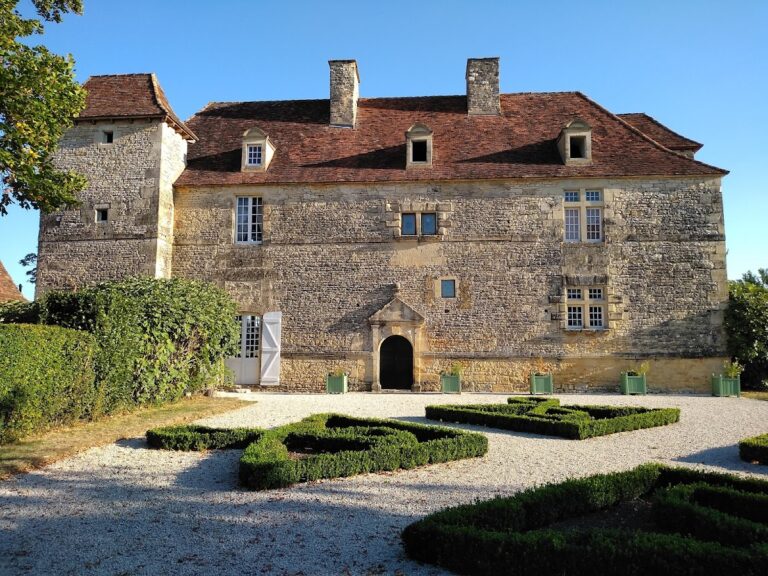
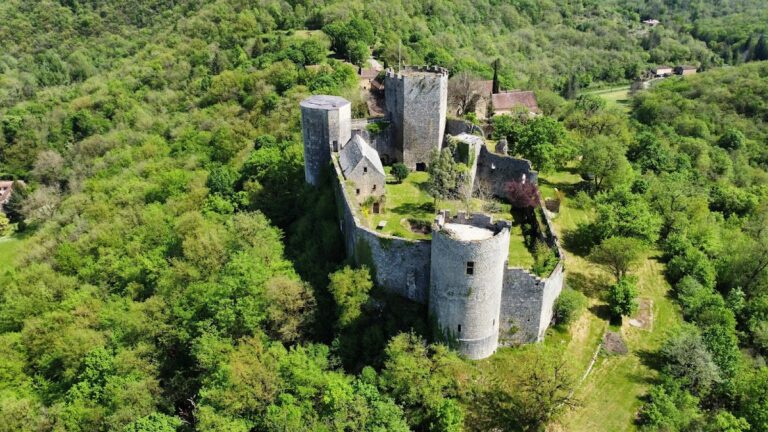
The Château de Montcléra is a fifteenth-century château in France, in the village of Montcléra, whose buildings were later altered during the Renaissance, a period of renewed classical influence in European art and architecture. Its history is connected with the creation of the Montcléra seigneurship in 1334, when the future King John II of France, then Duke of Normandy, granted the territory to Arnaud de Commarque for services rendered. The grant separated Montcléra from the royal jurisdiction of Cazals.
Arnaud de Commarque had served Popes John XXII and Clement VI. In 1346, an agreement between King Philip VI and the Bishop of Cahors established Montcléra as the boundary between royal and episcopal jurisdictions. The seigneurship passed to Amalvin de Commarque in 1368 through an act of homage to the Bishop of Cahors. A further act of homage in 1391 named the holder as Amalvin de Gironde.
The Gironde seigneurs
The seigneurship suffered damage during the Hundred Years’ War, the prolonged series of conflicts between the English and French crowns from the fourteenth to the fifteenth century. The Gironde family reoccupied it in 1446. By 1504, Jean de Gironde was identified as its holder in a register of feudal possessions, providing the earliest stated record of the château itself.
In 1610, François de Gironde made a will in favor of his son Brandelis and grandson François, requiring them to bear the arms of Gironde and Montcléra. Brandelis had married Louise de Gontaut-Biron in 1605. In 1616, King Louis XIII raised the seigneurship of Montcléra and the viscounty of Lavaur, a territory administered by a viscount, to the rank of marquisate, a higher territorial lordship associated with a marquis.
Later ownership and protection
The château remained with the Gironde family until the nineteenth century, when it passed to the Dupuy family. Château de Montcléra has been listed as a historic monument since 26 October 1925. Its entrance gate received classification as a historic monument on 21 January 1929.
Remains
Residential building and towers
The château complex centers on a rectangular residential building dating from the fifteenth century and altered during the Renaissance. Round towers flank the principal block, and their machicolations, projecting openings or galleries used by defenders to observe or attack those below, give the elevations a defensive character. One of the round towers is incorporated into the corner of a substantial square keep.
The square keep includes a square projecting sentry turret, a small turret placed at a fortified building’s corner or high point. Its large roof space is pierced by windows belonging to the Second Renaissance, a later phase of French Renaissance architecture associated particularly with the sixteenth century. The château’s facade has corner quoins and two arched entrances, a carriage gate and a pedestrian doorway, each formed with a semicircular arch.
Entrance gate and grounds
The entrance gate forms a specifically protected part of the château complex. The buildings are surrounded by a park, which completes the surviving setting of the residential and defensive structures.
Nearby sites