Castillo de Santa Catalina de El Puerto de Santa María: A Coastal Fortress in Cádiz, Spain

Site at a Glance
- Rating
- 4.4
- Popularity
- Very Low
- Country
- Spain
- Primary era
- Early Modern
- Eras represented
- Early Modern
- Civilizations
- Spanish
- Site type
- Military
- Remains
- Fort
On this page6 sections
History
Origins and Early Modern Defense
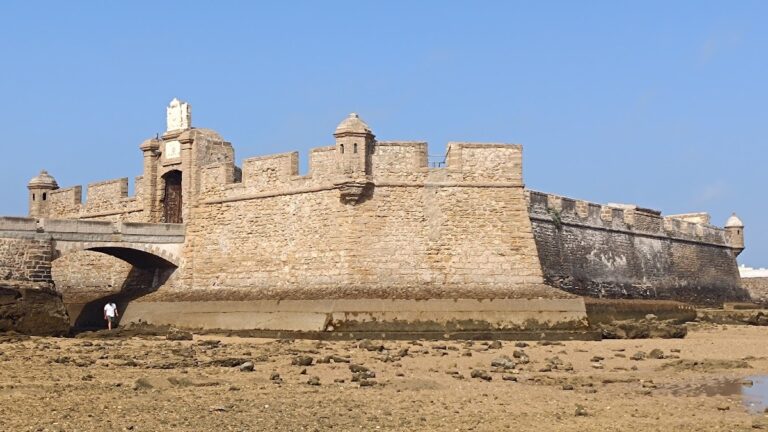
Castillo de Santa Catalina de El Puerto de Santa María is a sixteenth-century coastal fortification in Spain, built beside a hermitage dedicated to Saint Catherine. It guarded the outer mouth of Cádiz Bay and helped protect access to El Puerto de Santa María as part of the defensive system of Cádiz.
Charles V, the Habsburg emperor who ruled Spain as King Charles I from 1516, reportedly ordered the construction of the tower that became the castle’s core in 1540. Work probably began around 1585. In 1586, the city of Cádiz asked Philip II, King of Spain from 1556 to 1598, to authorize construction of the fort. The project is also dated broadly to the 1580s, with construction listed as beginning in 1587.
The fort stood opposite the San Felipe bastion and formed part of the early modern defenses outside La Isla. Its distance from San Felipe limited its effectiveness during the attacks of 1587 and 1596. Before the attack of 1625, the fort was reinforced, and its artillery helped protect the movement of provisions to Cádiz.
Destruction and Rebuilding
The fortress was later strengthened and possibly enlarged to reach its definitive form, but it did not prevent the landing and sack of 1702. It was subsequently demolished by an explosion and rebuilt afterward. Sala enlarged the castle in the mid-eighteenth century.
In 1810, the fort was destroyed to prevent French forces from using it against Cádiz. The ruins were occupied in 1824 by the Hundred Thousand Sons of Saint Louis, a French army sent to Spain in 1823 to restore the authority of King Ferdinand VII. The castle later formed part of Spain’s defenses during the Second World War before being abandoned.
Castillo de Santa Catalina is protected under Spain’s general protection for castles, established by a 1949 decree and supplemented by the 1985 Historical Heritage Law. It became a Property of Cultural Interest in the Monument category on 29 June 1985 and forms part of the historic site associated with the Courts and Constitution of 1812 in San Fernando, Cádiz, and the Bay of Cádiz.
Remains
Fortress Layout and Surviving Defenses
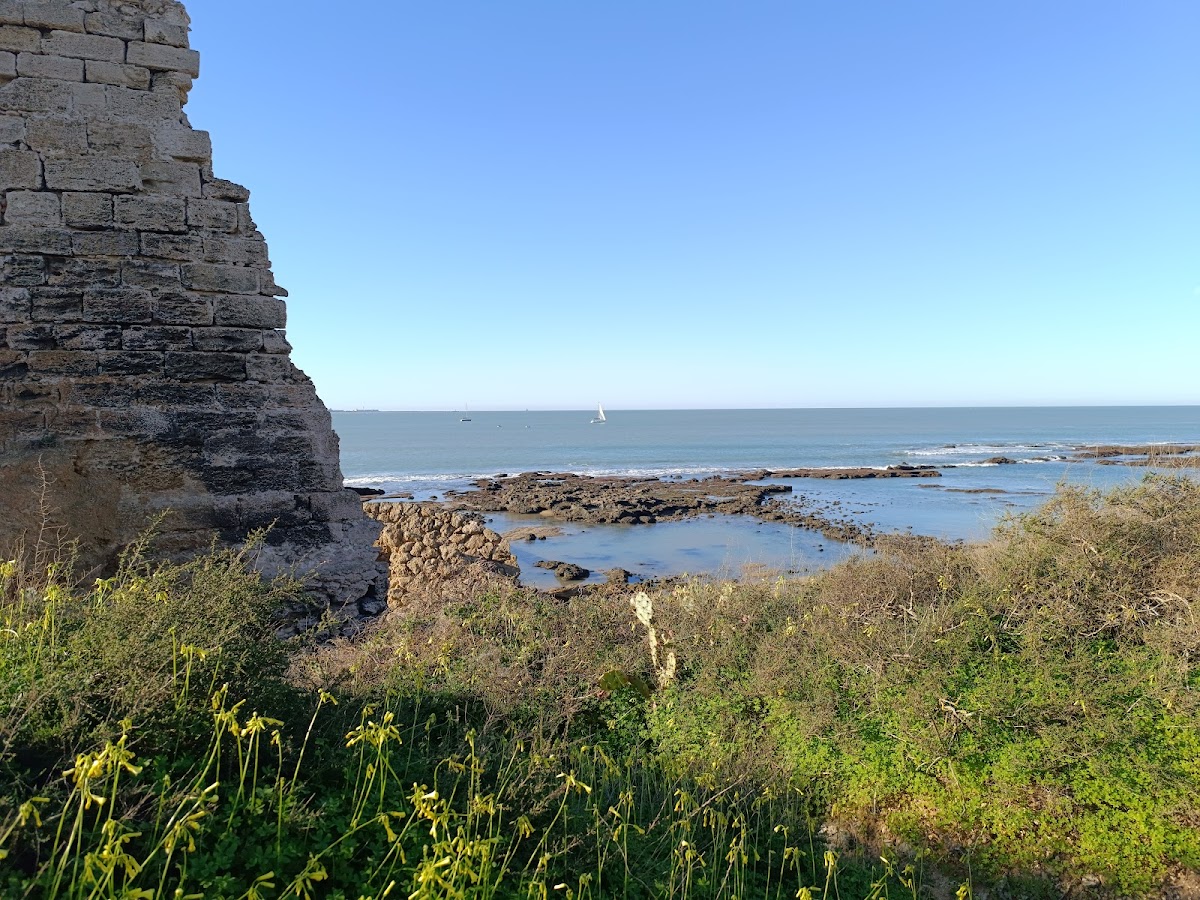
The rebuilt fort combined a sea-facing side arranged in an almost semicircular form with a landward defense organized as a hornwork, an angular outer fortification projecting before the main defensive line. A moat, covered way, and parade ground formed part of this landward arrangement. Much of the landward front and the moat survive, while the remaining wall sections have been partly brought down by storms.
The curtain walls were built with cyclopean masonry, using very large stones, and faced with ashlar blocks of ostionera stone, a shell-rich limestone commonly used in the Cádiz area. Within the former parade ground, the partially collapsed remains of the original tower project toward the sea. The tower was a truncated-conical structure with two vaults and was designed to mount several artillery pieces.
Earlier Archaeological Remains
The site is also associated with a Roman villa, a Roman ceramic-production facility, and a grave dating from the Roman period. These remains place earlier domestic, industrial, and funerary activity within the archaeological history of the location alongside the later fortress.