Rotund Castle: A Medieval Hill Castle in South Tyrol


Site at a Glance
- Rating
- 4.4
- Popularity
- Very Low
- Country
- Italy
- Primary era
- Medieval
- Eras represented
- Medieval
- Civilizations
- Habsburg, Holy Roman Empire
- Site type
- Military
- Remains
- Castle
On this page6 sections
History
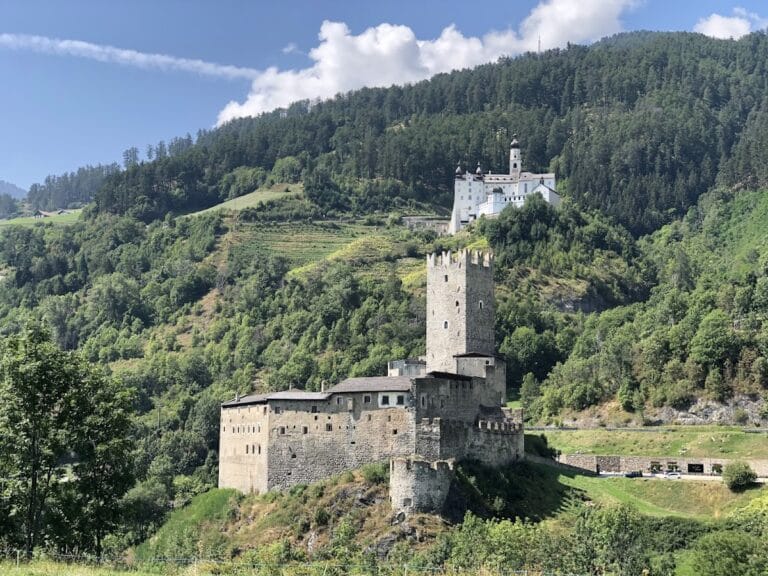
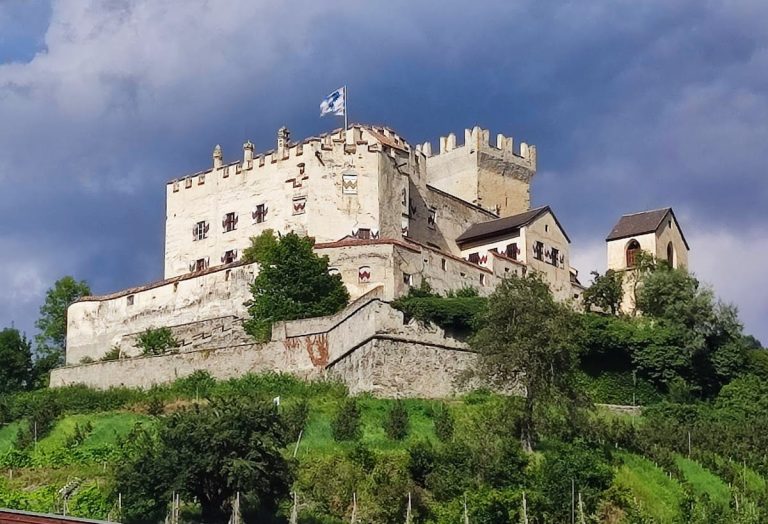
Rotund Castle is a medieval hill castle in Italy, above Taufers in Münstertal, built around 900 by the bishops of Chur. The bishops, who were the senior ecclesiastical authorities of the Diocese of Chur, first used it as a residence. The castle later became known as Oberreichenberg, a name referring to nearby Reichenberg Castle, which stands about 150 metres lower.
From episcopal residence to noble fief
In 1150, the bishops of Chur granted Rotund Castle as a fief, meaning a fortified property held from a superior lord in return for service and allegiance, to the nobles of Rotund. This family probably took its name from the castle. When the line died out in 1288, ownership passed to the barons of Reichenberg. In 1310, the castle was sold to Heinrich von Reichenberg.
During the 1380s, the von Reichenberg family sold Rotund to the Counts of Tyrol. The counts then granted it as a Chur fief to the barons of Schlandersberg. Kaspar and Heinrich von Schlandersberg joined the noble opposition to Frederick IV, Duke of Austria and Count of Tyrol, known as Frederick with the Empty Pocket. Their violent abuses also affected their own subjects, adding to the tensions surrounding their rule.
Conflict, rebuilding, and later ownership
In 1417, Frederick captured Rotund and nearby Reichenberg. The Schlandersberg castle of Hochgalsaun was destroyed in 1423. In 1448, Ulrich von Schlandersberg exchanged Rotund with Duke Sigmund, Frederick’s successor as ruler of Tyrol, for the castle and town of Bludenz. The castle was renewed during the fifteenth century, and a circular fortified projection, or corner rondel, was added to its defenses.
Rotund was also involved in the Battle of the Calven in 1499, which was fought at the foot of the castle. From 1555, the later Counts von Hendl acquired and retained the estate until the nineteenth century. Baron von Heydorf was its last lord. Rotund ceased to be inhabited from the seventeenth century onward and gradually fell into ruin.
The ruin is now owned by the municipality of Taufers in Münstertal. Stabilization work was carried out in 2011 by the South Tyrol State Office for Monument Protection. Rotund Castle is recognized as a cultural heritage monument in South Tyrol.
Remains
Rotund Castle stands at approximately 1,500 metres above sea level on a steep-sided elevation above Taufers in Münstertal. The high-altitude site is among the highest castles in Tyrol and South Tyrol. Very steep slopes protect three sides of the hill. On the fourth, access crossed a saddle about 15 to 20 metres deep. At the entrance, the saddle was cut by a moat and crossed by a drawbridge.
Defensive setting
Rotund and nearby Reichenberg Castle together formed a substantial defensive barrier along the Münstertal valley. The surviving layout reflects the importance of the elevated position and the controlled approach across the saddle. The castle’s ruins include fabric from the fifteenth-century renewal, as well as the later corner rondel, a circular projection attached to or built into a defensive wall.
Keep and surviving ruins
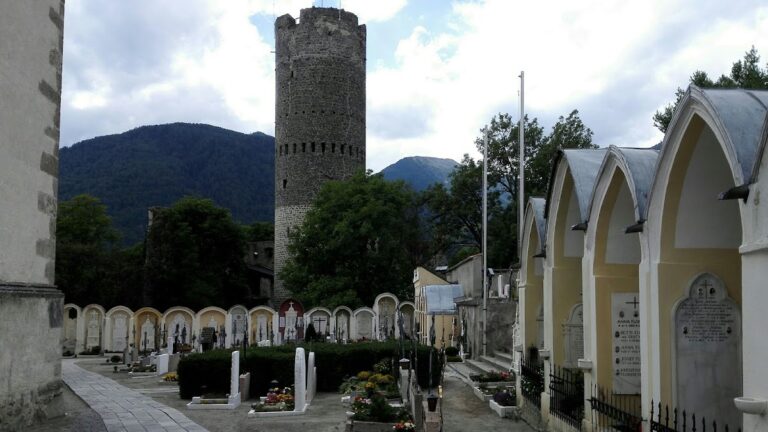
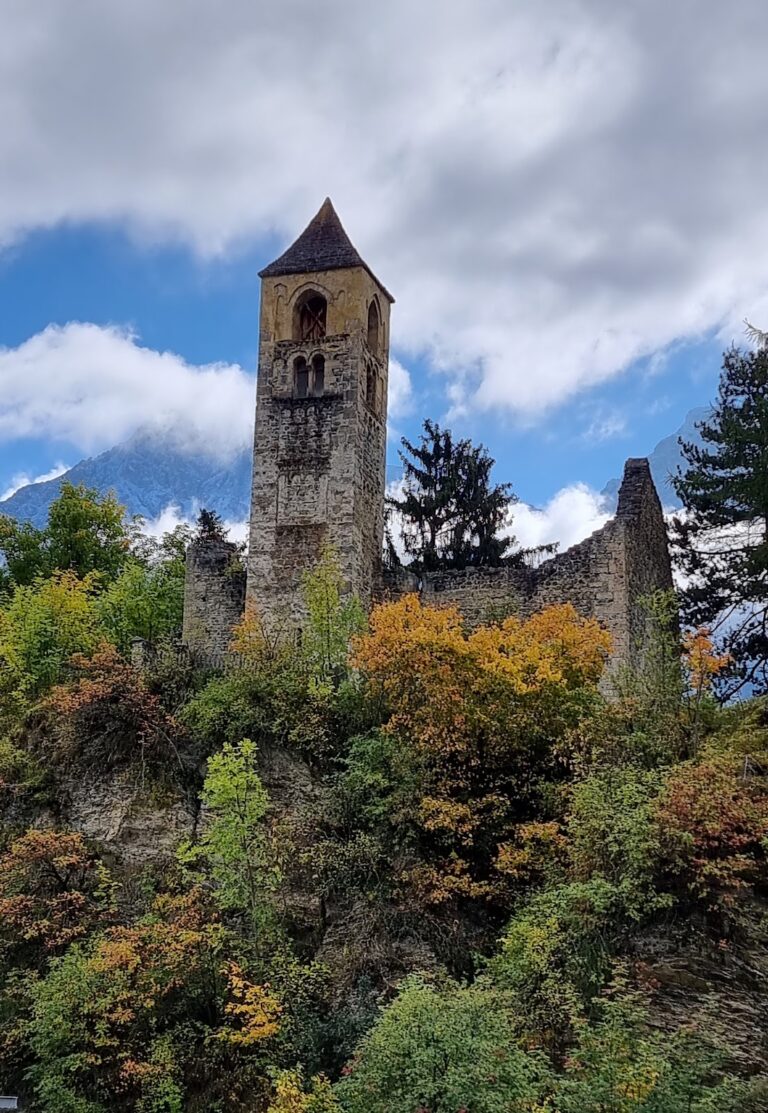
The circular keep rises from the highest point of the castle precinct and remains the most prominent surviving structure. A keep was the principal fortified tower of a medieval castle, serving as a strong defensive position and a centre of lordly authority. The tower’s circular form may have given the castle its name. It had split and threatened to collapse, so the Soprintendenza delle Belle Arti secured it with an iron band in 1957. The reinforced keep now stands above the surrounding ruins.