Eibenstein Castle Ruins: A Hilltop Castle in Austria


Site at a Glance
- Rating
- 4.4
- Popularity
- Very Low
- Country
- Austria
- Primary era
- Medieval
- Eras represented
- Medieval
- Civilizations
- Duchy of Austria, Holy Roman Empire
- Site type
- Military
- Remains
- Castle
On this page4 sections
History
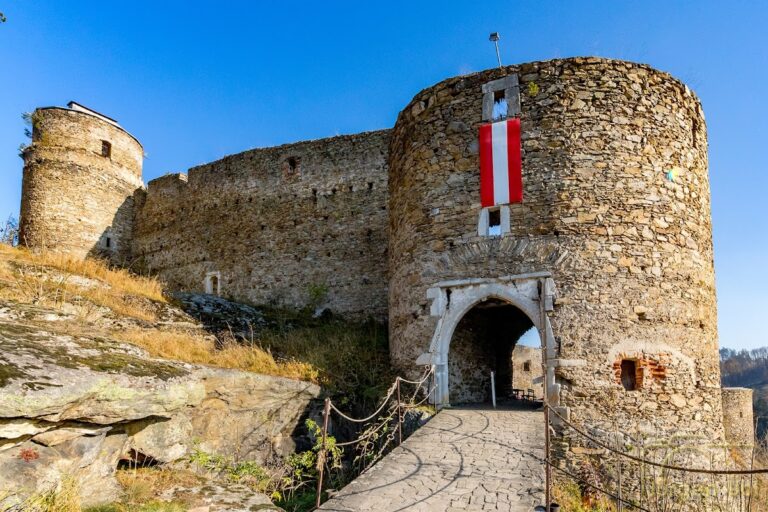
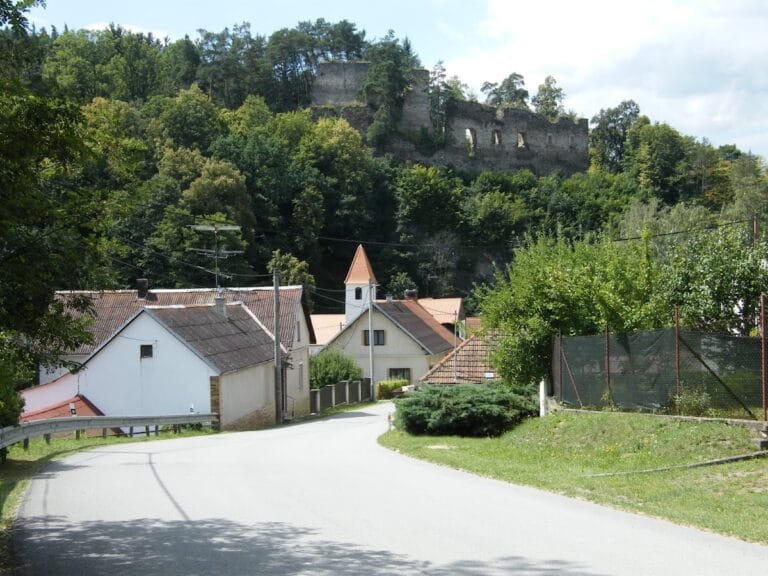
Eibenstein Castle Ruins is a former hilltop castle in Austria, built before 1194 on a steep rock face above the Thaya River. Its elevated position used the terrain for defense, while the castle formed part of the historical landscape between Drosendorf and Eibenstein in Lower Austria.
Medieval Origins and Later Lords
The castle is first mentioned in 1194, although its construction preceded that date. The surviving historical record later places Eibenstein within the Drosendorf lordship. It remains associated with the Hoyos family, whose origins lay in Spain.
On 24 April 1543, Eibenstein was sold to the brothers Christoph and Erasmus von Schneckenreith, also known as Schneckenreither. Their family line ended in 1569, after which the castle passed through later phases of lordship connected with Drosendorf and the Hoyos family.
Decline and Tradition
By the seventeenth century, the castle stood in a ruined state. Franz Xaver Kießling, an Austrian local historian and early researcher of regional heritage, considered it possible that Eibenstein had already been deserted when Georg Matthäus Vischer recorded Austrian landscapes and settlements. The ruin may nevertheless have been inhabited temporarily during the Thirty Years’ War, the European conflict fought from 1618 to 1648.
Local tradition connects the castle’s last owner with the Templar Order, a medieval Christian military-religious order that later became the subject of many legends. The same traditions say that rebellious peasants subsequently devastated the castle. In 1867, substantial sections of the northern walls reportedly fell from the rock face into the Thaya River. Eibenstein is listed as a protected monument in Austria.
Remains
Eibenstein Castle Ruins occupy a steep rocky height on the south bank of the Thaya River, opposite the settlement of Eibenstein and its parish church dedicated to Saint Giles, an early medieval Christian hermit widely venerated as a saint and patron of churches and communities in Europe. The site is classified as a castle ruin. Its position between Drosendorf and Eibenstein, within the municipality of Raabs an der Thaya, reflects the castle’s commanding hilltop setting, while the reported 1867 collapse accounts for the loss of substantial parts of the northern wall into the river.