Castillo de Matagorda: A Bay-Entrance Fortification in Spain


Site at a Glance
- Rating
- 4.5
- Popularity
- Very Low
- Country
- Spain
- Primary era
- Early Modern
- Eras represented
- Early Modern
- Civilizations
- Spanish
- Site type
- Military
- Remains
- Fort
On this page5 sections
History
Construction and defensive role
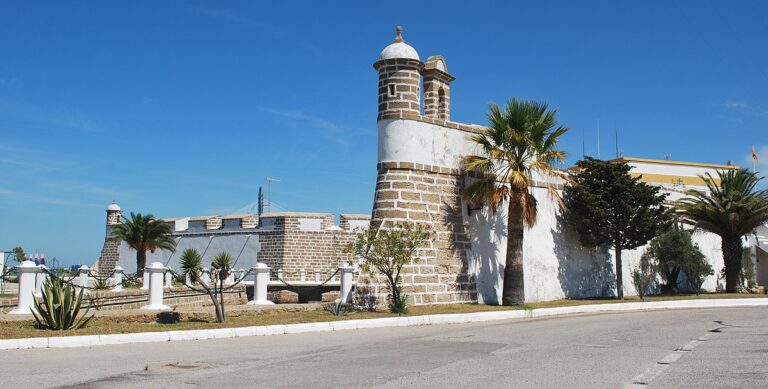
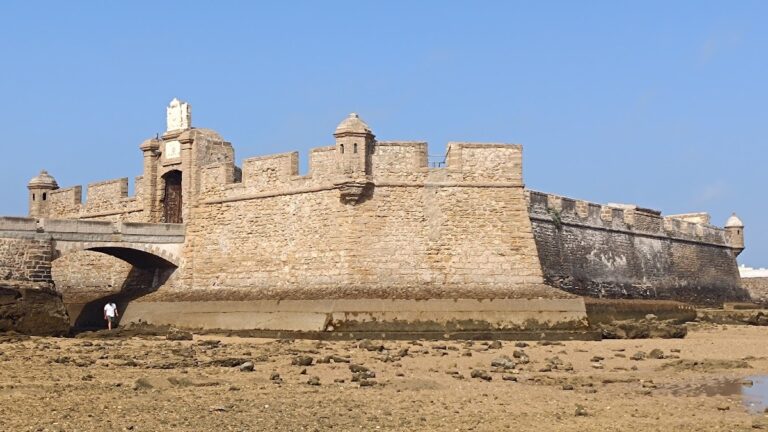
Castillo de Matagorda is a fortification on the shores of Cádiz Bay in Puerto Real, Spain. Constructed in 1691, it was designed by Cristóbal de Rojas, a military engineer involved in planning fortifications, who died before its completion. The fort stood opposite Castillo de San Lorenzo del Puntal and worked with that castle and San Luis Fort as part of a defensive network protecting the entrance to Cádiz Bay.
Capture and destruction in 1810
During the Peninsular War, the conflict in which Spain and its allies fought French rule in the Iberian Peninsula, British forces allied with Spain captured Castillo de Matagorda in 1810. French forces retook it several months later. Before withdrawing, the British burned the fort to prevent the French from using it and disabled the guns they could not carry away by spiking them.
The capture also gave rise to the reputation of Agnes Reston as the “Heroine of Matagorda.” Reston was a nurse who assisted the soldiers, remained at the fort after the other women had departed, helped manage ammunition, and reinforced the defenses with sandbags.
Later history and protection
An effort to rearm the fort took place during the nineteenth century, but the project was never completed. Castillo de Matagorda is included among the Places associated with the Cortes and Constitution of 1812. The Cortes of Cádiz was the Spanish legislative assembly that met in Cádiz during the Peninsular War and produced the Constitution of 1812. The site was declared an Asset of Cultural Interest in 1985.
Remains
The surviving remains of Castillo de Matagorda lie within the facilities of the Matagorda shipyard in Puerto Real. The fort originally followed a rectangular plan, with its artillery directed toward the interior of Cádiz Bay. This layout reflects its role within the wider defensive system formed with Castillo de San Lorenzo del Puntal and San Luis Fort to guard the bay entrance.