Burgruine Kammerstein: Medieval Castle Ruins in Austria
Site at a Glance
- Rating
- 4.3
- Popularity
- Very Low
- Country
- Austria
- Primary era
- Medieval
- External website
- Open
- Eras represented
- Medieval
- Civilizations
- Holy Roman Empire
- Site type
- Military
- Remains
- Castle
On this page6 sections
History
Burgruine Kammerstein is the ruin of a medieval hilltop castle in Austria, near Perchtoldsdorf, built around 1240–1250 by Otto II of Perchtoldsdorf. Its construction followed the burning of Perchtoldsdorf Castle during noble rebellions under Otto I. The new fortress formed part of the turbulent political landscape of medieval Austria.
Foundation under Otto II
The castle was originally called Chemerstain. The name probably referred to Otto II’s position as chamberlain of Austria, a high-ranking court office concerned with the ruler’s chamber and household administration. Another interpretation connects it with an estate belonging to the ruler’s chamber, whose origin was associated with a donation made in 1002. Otto II later regained the favor of Duke Frederick II of Austria, a ruler from the Babenberg dynasty, which governed Austria before the Habsburgs. Otto II died at Lilienfeld and was buried in Lilienfeld Abbey.
Political conflict and destruction
Frederick II died in 1250, and Austria then entered a period without a duke or an emperor, creating political insecurity. After 1273, Rudolf I of Habsburg and his son Albrecht I reassigned fiefs, meaning lands, offices, or rights granted by a superior ruler in return for service or allegiance. Their expansion into Austria provoked resistance among parts of the Austrian nobility, and Otto III, Otto II’s son, joined the uprisings.
After Perchtoldsdorf’s principal castle was destroyed again, Otto III withdrew to Kammerstein. He was reportedly lured to Vienna by a ruse, allowing the castle to be captured while it was without its leader. Otto allegedly saw the burning fortress from Vienna and was later imprisoned for life. Burgruine Kammerstein is now a listed monument in Austria.
Remains
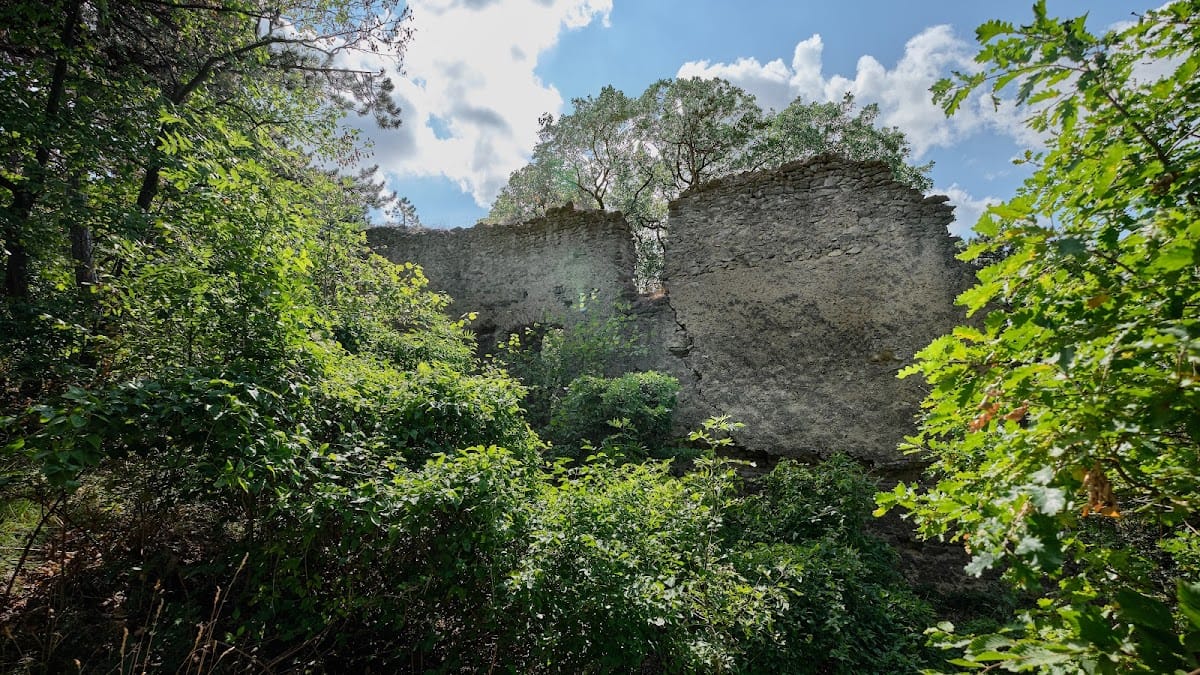
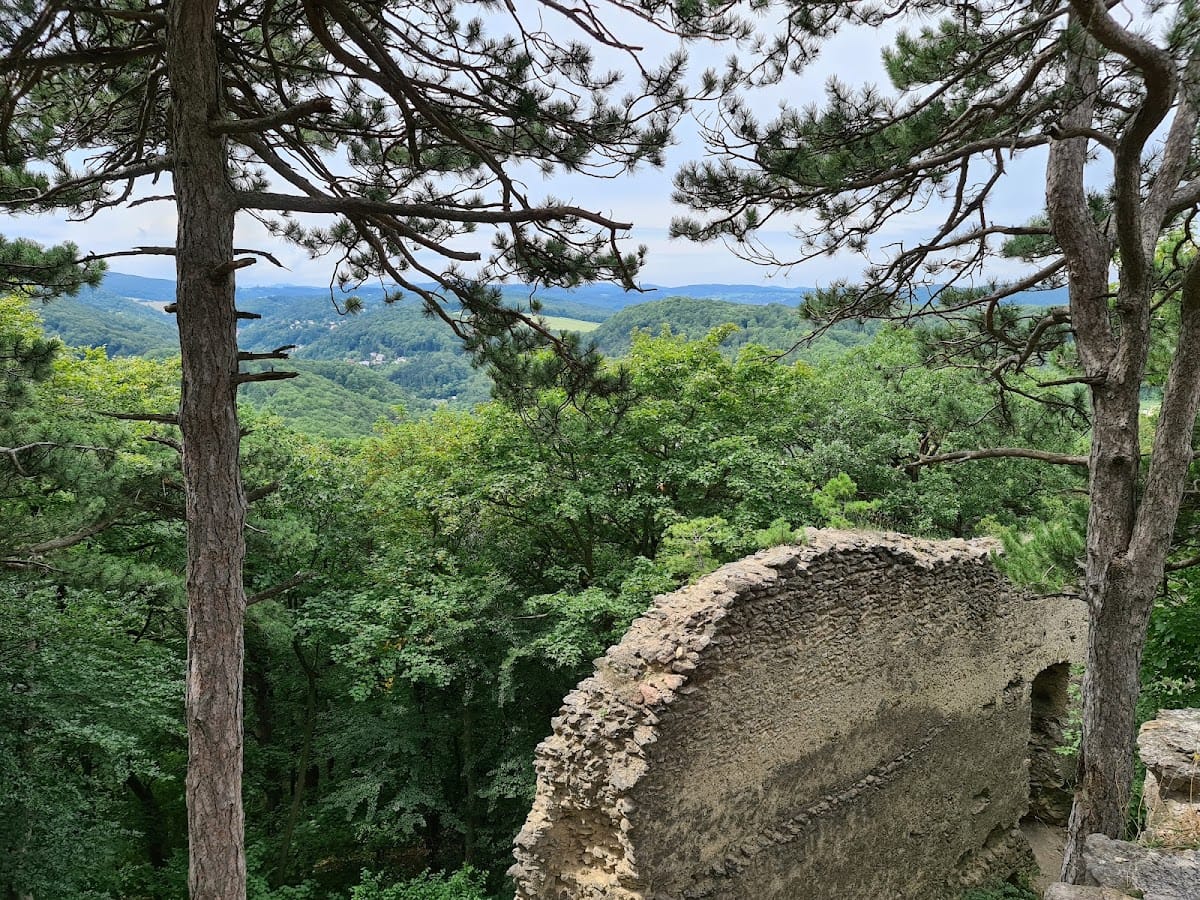
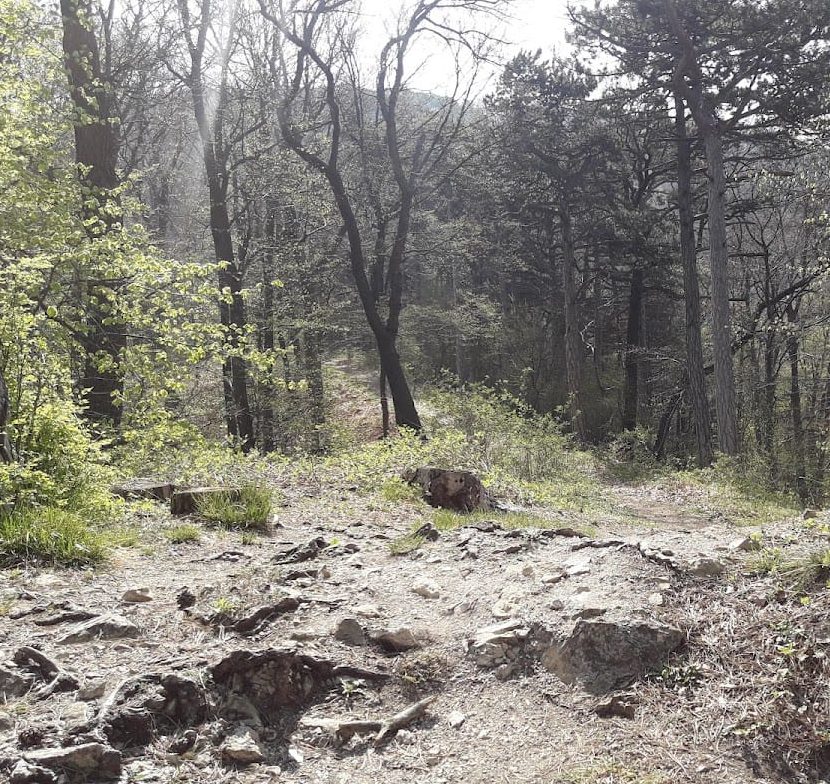
The castle occupied a compact hilltop site measuring about 40 by 25 metres at an elevation of 420 metres. It stood south of the Dürren Liesing valley, on the boundary between Perchtoldsdorf and Kaltenleutgeben in Lower Austria’s Mödling District. Steep slopes protected three sides, while the western side formed the approach across a bridge only one metre wide. The enclosing walls rose to about 15 metres, emphasizing the fortress’s defensive character.
Enclosure and access
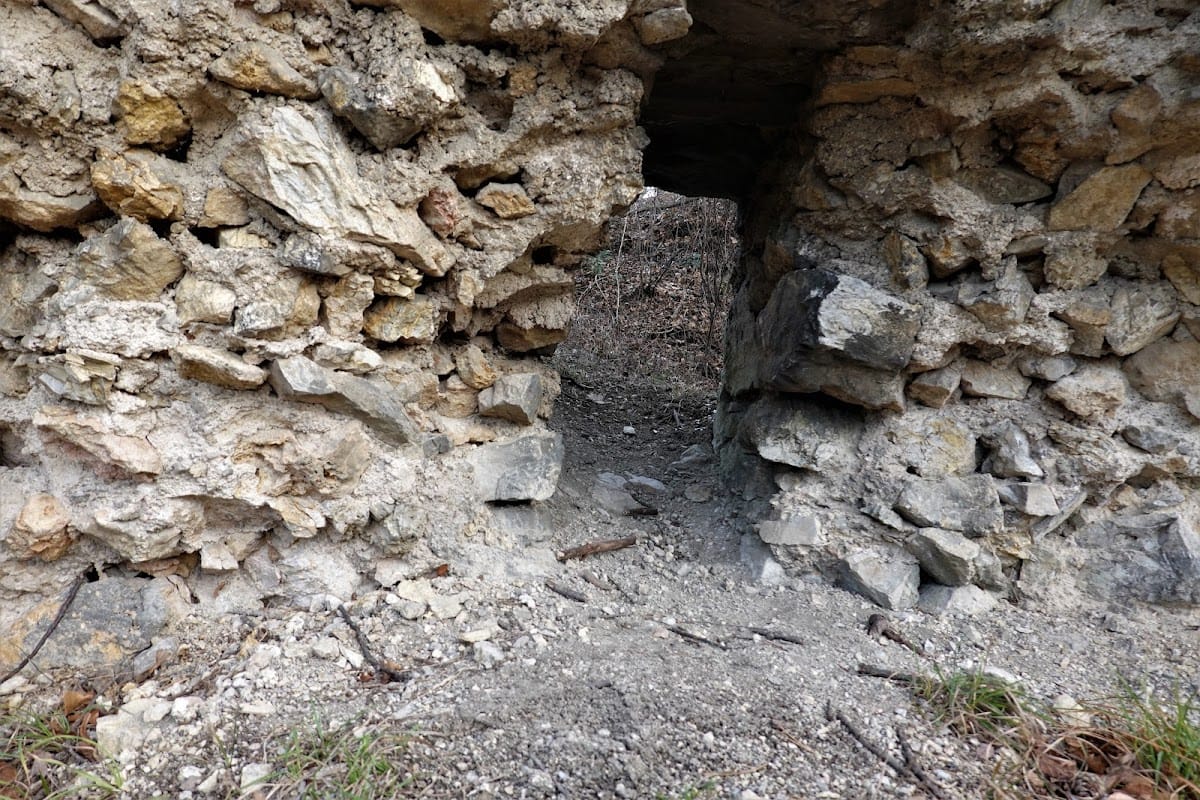
The ring wall, the continuous defensive wall around a castle, enclosed the site and adapted its defenses to the steep terrain. Only part of this wall survives, together with a section of masonry adjoining the principal defensive tower. These fragments preserve the basic outline of the fortified hilltop and its strongly restricted western entrance.
Residential and defensive buildings
A four-storey half-timbered palas, the castle’s principal residential and representative building, stood against the southeastern ring wall. At the highest point was a five-sided bergfried, the main defensive tower of a medieval castle. It had four storeys, walls up to three metres thick, and an entrance reachable only by ladder. The surviving masonry beside the tower forms part of the remaining fabric of Kammerstein.