Burg Bocksberg: A Medieval Hilltop Castle in Germany
Site at a Glance
- Rating
- 4.6
- Popularity
- Very Low
- Country
- Germany
- Primary era
- Medieval
- Eras represented
- Medieval
- Civilizations
- Holy Roman Empire
- Site type
- Military
- Remains
- Castle
On this page8 sections
History
Burg Bocksberg is a ruined hilltop castle in Germany, above the Bocksberg district of Laugna in Swabia. It probably originated in the early thirteenth century as the seat of the Lords of Bocksberg, a probably free-noble lineage documented there from 1231 to 1322. The castle occupied a projecting height above the Laugna valley during the high medieval period.
The Lords of Bocksberg
The Lords of Bocksberg are thought to have died out during the fourteenth century. The Marschalken of Bocksberg then appear at the castle as ministerials of the Augsburg prince-bishopric. Ministerials were medieval service dependants who carried out administrative or military duties for a lord. In this case, they served the temporal territory governed by the bishop of Augsburg.
Military conflict damaged the castle in 1378. The following year, the Augsburg patrician Rehm family acquired the lordship. In 1462, Andreas Rieter of Kornburg, a Nuremberg patrician also recorded as Rieder, married into the Rehm family. The castle was destroyed again that year during the Second War of the Cities.
Patrician and Fugger Ownership
The entire estate passed in 1542 to Georg von Stetten of the Augsburg patrician family von Stetten. In 1613, Schertlin von Burtenbach acquired the lordship, then sold it later in the same year, together with Emersacker and Laugna, to the Fugger family. The Fuggers were a powerful Augsburg merchant and banking dynasty that held extensive estates and lordships during the early modern period.
The Thirty Years’ War left the castle so severely damaged that it was not rebuilt. From 1660, a Fugger family foundation administered the estates, while Bocksberg was subsequently managed from Laugna. After the Second World War, the grounds were converted into a festival site and supplied with electricity. The high-medieval keep was renovated, but wooden additions built for festival use now surround it.
Remains
Hilltop Setting and Defences
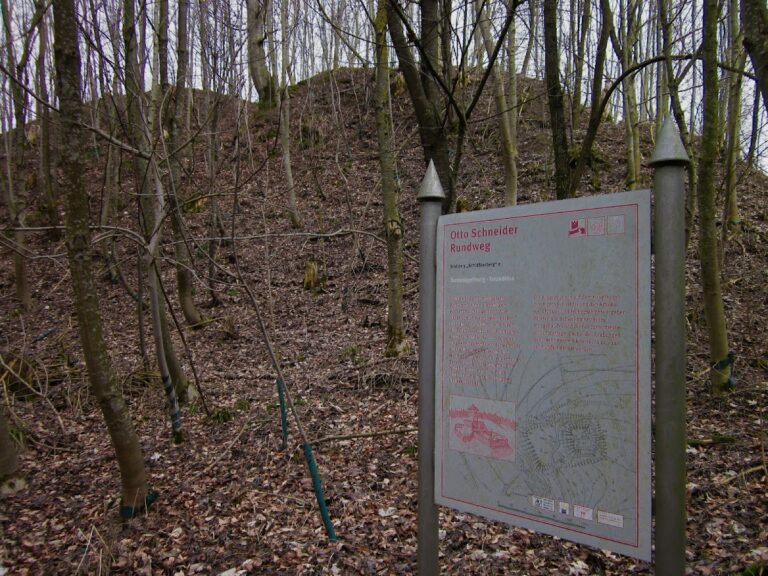
The ruin stands on a wooded height at about 480 metres above sea level, on a projecting spur above the Laugna valley. Its surviving remains include ditches, earthworks, and part of the keep. The main-castle mound forms a stepped, pointed cone. A deep, curved neck ditch separates it from the land behind the spur, while a naturally steep slope protects the northern side. A neck ditch is a defensive ditch cut across the landward approach to a spur castle.
Outer Bailey Terrace
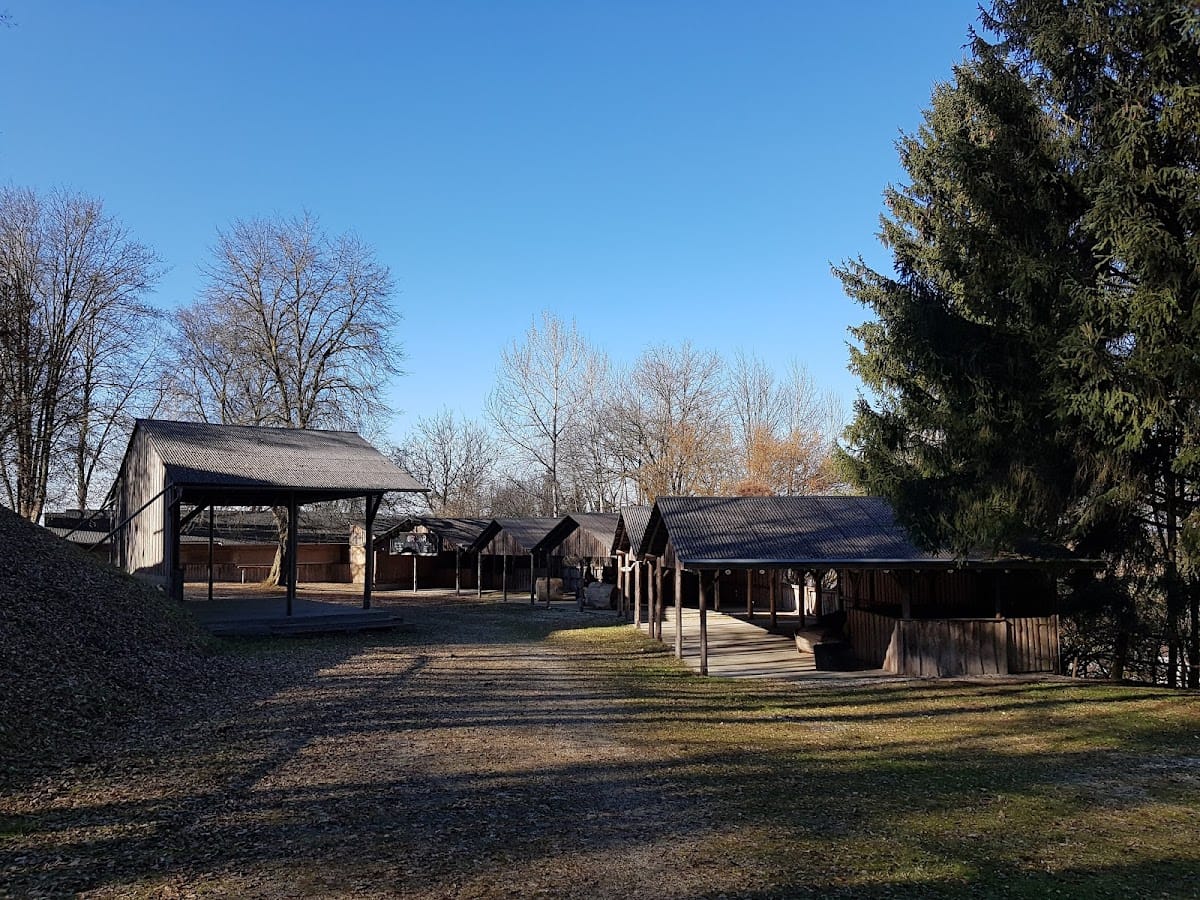
A broad lower terrace to the north and east of the main mound formerly held the outer bailey, the castle’s lower fortified area. It has been levelled for use as a festival ground and is occupied by wooden stalls and a stage. Some of the stalls extend into the neck ditch, whose entrance is marked by a tall wooden palisade.
Keep
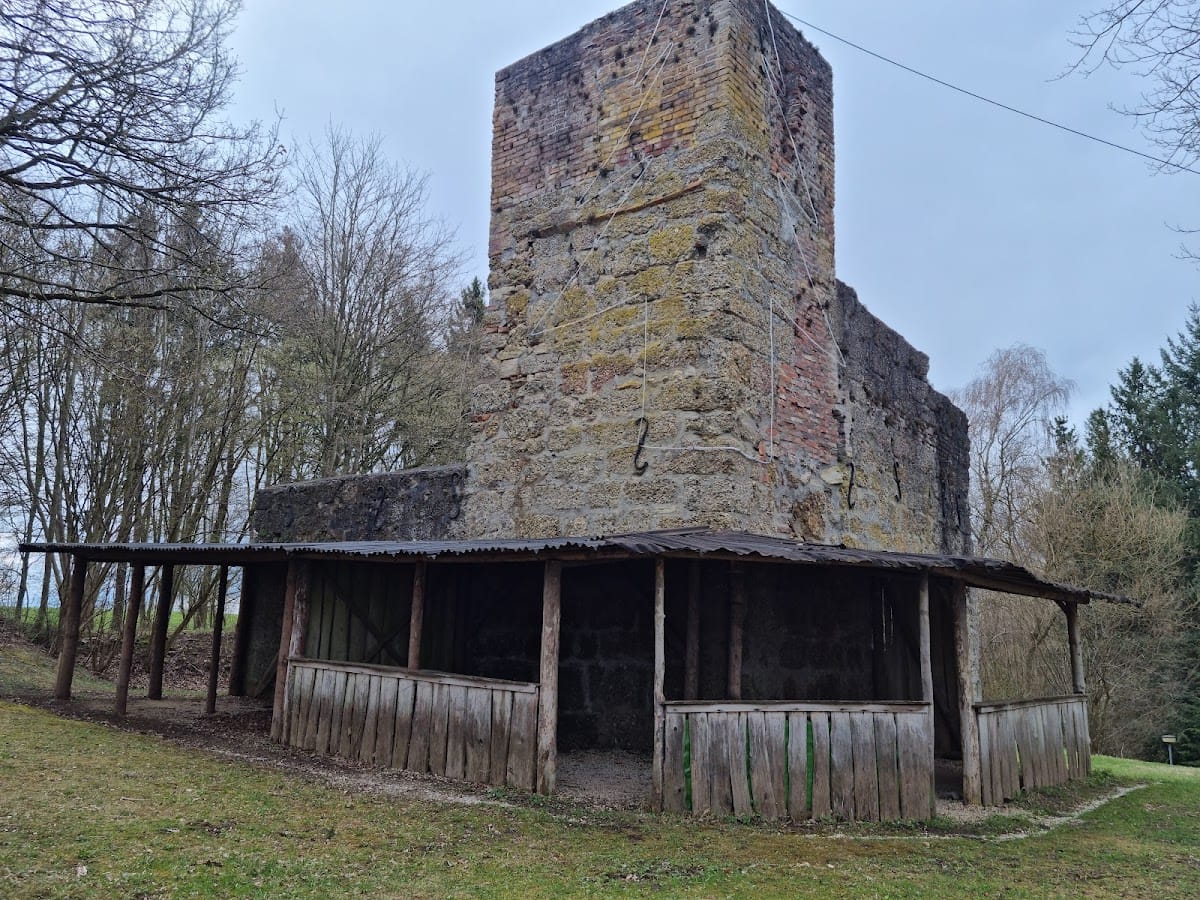
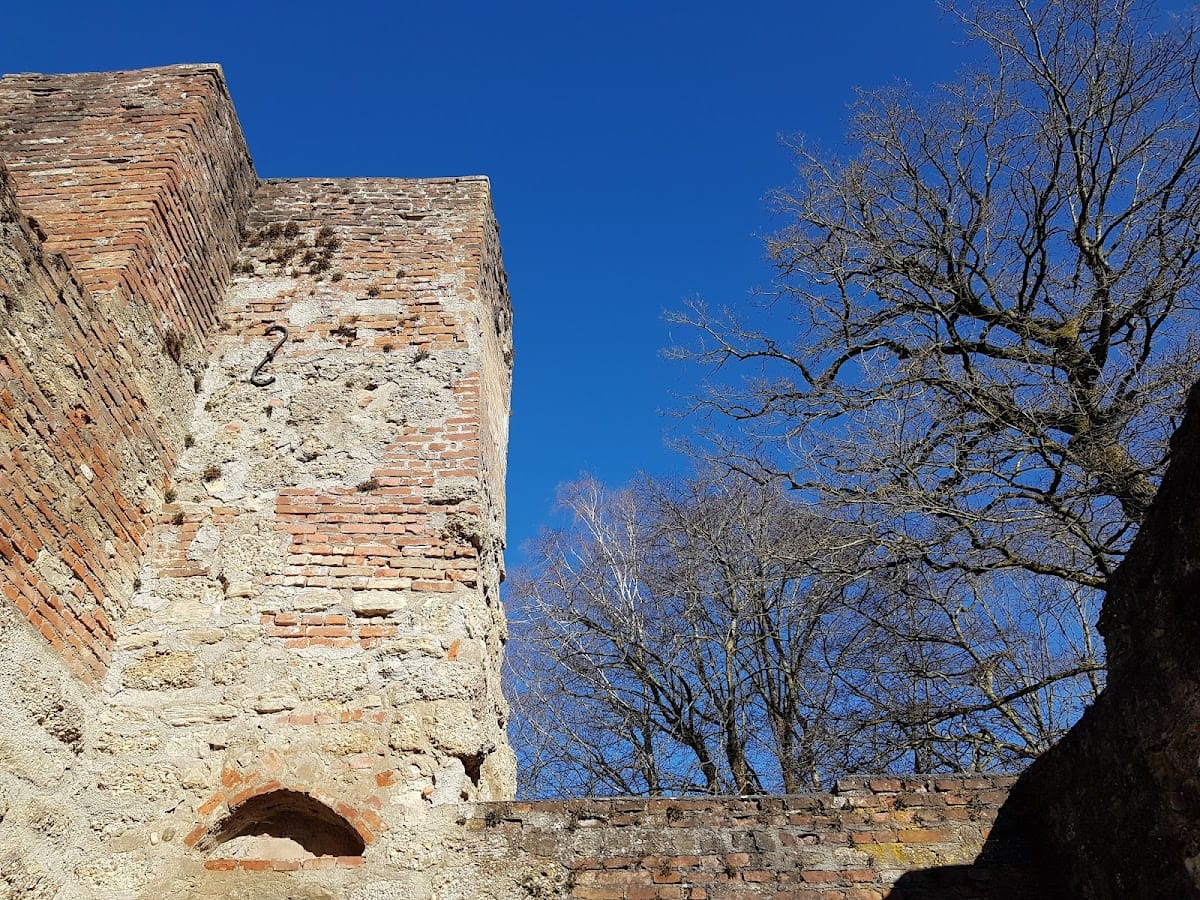
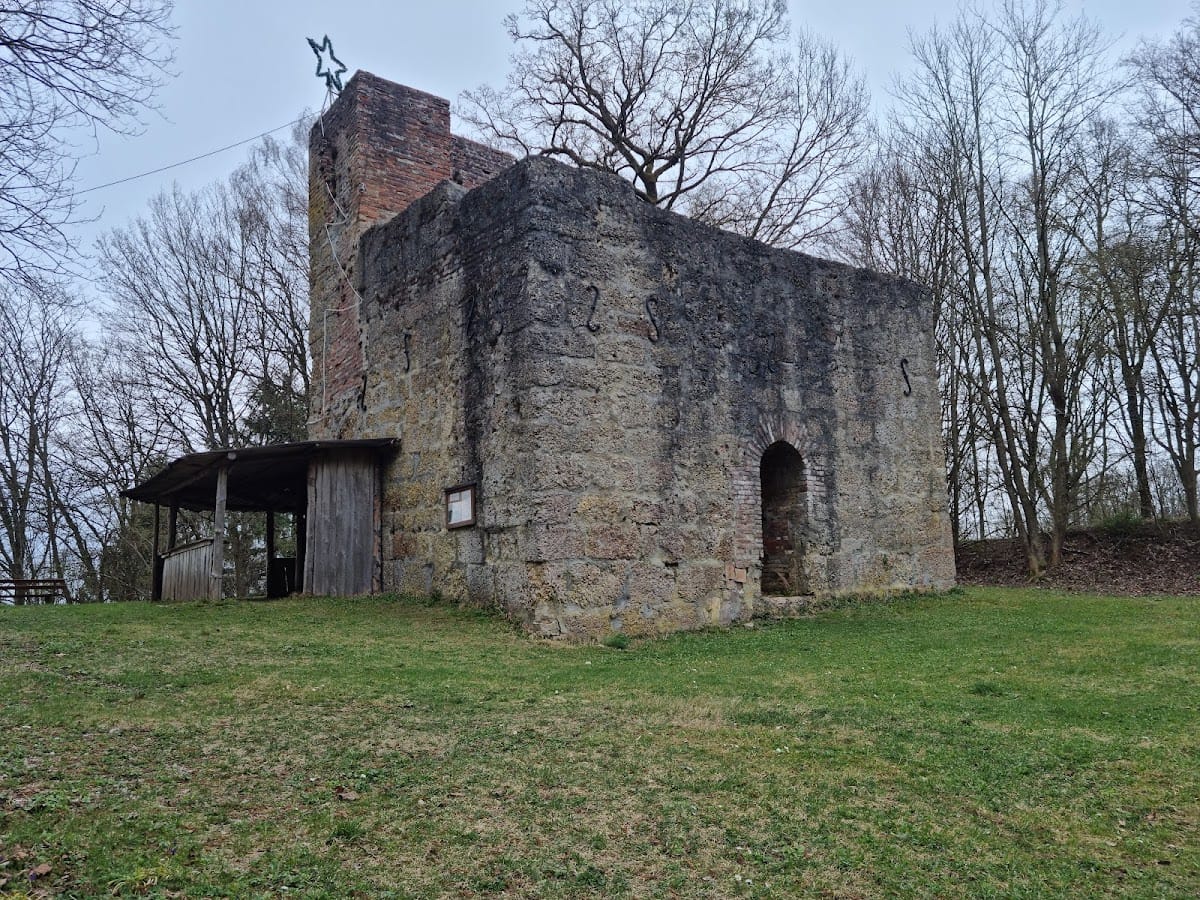
On the main-castle plateau, the stump of the former residential tower survives. This keep, the principal fortified tower of a castle, combined defensive and residential functions. Its square masonry structure is built from smooth Nagelfluh blocks, a conglomerate rock made of naturally cemented rounded stones. Each side measures approximately 9.25 metres, and the walls are about 1.75 metres thick. The northeastern corner remains approximately eight metres high, while the upper sections consist of renovated brick masonry.
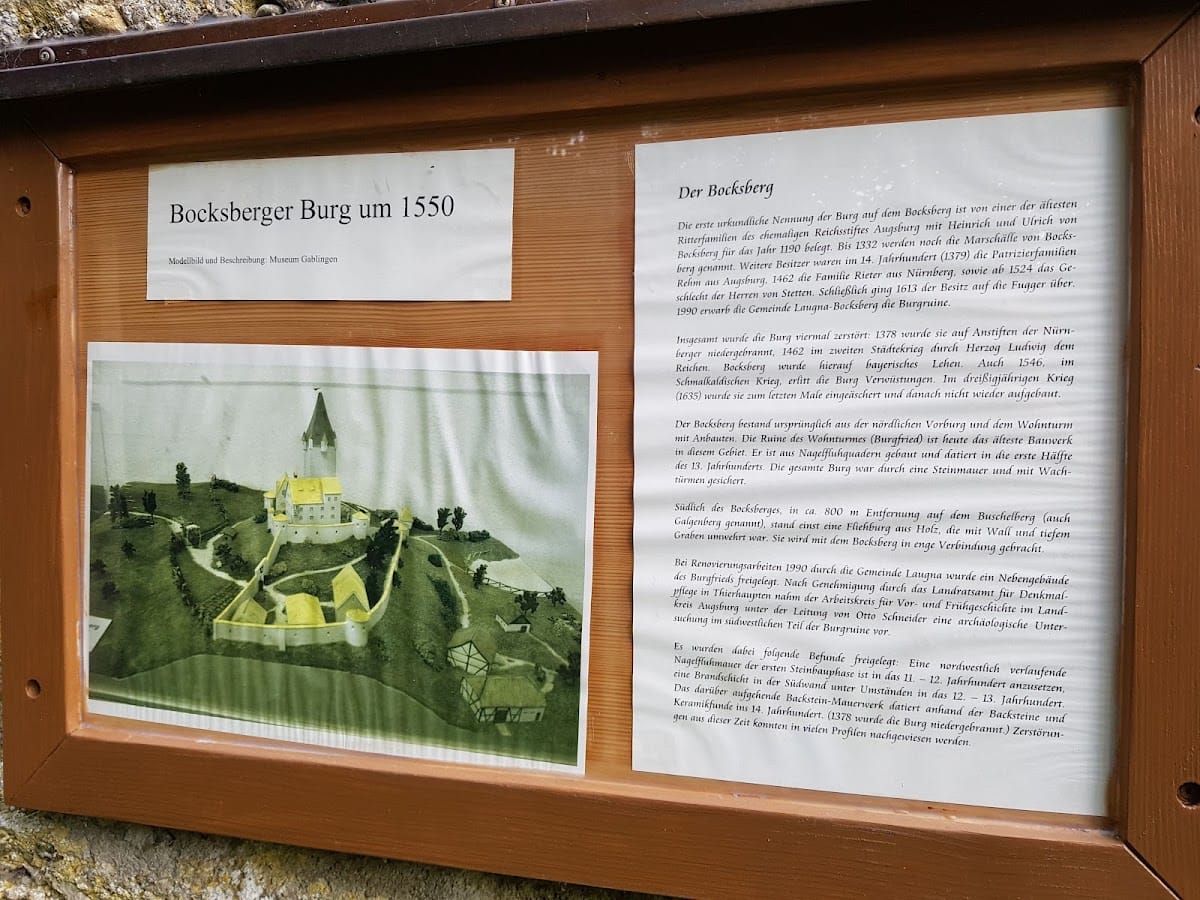
A small map from the second half of the sixteenth century depicts two castle houses with gabled roofs. It shows the substantial keep with a pointed roof and small projecting defensive structures, providing an image of the complex before its later destruction.
Buschelberg Motte
Approximately 200 metres south of the ruin, on the slope, stands Buschelberg, a large high-medieval motte. A motte is a raised earth mound constructed to carry a fortified building. Buschelberg may mark an older predecessor castle or probably served as the residence of one of the first lords’ retainers. The castle site itself already appears on the sixteenth-century map that depicts Bocksberg.