Castello di Cormons: A Lombard and Medieval Hilltop Fortress in Italy


Site at a Glance
- Rating
- 4.7
- Popularity
- Very Low
- Country
- Italy
- Primary era
- Medieval
- External website
- Open
- Eras represented
- Medieval
- Civilizations
- Holy Roman Empire, Lombard
- Site type
- Military
- Remains
- Castle
On this page7 sections
History
Castello di Cormons is a ruined hilltop fortress in Cormons, Italy, whose seventh-century defenses were associated with the Lombards, a Germanic people who established a kingdom across much of Italy. Built on the summit of Monte Quarin, it served as a lookout and signaling point within the defensive networks of the early medieval period.
Roman and Lombard Origins
A fortification stood on Monte Quarin during the Roman period under the name Cormontium. The castle itself is generally dated to the seventh century, and historical records mention it by 630, although its origins may reach further back. The Lombards occupied or developed the hilltop position as part of their defenses against the Avars, a powerful nomadic confederation whose attacks in the region began around 610.
During the eighth century, the fortress passed to the Patriarchate of Aquileia, an ecclesiastical principality whose patriarchs also exercised territorial power in northeastern Italy. A document from 1159 claimed that the patriarchs had maintained their seat at Cormons for two centuries. The chronology remains difficult to reconcile with the recorded transfers of that seat: Patriarch John is said to have moved it from Cormons to Cividale in 628, while Patriarch Calixtus transferred it to Cividale in 737.
Magyar Attacks and Imperial Authority
The hilltop fortress probably offered refuge to local inhabitants during Magyar attacks in the ninth and tenth centuries. In 964, Otto I, the German king and Holy Roman Emperor, granted Cormons to the Patriarch of Aquileia as imperial authority was reorganized during the Ottonian period.
A larger lower castle was built at the foot of Monte Quarin during the tenth century, probably by the Counts of Gorizia. Control of this complex remained disputed between the patriarchs and the counts for an extended period. By the twelfth century, it had been strengthened with two town walls, expanding the defended area beyond the original hilltop position.
Gorizian and Habsburg Rule
After the long territorial dispute, the castle passed to the Counts of Gorizia in 1286. They granted it as a secondary fief to the Vogrsko family, whose members served as castellans until Simon Vogrski died in 1511. Fulcherio was the best-known member of the family.
On 12 April 1500, the death of Count Leonard of Gorizia brought Cormons and its territories by inheritance to Emperor Maximilian I of Habsburg. The Habsburgs were a European ruling dynasty whose possessions included territories in northeastern Italy. Venice opposed their control of the fortress. Venetian forces captured Cormons in 1508, lost it, and retook it in 1511. The site returned to Austrian control in 1514, and the castle was finally demolished.
The Peace of Worms in 1521 assigned Cormons definitively to the Habsburgs, although Venice returned the castle to Austria in 1618. The fortress was probably abandoned around 1600, after which its structures deteriorated progressively. A brief French occupation followed in 1813. Cormons then formed part of the Princely County of Gorizia and Gradisca until the Italian army occupied it in May 1915. The site is now an abandoned ruin within the municipality of Cormons.
Remains
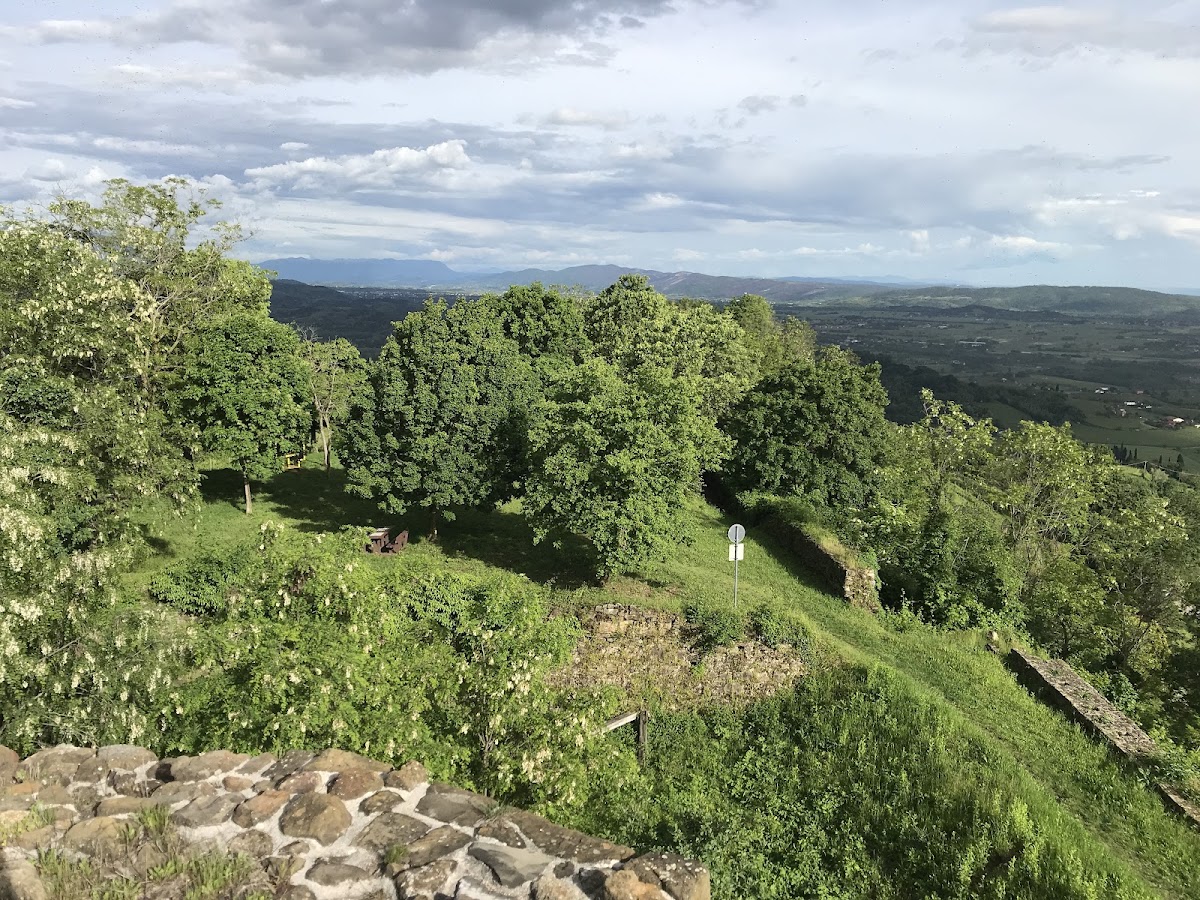
The remains occupy the summit of Monte Quarin above Cormons, at an elevation given as approximately 250 metres, while the mountain itself reaches 274 metres. The surviving complex is principally a group of extensive castle walls and ruins. Its construction used rubble stone, and the present condition is poor and ruinous.
Hilltop Fortress
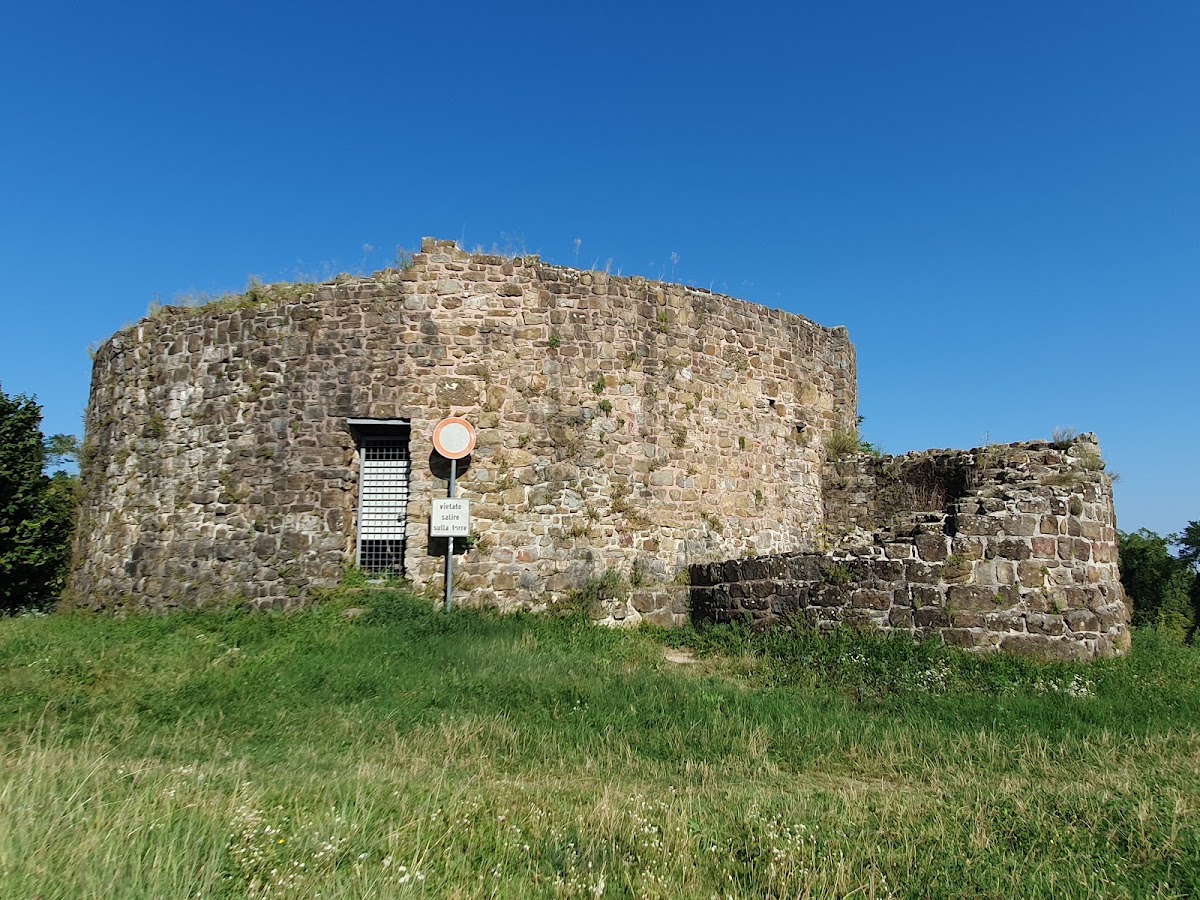
The principal hilltop fortress survives in fragmentary walling associated with both its Lombard origins and its later medieval use. A circular structure measures approximately 18 metres across. Its walls reach up to 5 metres in thickness and contain masonry belonging to different periods, reflecting the long development and alteration of the stronghold.
Lower Castle
A larger lower castle stood at the foot of Monte Quarin. By the twelfth century, this lower complex had been reinforced with two town walls, giving it a distinct defended area below the summit fortress. The surviving ruinous remains of Castello di Cormons therefore represent both the elevated early medieval stronghold and the later lower expansion of the fortified settlement.