Château de Kagenfels: A Medieval Castle near Ottrott

Site at a Glance
- Rating
- 4.2
- Popularity
- Very Low
- Country
- France
- Primary era
- Medieval
- External website
- Open
- Eras represented
- Medieval, Early Modern
- Civilizations
- Holy Roman Empire
- Site type
- Military
- Remains
- Castle
On this page9 sections
History
Château de Kagenfels is a medieval castle near Ottrott in France, begun in 1262 during the Grand Interregnum, a period when no generally recognized emperor exercised effective authority across the Holy Roman Empire. Albrecht Kage, an episcopal ministerial, built it for Walter von Geroldseck, Bishop of Strasbourg, while the bishop was at war with the city of Strasbourg.
Foundation and episcopal authority
King Rudolf I of the House of Habsburg legalized the castle’s construction in 1289. Rudolf, the first Habsburg king of the Romans, ruled from 1273 to 1291. The length of the Kage family’s ownership after legalization is uncertain. During the fourteenth century, the castle passed through several hands, including those of Albrecht von Schoenau and Friedrich von Stahel of Westhoffen.
Kagenfels was besieged in 1383, 1390, 1397, and 1424. Some of these attacks used heavy siege artillery. In 1424, the castle became a fief of the Bishop of Strasbourg, placing it within the bishop’s territorial system.
Fire, renovation, and changing ownership
In 1406, an accident involving servants bathing caused a fire that destroyed several buildings. About two decades later, Heinrich von Hohenstein, the bishop’s Vitztum, acquired the badly damaged castle. A Vitztum was a senior official who exercised delegated authority for a territorial lord or bishop. Heinrich carried out extensive renovation work, supported by the construction of a nearby sawmill for the project.
After Heinrich von Hohenstein died in 1451, his son Anton used the castle as a base for raids into the surrounding area. In 1559, Lucas von Visebock, bailiff of the lordship of Weiler, bought the castle and adopted the byname “zu Kagenfels.” He added service and agricultural buildings. The town of Obernai acquired the castle and its associated lands in 1563.
Abandonment and archaeological work
Use of the castle is documented until 1599. It was abandoned in the early seventeenth century, probably during the Thirty Years’ War, the European conflict fought from 1618 to 1648 amid religious, dynastic, and political struggles. The site was recorded as a ruin in 1664.
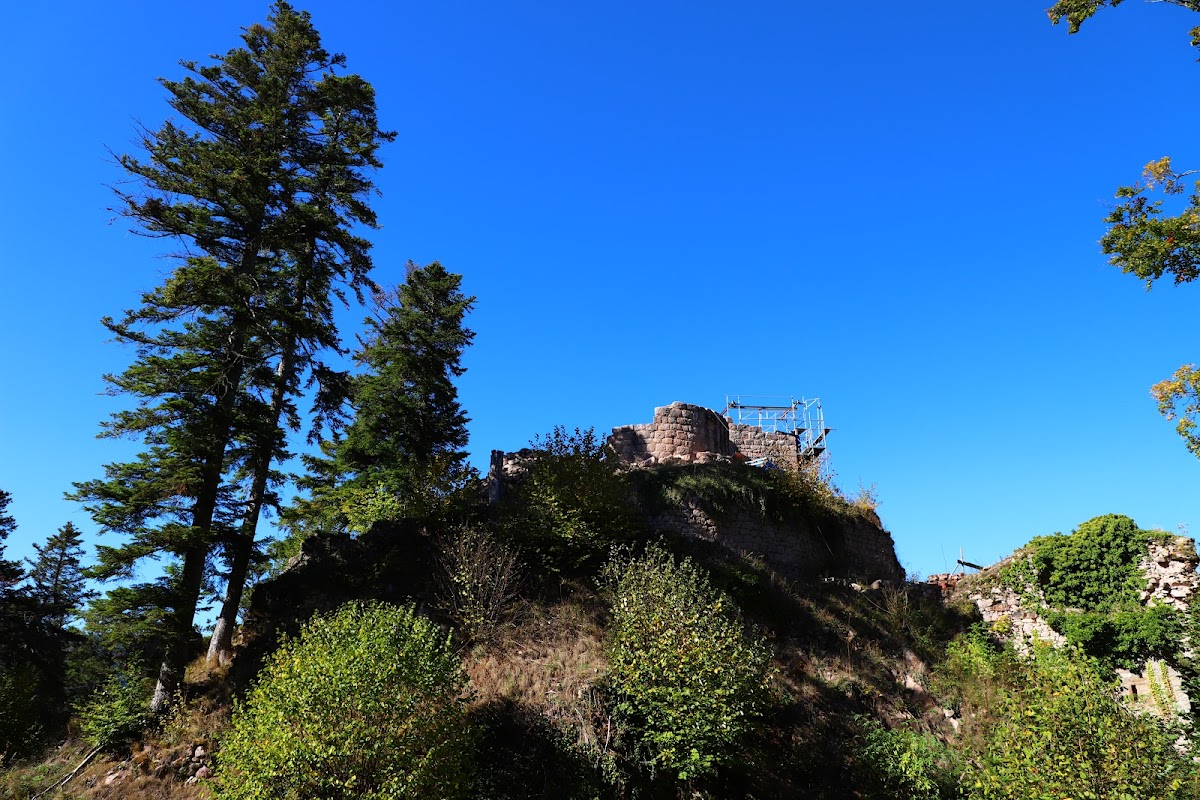
The ruin was identified as Château de Kagenfels only in 1828. It belongs to a group of nine castles within a few square kilometres around Mont Sainte-Odile, including Birkenfels, Dreistein, and Hagelschloss. Archaeological research has continued since 1999. Since 2000, the Association for the Conservation of Obernai Heritage has consolidated the remains, while architectural elements found on the site have been used in partial reconstruction.
Remains
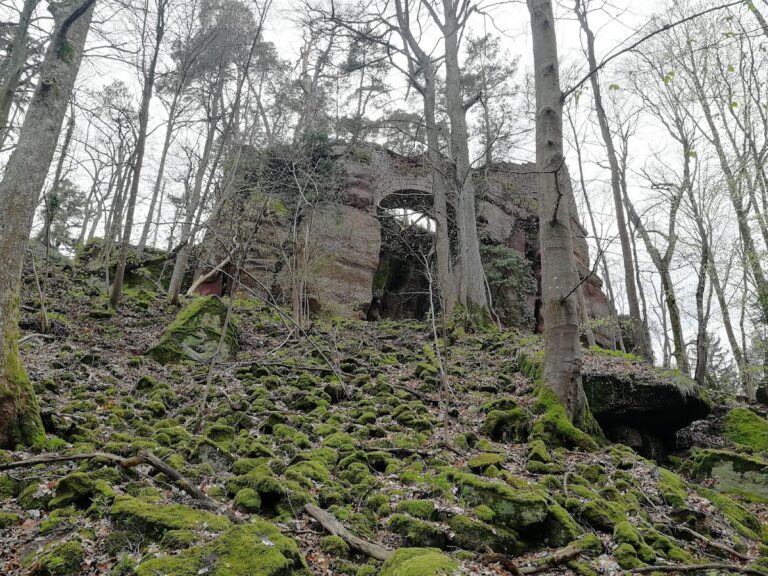
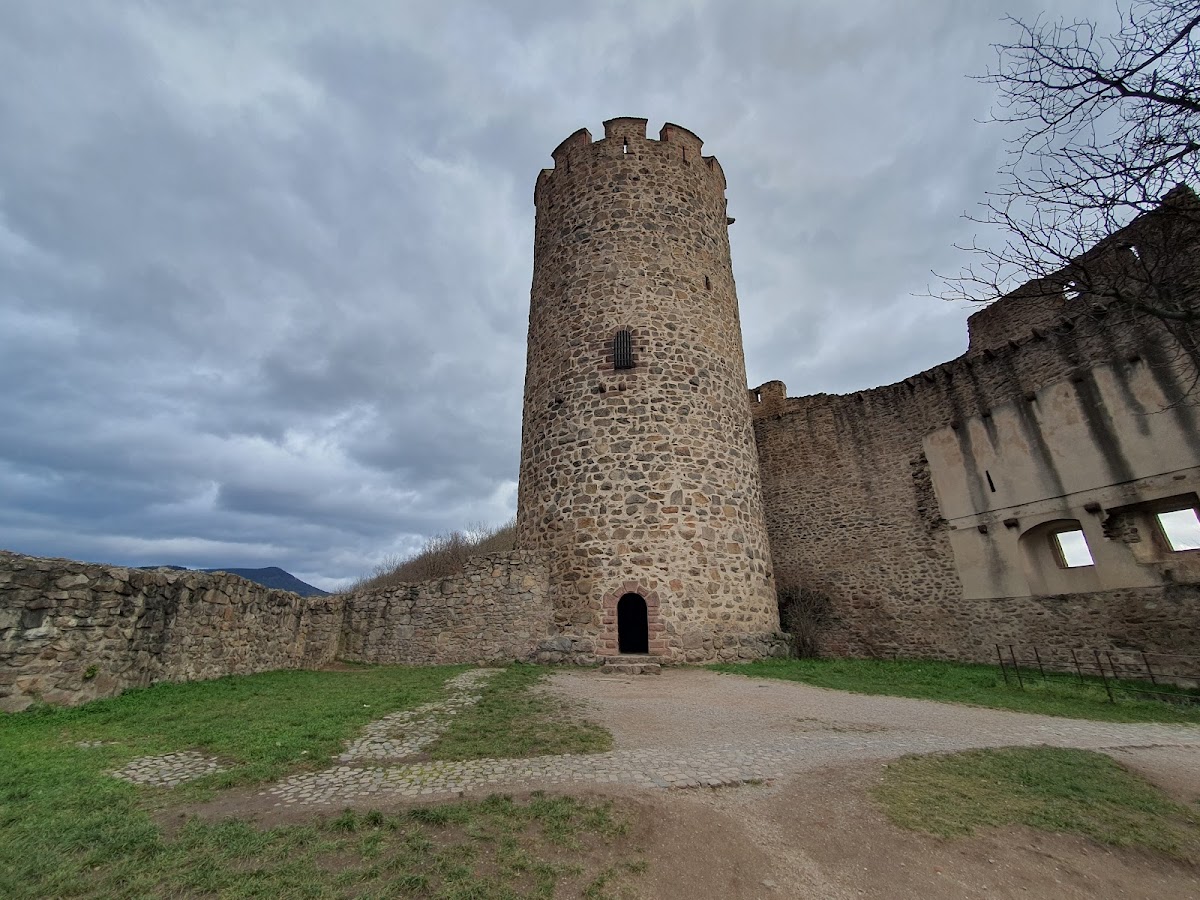
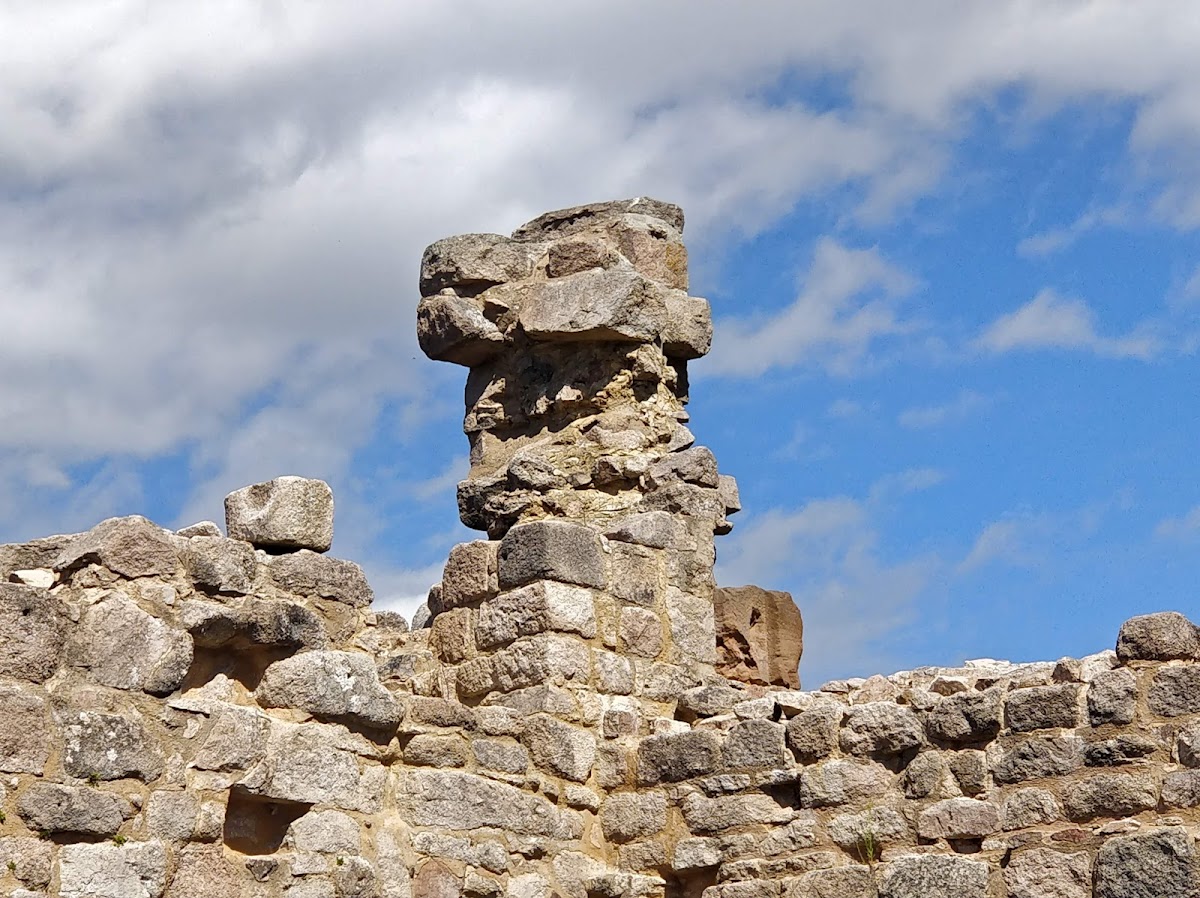
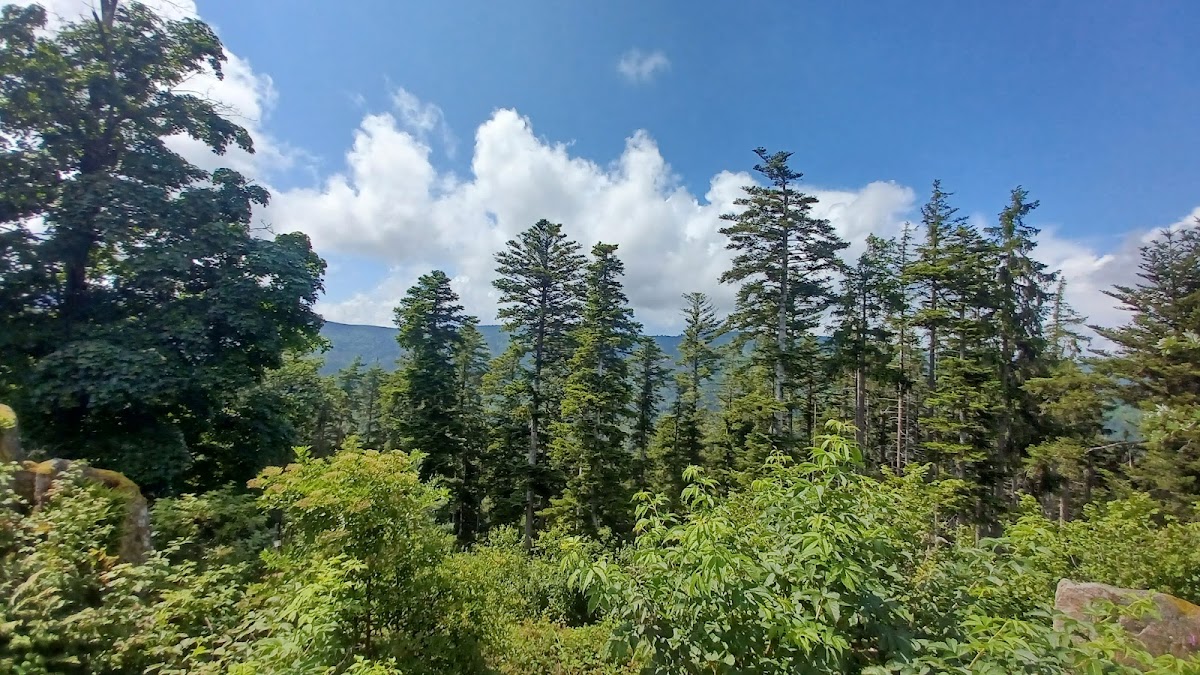
The castle stands at approximately 667 metres above sea level in forest shared by Obernai and Bernardswiller, within the commune of Ottrott. Built largely of granite, the complex was organized around a residential tower and a keep, with surrounding walls and a moat forming its defensive framework. Sections of the walls, parts of the tower, and the visible former moat survive.
Principal structures and defenses
Residential tower
The residential tower combined living quarters with defensive functions. It measured approximately 13.8 by 15.5 metres, and its walls were about 1.5 metres thick. Parts of the tower remain among the surviving structural evidence of the castle.
Keep, walls, and moat
The keep served as the principal strong defensive tower of the medieval castle. The surrounding walls survive in sections, while the former moat remains visible as part of the site’s defensive layout.
Archaeological evidence and reconstruction
Archaeological investigations have uncovered cannonballs associated with the castle’s recorded sieges and an altar stone. Architectural components recovered during the work have been reused in partial reconstruction, alongside the consolidation of surviving sections of the castle.