Castle of Atzeneta: A Medieval Fortress and Tower of Homage in Spain


Site at a Glance
- Rating
- 4.7
- Popularity
- Low
- Country
- Spain
- Primary era
- Medieval
- Eras represented
- Medieval
- Civilizations
- Crown of Aragon, Taifa Kingdoms
- Site type
- Military
- Remains
- Castle
On this page7 sections
History
Castle of Atzeneta is an eleventh-century Muslim fortress in Spain, located near Atzeneta del Maestrat, whose surviving principal tower is a Gothic structure. Built over the remains of a Roman fortification, the castle originally served an exclusively military purpose and controlled an important approach to the settlement.
Muslim Fortress and Aragonese Conquest
The fortress formed part of the territorial district governed from Culla Castle. During James I of Aragon’s medieval conquests in eastern Iberia, which established Aragonese rule across much of the region, the king used the Castle of Atzeneta together with the Castle of Les Coves in an exchange for Morella. After this change, the fortress entered the domains of Blasco de Alagón, an Aragonese nobleman.
The castle also protected and closed the pass of Atzeneta. This route was regarded as the principal approach to the settlement from the Lucena mountain ranges and from the ravines of Les Torrocelles and Mas d’Avall.
Inheritance and Montesa Ownership
Through inheritance, the castle passed to Constanza de Alagón and Guillem d’Anglesola. Their daughter, Mergelina d’Anglesola, later held it with her husband, a member of the Queralt and Cervelló family, lords of Santa Coloma de Queralt. In 1387, Mergelina’s descendant Pere de Queralt sold El Castellar, another name for the castle, to the master of the Order of Montesa. This military religious order held territories and fortifications within the medieval Crown of Aragon.
Decline and Later Protection
The Chronicle of Viciana records that the castle eventually fell into ruin. Villagers later built a church on the site and dedicated it to the Virgin of Hope and Saint Sebastian, giving the remains a new religious use.
The monument was declared a protected cultural monument in 1985. This protection is associated with Spain’s 1949 decree concerning castles and the heritage law enacted in 1985. The ministerial entry for the monument is dated 28 January 2003.
Remains
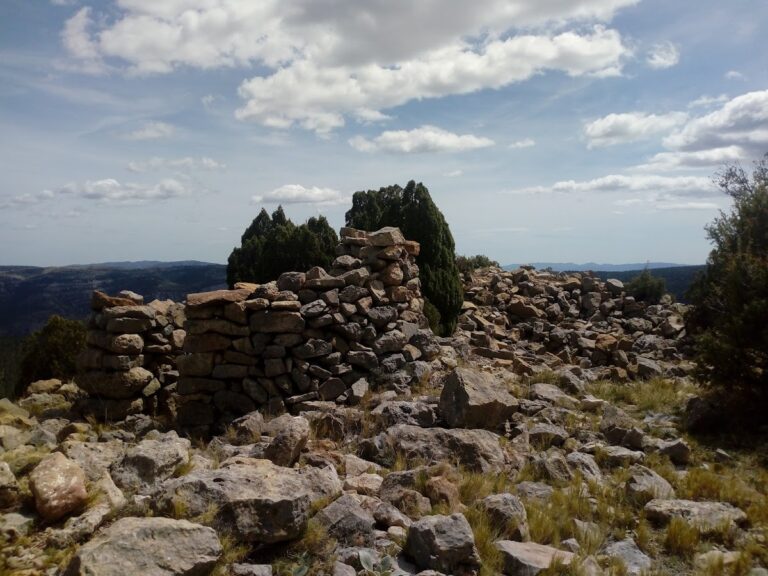
The remains occupy a prominent position about 3 kilometres from Atzeneta del Maestrat, at approximately 500 metres above sea level, in the area called les Foies. The site lies near the boundary of Lucena del Cid and the Pallisera ravine. The original fortress survives chiefly through its former tower of homage, the castle’s principal fortified tower, together with a later chapel.
Former Tower of Homage
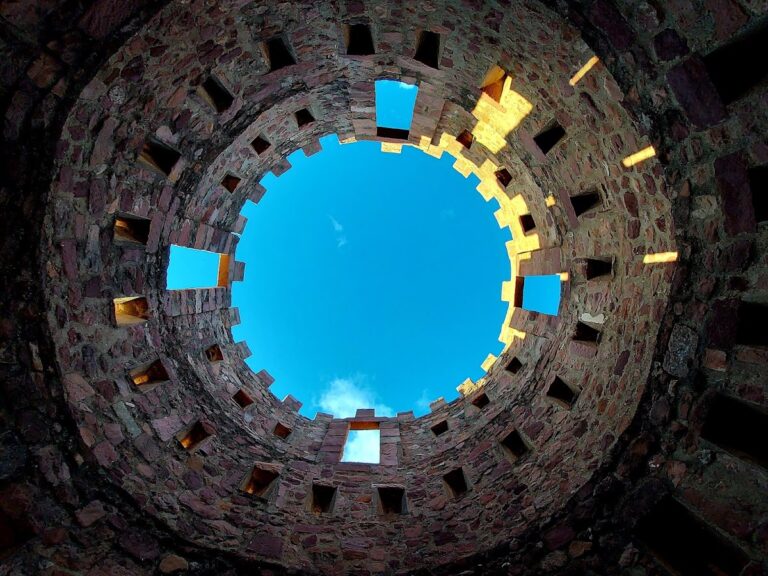
The former tower of homage is a square-plan Gothic building. Its entrances are framed by semicircular arches, while pointed arches and a staircase remain inside. The tower also preserves a guesthouse, a lodging area associated with a religious or institutional complex, and an oven dating from the period when the tower was built.
The construction combines ashlar, regularly cut stone blocks, with roughly dressed small stones and rubble masonry. Inside, an oil painting on canvas of the Immaculate Conception bears the date 1689. An eighteenth-century altarpiece dedicated to Saint John the Baptist, formerly associated with the site, is now kept in the parish archive.
Later Chapel
A later chapel within the complex is dedicated to the Virgin of Hope and Saints Fabian and Sebastian. Its construction date is uncertain. A small fragment of the chapel’s former sundial survives on one corner, and an ecclesiastical coat of arms is displayed above the entrance.