Castillo del Boi: A Medieval Rock Castle in Spain


Site at a Glance
- Rating
- 4.3
- Popularity
- Very Low
- Country
- Spain
- Primary era
- Medieval
- Eras represented
- Medieval
- Civilizations
- Crown of Aragon
- Site type
- Military
- Remains
- Castle
On this page7 sections
History
Castillo del Boi is a ruined thirteenth-century rock castle in Spain, located near Vistabella del Maestrat in Castellón. Built during the Middle Ages, it occupied a strategic mountain summit and formed part of the territory of Culla.
Early Settlement and Medieval Rule
The Vistabella del Maestrazgo area was inhabited during the Bronze Age, approximately between 1500 and 1000 BC. Castillo del Boi itself emerged later, during the thirteenth century, when the surrounding settlement gained greater importance. The castle belonged to the Tinença, or territory, of Culla, which was held by Blasco de Alagón, a medieval Aragonese nobleman, from 1253.
Castillo del Boi appears in several medieval documents, including the Charter of Settlement of Vistabella dated 3 April 1251. On 11 May 1303, Guillermo de Anglesola sold the castle of Culla together with the castles of Boi and Vistabella to Berenguer Cardona, the chief governing officer of the Templars. The Templars were a medieval military religious order that controlled land and fortified sites. The property later passed to the Order of Montesa, a military religious order that assumed some former Templar possessions in the Crown of Aragon.
A Military Position
The castle stood beside a small hamlet of the same name, which contained 20 houses in 1320. Its position along the route connecting the northern territory of the Montlleó River with Culla indicates that the fortress served a strictly military purpose. The castle is now in ruins.
Heritage Protection
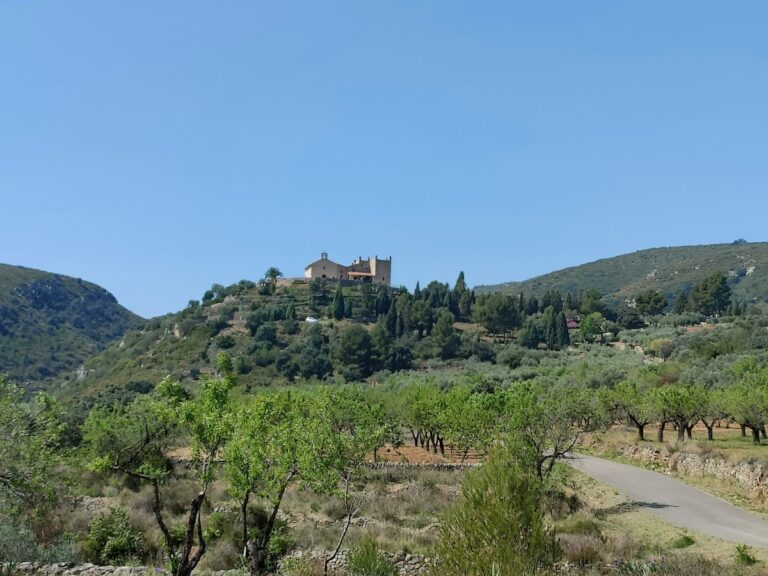
Castillo del Boi was declared an Asset of Cultural Interest in the category of Monument on 25 June 1985. This is a formal Spanish heritage designation for places of recognized historical, architectural, or cultural importance. In 2010, the protected surroundings were formally defined and regulations for their protection were established. The Hermitage of San Bartolomé, about four kilometres from the castle at the foot of its hill, lies within these protected surroundings and is classified as an Asset of Local Relevance, a designation for heritage of recognized local importance.
Remains
Mountain Setting and Fortifications
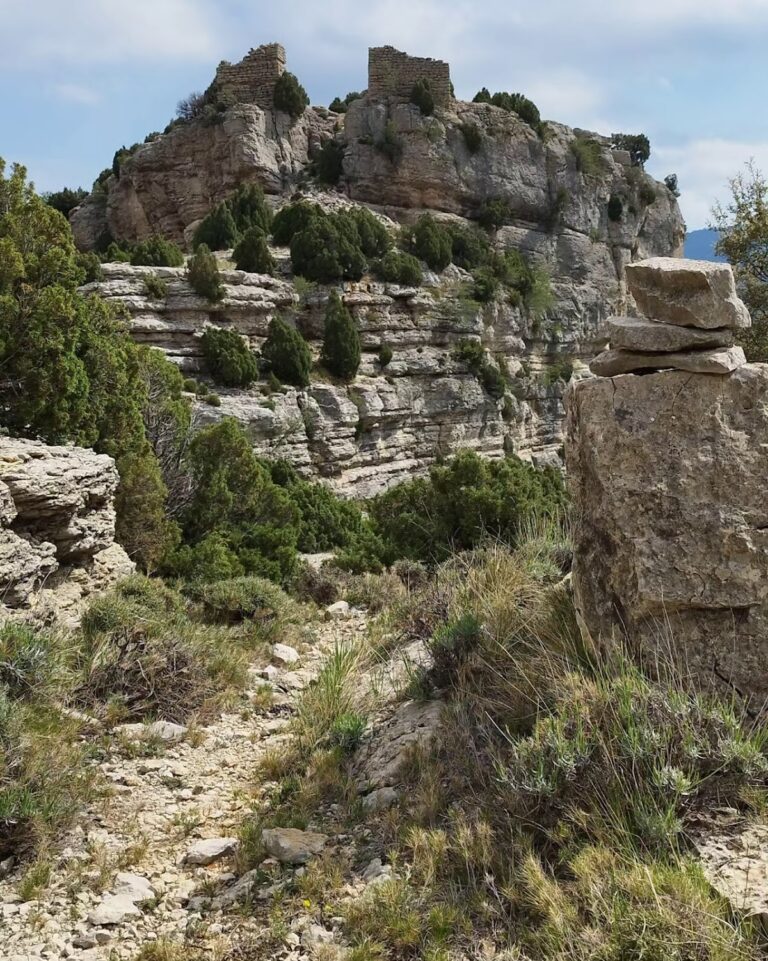
Castillo del Boi occupies the summit of a mountain in the Sierra del Boi, approximately 1,120 metres above sea level. It is a rock castle, meaning a fortress built on a rocky summit that uses the natural terrain as part of its defenses. The castle was constructed on a natural rock platform, whose central rise supported the upper fortified enclosure. Ashlar masonry, made from carefully cut stone blocks, forms the castle fabric. The surviving walls and two square-plan towers indicate that the original fortress probably had three or four elevated towers integrated with the rocks above the precipice.
Southern Settlement Area
The southern part of the castle contains the foundations of several square-plan dwellings and rooms. This area has also produced pottery and other archaeological remains from both the Bronze Age and the medieval period. Together, the foundations and finds show that the rocky summit preserved evidence of activity before and during the castle’s medieval use.
Nearby sites