Burg Hinta: A Former Chieftain’s Seat in Germany



Site at a Glance
- Rating
- 4.1
- Popularity
- Low
- Country
- Germany
- Primary era
- Early Modern
- Eras represented
- Early Modern, Modern
- Civilizations
- German, Holy Roman Empire
- Site type
- Military
- Remains
- Castle
On this page11 sections
History
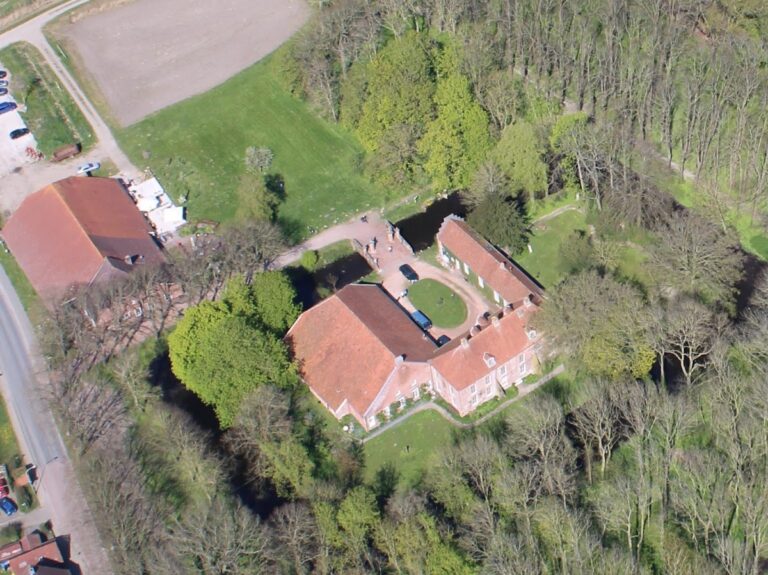
Burg Hinta, also known as the Osterburg, is a former chieftain’s seat in Hinte, Germany, that developed from a late-thirteenth- or early-fourteenth-century Gothic water castle. The surviving building fabric dates mainly from around 1500 onward, and the castle remains an important architectural monument in East Frisia.
Two chieftain castles
In the fourteenth century, Hinte had two chieftain castles, the Westerburg and the Osterburg. The Westerburg was destroyed during the fifteenth century by the Hanseatic League, a medieval and early-modern alliance of northern European towns and merchant communities. The attack followed the support that East Frisian chieftains and towns had given to piracy. The Osterburg survived and later became known as Burg Hinta.
Allena and Ripperda ownership
After the death of the last member of the Allena family in 1527, the castle passed to his niece Etta von Oldersum. She was married to Omko Freiherr von Ripperda zu Farmsum, whose title Freiherr is conventionally translated as baron. Omko was a grandson of Unico Freiherr von Ripperda zu Farmsum and Ulske Ukena.
Omko was succeeded by his son Frederik, who died in 1554. The property then became associated with his grandson Unico Freiherr von Ripperda, whose period of association with the castle is given as 1553–1564. A Renaissance monument to Unico stands in Hinte Church.
Conflict and later ownership
Since 1567, Burg Hinta has been owned by the noble von Frese family. During the Emden Revolution, a political conflict centered on Emden in 1602, troops from Emden occupied the castle. The count’s troops later recaptured it by force, but the Osterburg escaped destruction during the fighting.
A castle gate was added in 1704, during the Baroque period. The castle was remodeled during the eighteenth and nineteenth centuries, producing the four-wing arrangement that survives today. It is recognized as a protected architectural monument.
Remains
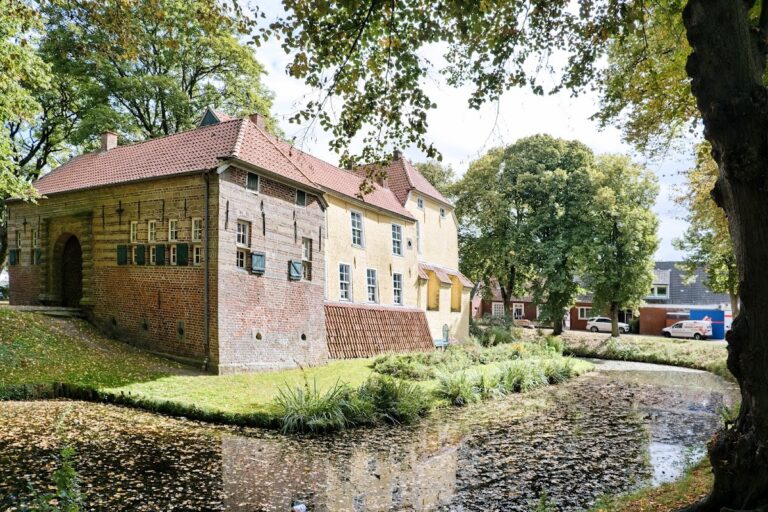
Burg Hinta is a brick-built water castle enclosed by a broad moat. Its present form is a four-wing complex arranged around a large inner courtyard. The buildings combine the remains of the medieval castle with later Renaissance, Baroque, and eighteenth- and nineteenth-century alterations.
Medieval and Renaissance fabric
Hohe Haus
The oldest surviving part is the Hohe Haus in the west wing, a single-storey stone house attributed to the chieftain Haiko von Wynham, the husband of Heba Attena. Its design lies between late Gothic and early Renaissance architecture. The south side preserves a stepped gable, whose sloping edges rise in stair-like steps. Openings in the triangular gable are arranged in pairs of superimposed segmental arches, each formed from part of a circle. The hall windows below were formerly narrow and tall, reflecting the vertical emphasis of Gothic design.
Moat gateway
At the base of the north gable, a gateway opens toward the moat. Its Renaissance arch has a visually prominent keystone, linking the building’s defensive setting with the architectural changes introduced around 1500.
Baroque gate and later complex
Castle gate
The castle gate added in 1704 belongs to the Baroque phase of the site. During the eighteenth and nineteenth centuries, further remodeling formed the present four-wing layout around the inner courtyard.
Hinte Church
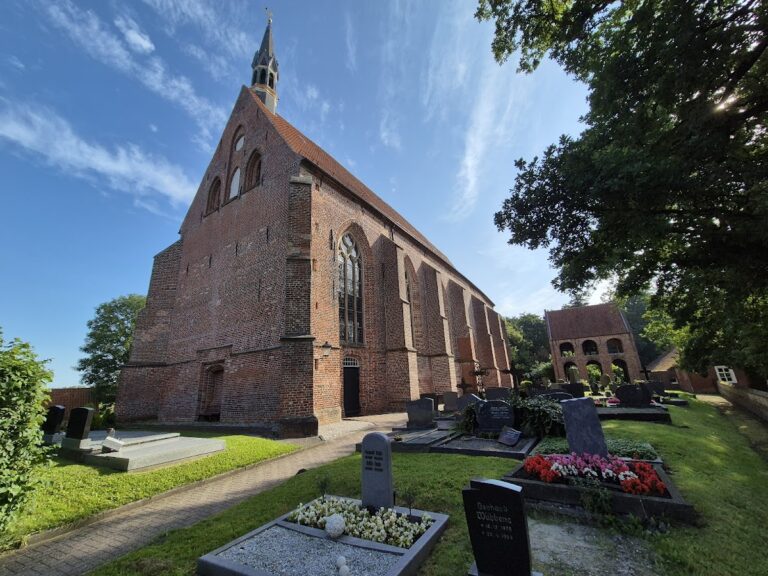
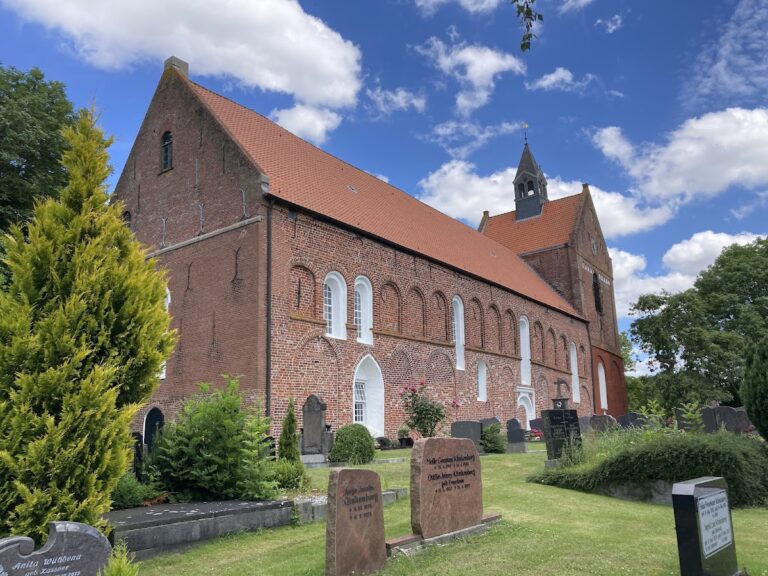
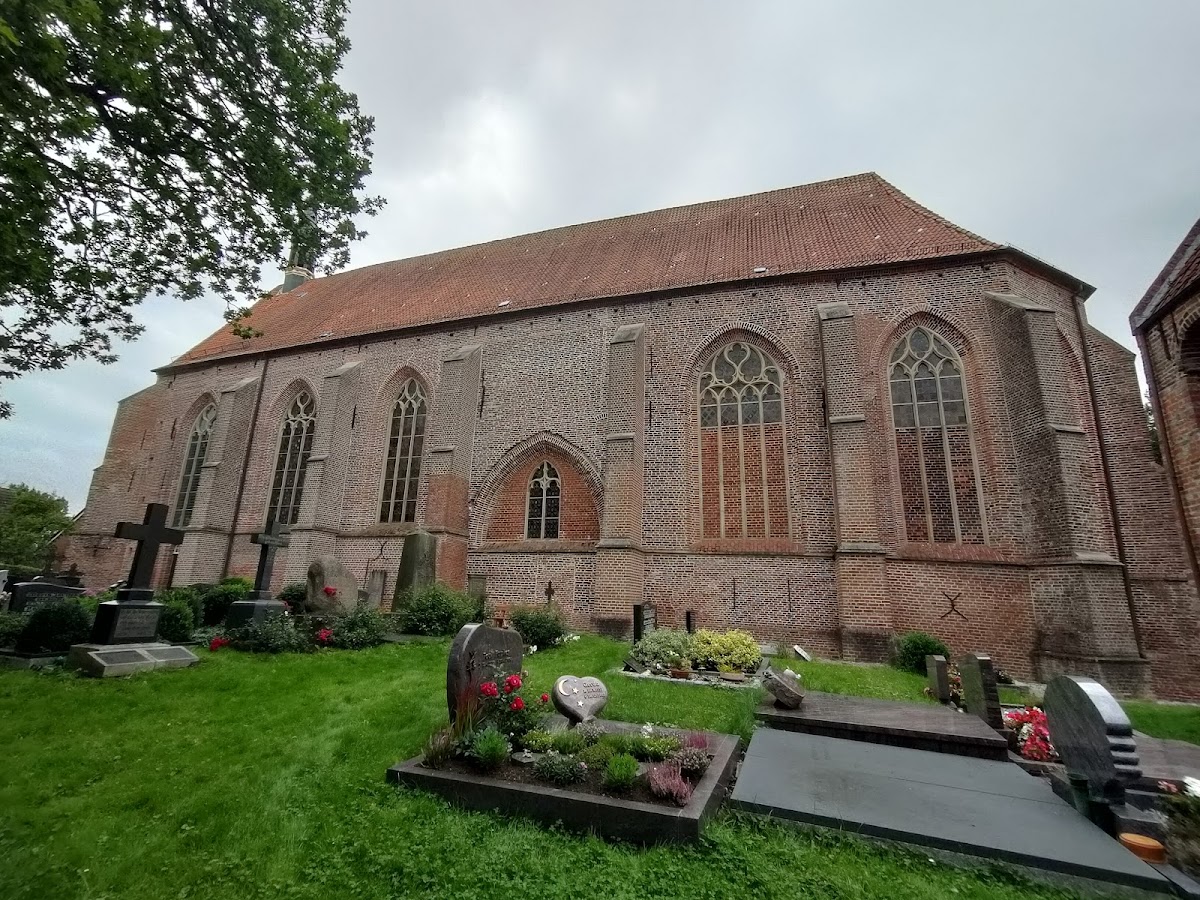
North of the castle, on a raised settlement mound, stands the fourteenth-century Evangelical Reformed Church of Hinte. Such mounds were elevated places used in the low-lying coastal landscape to protect buildings from flooding. The church also contains the Renaissance monument to Unico Freiherr von Ripperda.