Torwood Castle: A Sixteenth-Century Tower House in Scotland


Site at a Glance
- Rating
- 4.5
- Popularity
- Low
- Country
- United Kingdom
- Primary era
- Early Modern
- External website
- Open
- Eras represented
- Early Modern
- Civilizations
- Kingdom of Scotland
- Site type
- Military
- Remains
- Castle
On this page7 sections
History
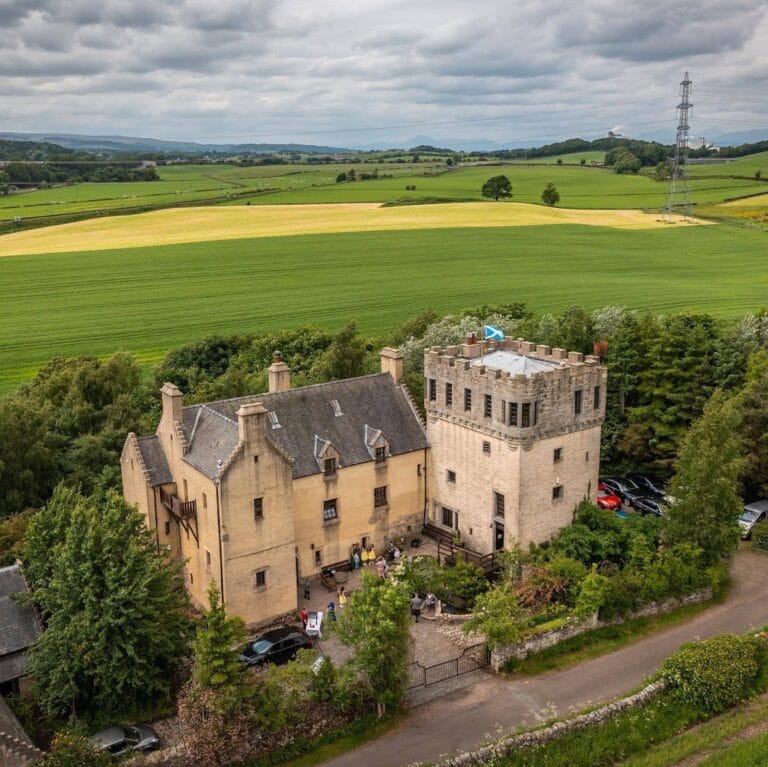
Torwood Castle is a ruined sixteenth-century tower house in Torwood, central Scotland, built for Sir Alexander Forrester of Garden around 1566. A tower house was a fortified masonry residence for a landed family, and this castle formed part of the Forrester family’s long association with the area.
The Forrester estate
The Forresters originally held the estate and served as keepers of the nearby royal forest of Tor Wood from the second half of the fifteenth century until the middle of the seventeenth century. The estimated construction date comes from a carved stone panel found near the castle in 1918.
Torwood was visited by Regent Morton in September 1575. Morton, James Douglas, 4th Earl of Morton, governed Scotland while King James VI was a minor. In 1585, during the successful rebellion of the Earls of Mar and Angus, the castle was captured as an initial step toward taking Stirling Castle.
Seventeenth-century ownership and abandonment
After a period in the hands of Clan Baillie, the property became associated with the Forresters again during the seventeenth century. George, 1st Lord Forrester, was connected with Torwood in 1635, and the Forresters of Corstorphine held it by 1653. Several external buildings were added around the beginning of the seventeenth century, but they have not survived. The date when the castle was abandoned is unknown.
Ruination and preservation
Gordon Millar bought Torwood Castle in 1957, when it was already a ruin, and worked on its restoration until his death in 1998. The gradual repairs stabilized the masonry and stopped further decay, but did not restore the building to a complete condition. Before his death, Millar created the Torwood Castle Charitable Trust to continue the work.
In September 2018, Gary Grant moved into the unsecured castle to protect it from vandalism and maintain it as far as possible. The trust was seeking new trustees, a secretary, and professional assistance for the building’s future. Torwood Castle was placed on Scotland’s Buildings at Risk Register in 1995, with its risk level raised from low to moderate in 2019 because of continuing neglect. It became a Category A listed building in 1979, the highest Scottish listing category for buildings of national or exceptional architectural or historic importance. Its earlier Scheduled Monument classification, which provided statutory protection for monuments of national importance, was removed during the 2010s.
Remains
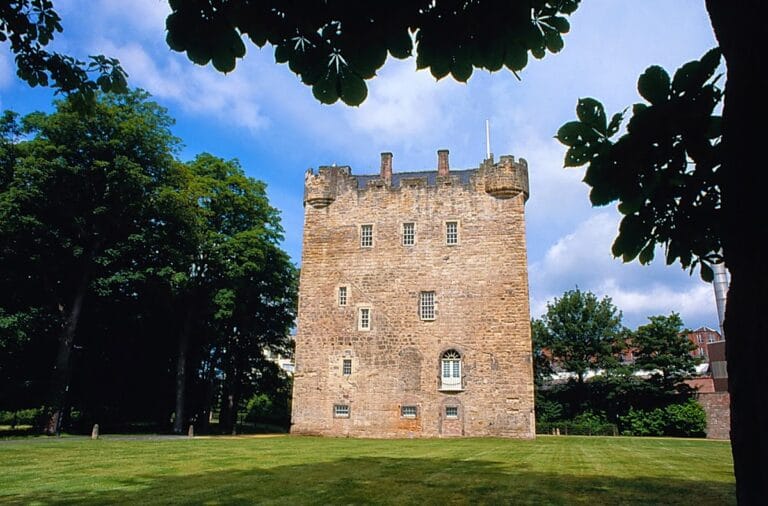
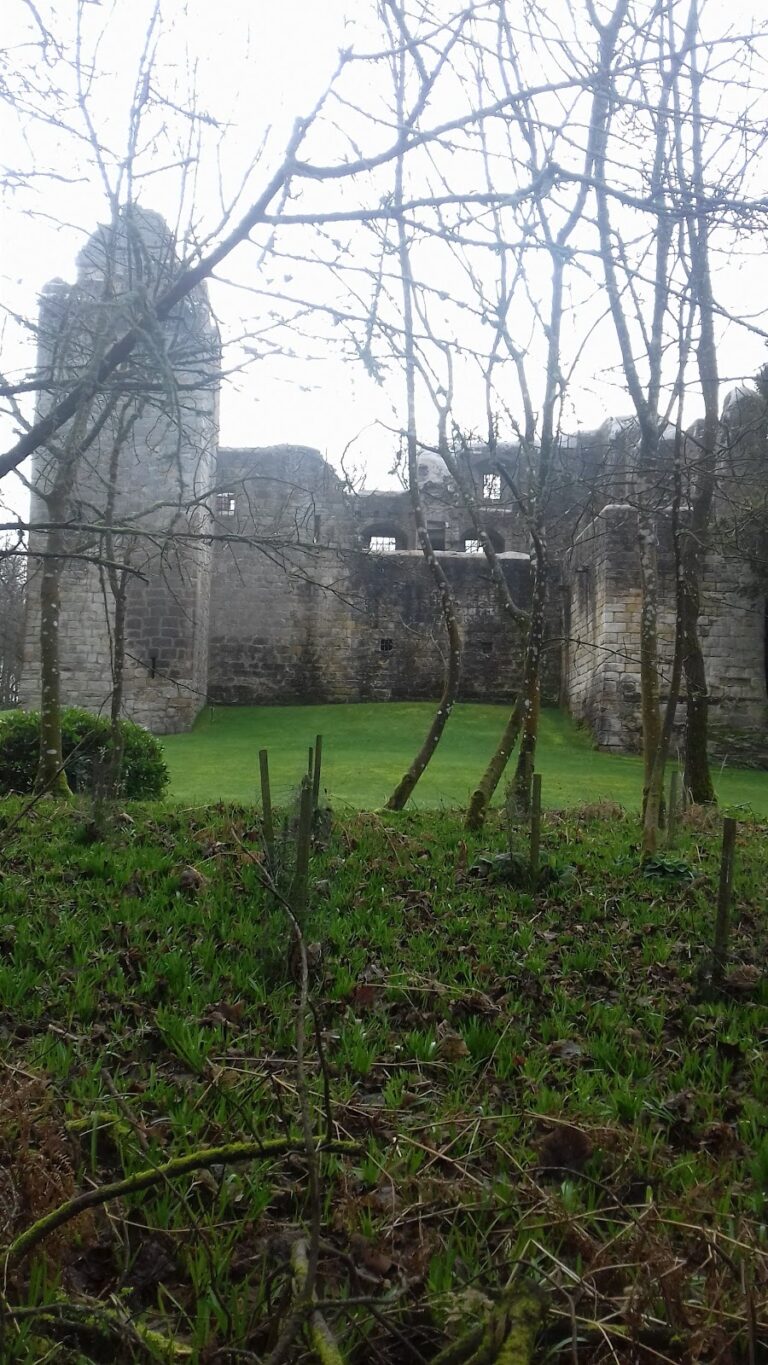
Torwood Castle survives as a roofless, three-storey tower house with an L-shaped plan. The main block has a vaulted ground floor, a first floor, and an attic. Its short wing contains the staircase and has gables at both its northern and southern ends.
Tower house
The surviving masonry preserves the castle’s principal residential and defensive form, with the projecting wing set at right angles to the main block. The roof has gone, and the building remains in a ruined but stabilized condition following Millar’s restoration work.
Courtyard and service ranges
A cobbled courtyard was enclosed by three ranges of external buildings. Only small parts of these ranges remain, although excavations in 1999 uncovered two rooms in the northern range. They were identified as a kitchen and a well room, providing evidence of the service areas that supported life within the castle.