Hynšta: A Medieval Rock Castle in Czechia


Site at a Glance
- Rating
- 4.6
- Popularity
- Low
- Country
- Czechia
- Primary era
- Medieval
- Eras represented
- Medieval, Early Modern
- Civilizations
- Habsburg, Holy Roman Empire, Kingdom of Bohemia
- Site type
- Military
- Remains
- Castle
On this page6 sections
History
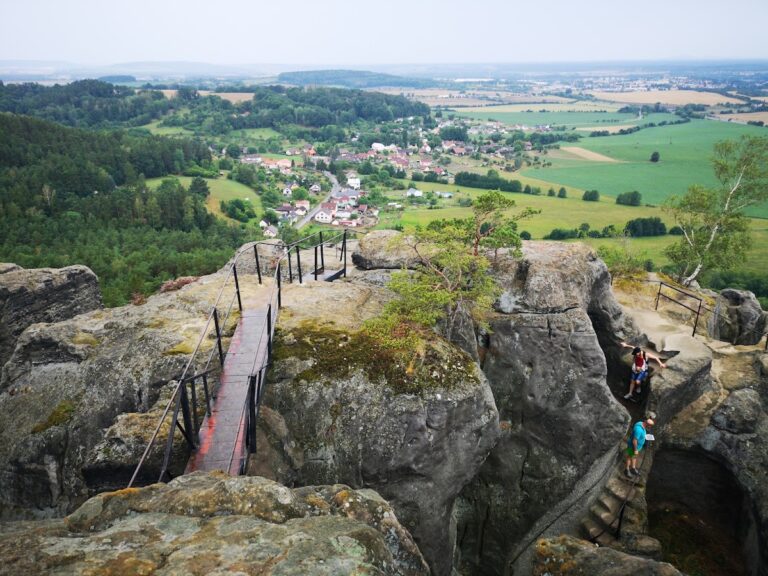
Hynšta is a medieval rock castle in Czechia, located about 1.5 kilometres north of Branžež in the Příhrazské Rocks. Archaeological finds indicate that it existed in the 13th century. Its original name, builder, and later owners remain uncertain, but the site is protected as a cultural monument of the Czech Republic within the protected Příhrazské Rocks area.
Medieval origins
The castle occupied a sandstone formation in the rocky landscape. Its small central stronghold and extensive bailey formed the main elements of the complex, although the surviving evidence does not establish who built it or how its ownership developed.
Seventeenth-century religious use
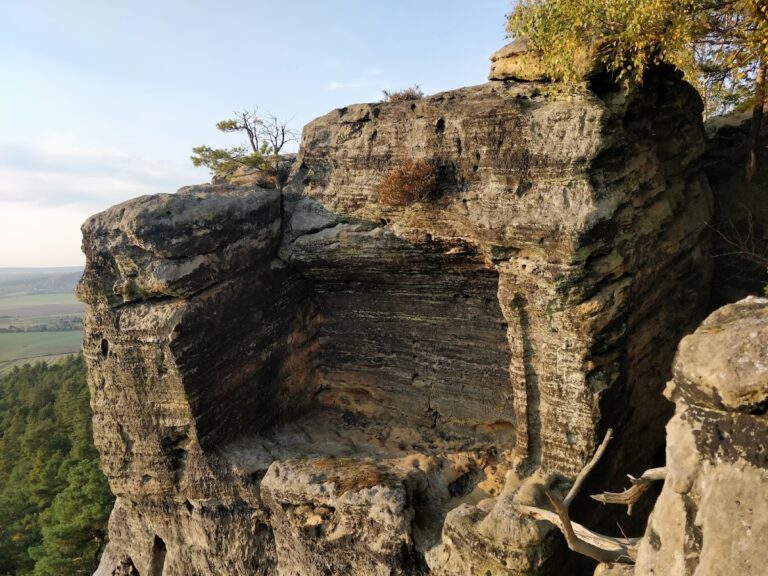
During the 17th century, a room cut into the rock was enlarged and adapted as a prayer room. Tradition connects the space with members of the Czech Brethren, a Protestant community that emerged in Bohemia during the 15th century and emphasized scripture, communal worship, and religious reform. This association remains traditional rather than documented. A quotation attributed to Jan Amos Comenius, a 17th-century Czech theologian, educator, philosopher, and bishop of the Czech Brethren, was carved into the eastern rock wall of the castle core, although its historical authenticity is uncertain.
Remains
Castle core and bailey
The castle core was formed by a single small sandstone block, with the bailey extending beside it and separated from the core by a ditch. A buried water cistern survives at the foot of the sandstone block. The eastern rock wall bears the carved quotation attributed to Comenius, adding a later inscription to the medieval remains.
Rock-cut prayer room
The most prominent surviving feature is a room cut directly into the rock. It was enlarged during the 17th century and adapted for religious use as a prayer room. Its physical form preserves the connection between the earlier castle complex and the later tradition of Czech Brethren worship at Hynšta.
Nearby sites