Tappoch Broch: An Iron Age Tower near Falkirk
Site at a Glance
- Popularity
- Medium
- Country
- United Kingdom
- Primary era
- Iron Age
- Eras represented
- Iron Age
- Civilizations
- Unclassified
- Site type
- Military
- Remains
- Tower
On this page12 sections
History
Tappoch Broch, also called Torwood Broch, is a Scottish broch, an Iron Age tower built of stone without mortar, near Torwood in Falkirk, United Kingdom. The Iron Age is the archaeological period associated with iron tools and weapons. Most brochs in northern Scotland are dated to around 100 BC to AD 100, and Tappoch may belong to that period. It may have been abandoned during the first century AD, although its chronology remains uncertain.
Dating and Roman connections
One alternative interpretation places the broch’s construction after the Roman occupation of this part of Scotland. On that view, it was built after AD 142, when the Antonine Wall, a Roman boundary across central Scotland, was constructed. A Roman road runs about half a kilometre west of Tappoch, but its presence does not establish Roman use of the broch.
Brochs are generally understood as multi-storey buildings associated with elite occupants. That interpretation provides context for Tappoch, but does not resolve when it was built or how it was used.
Excavation and protection
Colonel Joseph Dundas organized the first excavation in 1864. The mound was initially mistaken for a burial mound, and its summit was removed. After the structure was recognized as a broch, its interior was excavated, with much of the removed earth and stone placed outside. Smaller archaeological investigations have also taken place near the site at intervals.
In 2014, a conservation project cleared scrub, and AOC Archaeology carried out a laser survey. Archaeologist Murray Cook also made a small, focused excavation in the surrounding earlier hillfort, a fortified enclosure on elevated ground. Further clearance work in 2024 and 2025 removed bracken and self-seeded trees from the broch and hillfort. The 2025 work included the first modern excavation inside the broch. Tappoch has scheduled-monument status, a UK legal safeguard for archaeological and historic places.
Remains
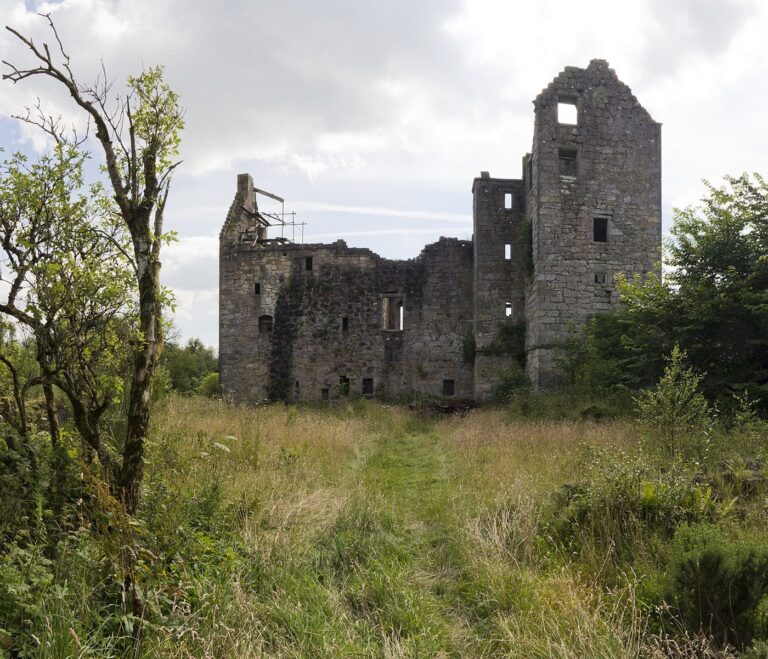
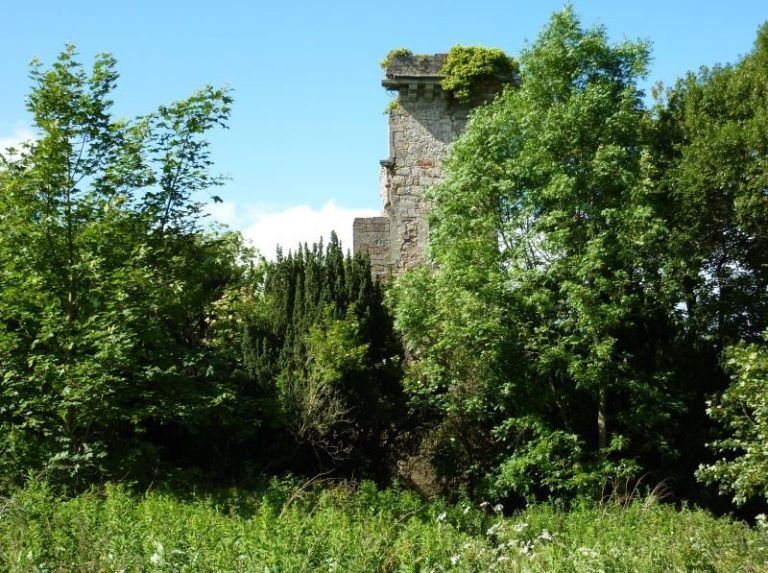
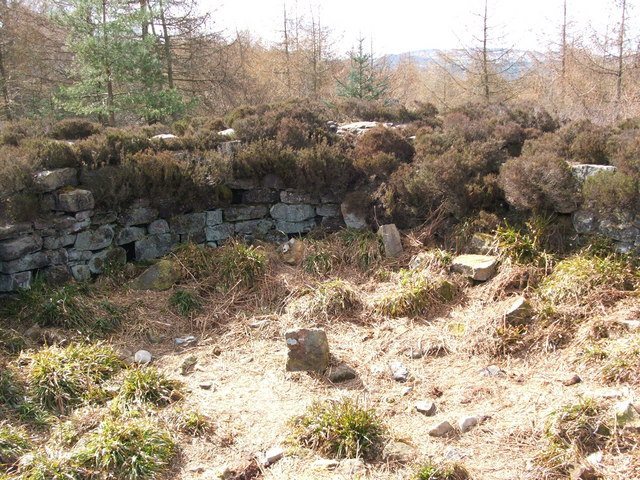
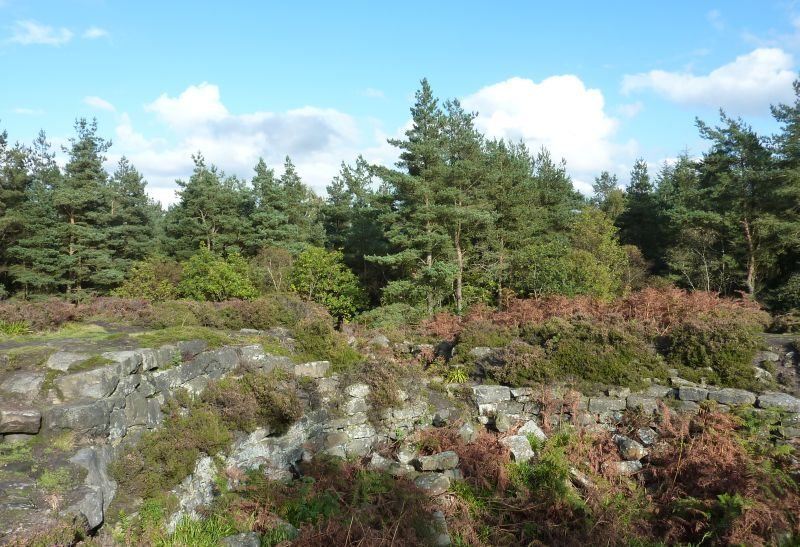
The broch stands in dense woodland on a hill about 116 metres high. The western slope is steep, while the other sides are more readily approached. The structure is circular on the outside and encloses an oval chamber. Its stone walls were built without mortar from large, irregular blocks gathered nearby.
Outer enclosure
Two earthen banks run around the broch on the more approachable sides of the hill. They are interpreted as defensive works for the tower and possibly nearby buildings. The banks may also be surviving parts of an outer enclosure that once contained a small settlement.
Broch walls and chamber
The inner chamber measures about 10.8 by 9.8 metres. The walls are estimated to be about six metres thick, though limited excavation outside the structure leaves their exact thickness uncertain. The chamber has been excavated, while most of the exterior remains concealed. Standing wall sections reach about two to three metres, and parts of the masonry have collapsed in recent times. The chamber is paved and has a large central hearth, or fire spot.
Internal access and wall features
Entrance passage
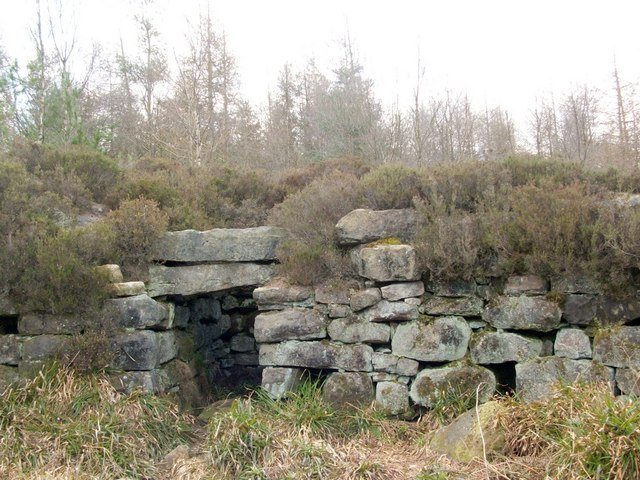
The entrance is on the southeast side. Its lintel stone survives, with fallen stones also remaining in place. Holes in the passage walls are thought to have held a beam used to bar the door from inside. A door stop and another hole for the beam are situated about halfway along the passage.
Staircase
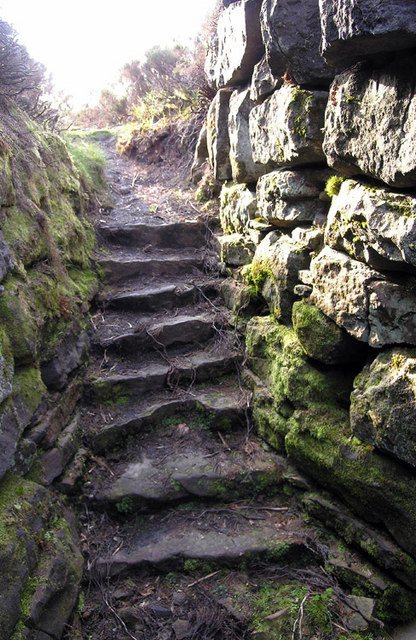
A short passage in the southwest part of the chamber leads to a staircase within the wall. Eleven steps remained in 1864. The stair passage’s side walls angle inward, a form suggesting that it was designed for a cantilever vault, built from stone courses that project inward as they rise.
Niches and wall chamber
At least thirteen niches appear to have been built as part of the broch; other openings may have been made later by removing stones. A small chamber in the northeast wall may also be a later addition.
Scarcement ledge
On the northwest side, about 1.8 metres above the chamber, the wall steps inward to form a narrow shelf about 40 centimetres wide. This scarcement ledge, an inward step forming a shelf, is generally thought to have supported a roof or upper structure, although its purpose is uncertain. At Tappoch and Clickimin Broch in Shetland, the shelf is made by thinning the wall rather than by adding a ring of projecting flat stones. Tappoch is the only southern broch preserved well enough to confirm this construction.
Finds
Finds include saddle and rotary querns, hand-operated stone mills for grinding grain, as well as a possible stone lamp, coarse pottery fragments, two hollowed stones, a stone cup, stone balls and spindle whorls used in spinning. The stone balls have been interpreted as possible status markers. Many of the finds are pre-Roman, while a late Roman pottery fragment may have been recovered during excavations around 1950. A 2026 excavation identified a previously unknown floor and hearth in place.