Rocca di Cerbaia: Medieval Fortress in Tuscany


Site at a Glance
- Rating
- 4.5
- Popularity
- Low
- Country
- Italy
- Primary era
- Medieval
- External website
- Open
- Eras represented
- Medieval
- Civilizations
- Holy Roman Empire
- Site type
- Military
- Remains
- Castle
On this page7 sections
History
Rocca di Cerbaia is a medieval fortress in Italy, located at Carmignanello in the municipality of Cantagallo, Tuscany. Built probably at the beginning of the twelfth century on a hill about 400 metres above sea level, it guarded the Lombardy Road and became the residence of the Alberti counts.
The Alberti Stronghold
In 1164, Holy Roman Emperor Frederick Barbarossa, who ruled from 1155 to 1190 and exercised authority across much of northern and central Italy, granted the fortress to the Alberti counts. During the thirteenth century, Cerbaia became one of the principal strongholds in the conflict between Alberti feudal power and the emerging commune of Prato.
The fortress was also connected with the Alberti family through Adelaide degli Alberti, who met her husband, Ezzelino II da Romano, at Cerbaia. Their daughter Cunizza da Romano later lived there. In 1278 she made her will at the fortress and then disappeared from the historical record. She probably died at Cerbaia and was buried in the adjacent cemetery.
Florentine Control and Later Owners
In 1361, Niccolò Aghinolfo degli Alberti, the last count of Cerbaia, sold the fortress to the municipality of Florence. Florence strengthened the site and installed a military garrison, which was disbanded during the fifteenth century. Cerbaia gradually lost its strategic importance, becoming the residence of the Novellucci family in the seventeenth century and passing to the Eldmann family in the nineteenth.
At the end of the twentieth century, the municipality of Cantagallo acquired the fortress and promoted its restoration and enhancement. Rocca di Cerbaia is recognized as Italian national heritage.
Cerbaia in Dante and Florentine Tradition
Dante Alighieri mentions Cerbaia in the thirty-second canto of the Inferno, part of his Divine Comedy, in connection with the Alberti brothers Napoleone and Alessandro. The brothers killed one another during a dispute over inheritance, and Dante places them in Caina, the region reserved for those who betray or kill their relatives. In the sixth canto of the Purgatorio, he also recounts the killing of Orso by Alberto II, Napoleone’s son.
A Florentine legend dating from around the fifteenth century claims that Dante sought lodging at Cerbaia while travelling toward Bologna on a snowy winter night in 1285. According to the story, the Alberti counts refused him hospitality, so he sheltered in a shepherd’s hut farther down the valley. The tradition identifies that hut with a ruined house still standing at the foot of the fortress.
Remains
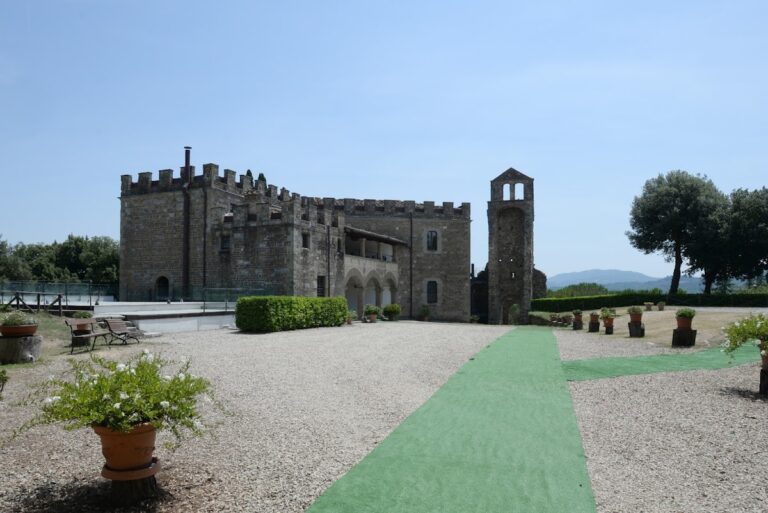
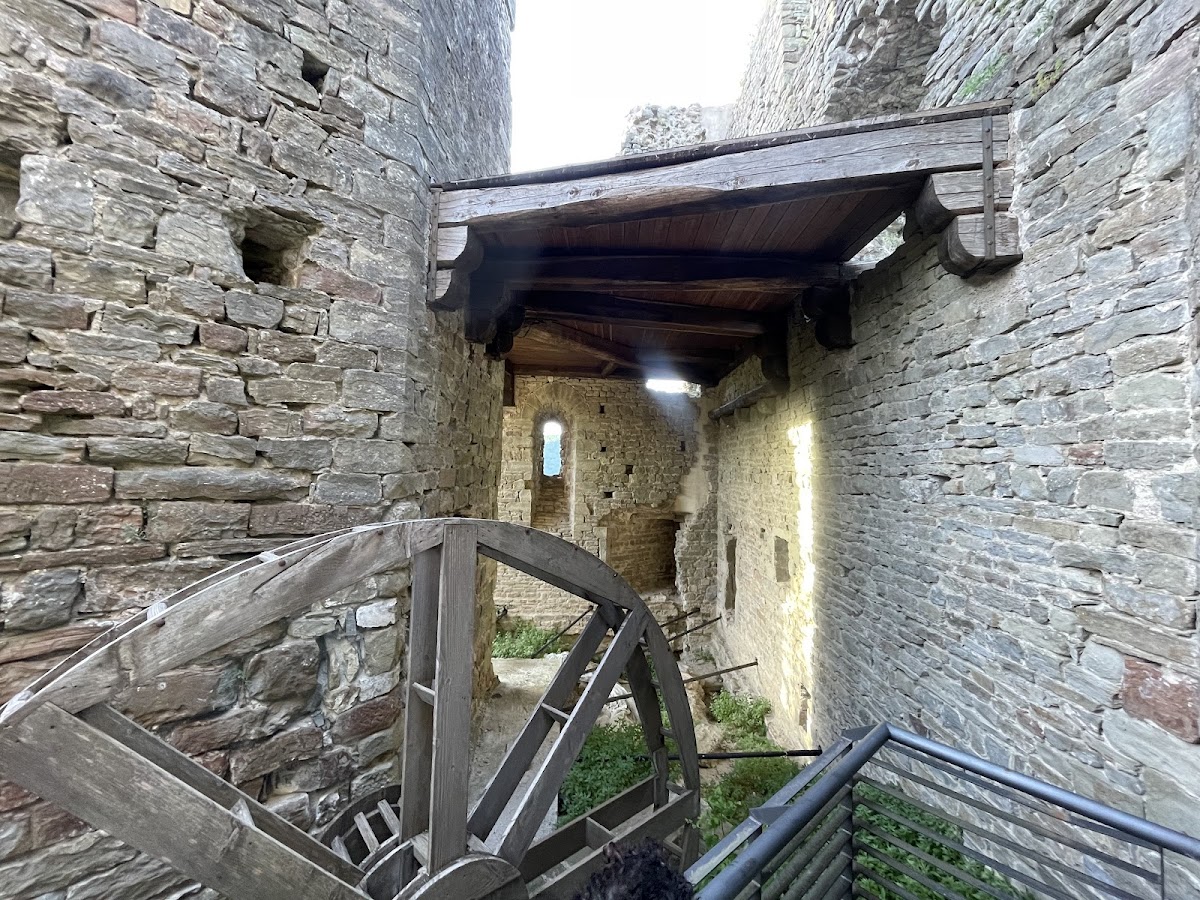
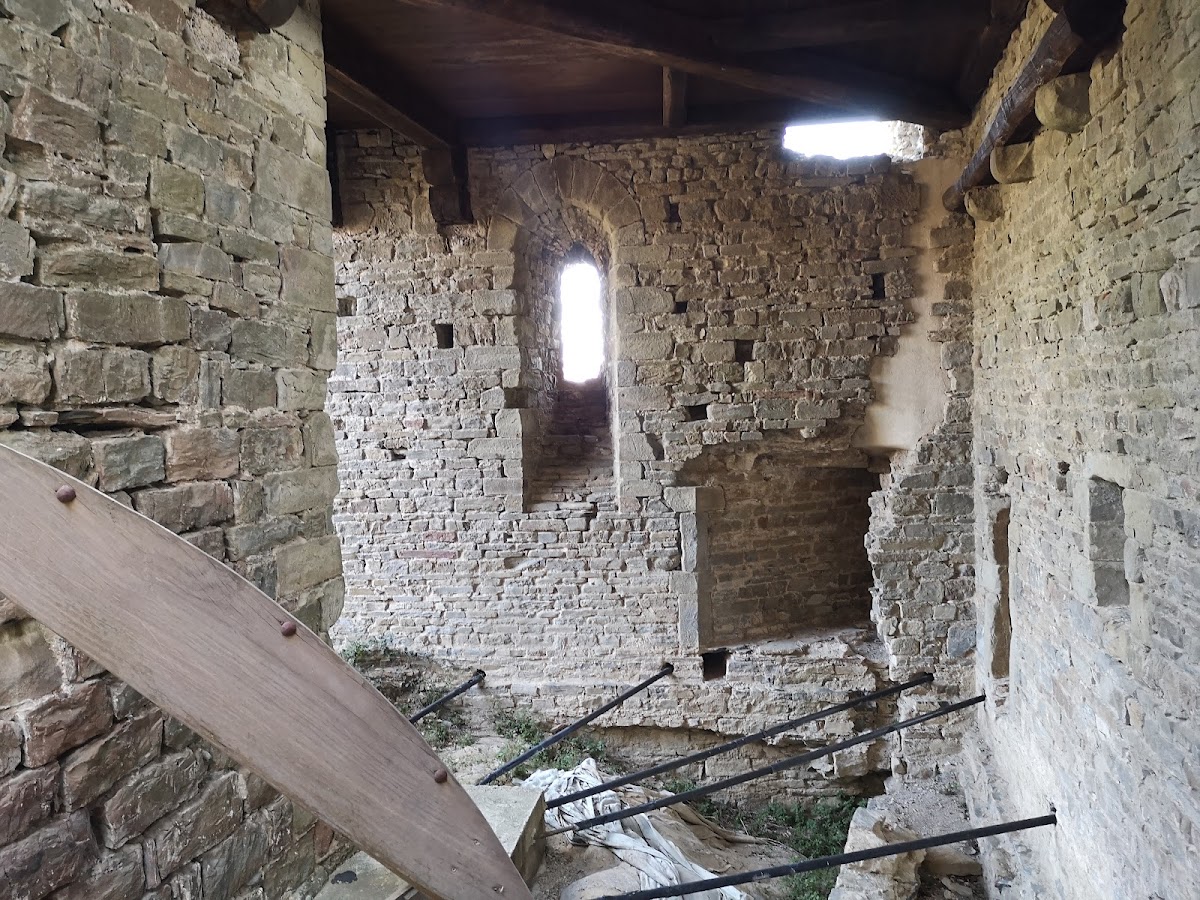
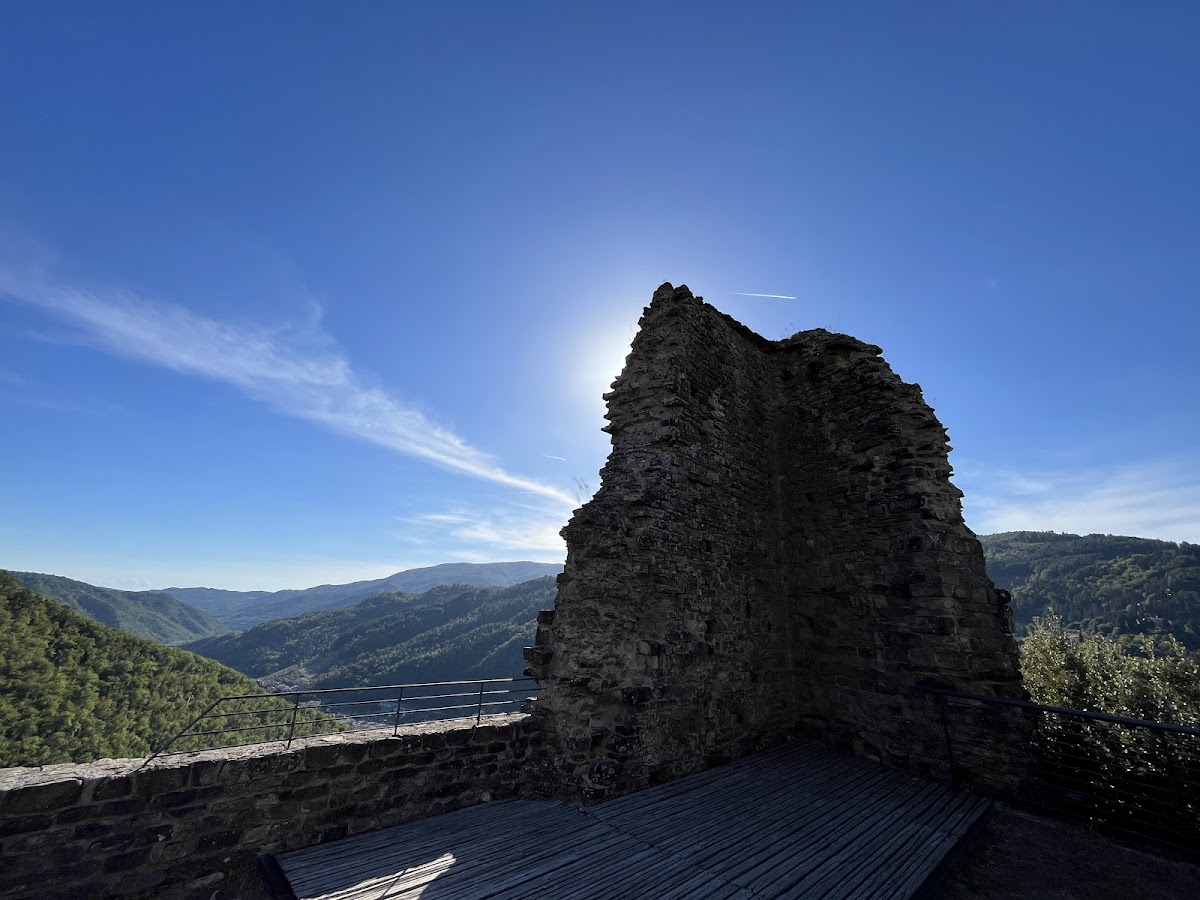
The surviving fortress is a ruin built in regular coursed local sandstone masonry. Its layout preserves two wall circuits and a central keep, with the broader lower enclosure containing an apsed medieval oratory. The Ponte di Cerbaia lies at the foot of the fortress.
Walls and Lower Enclosure
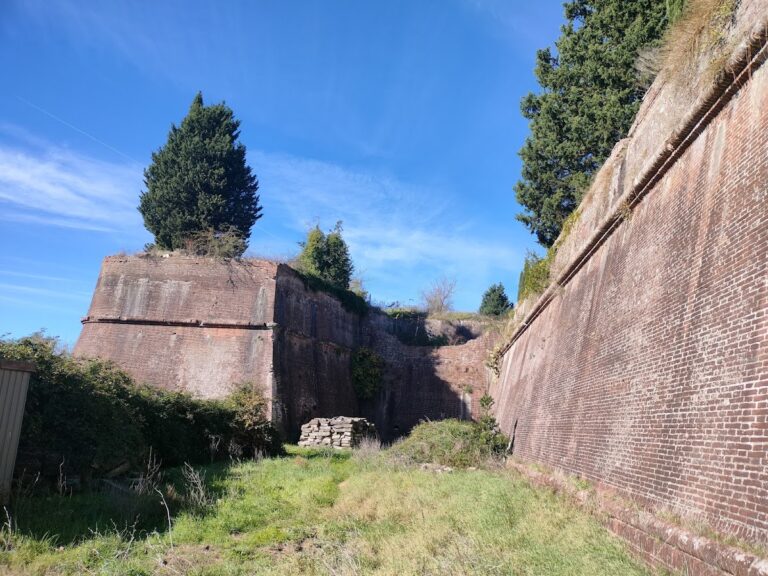
The outer fortified circuit encloses the lower part of the complex. Within it are the remains of a medieval oratory with an apse, the curved end of the building associated with its sacred space. The surviving walls are constructed in local sandstone using regular courses of stone blocks.
Inner Enclosure and Keep
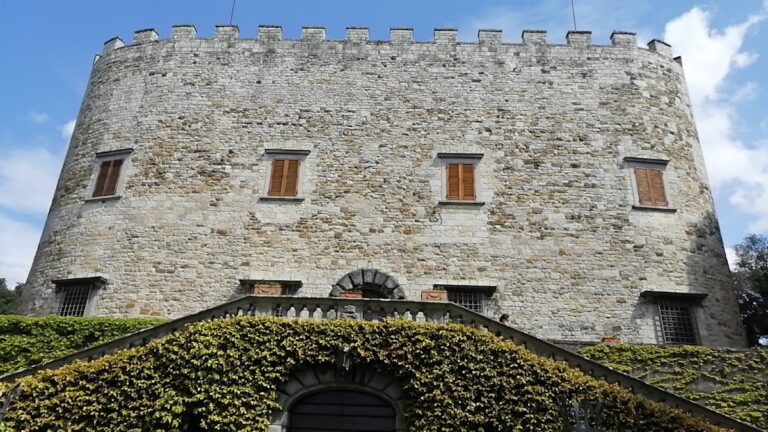
The second enclosure contains a cistern covered by a barrel vault, a curved ceiling formed as a continuous half-cylinder, together with service rooms. At the centre stands the large pentagonal tower known as the Mastio, the principal fortified tower used for defence and the residence or command of the lord. It is substantially collapsed, but surviving elements include window openings and loopholes, narrow openings intended for observation or weapons.
The keep probably underwent rebuilding during the second half of the thirteenth century. Its forms were influenced by the Castello dell’Imperatore in Prato. The central watchtower was formerly much taller, while the remaining sections preserve evidence of the tower’s defensive arrangement.