Château de Nesles: A Thirteenth-Century Fortified Castle in France



Site at a Glance
- Rating
- 4.5
- Popularity
- Low
- Country
- France
- Primary era
- Medieval
- External website
- Open
- Eras represented
- Medieval
- Civilizations
- County of Champagne, French
- Site type
- Military
- Remains
- Castle
On this page8 sections
History
Château de Nesles is a former fortified castle in France, founded around 1226 by Robert III, Count of Dreux, also known as Gasteblé. Built as a seigneurial residence, the principal fortified dwelling and administrative center of a lord’s estate, it followed the highly regularized castle design associated with Philip Augustus and his successors. Its construction was authorized by Thibaud, Count of Champagne.
Foundation and Early Lords
Robert III belonged to the Capetian dynasty, the French royal family from which many medieval princely houses descended, and held the county of Braine. He modeled Château de Nesles on Château de Dourdan, a castle built a few years earlier by Philip Augustus. The new residence combined the status of a noble household with a carefully organized defensive plan.
By marriage, the lordship passed to Gaucher de Châtillon, who held the office of Constable of France, the senior military position in the medieval French monarchy, and already ruled Fère-en-Tardenois. The Châtillon family retained the lordship until about 1370.
Late Medieval Lords and Conflict
Around 1370, Jehan de La Personne, Viscount of Acy and Aulnay, acquired the lordship. He was a wealthy nobleman and a former companion-in-arms of Bertrand du Guesclin, a leading French commander during the later stages of the Hundred Years’ War. La Personne later served as Seneschal of Poitou, a high official responsible for administration and justice in that territory, and in 1385 became the first captain of the Bastille Saint-Antoine.
English forces besieged Château de Nesles from 1421 to 1423 and eventually took it under the terms of a treaty. In 1436, the lordship passed by marriage to Guillaume de Flavy, a military commander and former captain of Compiègne. He was accused at the time of betraying Joan of Arc when she was captured.
The Flavy Murders
Guillaume de Flavy was associated with numerous exactions and had captured Marshal Pierre de Rieux, a senior French military officer and former companion of Joan of Arc. Rieux died at Château de Nesles in 1439 after spending a year in captivity.
In 1449, Flavy was murdered by his wife, Blanche, on the first floor of the great tower. Blanche was imprisoned briefly before marrying Pierre de Louvain, her lover and accomplice. Fourteen years later, Flavy’s brothers pursued and brutally murdered Louvain. Blanche, widowed for a second time, later married Pierre Puy, a councillor of the Parlement of Paris.
Protection and Ownership
The enclosure walls, towers, and keep have been protected as French historic monuments since a decree of 29 May 1922. The farm buildings incorporated into the castle complex are excluded from that protection. The site is classified as a historic monument and remains privately owned.
Remains
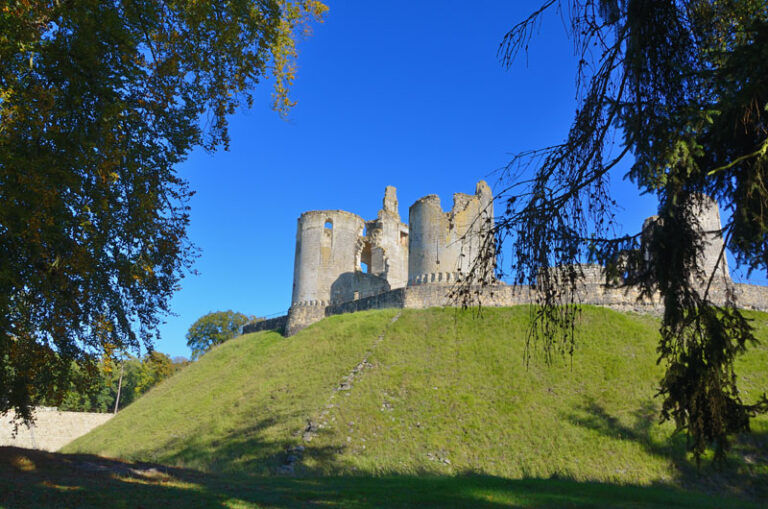
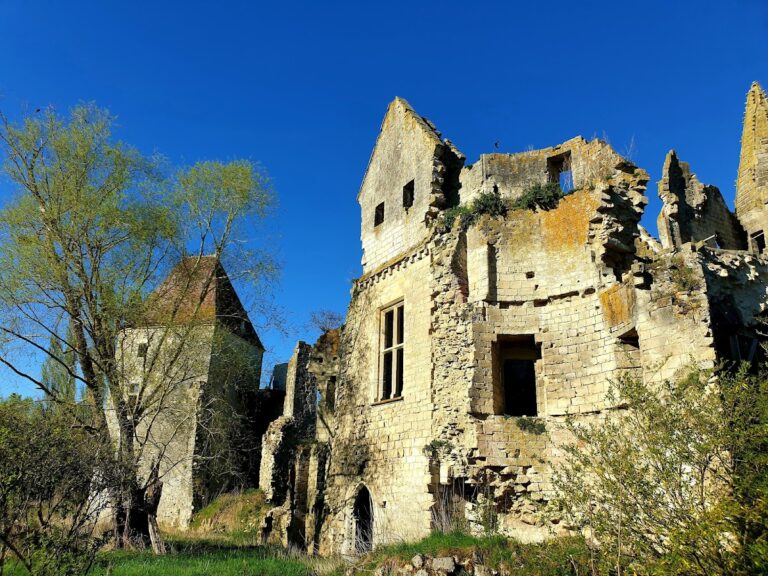
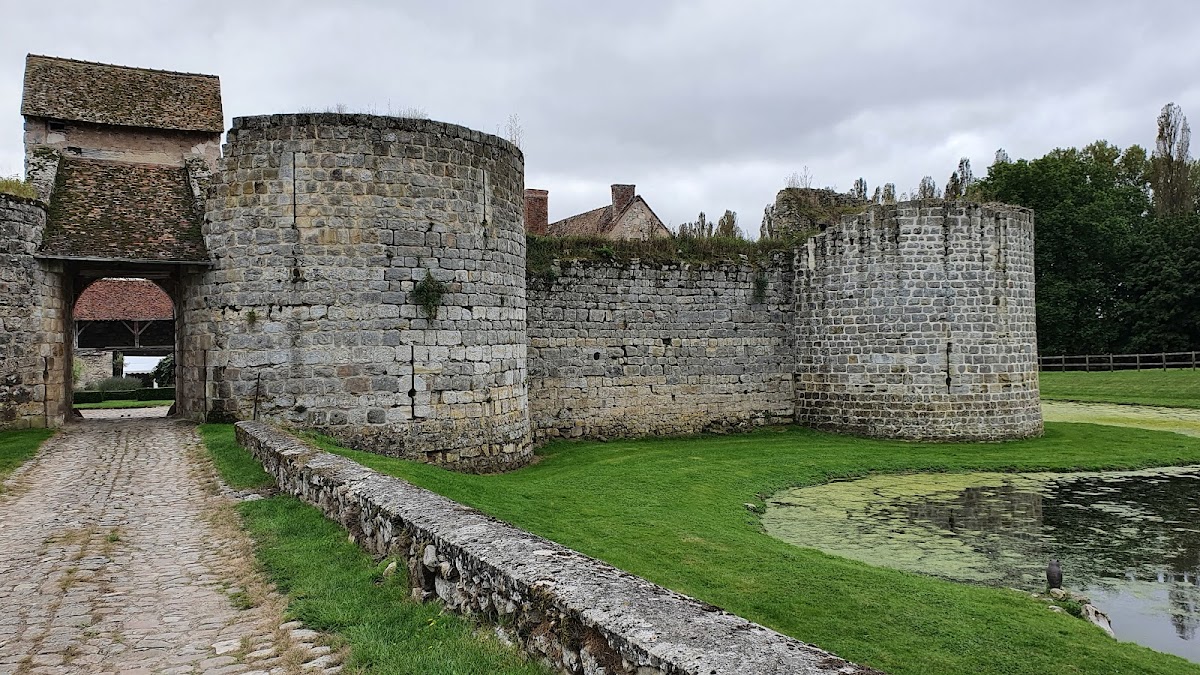
Château de Nesles survives as a thirteenth-century fortified complex whose plan closely follows Château de Dourdan. Its design emphasizes symmetry, regularity, and an organized defensive system characteristic of the architectural approach later called Philippian. A quadrangular enclosure is arranged around an interior space, with the principal defensive elements distributed in a notably regular pattern.
Enclosure and Towers
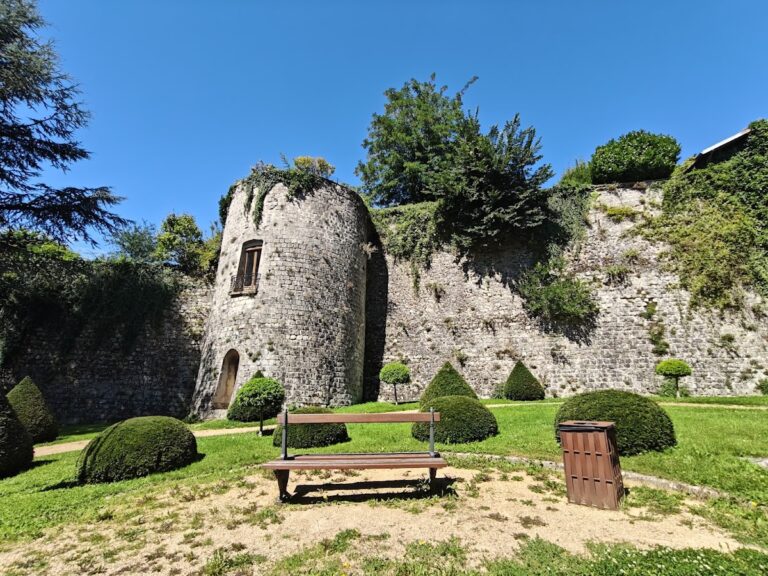
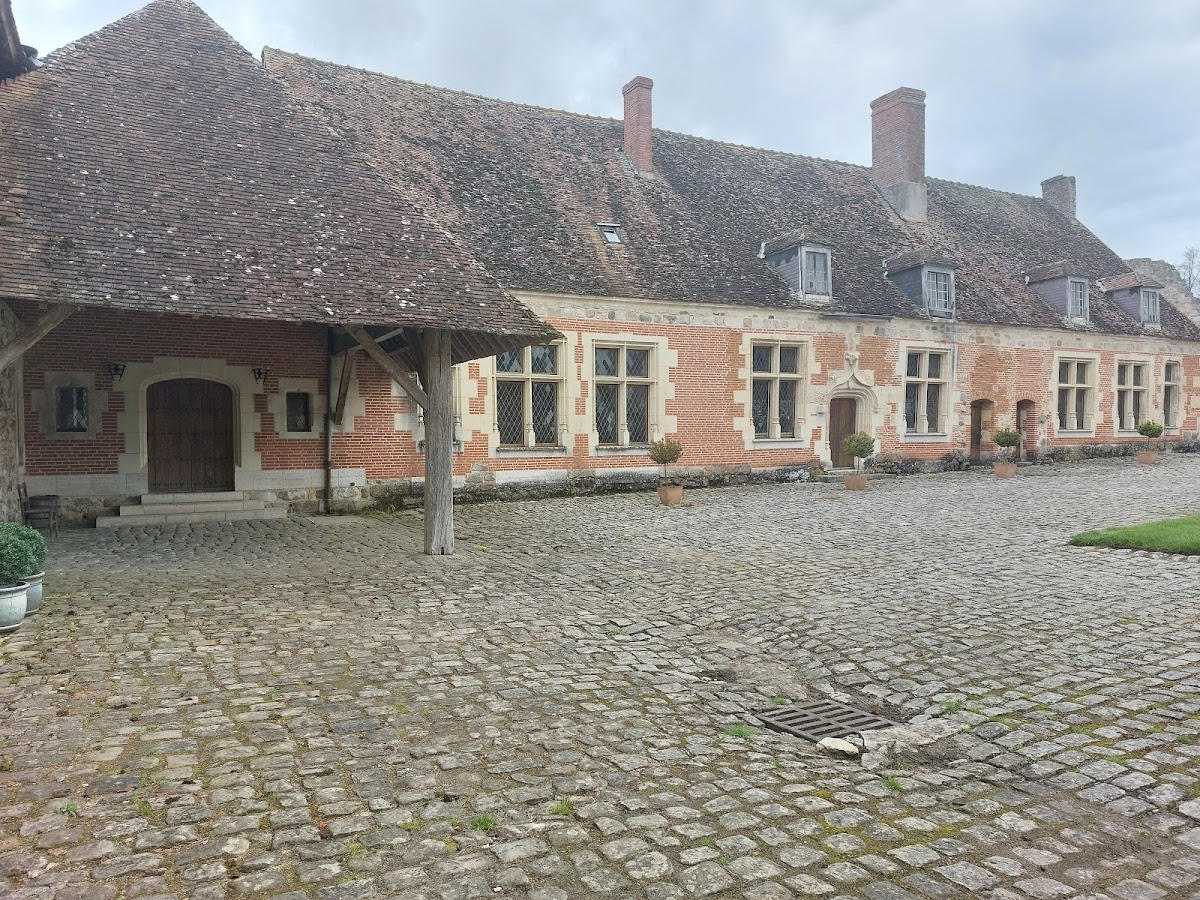
The quadrangular enclosure is flanked by eight towers of identical dimensions. The entrance passes through the northern curtain wall, the fortified wall linking the towers, and is positioned between two of them. Farm buildings are integrated into the enclosure, although they do not form part of the protected historic-monument classification.
Master Tower
A large cylindrical master tower, or keep, stands separately at the northeastern corner of the complex. It rises approximately 30 metres and has walls about 5 metres thick. Its scale and isolated position form a distinct element within the otherwise regular enclosure.