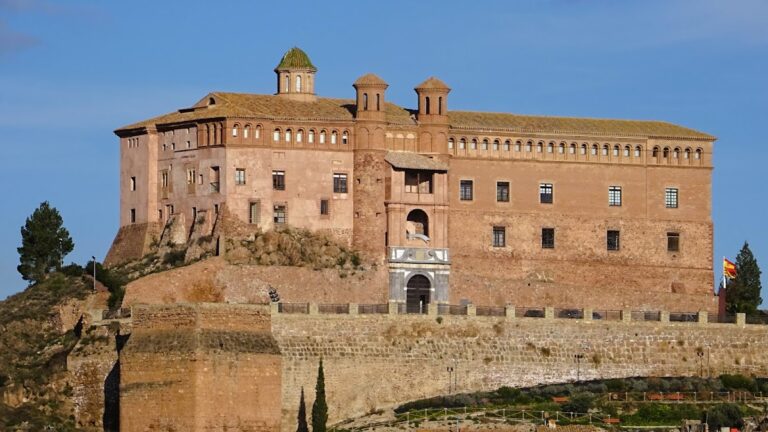
Doña Martina Castle: A Muslim Citadel in Calatayud, Spain


Site at a Glance
- Rating
- 4.2
- Popularity
- Low
- Country
- Spain
- Primary era
- Medieval
- External website
- Open
- Eras represented
- Medieval
- Civilizations
- Crown of Aragon, Taifa Kingdoms, Taifa of Zaragoza, Umayyad
- Site type
- Military
- Remains
- Citadel
On this page7 sections
History
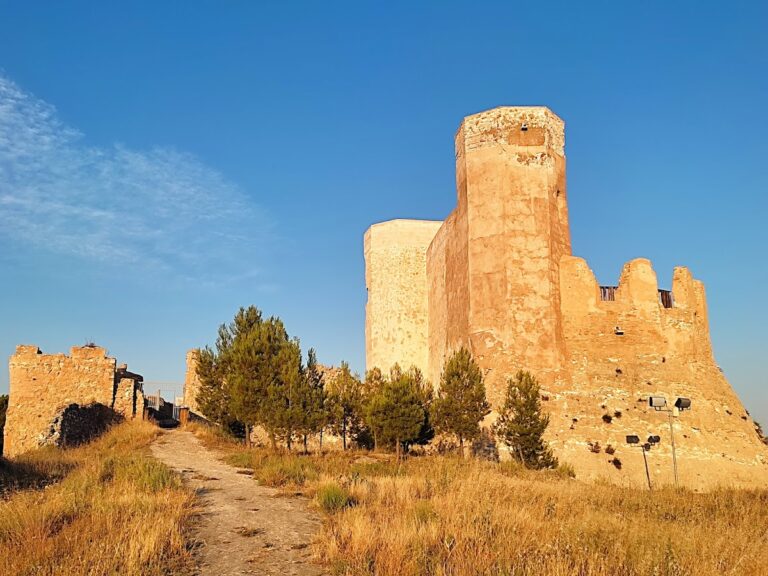
Doña Martina Castle is a Muslim fortress in Spain, located at Calatayud, whose origins are associated with the eleventh century and whose surviving remains correspond to the fourteenth century. Its broader construction history extends from the ninth to the fourteenth centuries. Also known as the Jewish Quarter Castle, it served as an alcazaba, a fortified citadel that functioned as a city’s main defensive and administrative stronghold.
Foundation and the Upper March
Tradition places the foundation of Calatayud in 716, when Ayyub ben Habib al Lajmi, an early Muslim governor of al-Andalus, established the settlement at the location now occupied by Doña Martina Castle. During the Emirate of Cordoba, Calatayud belonged to the Upper March, the northeastern frontier region administered from Zaragoza. The city served as the administrative center of a district that included Daroca.
In 862, Muhammad I, the Umayyad emir of Córdoba, commissioned the Tujibid military leader Abderramán ben Abdelaziz el Tuyibí to enlarge Calatayud’s defenses. The work responded to the threat posed by the Banu Qasi, a powerful Muslimized local dynasty that controlled territory in the Ebro valley. Calatayud therefore formed part of a frontier system in which fortified settlements supported both administration and military defense.
Caliphate, Taifa, and Almoravid Rule
Calatayud was taken by Abd al-Rahman III in 937 after it joined the Tujibid rebellion of Zaragoza against the caliphate. By 1031, the city had become one of the principal centers of the taifa kingdom of Zaragoza. A taifa was an independent or semi-independent Muslim kingdom that emerged after the collapse of the Caliphate of Cordoba.
The city experienced economic and cultural prosperity for approximately the period up to 1110. Around 1050, Muhammad ben Hud led a brief phase of semi-independence in Calatayud, during which the city issued its own coinage and declared itself an independent taifa. In 1110, the Almoravids, a North African Muslim dynasty that established control over much of Muslim-ruled Iberia, took control of the peninsula while attempting to contain the Christian reconquest.
Alfonso I of Aragon besieged Calatayud in 1120. The city surrendered after the Almoravids were defeated at the Battle of Cutanda. Doña Martina Castle later formed one of five castles enclosing Calatayud’s upper city. These strongholds were linked by nearly four kilometres of walls, creating a fortified defensive system around the elevated urban area.
Spain declared Doña Martina Castle a Property of Cultural Interest on 17 April 2006, with the declaration published on 22 May that year. This protection recognizes the castle as part of Calatayud’s historic fortified landscape.
Remains
Doña Martina Castle occupies the center of Calatayud’s upper city, south of the Castle of the Mocha Tower and west of the Clock Castle. Its elongated plan measures approximately 140 metres from end to end. Among the five castles in the upper-city enclosure, it is distinguished by its construction in large ashlar blocks, meaning large, carefully cut stone units.
Fortified Citadel
The castle’s form reflects its role as an alcazaba within the upper-city defenses. Its elongated enclosure was integrated into the broader system of walls that connected Calatayud’s five castles. The surviving fabric combines substantial stone construction with defensive elements that shaped the western and eastern sides of the site.
Western Wall
The western front retains a powerful wall built with a timber framework using construction techniques associated with Yemen. Three substantial buttresses reinforce the wall, adding strength to its surviving defensive structure. The use of large ashlar blocks elsewhere in the castle distinguishes its masonry from that of the other castles in the fortified enclosure.
Eastern Tower and Wall
At the eastern end, the remains include the base of a tower whose height has been considerably reduced. From this area, the beginning of a wall descends toward the former Valencia Gate through the Rúa ravine. Together, the tower base and descending wall preserve part of the castle’s connection with the lower defensive approaches to Calatayud.