Castle of Roppolo: A Medieval Hilltop Fortress and Country Residence in Italy


Site at a Glance
- Rating
- 4.3
- Popularity
- Low
- Country
- Italy
- Primary era
- Medieval
- External website
- Open
- Eras represented
- Classical, Medieval, Modern
- Civilizations
- Holy Roman Empire, Kingdom of Sardinia, Roman
- Site type
- Domestic
- Remains
- Castle
On this page6 sections
History
Castle of Roppolo is a hilltop fortress in Italy whose present building incorporates an earlier fortification dating to the 3rd century AD. Its strategic position helped sustain its importance through the medieval conflicts between the Guelphs, who generally supported the papacy, and the Ghibellines, who generally supported the Holy Roman Emperor.
From early fortification to medieval castle
The earlier fortification provided the foundation for the building that stands today. After passing through several local noble families, the site became the property of the Bichieri family of Vercelli in 1225. The Bichieri transformed the neglected hilltop defence into a medieval castle, which served their interests during the struggles between the Guelphs and Ghibellines.
In 1315, the castle and the nearby village passed to the Visconti, a powerful dynasty associated with Milan and northern Italian politics. Under their control, the building was used as a noble residence. The territory was later conquered by Facino Cane, a professional military commander who led troops under contract for an Italian state or ruler, while he was serving the Marquisate of Monferrat.
Savoy rule and the Valperga dispute
Roppolo returned to Savoy rule in 1427 and later became the domain of the Valperga counts. A tradition connected with this period concerns Bernardo of Mazzè. After losing a dispute with Ludovico Valperga of Masino in 1459, Bernardo was reportedly placed in armor and walled up alive inside the castle. The tradition gained a possible physical corroboration when restoration work in the 20th century uncovered the remains of a man in armor behind a wall.
The alleged killing contributed to the condemnation of the Valperga family of Caluso-Masino, a branch of the Valperga family. They were required to return the castle and the territory of Roppolo to the Savoy family. The legal dispute continued until 1630, when the Caluso-Masino branch became extinct and Savoy regained full possession of the castle and village.
Later ownership and changing functions
In 1632, during the French invasions, the castle served as a stronghold for Thomas Francis of Savoy, a member of the Savoy ruling house. After France allied with Savoy in 1640, Roppolo was ceded to Guido Villa, Marquis of Cigliano, and Giandomenico Doria of Ciriè.
Descendants of the Valperga family regained ownership of the village and castle in 1730. The family later sold the property in 1837 to Ignazio Anselmi, a wealthy landowner facing financial decline. Anselmi renovated the medieval fortress and converted it into an elegant country residence.
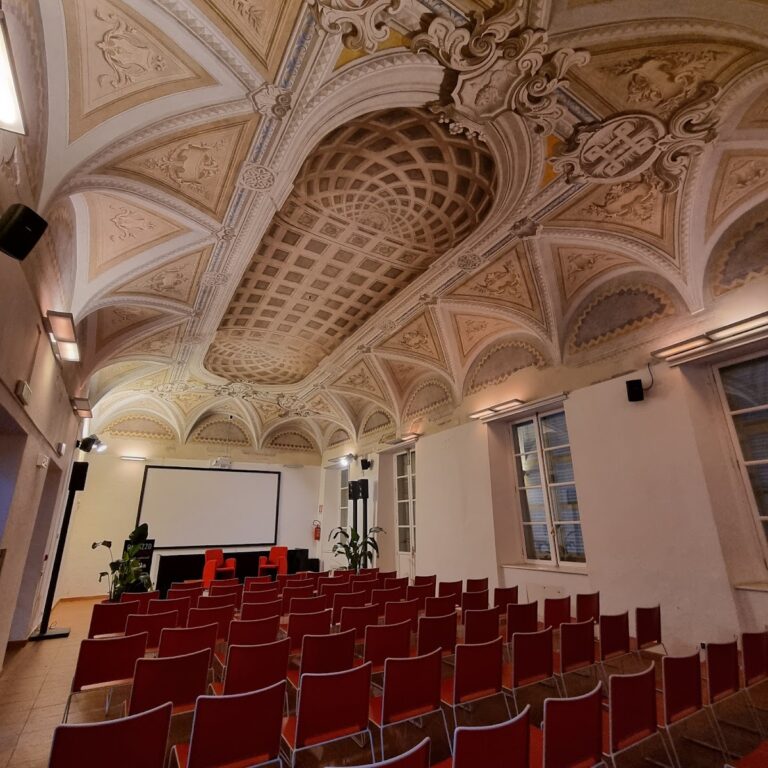
During the Risorgimento, the 19th-century movement that led to the political unification of Italy, Anselmi transferred the property to the senator and general Gustavo Mazè de la Roche. The castle subsequently passed to the Chio family and then to the Gruner family. In the 1980s, the Moransengo family converted the building into a hotel. It also housed the Enoteca Regionale della Serra, a regional institution devoted to presenting local wines and other products, until that institution moved elsewhere in 2015. The Saletta family purchased the castle in 2015 after a period of closure, and it reopened to the public in May 2018.
Remains
Hilltop castle and surviving fabric
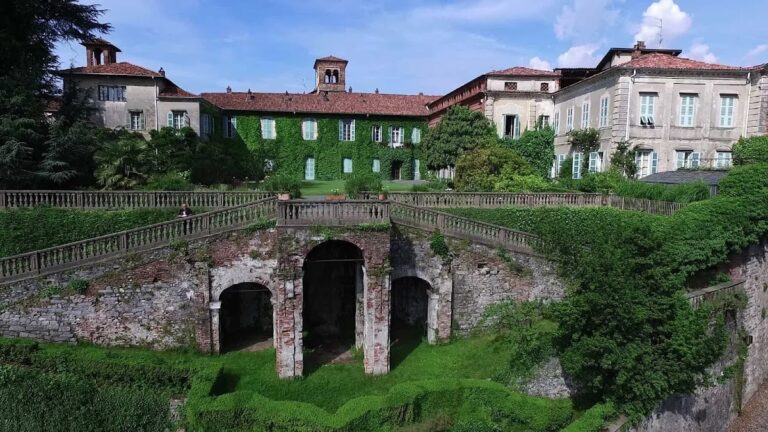
The castle occupies a strategically positioned hilltop, and its present form preserves the foundation of the earlier fortification dating to the 3rd century AD. The medieval defensive complex created by the Bichieri family in 1225 forms the historical core of the building.
A renovation in the 19th century altered the medieval fortress into a country residence. This domestic character is the form in which the building has been preserved. The site also retains the archaeological element associated with the story of Bernardo of Mazzè, since restoration work in the 20th century reportedly revealed the remains of a man in armor behind a wall. The find was presented as possible confirmation of the tradition surrounding his death.