Burg Haag: A Medieval Castle Ruin in Upper Bavaria


Site at a Glance
- Rating
- 4.5
- Popularity
- Low
- Country
- Germany
- Primary era
- Medieval
- External website
- Open
- Eras represented
- Medieval, Early Modern
- Civilizations
- Holy Roman Empire
- Site type
- Military
- Remains
- Castle
On this page11 sections
History
Burg Haag, also called Schloss Haag, is a medieval castle ruin in Haag, Germany, probably built in the twelfth century by the noble family de Haga, or vom Hage. It developed as a lowland castle associated with the County of Haag and became the seat of successive noble families who ruled the surrounding lordship.
Medieval noble families
Through inheritance or sale, the castle passed to the noble Gurren family of Kirchdorf. The family thereafter took the name Gurren of Haag. The lordship later came to the Fraunberg family, a Bavarian noble and ministerial dynasty whose members held administrative and military authority while serving higher rulers and nobles. The Fraunbergs governed Haag until the family died out in 1566.
The County of Haag
In 1509, the lordship was raised to an imperial county. This status meant that its ruler held the territory directly from the emperor of the Holy Roman Empire rather than from a regional duke. Emperor Maximilian II later granted the county to the dukes of Bavaria. Under Bavarian rule, Catholic authority was restored after the Reformation, the sixteenth-century religious movement that brought major changes to Western Christianity.
Dismantling and modern preservation
The castle began to be dismantled piece by piece around 1804, during the Napoleonic period. Much of the formerly large complex was lost, but the core castle, its tower, and portions of the defensive structures survived as ruins.
From 1981 to 2005, the castle tower housed a local-history museum operated by the Haag Historical Society. Structural defects led to its closure in 2005, and the tower reopened in July 2016 without the museum. Burg Haag is protected as an architectural monument of Haag and is also recorded as an archaeological monument covering subterranean medieval and early-modern remains in the area of Schloss Haag and its predecessor buildings.
Remains
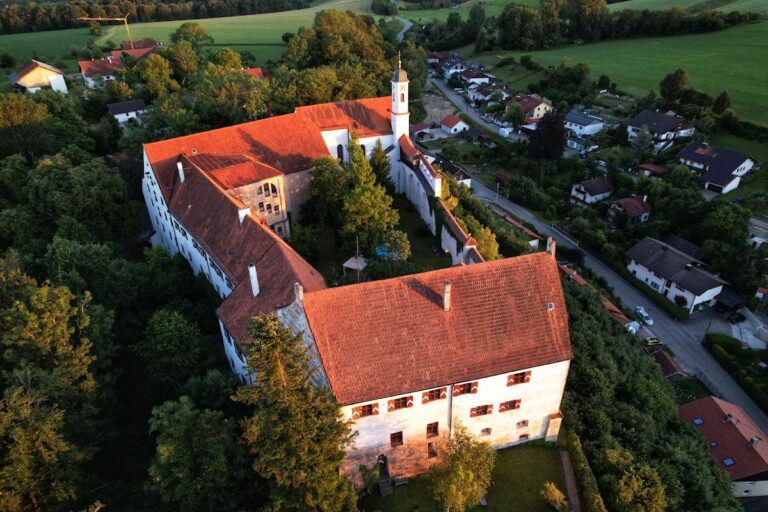
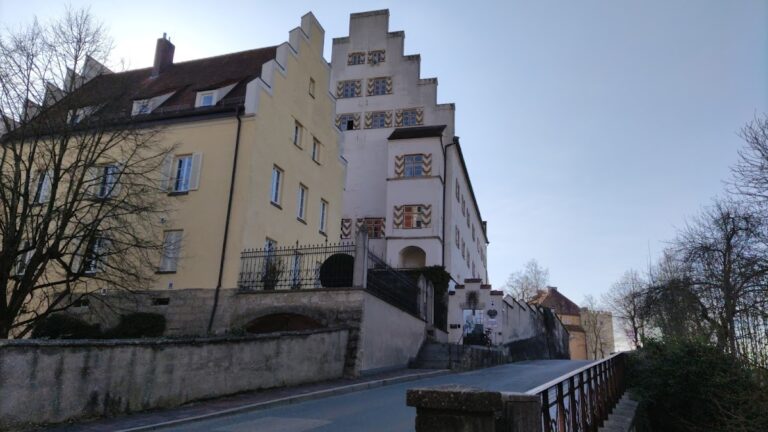
The surviving castle complex includes the core castle, a circular curtain wall, parts of an outer defensive enclosure, an outer bailey, a gate tower, and the prominent 42-metre-high residential tower known as the Schlossturm. A residential tower was designed to combine accommodation with defense. Together, these elements preserve the main defensive and residential organization of the former lowland castle.
Residential and defensive structures
Schlossturm
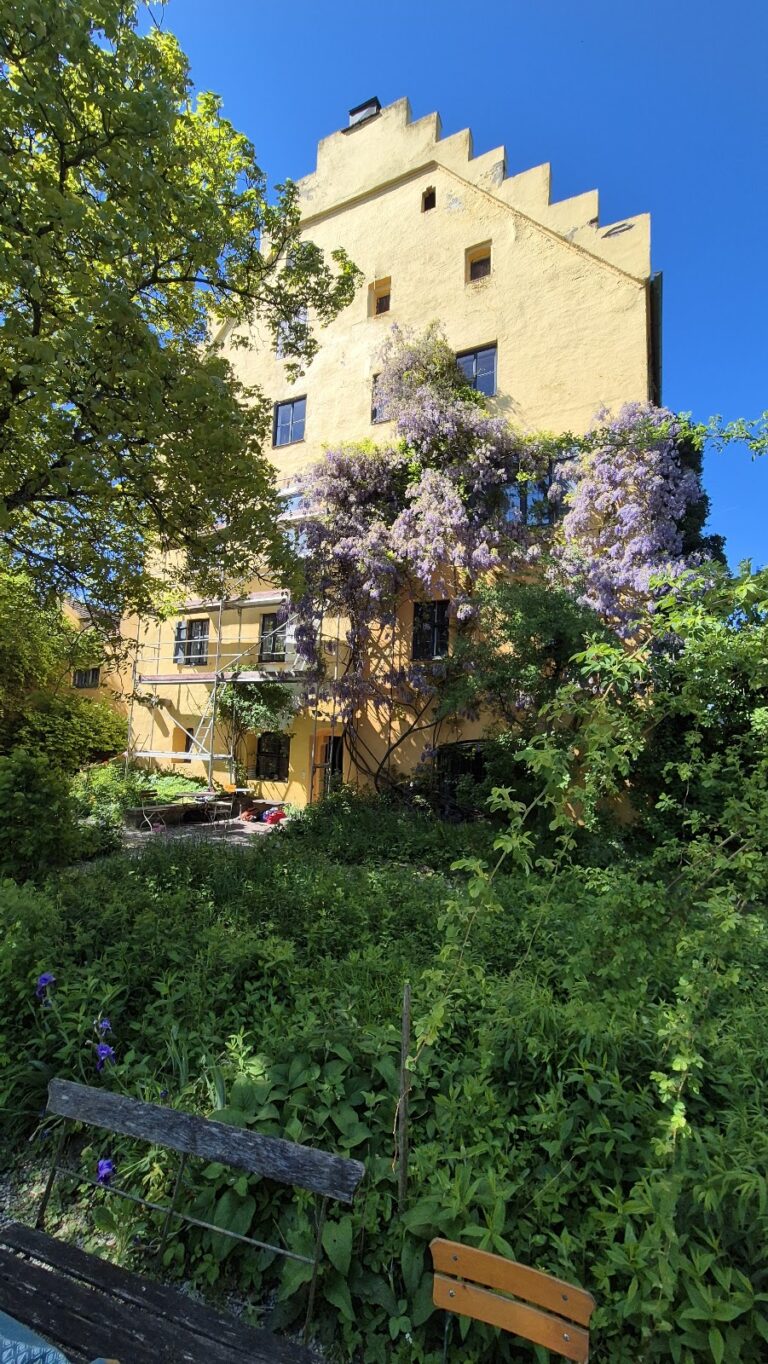
The lower part of the residential tower dates from around 1200 and was raised several times afterward. It has a square plan measuring 12 metres on each side, walls 3 metres thick, and an elevated entrance 7 metres above ground level. The upper two storeys contain a fireplace and small corner turrets dating from the fifteenth century. The tower survives as the most prominent standing element of the ruin.
Curtain wall and outer defenses
A circular curtain wall survives near the Schlossturm, together with sections of the outer defensive enclosure. The complex also retains an outer bailey and a gate tower. These structures formed successive defensive areas around the core castle, while the moat was used as a game park during the Baroque period.
Access structures and later landscape features
External staircase
A large external staircase dated 1748 remains part of the castle complex. Its survival reflects a later phase in the arrangement and use of the buildings.
Lion Bridge
The Lion Bridge also survives among the later features of Burg Haag. It belongs to the physical remains of the castle complex alongside the staircase, moat, tower, and defensive walls.
Nearby sites