Castello di Santa Margherita Ligure: A Genoese Coastal Fortress in Italy


Site at a Glance
- Rating
- 4.5
- Popularity
- Low
- Country
- Italy
- Primary era
- Early Modern
- Eras represented
- Early Modern
- Civilizations
- Genoese
- Site type
- Military
- Remains
- Fort
On this page9 sections
History
Castello di Santa Margherita Ligure is a sixteenth-century defensive fortress in Italy, commissioned by the Republic of Genoa to protect Santa Margherita Ligure and the western coast of the Tigullio from Barbary pirate raids. Construction began in 1550 and was completed by September of the same year. The fortress formed part of Genoa’s coastal defenses during a period when maritime raiders and privateers operating from North African ports threatened Mediterranean communities.
Genoese Foundation and Military Use
The Genoese Senate authorized the fortress in 1550, and Antonio de Càrabo designed it. He also designed the Castello di Rapallo in 1551. Structural changes and improvements to the weapons continued until the early seventeenth century, while the fortress remained in military use from the sixteenth through the eighteenth centuries.
Over time, the fortress served several successive governments and authorities, including the Republic of Genoa, the Ligurian Republic, the Kingdom of Sardinia, the Kingdom of Italy, and the municipality of Santa Margherita Ligure. The Ligurian Republic was a short-lived state created during the Napoleonic period, while the Kingdom of Sardinia and the Kingdom of Italy represented later political phases in the building’s history.
Loss of Military Role
As pirate attacks ceased during the eighteenth century, the fortress lost its strategic importance. Its defensive function ended during that century, after which the building received repair and maintenance rather than major military development.
Threats, Restoration, and Memorial Use
During the nineteenth century, the fortress twice faced proposals for demolition. The first followed Santa Margherita Ligure’s separation from Rapallo, when the site was considered for a new municipal building. A later proposal sought to enlarge the adjacent Calata Vittorio Emanuele, a waterfront quay or landing place.
The building was restored after the First World War and dedicated to the memory of those who died in the conflict. The municipality of Santa Margherita Ligure is its current owner, and the fortress remains in good condition.
Remains
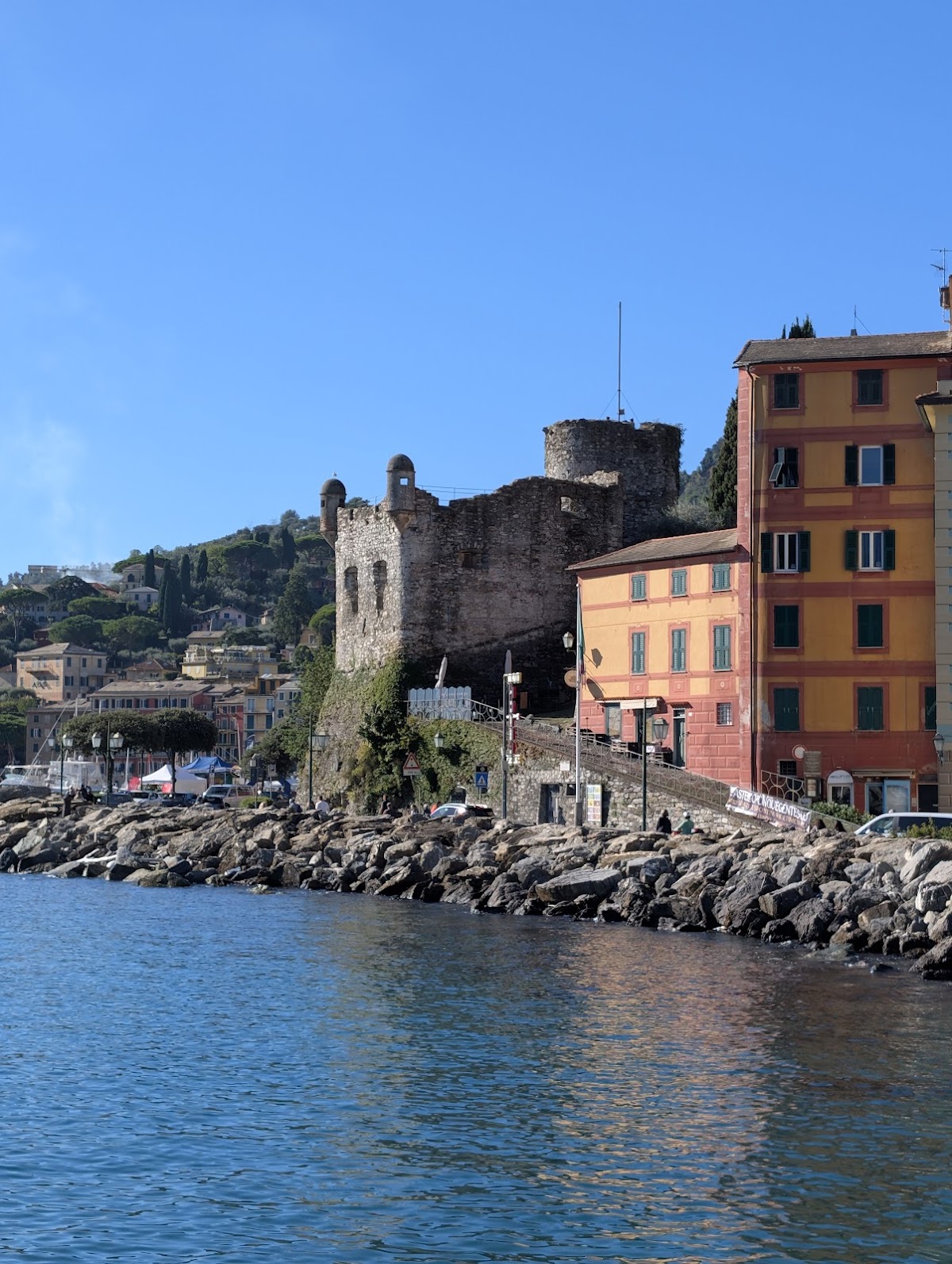
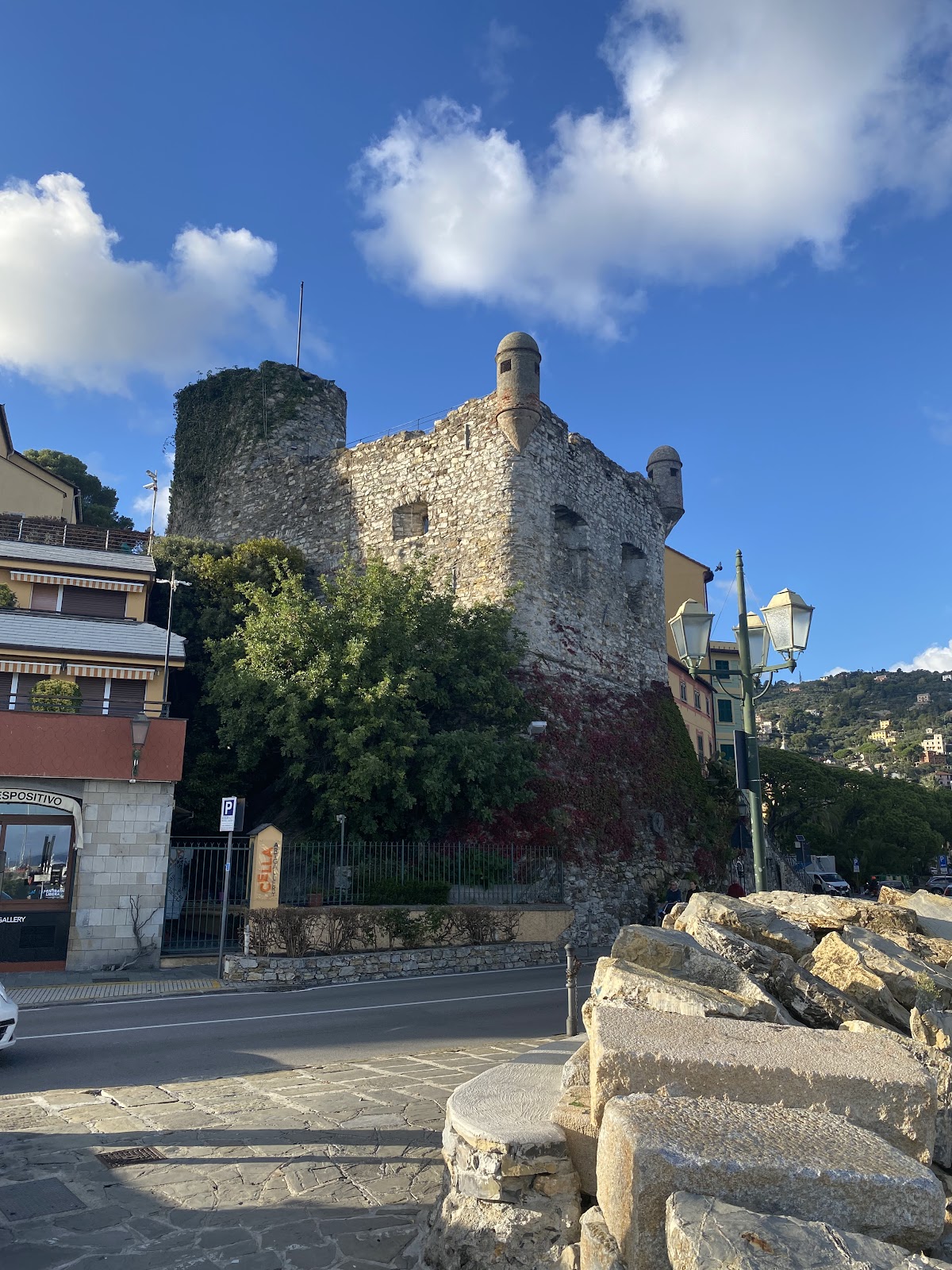
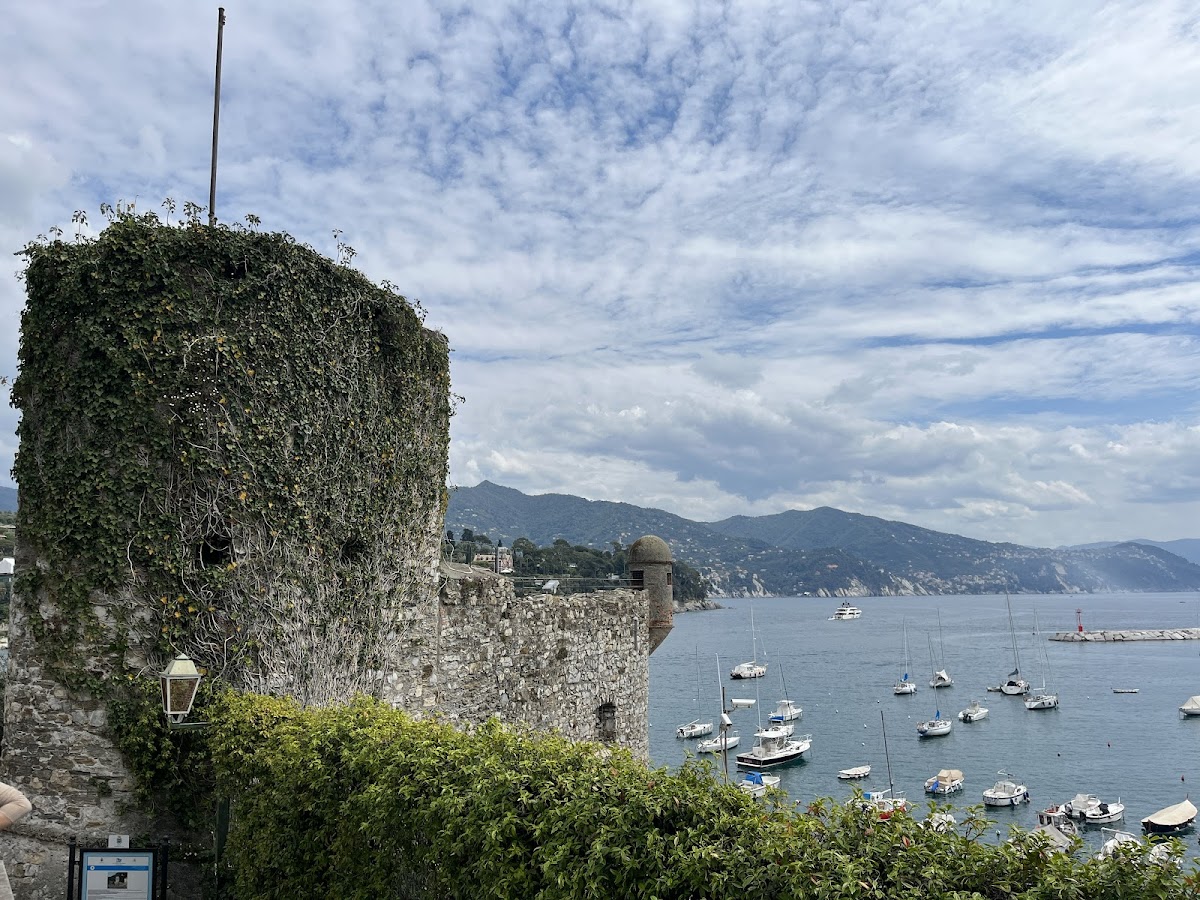
Castello di Santa Margherita Ligure survives as a compact coastal fortress at the foot of the hill occupied by Villa Durazzo-Centurione. It originally stood close to the sea, and its surviving defensive arrangement includes a fortified tower and a sentry box. The fortress is described as intact and in good preservation.
Defensive Structures
Fortified Tower
The fortified tower forms part of the sixteenth-century defensive complex. It survives within the fortress as one of its principal military elements, reflecting the building’s original role in protecting the coast.
Sentry Box
A sentry box is also preserved within the site. This small defensive feature belongs to the fortress’s system of observation and guard, alongside the tower.
War Memorial
A plaque commemorating those who died in the First World War is associated with the fortress. It reflects the building’s later memorial function after its postwar restoration.