Ostrężnik Castle: A Medieval Fortress Ruin in Poland



Site at a Glance
- Rating
- 4.3
- Popularity
- Medium
- Country
- Poland
- Primary era
- Medieval
- External website
- Open
- Eras represented
- Medieval
- Civilizations
- Kingdom of Poland
- Site type
- Military
- Remains
- Castle
On this page8 sections
History
Ostrężnik Castle is a medieval castle ruin near Złoty Potok in Poland, built in the early 14th century as part of the Eagle’s Nests, a chain of fortified sites on limestone heights in the Krakow–Częstochowa Jura. These fortifications secured the boundary between the Kingdom of Poland and the Holy Roman Empire, while the area now in the Silesian Voivodeship historically belonged to Lesser Poland.
Foundation and uncertain purpose
Archaeological investigations carried out between 2000 and 2003 indicate that construction probably began at the initiative of Jan Muskata, the medieval Bishop of Krakow, who also held the office of starosta, a senior royal or territorial administrative position. The site contains piles of stone prepared for building, while the lack of later archaeological layers suggests that the castle may never have been completed or may have been occupied for only a short time.
Ostrężnik’s original function remains uncertain. It may have served as a prison for powerful political opponents of the bishop. Another possibility is that it was occupied by robber knights. In either case, the archaeological evidence indicates a brief period of use followed by decline or destruction.
Destruction and later traditions
The only known historical reference appears in the Częstochowa registers, which mention a ruin at Ostrężnik described as a tower or castle. The circumstances and date of its destruction are unknown. Local tradition later portrayed the site as the refuge of robber knights who stored raided treasure there. Other legends describe an underground passage linking Ostrężnik with the distant castle at Olsztyn and claim that the robbers and their loot were buried in Ostrężnik Cave.
A further tradition connects the castle with the January Uprising, a major Polish insurrection against Russian rule that began in 1863. After the Battle of Śmiertny Dąb on 9 July, fought between insurgents and Russian troops about 10 kilometres northeast of Ostrężnik, the insurgents were allegedly said to have hidden their unit documents and war chest in the castle.
Remains
Fortified layout
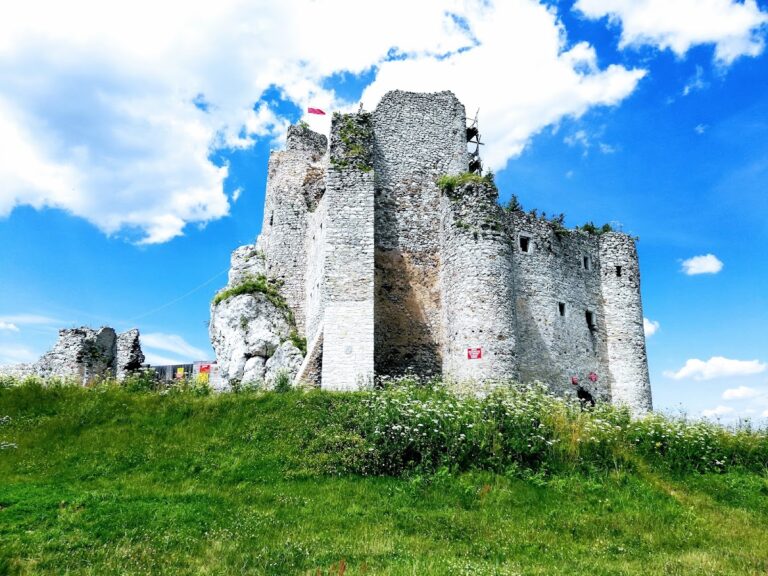
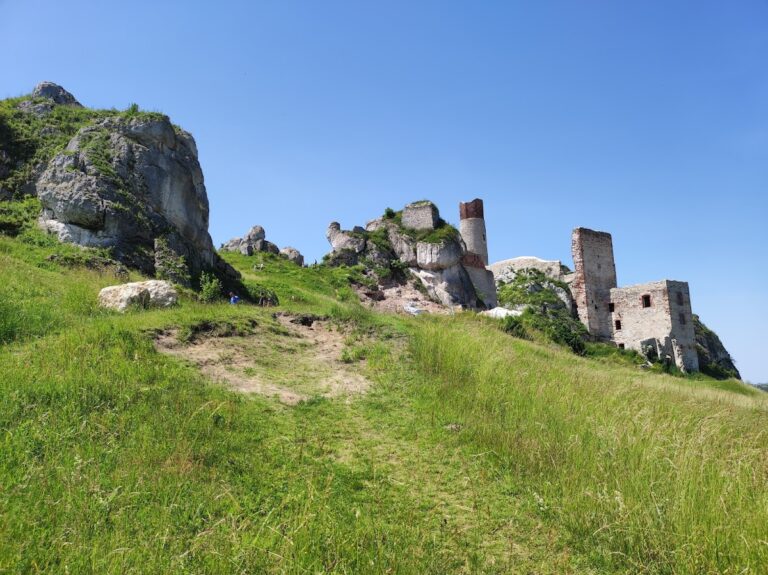
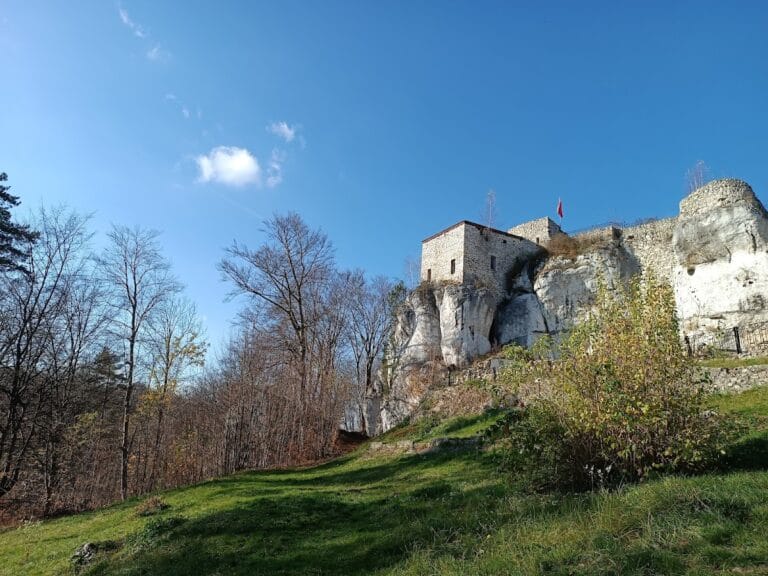
The surviving plan indicates a complex formed by an upper castle, a lower castle, and two outer baileys, all protected by a deep moat. The upper castle occupied a steep limestone rock, while the lower ground on the southern and eastern sides allowed the development of associated defensive and service areas. Forest now covers the ruins, with fragments of walls and earthworks remaining above the surrounding terrain.
Upper castle
The upper castle had a regular plan covering approximately 1,200 square metres. Its enclosing walls measured about 144 metres in length and were approximately 2 metres thick. A rectangular residential building stood in the northwestern part of the courtyard, and a quadrangular tower projected beyond the wall line on the southern side. The surviving fabric consists chiefly of the supporting limestone rock and wall fragments no more than 1 metre high, probably including parts of a defensive tower, the residential building, and a gate tower.
Lower castle and outer baileys
The lower castle occupied the gentler southern and eastern sides of the rock. It covered approximately 2,000 square metres, although some estimates place its area at up to about 7,000 square metres, and probably served an economic or service function. A stone wall and earth ramparts enclosed it, with a palisade, a defensive fence made from stakes or posts, forming part of the protection. These defenses separated the individual outer baileys, whose earth ramparts remain visible around the site.
Ostrężnik Cave
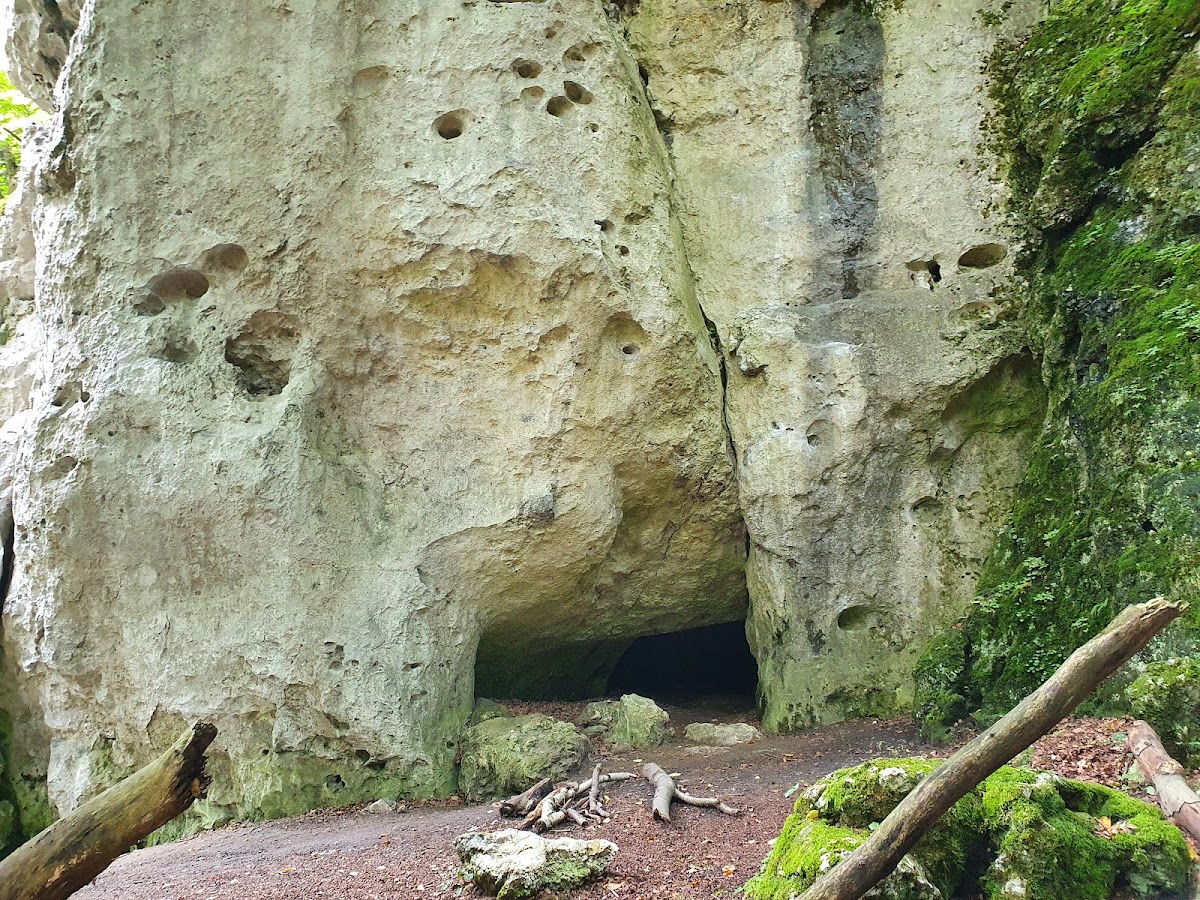
Ostrężnik Cave lies within the limestone rock supporting the upper castle. Its passages extend for approximately 90 metres, making the cave a physical part of the rocky setting in which the fortress was built. Local traditions associate it with the supposed burial of robber knights and the treasure taken during their raids.