Alcalá del Júcar Castle: An Almohad Fortress in Spain


Site at a Glance
- Rating
- 4.4
- Popularity
- Medium
- Country
- Spain
- Primary era
- Medieval
- External website
- Open
- Eras represented
- Medieval
- Civilizations
- Almohad
- Site type
- Military
- Remains
- Castle
On this page6 sections
History
Alcalá del Júcar Castle is a fortress of Almohad origin in Spain, dating from the twelfth and thirteenth centuries. The Almohads were a medieval Islamic dynasty and religious-political movement that ruled parts of North Africa and the Iberian Peninsula during this period. Earlier Iberian, Roman, Arab, and Christian occupations also shaped the history of the castle and its surrounding lands.
From Almohad rule to Castilian control
Alfonso VIII of Castile conquered the Júcar area around 1213. His reign included major Christian conquests in central and eastern parts of the Iberian Peninsula, and the castle subsequently passed into Christian hands. In a later phase, it belonged to the Marquisate of Villena, a major territorial lordship in medieval and early-modern Castile governed by a marquis.
Legend and modern protection
The castle is linked with the local legend of Zulema and Garadén. In one version, Zulema is a Christian princess pursued by Garadén, who kills herself by leaping into the void while remaining faithful to her religion. Another version presents her as a Muslim woman who falls in love with a Christian knight. The couple flee from the anger of her father, Garadén, and settle where the nearby village of Zulema later stands. Zulema and Garadén are legendary figures associated with the castle rather than established historical individuals.
The castle and the town of Alcalá del Júcar are protected as a historic-artistic site. The town received this designation through Royal Decree 2335/1982 of 30 July. The castle also benefits from the general protection established by the decree of 22 April 1949 and Spain’s Historical Heritage Law 16/1985. It has been restored, remains municipally owned, and serves a tourist function.
Remains
Setting and layout
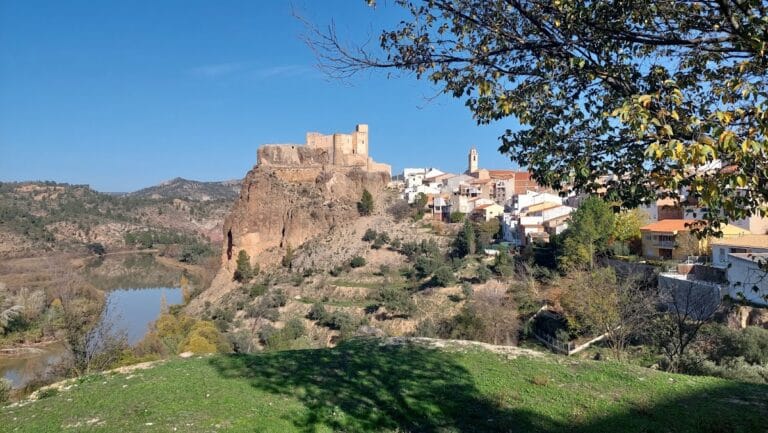
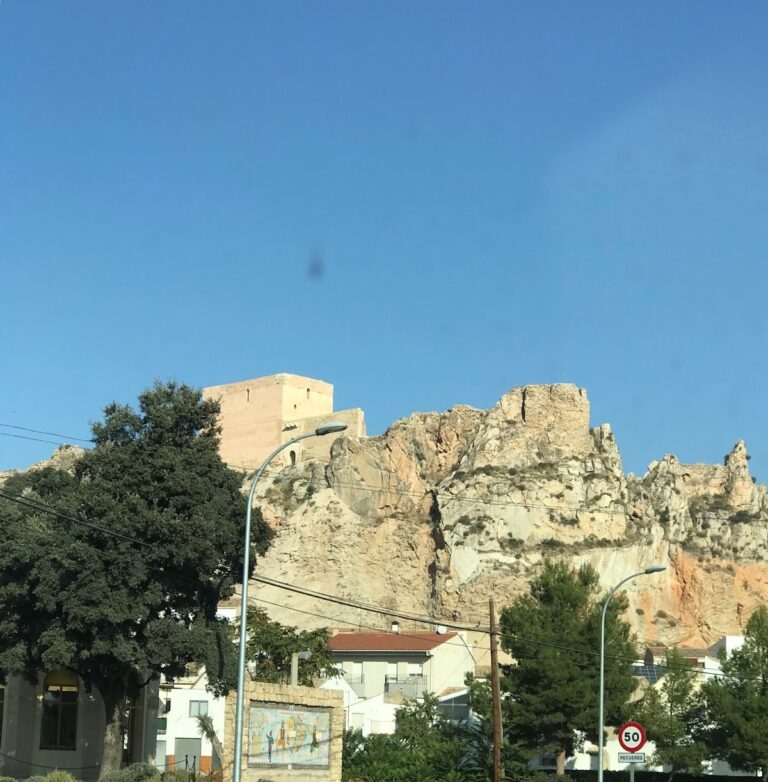
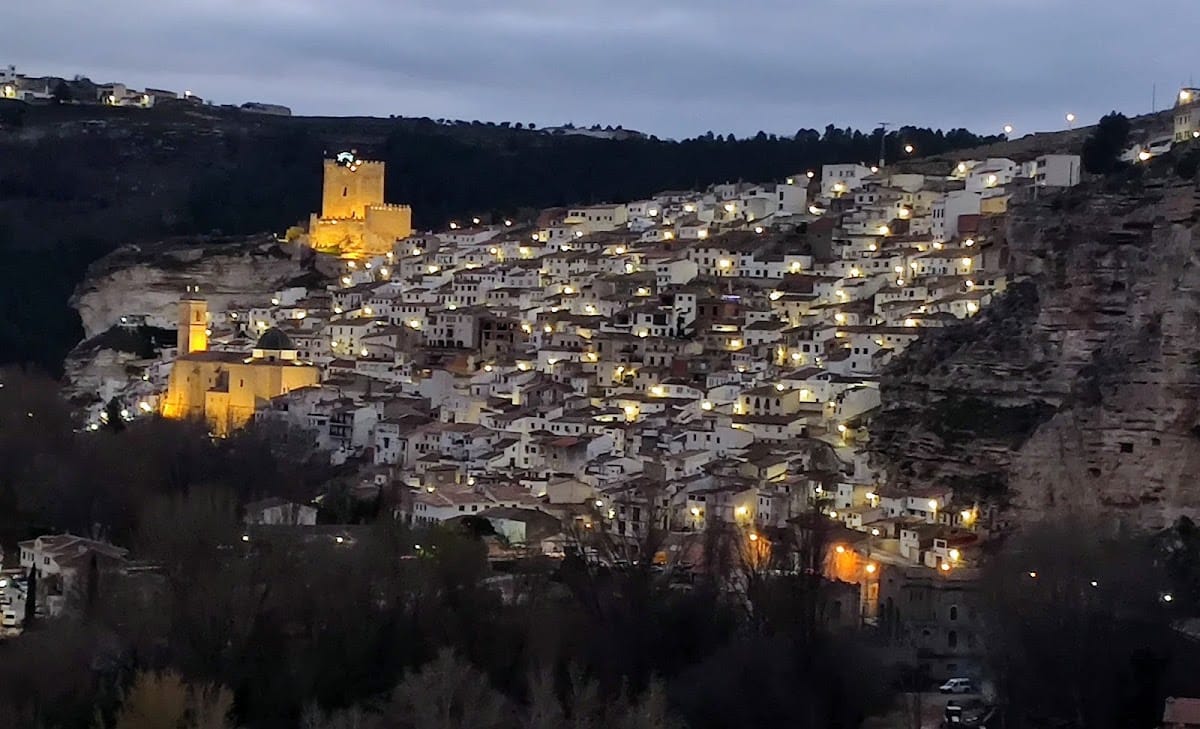
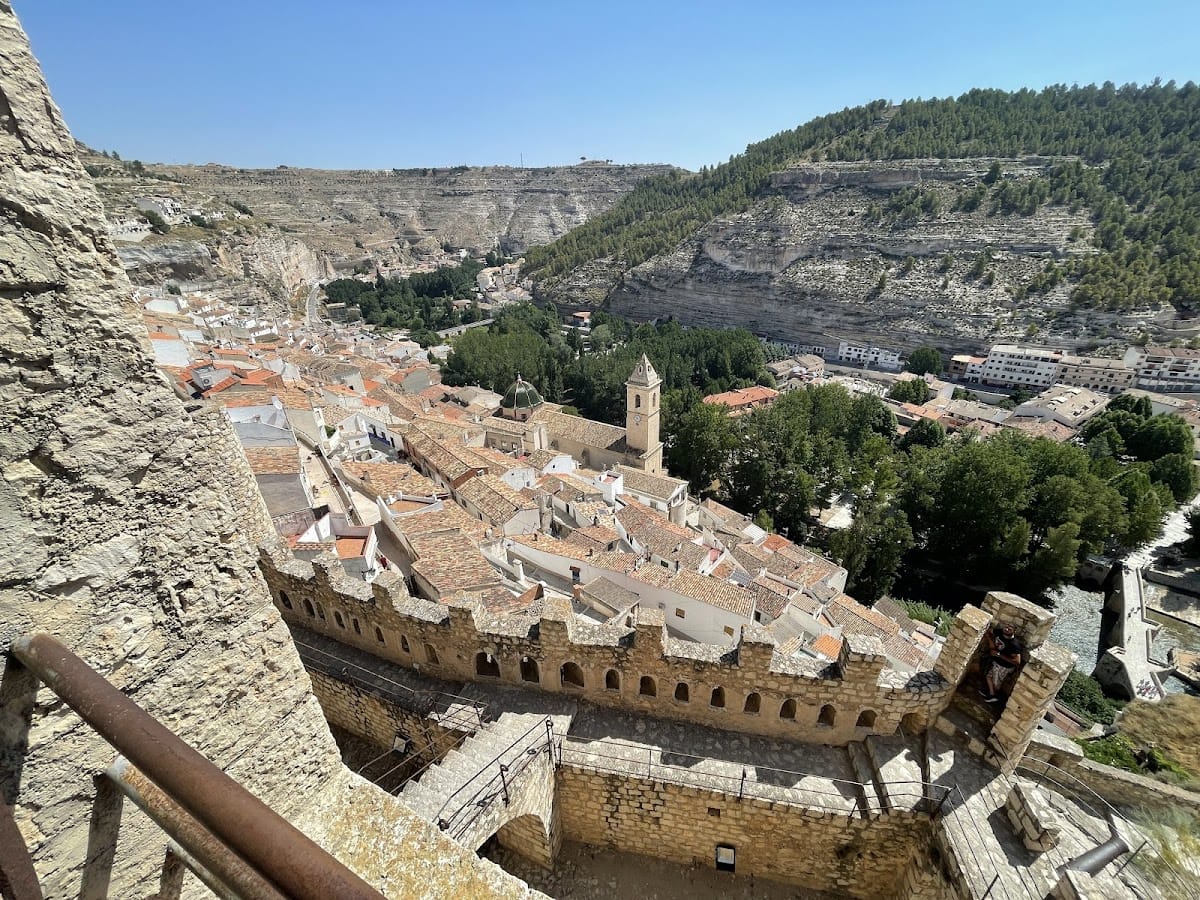
The castle occupies a rocky outcrop formed by the gorge of the Júcar River, above the town and overlooking the settlement. Alcalá del Júcar lies on a flat-topped limestone hill with steep sides, within a meander of the river. This elevated position forms the setting for the compact fortified complex and separates it physically from the surrounding river landscape.
Fortifications
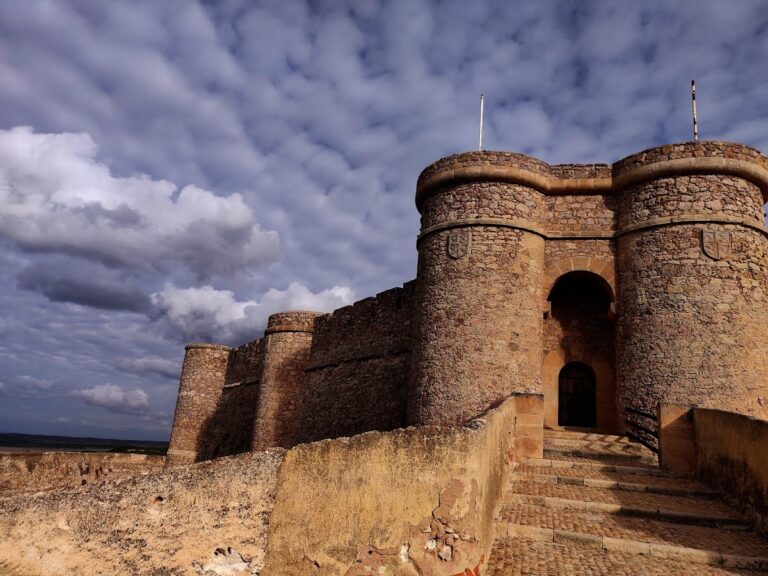
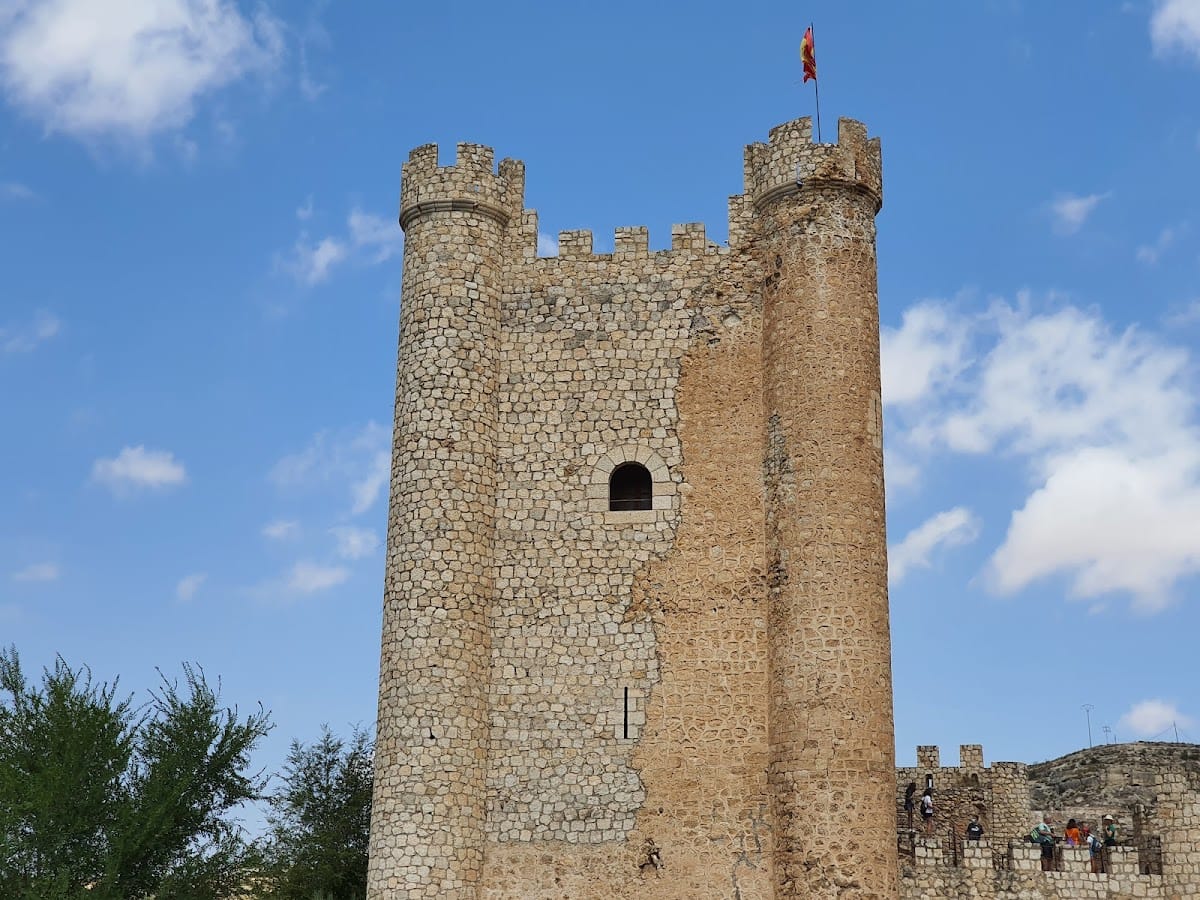
The surviving complex is Islamic in style and is organized around a pentagonal fortified tower with two small circular towers placed at the corners. The main tower contains three interior levels. Fragments of the original enclosing wall also survive, although much of that wall has been destroyed over time. Together, the towers and remaining wall sections represent the principal visible elements of the restored fortress.