Castle Murat: The Aragonese Fortress of Pizzo


Site at a Glance
- Rating
- 4.4
- Popularity
- Medium
- Country
- Italy
- Primary era
- Medieval
- External website
- Open
- Eras represented
- Medieval
- Civilizations
- Crown of Aragon, Kingdom of Naples
- Site type
- Military
- Remains
- Castle
On this page8 sections
History
Castle Murat is a historic fortress in Pizzo, Italy, built through successive Angevin and Aragonese phases and known for the imprisonment and execution of Joachim Murat in 1815. Its present name recalls Murat, the French military commander and former king of Naples, who was held there before being shot on 13 October 1815.
From coastal watchtower to Aragonese castle
The earliest fortification was Torre Maschia, a watchtower built in the late thirteenth or fourteenth century. It formed part of a coastal-tower system established during Angevin rule, when the French Anjou dynasty held the Kingdom of Naples, to resist raids by forces described as Saracen. Continuing attacks during the later rule of the Crown of Aragon led Ferdinand I of Naples to order further fortification by decree on 12 November 1480.
The work at Pizzo belonged to a wider defensive programme that also strengthened Reggio Calabria and involved the construction or enlargement of castles at Crotone, Cariati, Corigliano, and Belvedere Marittimo. Between 1481 and 1485, the earlier Angevin tower was expanded with enclosing walls, a central body, and a smaller guard tower. The resulting fortress became known as the Aragonese Castle. A further watchtower was built below it, overlooking the port.
Damage and restoration
An earthquake in 1783 damaged the castle, particularly its lower chambers. Restoration of those chambers was completed in 1790. The fortress later became state property of the Kingdom of Italy in 1806 and was sold to the municipality of Pizzo in 1884. A decree issued on 3 June 1892 declared it a national monument, a legally protected heritage site recognized for its historical or cultural importance.
Joachim Murat’s final campaign
After Napoleon’s defeat at Waterloo, Joachim Murat took refuge in Corsica on 25 August 1815. He was trying to evade a bounty of 48,000 francs offered by the Marquis of Rivière. Murat gathered several hundred supporters and waited for Austrian passports that would have allowed him to join his wife Caroline in Trieste. False reports of unrest among Neapolitans persuaded him to organize an expedition to recover the throne of Naples.
His hastily assembled force, numbering about 250 men, left Ajaccio on 28 September. Murat had intended to land near Salerno, but a storm diverted the expedition toward Calabria. He landed at Pizzo on 8 October, after the alleged betrayal of the battalion commander Courrand. Bourbon gendarmes under Captain Trentacapilli intercepted and arrested him, then confined him in the castle prison. General Vito Nunziante, the military governor of Calabria, came to establish the prisoner’s identity.
Ferdinand I of the Two Sicilies, a Bourbon ruler restored to the Neapolitan throne after the Napoleonic period, appointed a military commission in Naples chaired by Nunziante. He ordered Nunziante to impose the death penalty under the penal code previously promulgated by Murat and to allow the condemned man only half an hour for religious consolation.
Murat asked to write a final letter in French to his wife and children in Trieste. He gave it to Nunziante in an envelope that also contained several locks of his hair. He then confessed and received Communion before being taken to the place of execution. Murat refused a blindfold and reportedly addressed the firing squad with the words, “Spare my face, aim at my heart, fire!” A narrative by Charles Gallois states that the first two shots missed, after which ten shots were fired and six bullets struck him.
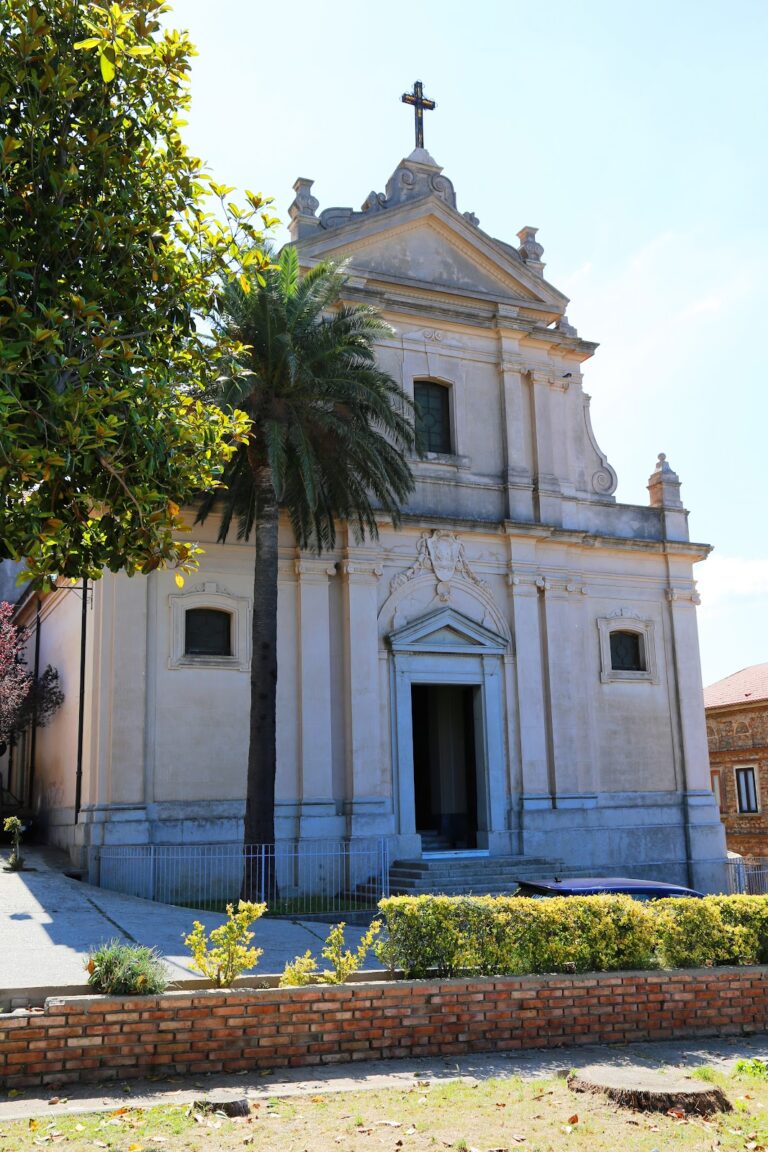
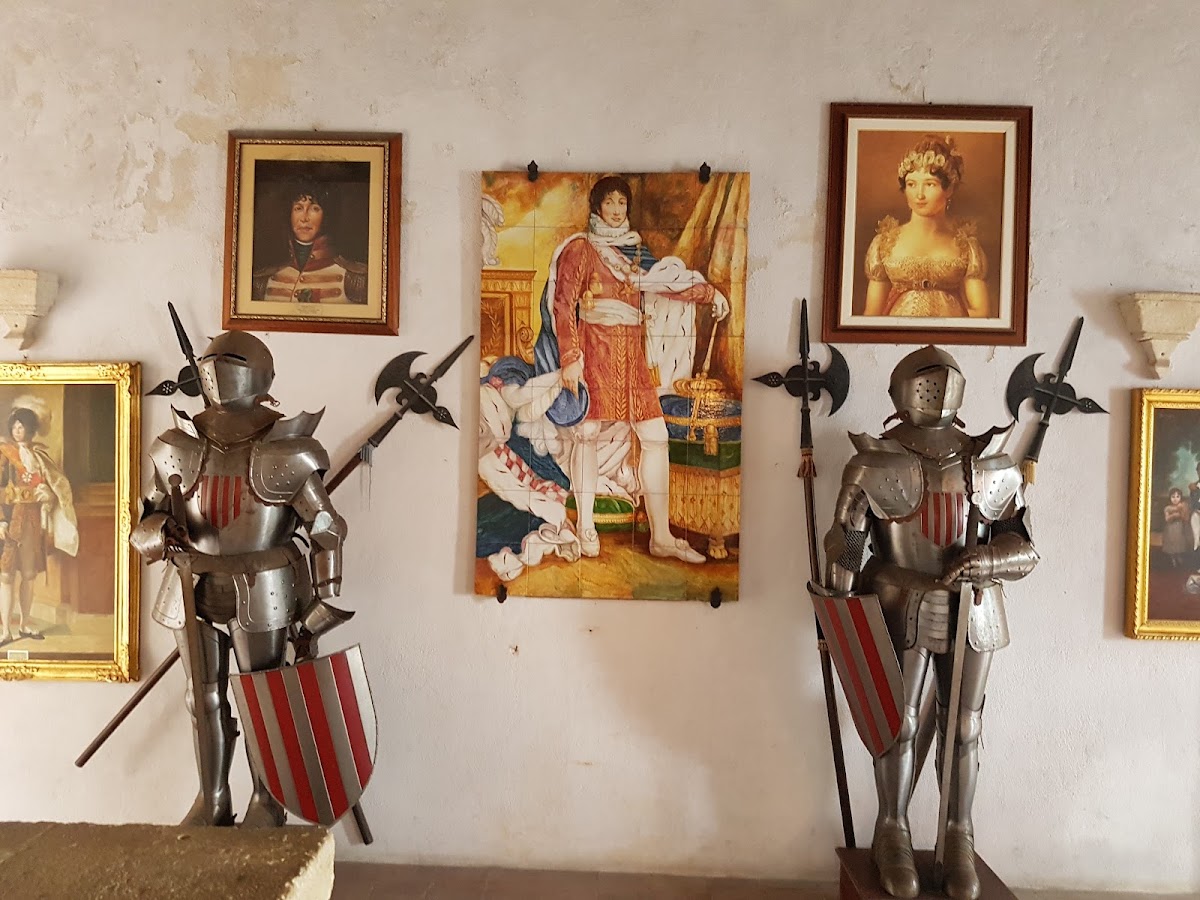
Murat’s body was buried in a common grave in the basement of the Church of San Giorgio. A plaque set into the centre of the church’s nave commemorates the burial. The castle’s museum presents the final sequence of his life there, from imprisonment and trial through confession and execution.
Remains
Fortress layout and defenses
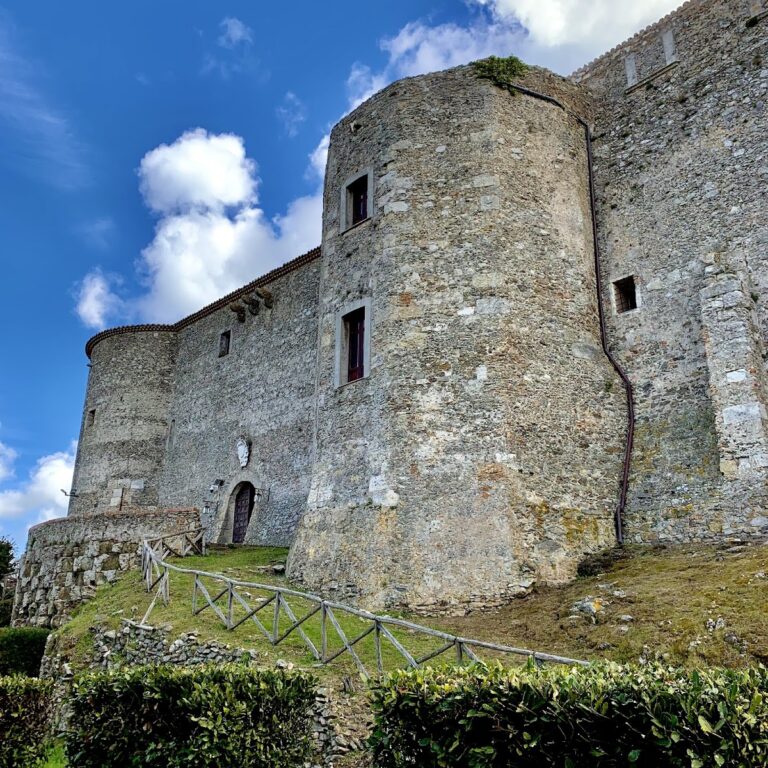
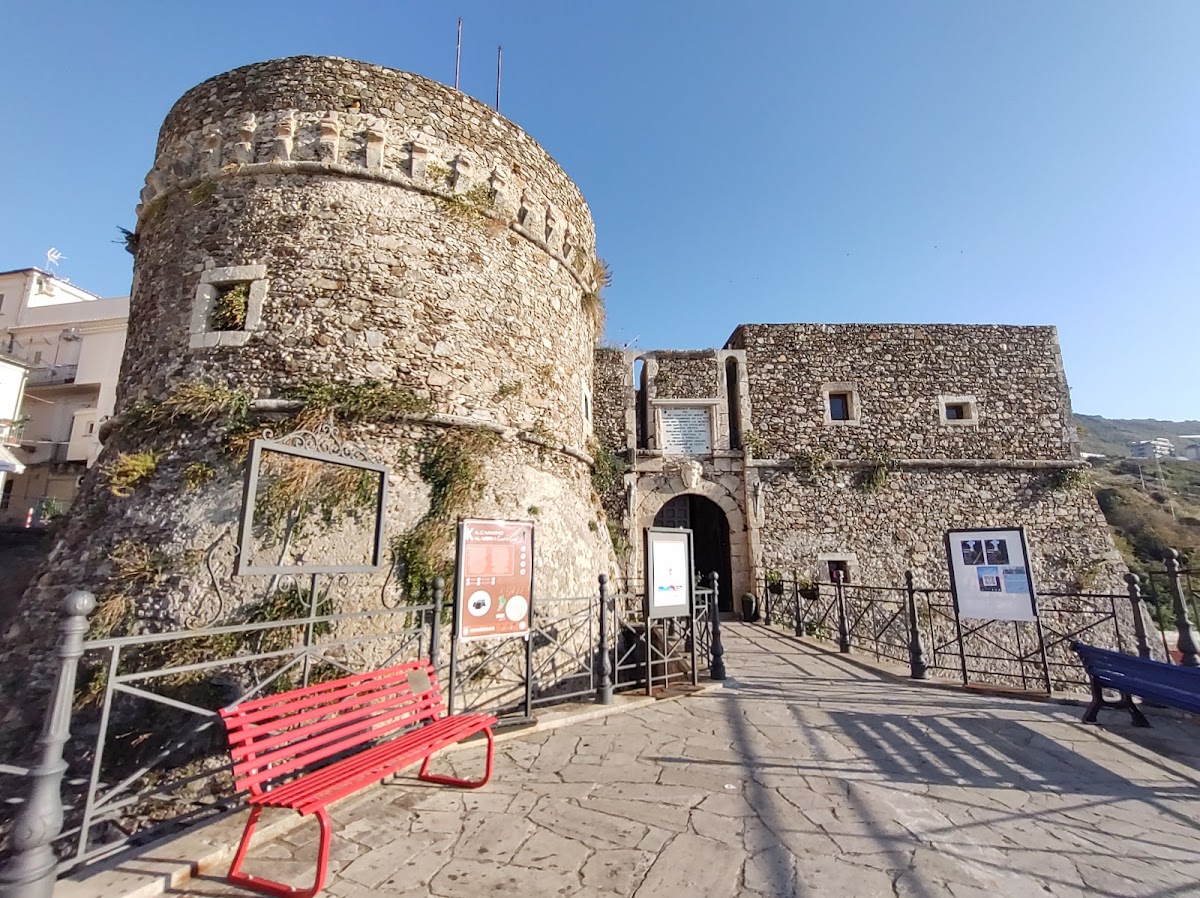
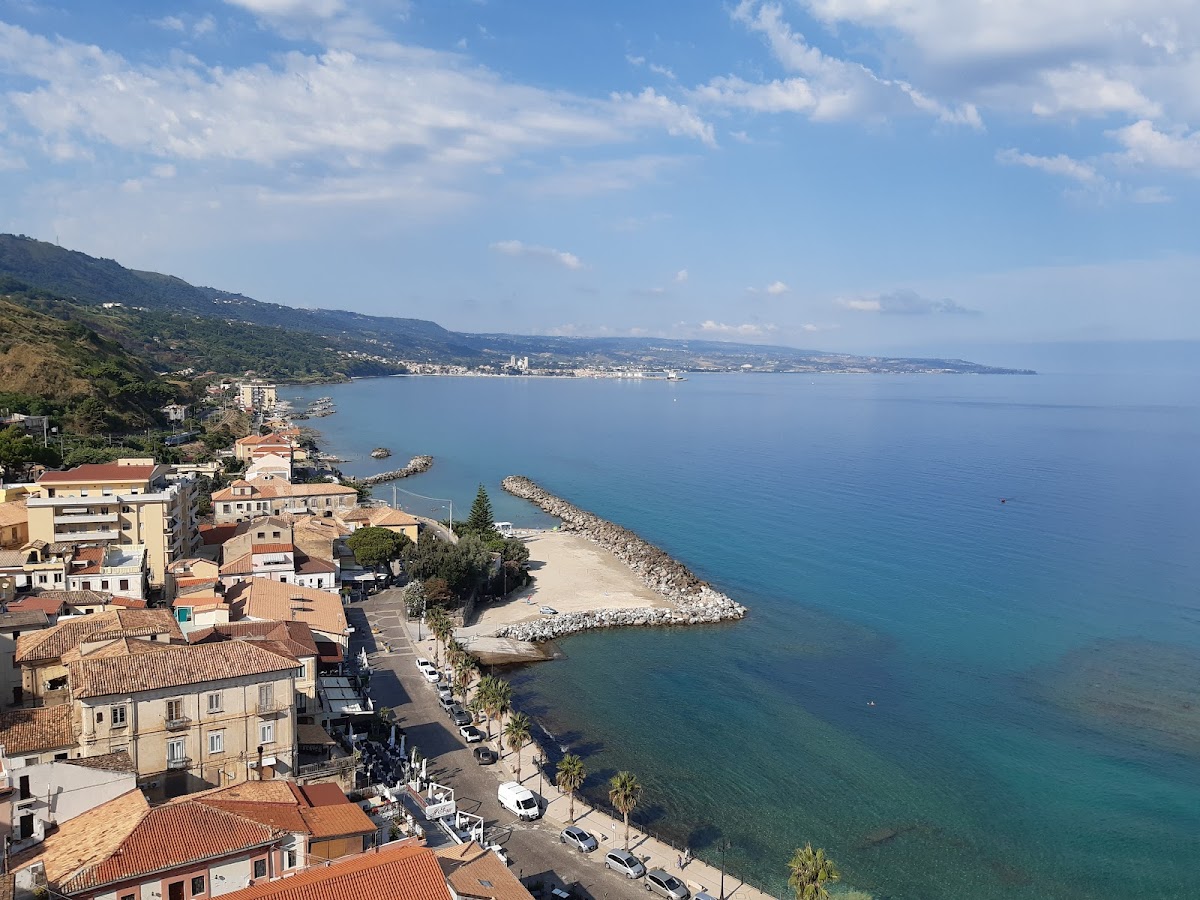
The surviving fortress has a quadrangular plan formed by buildings from different periods. One side rises directly above the sea, while another is bordered by a deep moat. The walls create a rectangular enclosure between two towers, and several guns formed part of its armament. The original entrance was approached by a drawbridge between the towers. That bridge has been replaced by a conventional limestone bridge and a paved approach.
Interior spaces and underground passages
Castle Murat is arranged over two storeys, with the lower chambers preserving the effects of the 1783 earthquake and the restoration carried out in 1790. The upper storeys contain the exhibition devoted to Murat’s final days, while the castle as a whole is described as surviving in an almost original condition. Underground passages are said to extend toward points near Vibo Valentia, about 11 kilometres away, and toward Lake Angitola, about 7 kilometres away.
Museum sculpture fragment
The museum also displays a fragment attributed to Antonio Canova, the leading Italian Neoclassical sculptor of the late eighteenth and early nineteenth centuries. The sculpture was lost during Giuseppe Garibaldi’s passage, and the surviving portion represents a helmet. Garibaldi was an Italian nationalist military leader whose campaigns contributed to the unification of Italy.