Rodenegg Castle: A Medieval Castle Residence in Italy


Site at a Glance
- Rating
- 4.4
- Popularity
- Low
- Country
- Italy
- Primary era
- Medieval
- External website
- Open
- Eras represented
- Medieval, Early Modern, Modern
- Civilizations
- Habsburg, Holy Roman Empire, Italian
- Site type
- Military
- Remains
- Castle
On this page12 sections
History
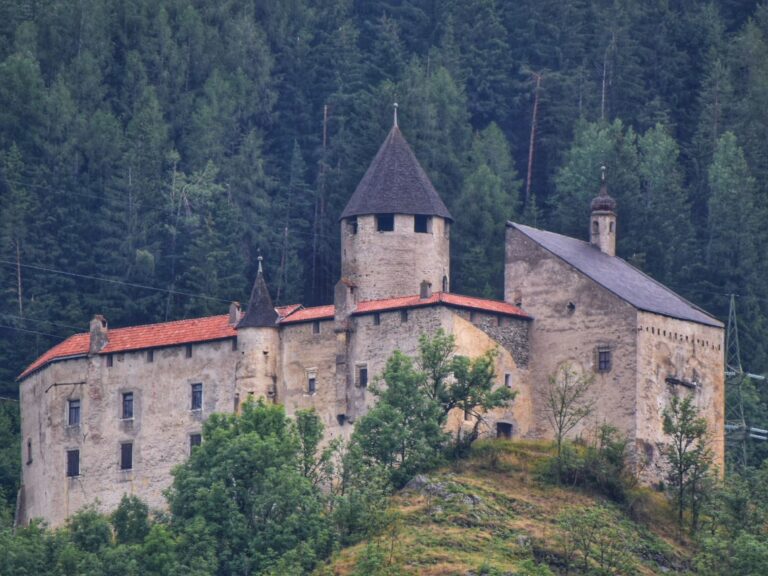
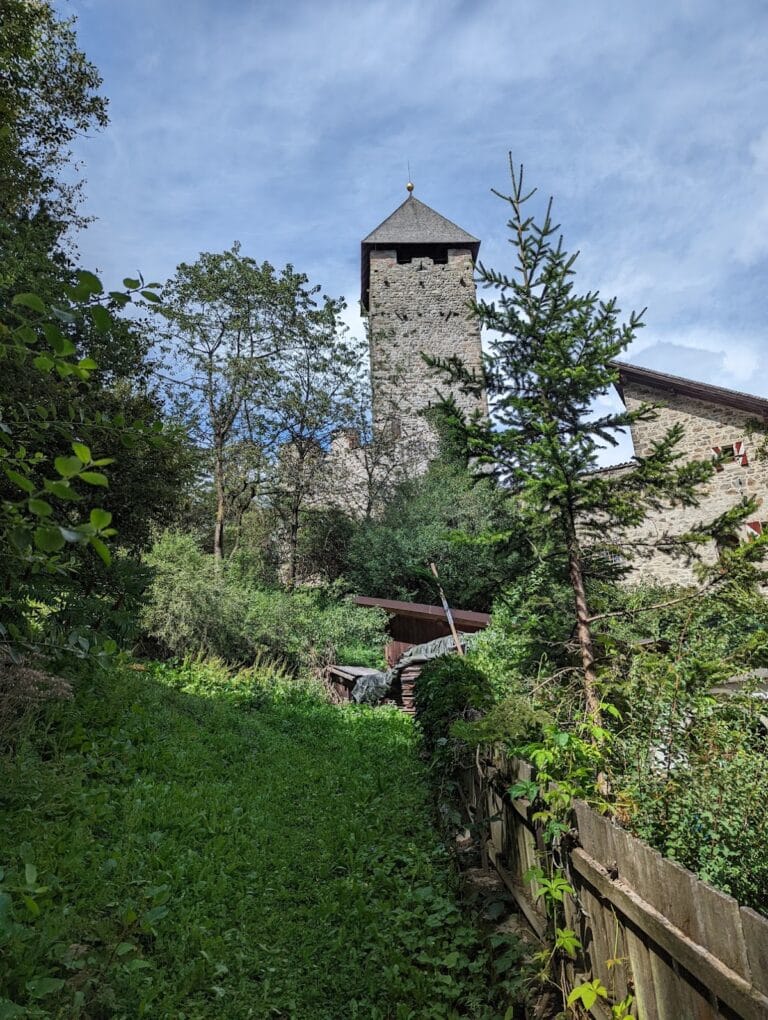
Rodenegg Castle is a medieval castle in Italy, near Rodengo in South Tyrol, northeast of Brixen and at the entrance to the Puster Valley. Friedrich I von Rodank built it during the first half of the twelfth century, around 1140, probably creating a keep and a residential hall. Its position above the Rienz gorge made it an important stronghold overlooking the valley.
The Rodank and Tyrolean Lords
Friedrich belonged to the Rodank family, an influential lineage of ministerials, who were members of the medieval service nobility and held administrative, military, or court offices for higher-ranking lords. The family retained Rodenegg until it became extinct around 1300. The Counts of Tyrol then administered the castle for a long period, before it later came under Habsburg control. In 1384, it was recorded within the Tyrolean lordship as vest ze Rodenkchen.
The Wolkenstein-Rodenegg Residence
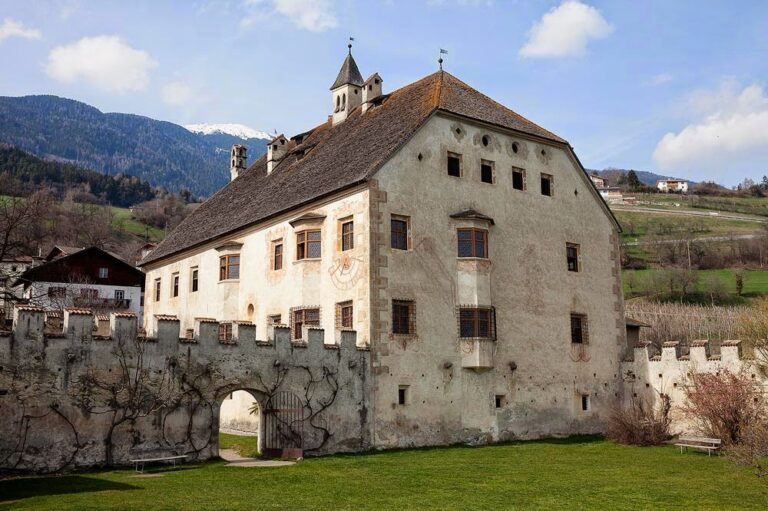
In 1491, Rodenegg passed to the barons, later counts, of Wolkenstein-Rodenegg. Their descendants enlarged the complex during the sixteenth century and converted it into a more luxurious residence. A major expansion took place in 1530. Around 1600, Marx Sittich von Wolkenstein included the castle and its judicial district in a separate section of his description of Tyrolean territory, calling it schloss Rottneckh. The Wolkenstein-Rodenegg family still owns the castle.
Trial, Discovery, and Continued Use
In 1645, Rodenegg was the setting for a sensational witchcraft trial. Matthias Perger, known as the “Lauterfresser,” was held in a narrow dungeon at the castle and sentenced to death by burning. The proceedings also led to the condemnation of several marginalized people.
The castle’s Iwein frescoes were discovered in 1972 and subsequently uncovered. The cycle, created in the early thirteenth century, consists of eleven scenes from the Iwein epic. Rodenegg remains in good condition, is partly inhabited, and contains a museum while retaining its association with the Wolkenstein-Rodenegg family.
Remains
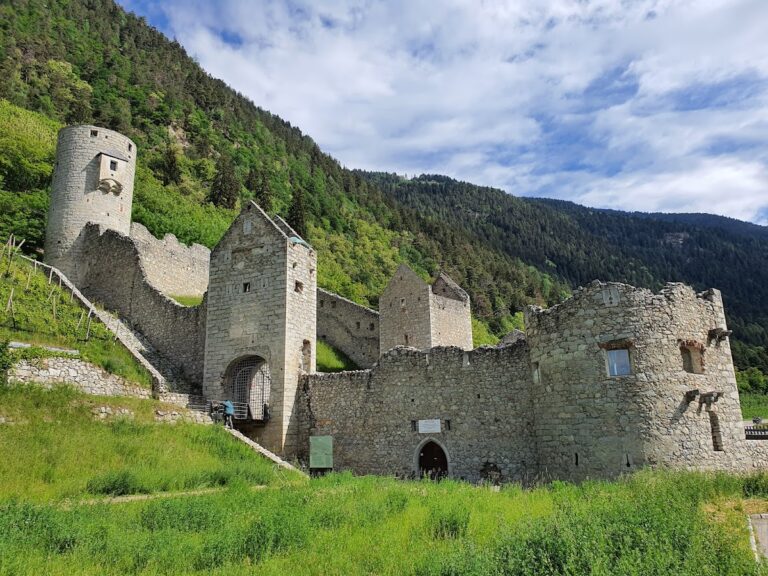
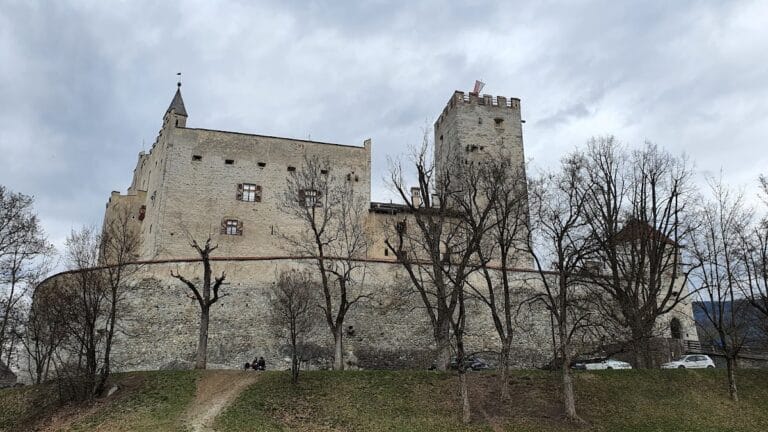
Rodenegg Castle occupies a long, narrow rocky spur above the Rienz gorge. The rock drops steeply on three sides, leaving the complex positioned above the valley. The surviving layout includes a tower, a modest palace, a chapel, a courtyard, crenellated towers, and a drawbridge. The earliest arrangement probably centered on a keep and a palas, the principal residential and representative hall of a medieval castle.
Fortifications and Castle Buildings
Tower and Palace
The tower and modest palace form part of the surviving castle complex on the rocky spur. They represent the defensive and residential elements that developed from the early keep and residential hall. The courtyard, crenellated towers, and drawbridge continue the fortified organization of the site, while the sixteenth-century enlargement gave the residence a more luxurious character.
Chapel and Service Areas
The complex contains the Chapel of Saint Michael, an armory, a bakery, and a castle garden. A narrow dungeon known as the Lauterfresserloch is also preserved within the castle. Interiors include original late-Renaissance furniture, linking the surviving rooms to the period when the Wolkenstein-Rodenegg family transformed the fortress into a residence.
Iwein Frescoes
The Eleven-Scene Cycle
The Iwein fresco cycle consists of eleven wall paintings dating from the early thirteenth century, generally placed between about 1200 and 1230. It illustrates episodes from Iwein, an Arthurian romance by Hartmann von Aue, a major Middle High German poet. The story concerns Yvain, or the Knight of the Lion, and is connected with the historical-legendary figure Owain mab Urien, whose Welsh heroic tradition was adapted into Arthurian romance. The cycle is regarded as the oldest profane wall painting in the German-speaking region.
Twentieth-Century Defensive Works
Bunker Work 28
At the base of the castle stands Bunker Work 28, part of the Rienza-Rio Valles-Sciaves Alpine Wall defensive barrage. The Alpine Wall was a twentieth-century system of fortified positions built by Italy along parts of its northern frontier. This bunker was constructed between 1939 and 1943, adding a later military layer to the archaeological and architectural setting of Rodenegg Castle.