Castillo del Moral: A Hispano-Muslim Fortress in Lucena, Spain



Site at a Glance
- Rating
- 4.4
- Popularity
- Low
- Country
- Spain
- Primary era
- Medieval
- External website
- Open
- Eras represented
- Medieval, Early Modern, Modern
- Civilizations
- Almohad
- Site type
- Military
- Remains
- Castle
On this page10 sections
History
Castillo del Moral, also known as the Castle of Lucena, is a Hispano-Muslim military fortress in Lucena, Spain. Its construction is listed as belonging to the eleventh century, although the historical narrative places its building after the Almohads, a North African Islamic dynasty that ruled much of Iberia during the twelfth century, arrived in the area in 1148. The fortress was built to protect the cora of Cabra, an administrative district in Muslim-ruled Iberia, during the advance of the Christian kingdoms.
Muslim foundation and Christian conquest
The cora of Cabra may have been politically unstable and was possibly governed through control of commercial caravans travelling between north and south. Castillo del Moral formed part of this defensive and administrative setting until Fernando III of Castile conquered the fortress and surrounding towns in 1240. Fernando III, the Castilian king who led the conquest of much of southern Iberia, turned the castle into a frontier stronghold. It was first granted to the Chapter of Córdoba and later to the Order of Santiago, a Christian military-religious order founded to defend and expand Christian territories in Iberia.
Noble lordship and the frontier with Granada
In 1342, Leonor de Guzmán acquired the castle in exchange for land. She kept it until her death in 1351, when it returned to the Crown. In 1371, Enrique II granted Castillo del Moral to Juan Martínez de Argote. Four years later, Juan transferred it to his daughter María Alfonso de Argote. Her marriage to Martín Fernández de Córdoba, the alcaide of the Donceles, brought the castle into the Fernández de Córdoba family lineage. An alcaide was the military governor or commander responsible for a fortress or town.
Members of the Fernández de Córdoba branch associated with the Donceles took an active part in the wars against the Nasrid Kingdom of Granada, the last Muslim state in medieval Iberia. During the Battle of Lucena in 1483, Boabdil, the last Nasrid emir of Granada, was captured and imprisoned in the Homage Tower. After Isabella I of Castile and Ferdinand II of Aragon, known as the Catholic Monarchs, conquered Granada in 1492 and ended Nasrid rule, the castle lost its defensive function. It became a residence of the Marquises of Comares and the seat of the alcaide of the Donceles until the castle and its lordship returned to the monarchy in 1767.
Later changes and preservation
A garden and adjoining stables were built during the seventeenth century. They were demolished in 1970 to make way for the Post and Telegraph building. Lucena’s municipal government purchased the castle from the Dukes of Híjar in 1926 for almost 40,000 pesetas. On 4 June 1931, it received protected Cultural Heritage status as a Monument.
A 1946 project proposed removing additions built in the seventeenth century by Luis Ramón Folch de Aragón because they had altered the fortress’s defensive character. Recovery and restoration began in 1984. The work included covering parts of the complex to create connections through the arms courtyard, consolidating the Moral Tower in 1989, and installing mural lighting in 1997. Later interventions addressed waterproofing, new lighting, and the removal of overhead cables.
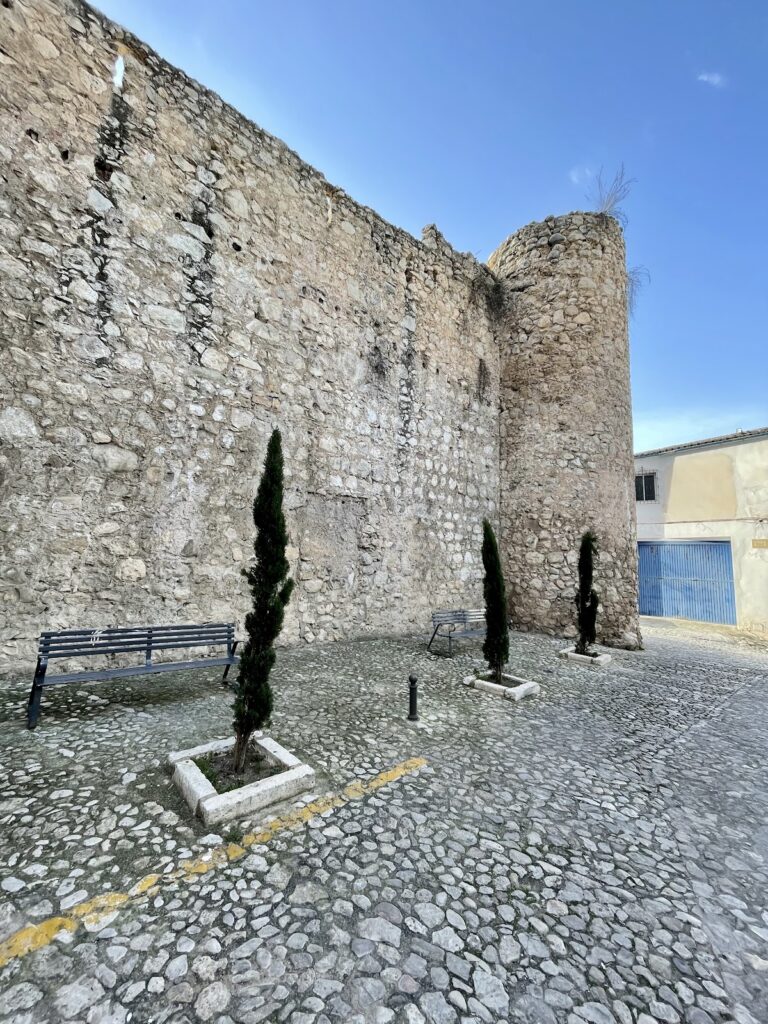
After restoration, Castillo del Moral was adapted to house the Archaeological and Ethnological Museum of Lucena. Two rooms opened on 6 December 2001, and the museum had six rooms by the end of 2002. The Human Evolution and Three Cultures rooms opened on 28 February 2003, followed by the final two rooms on 9 May, bringing the total to ten rooms. On 21 September 2025, part of the perimeter wall collapsed. An exterior support was installed in November while archaeological work was awaited to assess whether the foundations required reinforcement.
Remains
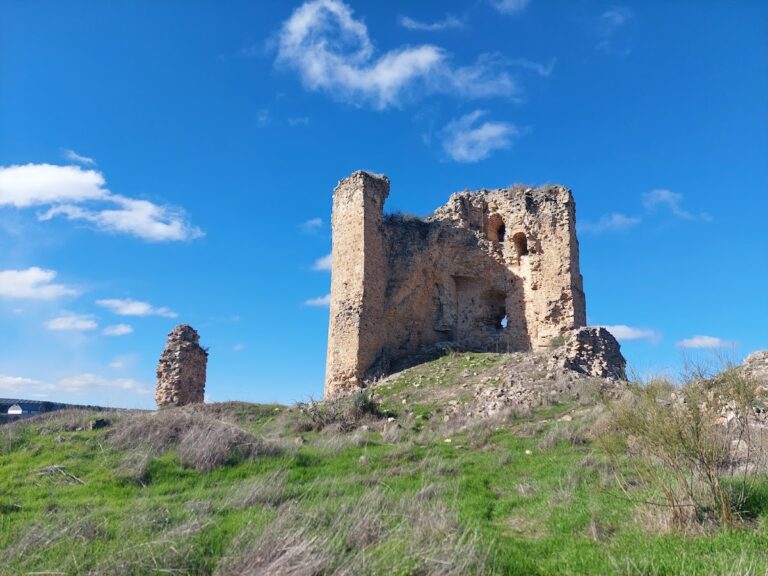
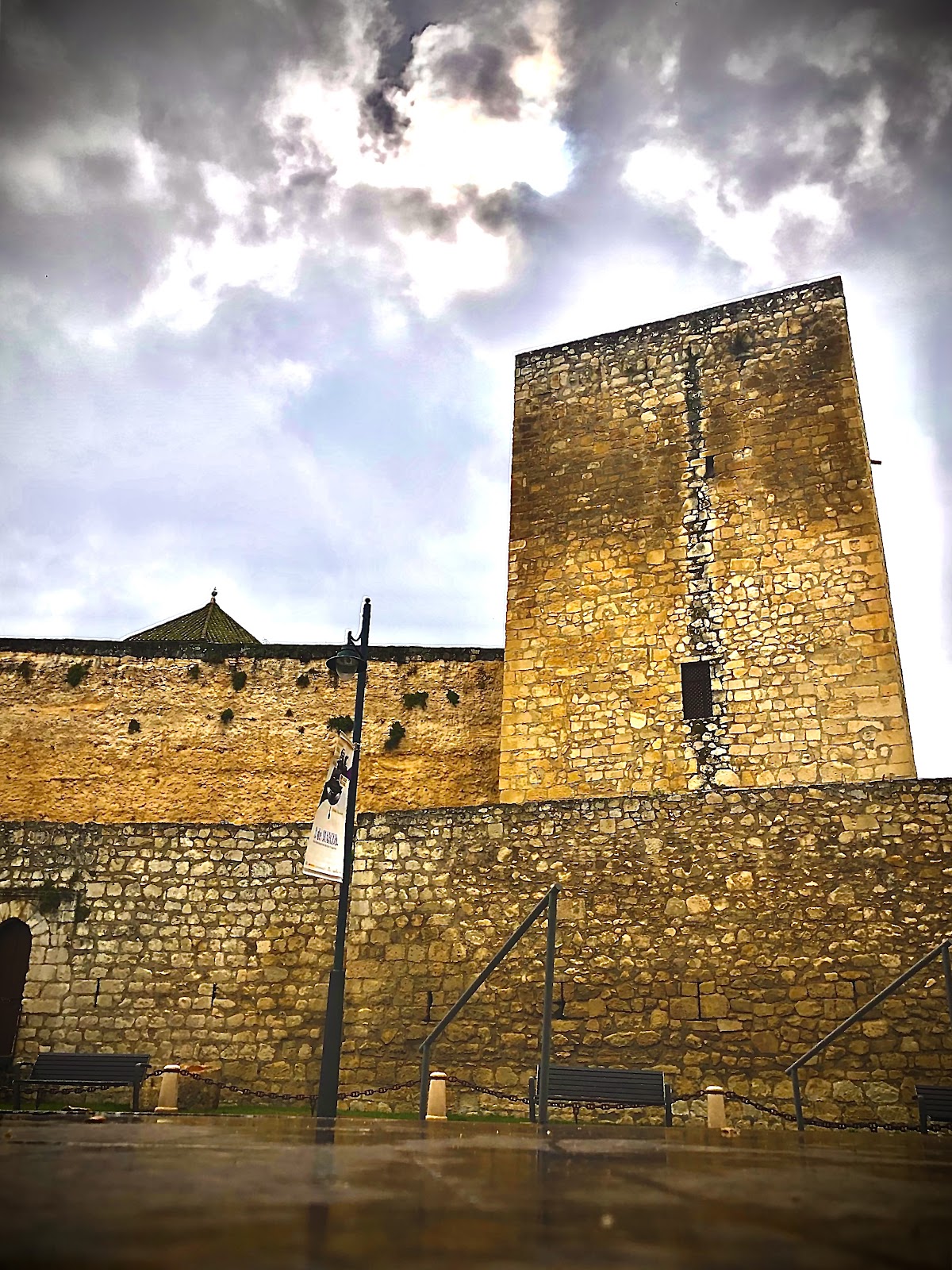
Castillo del Moral is a Hispano-Muslim fortress enclosed by a defensive wall. Its principal elements include the perimeter enclosure, four surviving towers, a second walled circuit with an elevated wall-walk, and a spacious arms courtyard at the center. A wall-walk is a passage along the top of a defensive wall, while an arms courtyard provided space for circulation, assembly, and military activities. Twentieth-century recovery work covered parts of the complex to connect them through the courtyard.
Towers and defensive enclosures
Moral Tower
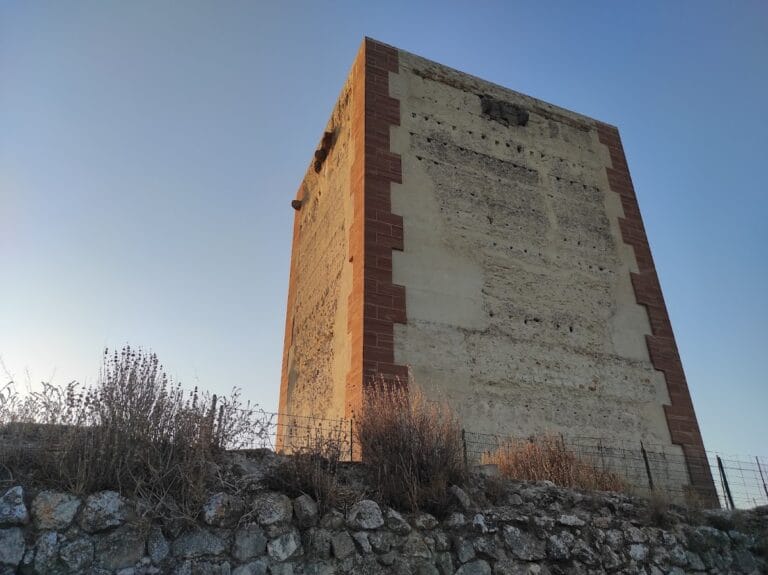
The Moral Tower is the most prominent structure in the fortress. It has an octagonal plan and originally ended in a flat roof with crenellations, the raised sections of a defensive parapet. During the eighteenth century, this roof was replaced by an octagonal brick vault. The tower was consolidated during restoration work in 1989.
Homage Tower
The Homage Tower forms part of the surviving tower group and is associated with the imprisonment of Boabdil after his capture during the Battle of Lucena in 1483.
Damas and Coso Towers
The Damas Tower and the Coso Tower have square plans. Both are linked with the other surviving towers by a second walled enclosure, whose elevated wall-walk formed part of the fortress’s defensive circulation.
Courtyard and museum spaces
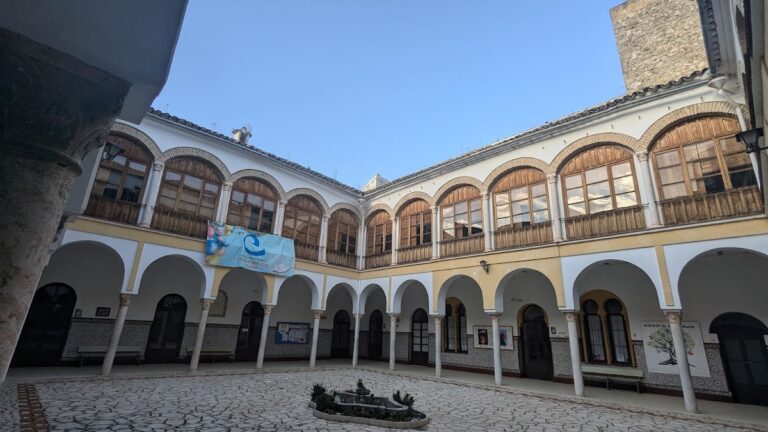
The arms courtyard occupies the center of the castle and provides the main internal organizing space. Parts of the complex were covered during the twentieth-century recovery project so that the buildings could be connected through it. The restored fortress now contains the Archaeological and Ethnological Museum of Lucena, arranged in ten rooms. Its collections include material from the Ángel Cave, while the entrance hall contains a space for the tourism office.
The seventeenth-century garden and adjoining stables belonged to the former castle complex until their demolition in 1970. The perimeter wall remains part of the fortress enclosure, although a section collapsed in 2025. The foundations and the extent of any reinforcement required were left for archaeological assessment.