Villa de Mithra: A Roman Villa and Mithraic Sanctuary in Spain
Site at a Glance
- Popularity
- Medium
- Country
- Spain
- Primary era
- Classical
- Eras represented
- Classical
- Civilizations
- Roman
- Site type
- Domestic
- Remains
- Villa
On this page17 sections
History
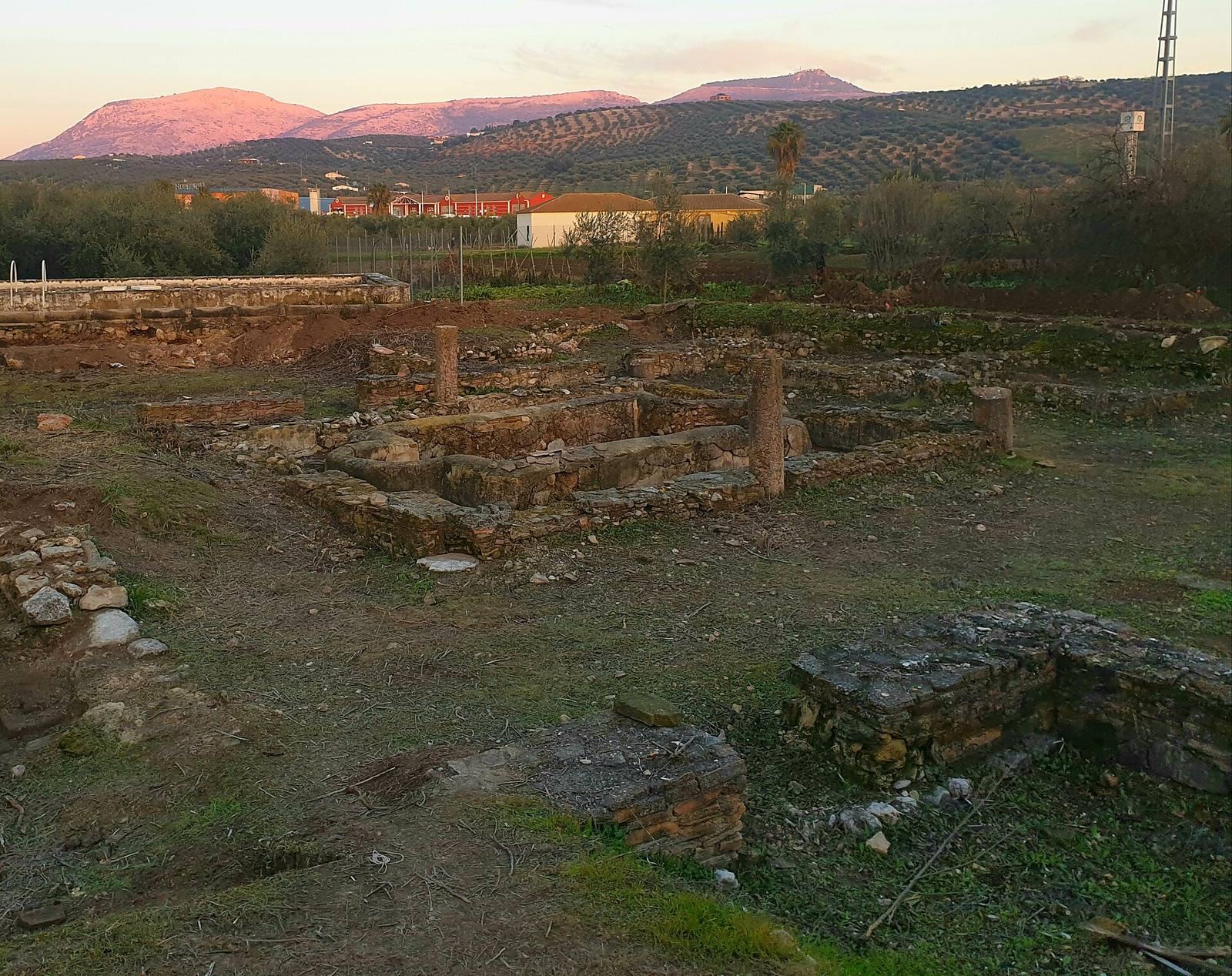
Villa de Mithra is a Roman villa in Cabra, Córdoba, Spain, which took shape in the first century AD outside the Roman town of Igabrum. It appears to have been arranged as a peristyle villa, organized around a courtyard with a colonnade, and was substantially renovated in the third and fourth centuries. A sanctuary to Mithras uncovered in 2023 makes it one of three known in Spain and the only one in Andalusia.
Early evidence and Roman development
The earliest sign of human activity at the site is a flint sickle blade from the Metal Ages, broad archaeological periods associated with the use of metal. The villa stood near the Fuente de las Piedras spring, giving it access to water. Its major renovations in the third and fourth centuries reflect a long period of Roman use.
Abandonment and later occupation
An abandonment layer dates to the late fourth century. Evidence of a fire suggests that it destroyed the villa’s roof. Human activity continued in the Visigothic era, when a Germanic kingdom succeeded Roman imperial rule across much of Iberia. A necropolis from this period is among the evidence for later occupation, although most of the remains at the site belong to the Roman period.
Discovery and archaeological work
Farmer Francisco Castro Córdoba found the villa on his land in 1951 and 1952, uncovering sculptures. Their dispersal among local families made it harder to bring the finds together. Julián García García led the first official excavation in 1972 and 1973. José Luis Jiménez Salvador and Manuel Martín Bueno directed further excavation in 1981. A radar survey below the ground followed in 2004 to help establish the site’s extent.
Excavation from October 2022 to March 2023 uncovered the mithraeum in February 2023. In 2016, the site received protected cultural property status as an archaeological zone. Cabra’s municipality bought the land in 2018, after about four decades under a rental arrangement, and a metal fence was installed in 2021 to protect the area. In November 2025, an adjoining plot of 1,500 square metres was acquired to enlarge the archaeological site.
Remains
Residential architecture
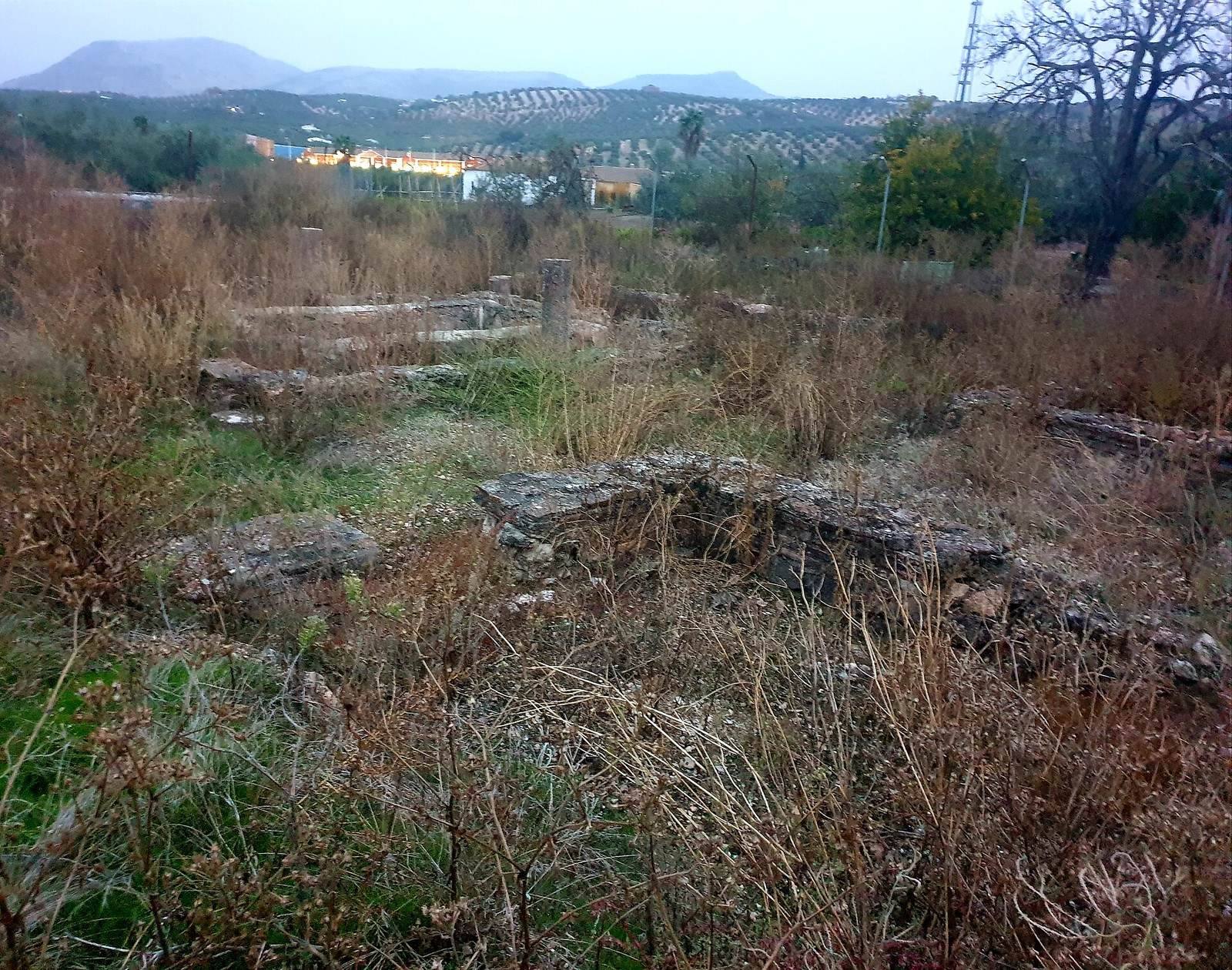
The villa appears to have followed the peristyle plan, with rooms opening toward a courtyard and pool. A fortified courtyard contained the pool and surrounding rooms. Walls were built mainly from limestone rubble set in mortar made with sand and lime.
Courtyard and pool
The courtyard originally had a rectangular fountain and a columned portico, whose columns were linked by a low wall. In a later phase, the portico and columns were removed, the pool was enlarged, and two recessed spaces were added. The statues of Eros and Dionysus found at the villa may have stood in these spaces.
Reception and private rooms
A large, richly appointed room may have served as a triclinium, or dining room, used to receive visitors. Smaller rooms around the courtyard were private bedrooms and were not accessible to guests.
Walls and decoration
Some walls retain stucco decorated with red bands. Floors were covered with mosaics bearing geometric and plant designs, among other patterns. The largest, in the dining room, depicts the Triumph of Bacchus, the Roman name for Dionysus.
Bath heating
A hypocaust, an underfloor heating system, warmed the villa’s baths by circulating heat beneath the room floors.
Mithraic sanctuary and sculptures
Mithraeum
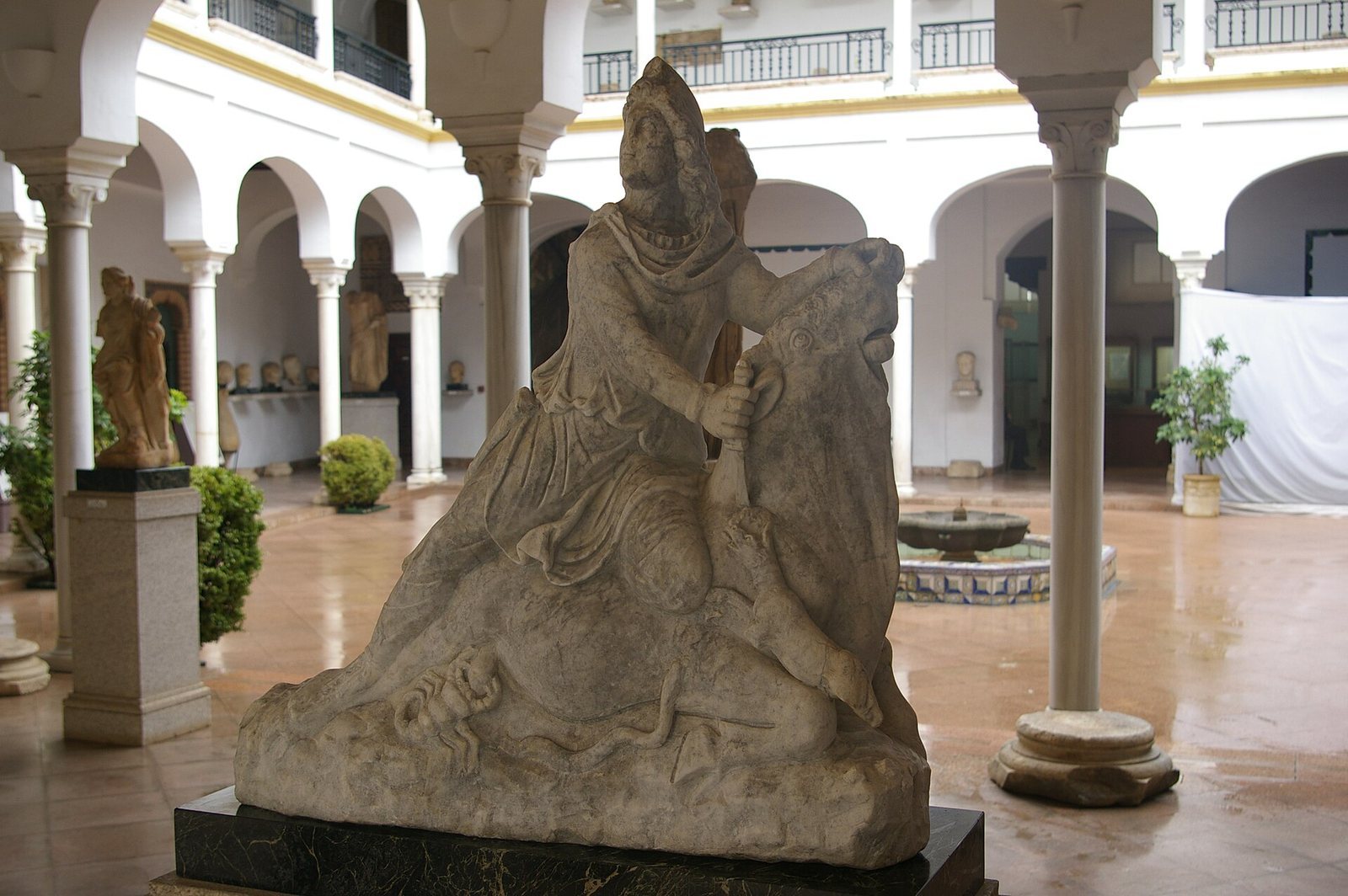
The 2023 excavation revealed a mithraeum, a sanctuary for worship of Mithras, a deity of a Roman mystery religion. Pig, bird, and rabbit bones were distributed across its floor. The sculpture known as Mithras of Cabra belonged to the sanctuary and may have been accompanied by figures of Cautes and Cautópates, torchbearers associated with Mithraic imagery.
Sculptures and their uses
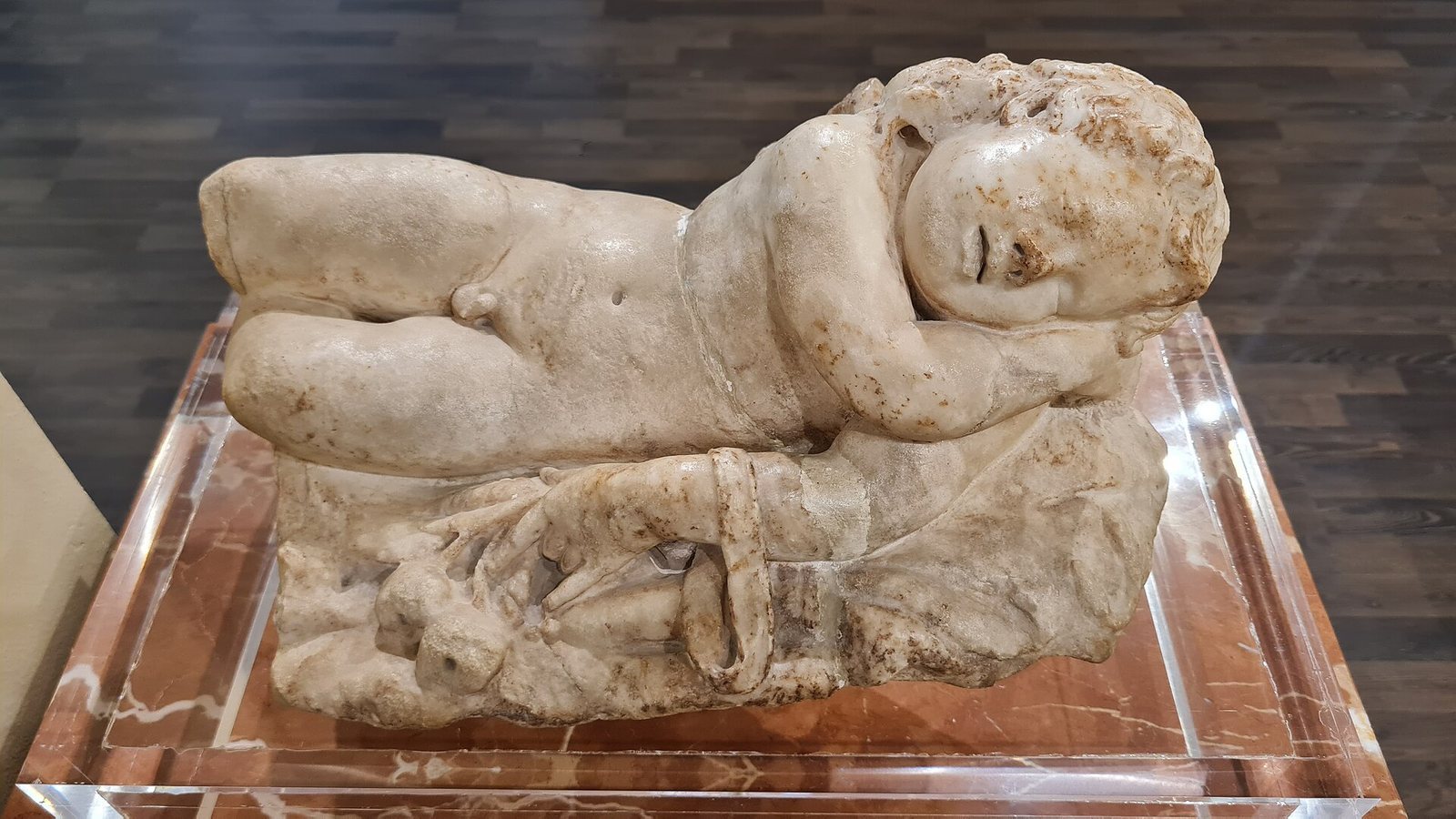
The second-century sculpture of Mithras of Cabra and a second-century Sleeping Eros were found in or beside the pool. They may have been placed in the water for protection after a siege. The Boy with Hare may have served as a water spout, with a hole in the sculpture carrying the water. The Dionysus statue was restored at the workshop of Itálica in 1973. Excavated mosaics and statues are preserved at the Archaeological Museum of Cabra; the Mithras of Cabra was donated to the Archaeological Museum of Córdoba.
Other archaeological finds
Coins
Three coins from the 1981 excavation help date different parts of the site. A coin found beneath a mosaic bears the image of Emperor Philip the Arab and dates to AD 244. Another, bearing the face of Emperor Diocletian, dates to AD 285. A coin found among roof remains carries the image of Emperor Valentinian II and dates to AD 378.
Bricks and knife
Work in 2021 uncovered eight bricks stamped EX OFFIC(INA) AVR(ELI) CARISI, meaning “made in the workshop of Aurelius Carisius.” Bricks found in 1908 and reused in a nearby Visigothic tomb, together with finds from the 1981 excavation, bring the known total bearing this stamp to seventeen. Carisius may have been a local potter or the villa’s owner. The 2021 work also yielded a knife dated to the fourth or fifth century.
Necropolis
A Visigothic necropolis forms part of the archaeological evidence at the site. A Late Roman and Visigothic necropolis is also known on the adjoining land added to the archaeological area.