San Esteban de Deyo: A Medieval Hilltop Fortress in Navarre


Site at a Glance
- Rating
- 4.6
- Popularity
- Low
- Country
- Spain
- Primary era
- Medieval
- External website
- Open
- Eras represented
- Medieval, Early Modern
- Civilizations
- Kingdom of Navarre, Spanish
- Site type
- Military
- Remains
- Castle
On this page7 sections
History
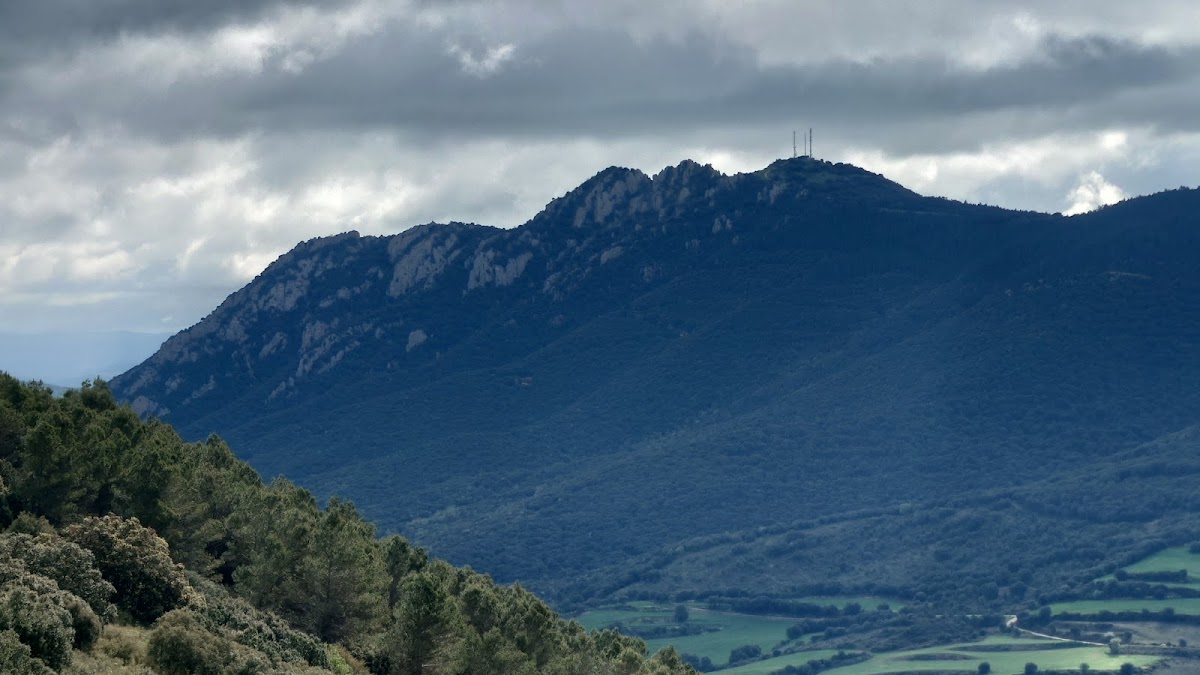
San Esteban de Deyo, also known as the Castle of Monjardín, is a ruined hilltop fortress above Villamayor de Monjardín in Navarre, Spain. Its foundations are Roman, and it had become a Muslim fortification by the tenth century before being repeatedly rebuilt. Its position helped control a frontier and later opened access for the armies of Pamplona toward the Ebro valley.
The Banu Qasi and the conquest by Pamplona
By the early medieval period, San Esteban de Deyo was one of the last strongholds of the Banu Qasi, a powerful Muslim family dynasty that controlled territory in the Ebro valley and maintained regional fortresses. The exact date of its capture is uncertain, but Sancho Garcés I of Pamplona, a king whose reign formed part of the Christian expansion in Navarre, took the fortress in the early tenth century. Its seizure established a new frontier and gave Pamplona’s armies access toward the Ebro valley.
A separate tradition, preserved in the twelfth-century Codex Calixtinus, attributes the capture to Charlemagne, the Frankish emperor whose campaigns extended across much of western Europe in the late eighth and early ninth centuries. In this account, he took the castle from a Navarrese prince named Furré. The same tradition connects the fortress with a siege by Charlemagne’s forces after their failed expedition to Zaragoza and with another siege several months later by Abd al-Rahman I of Córdoba, founder of the Umayyad emirate in al-Andalus.
Names, religious associations, and later possession
The fortress was called San Esteban de Deyo until the twelfth century, reflecting its strategic position in the territory of Deyo. This area corresponded approximately to parts of western central Navarre, including the modern valleys of Yerri, Guesálaz, Allín, and portions of La Solana and Valdega. It later became known as the Castle of Monjardín. Medieval documents, including a donation from 1223, preserve forms of the name equivalent to “Castle of Saint Esteban of Mont Iardin.”
Tradition holds that Sancho Garcés I was buried at the fortress, although the burial remains legendary. The later dedication Santa Cruz de Monjardín refers to a processional cross traditionally associated with him. Sancho II of Navarre subsequently donated the castle and its domains to Irache Monastery, while Sancho III of Navarre donated them to the episcopal see of Pamplona.
From early modern lordship to protected ruin
At the beginning of the sixteenth century, the castle was held by the Duke of Alba, possibly as a reward for services connected with the invasion and annexation of Upper Navarre in 1512. Much of its stone was reused in the seventeenth century to build the Baroque Hermitage of San Esteban. During the nineteenth-century Carlist Wars, Spanish civil wars fought between supporters of the Carlist claim to the throne and forces supporting the central government or rival dynastic arrangements, the castle changed hands between centralist and Carlist forces.
The ruins were designated an Asset of Cultural Interest of Navarre on 25 June 1985. The site is also identified as part of a World Heritage property, a site recognized under an international heritage convention for its cultural or natural significance.
Remains
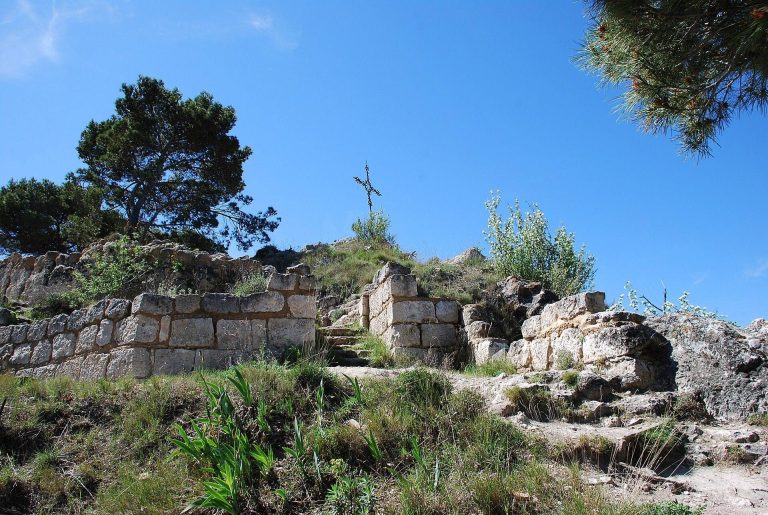
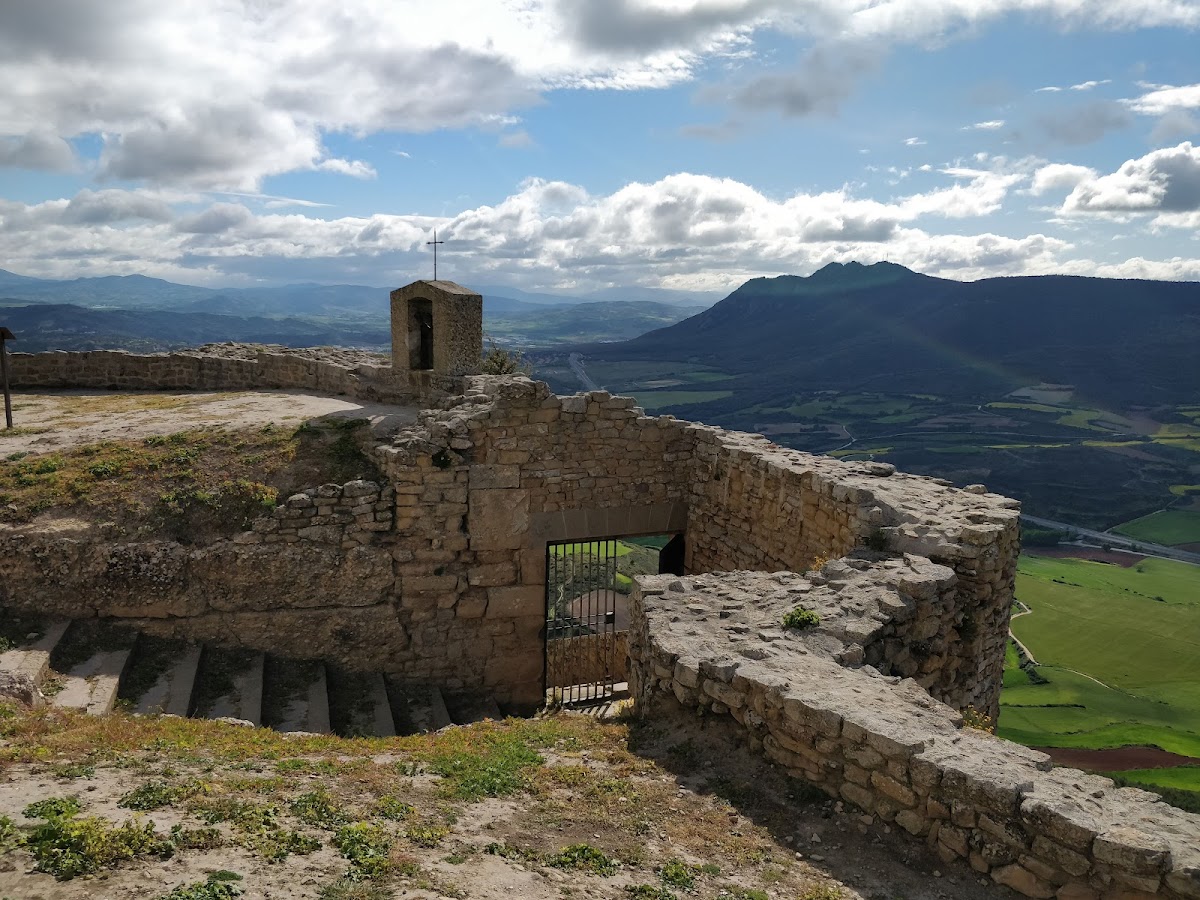
The fortress occupies a hill at approximately 890 metres above sea level, in a commanding position above Villamayor de Monjardín. The surviving medieval enclosure measures about 70 metres in length and reaches approximately 30 metres at its broadest point. Old sandstone walls define the enclosure and surround a level courtyard, while the remaining structures include a cistern and parts of the keep, the principal fortified tower of a medieval castle.
Walls, courtyard, and defensive structures
The cistern lies within a structure covered by a vaulted roof. Together with the sandstone walls and the remains of the keep, it forms the principal surviving fabric of the medieval fortress. The walls enclose the level courtyard, preserving the basic spatial arrangement of the hilltop enclosure even though the castle has been altered and reduced over time.
Hermitage and associated objects
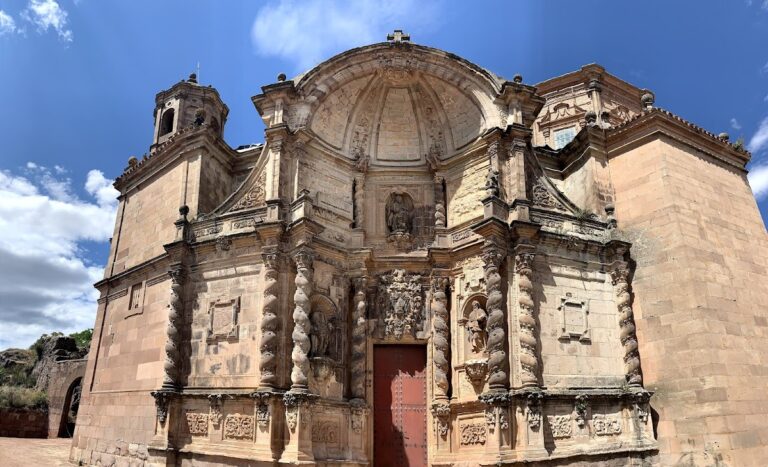
The Hermitage of San Esteban de Deyo, also called Santa Cruz de Monjardín, stands within the courtyard. It was built later than the period associated with the early expansion of the kingdom of Pamplona toward La Rioja, and much of the castle’s stone was reused in its seventeenth-century construction.
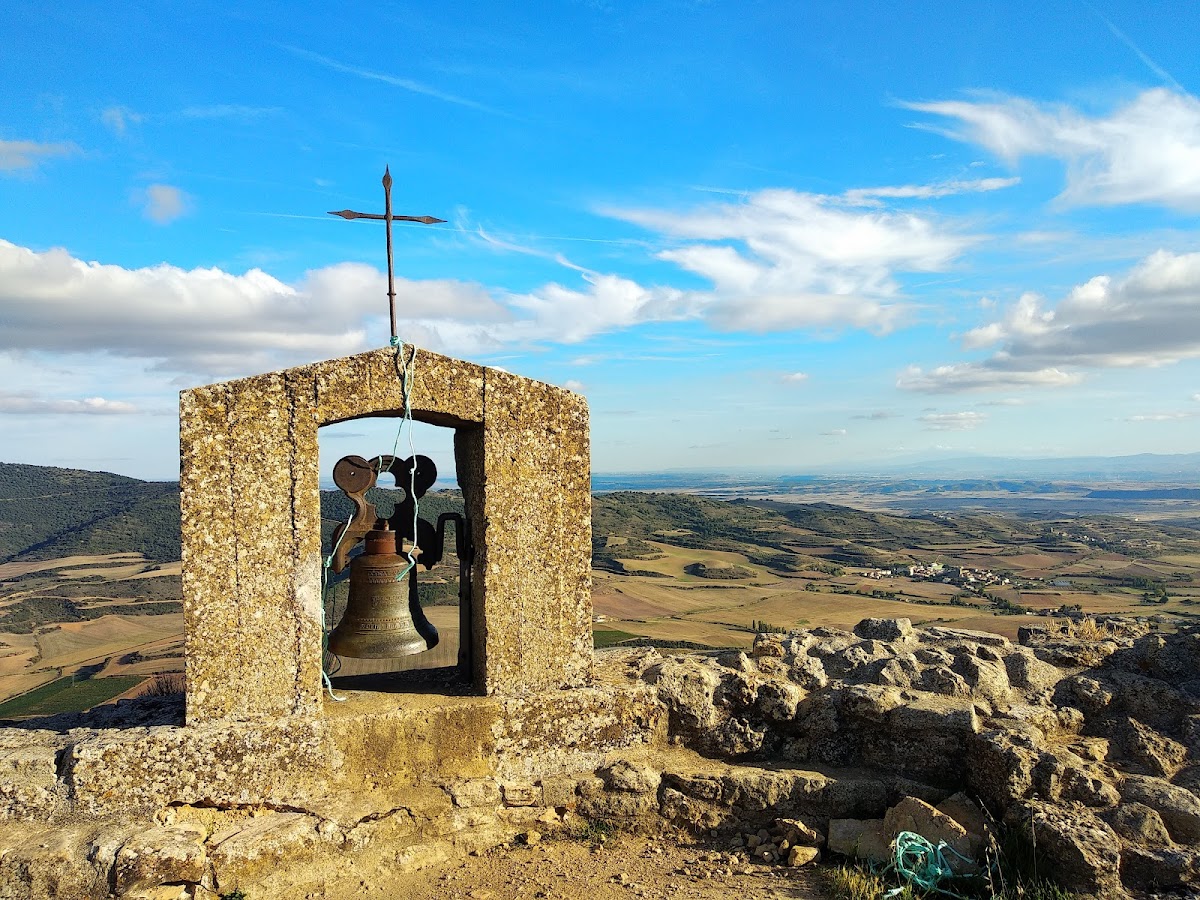
The processional cross associated with the hermitage has features indicating a thirteenth-century date, making it later than the lifetime of Sancho Garcés I despite the tradition linking it with him. The hermitage’s bell was given in 1965 by La Saeta, a recreational society in Pamplona associated with the San Fermín festivities.