Castello di Gorzone: A Medieval Fortress and Federici Residence in Italy
Site at a Glance
- Rating
- 4.2
- Popularity
- Low
- Country
- Italy
- Primary era
- Medieval
- External website
- Open
- Eras represented
- Medieval, Early Modern
- Civilizations
- Holy Roman Empire, Venetian
- Site type
- Military
- Remains
- Castle
On this page9 sections
History
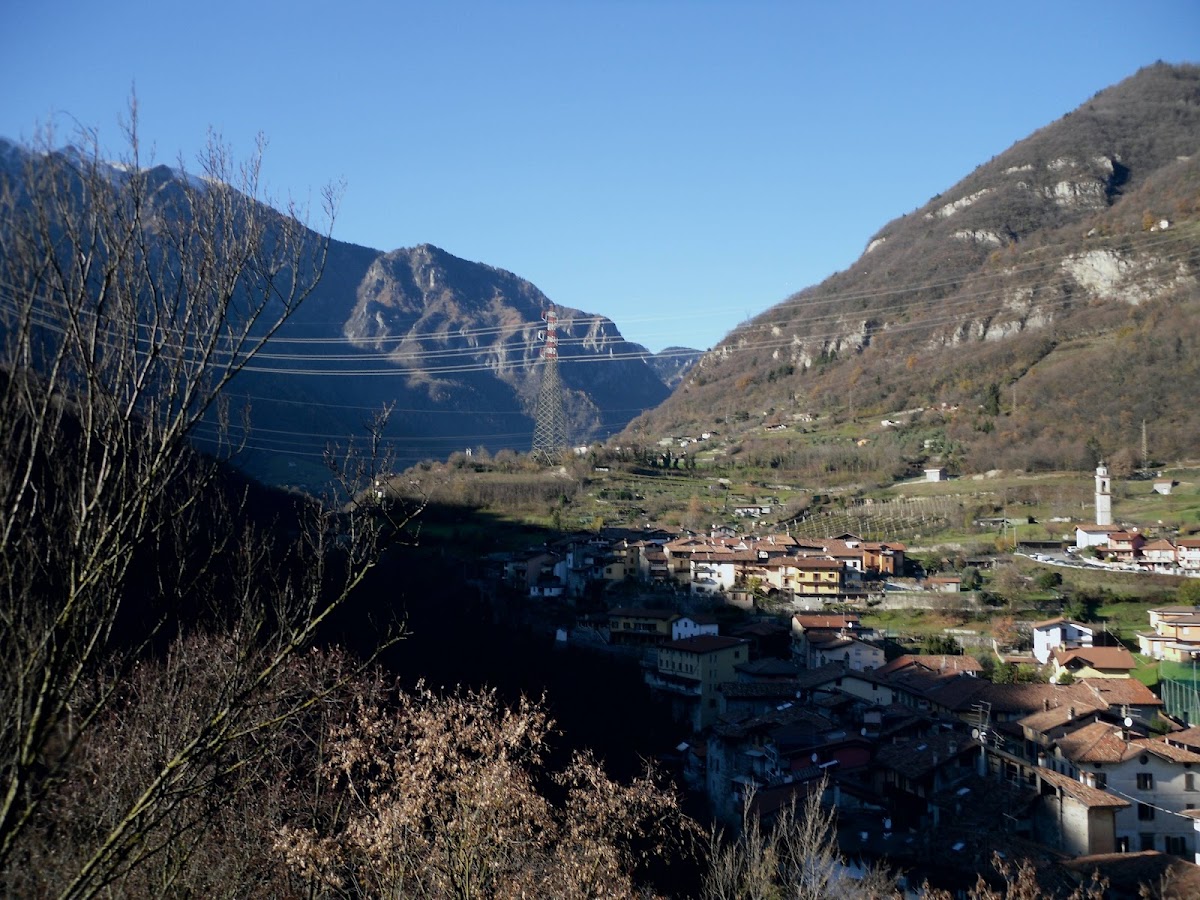
Castello di Gorzone is a medieval fortress and noble residence in Italy, in Gorzone, a hamlet of Darfo Boario Terme. Its first nucleus emerged between the eleventh and twelfth centuries, when the site served as a military outpost on the historic route linking Val Camonica with Val di Scalve. Positioned above the Dezzo gorge, it controlled movement toward the mountain mines and ironworks and later became one of the principal residences of the Federici family.
Origins and the Federici Domain
The exact beginnings of the fortification are uncertain. Local tradition attributes its construction to the Brusati family, regarded as ancestors of the Federici and remembered as a Ghibelline house. Ghibellines generally supported imperial authority in medieval Italy, in opposition to the Guelphs, who generally supported the papacy. During the twelfth century, the Brusati consolidated their power in several parts of Val Camonica.
A document from 1198 names the fief of Gorzone as curte Gorzolli, at a time when the territory was contested by Brescia and Bergamo. In the decades that followed, control passed permanently to the Federici. From the thirteenth through the sixteenth centuries, this powerful feudal family controlled extensive areas of Val Camonica, including castles, feudal rights, mines, forests, and farmland. Gorzone stood alongside Montecchio and the Federici holdings at Erbanno as part of a defensive system governing the valley and the approach to Val di Scalve.
Destruction and Reconstruction
The Federici were Ghibelline opponents of the Commune of Brescia, and their rivalry intensified during the thirteenth century. In 1287, the Brescia government ordered the destruction of the family’s strongholds. Brescian forces attacked Gorzone in 1288, looting and severely damaging the castle as part of the wider Guelph-Ghibelline conflicts that affected communal Lombardy.
The damage did not end the castle’s history. Matteo Visconti, a leading figure of the Visconti dynasty associated with Milan, mediated a reconciliation between Brescia and the Federici. The family then received permission to rebuild its fortifications. This reconstruction enlarged and elaborated the original complex, and much of the visible masonry probably dates from the late thirteenth century and the first decades of the fourteenth.
From Stronghold to Noble Residence
Val Camonica came under the Republic of Venice during the fifteenth century. The greater political stability that followed reduced Gorzone’s military importance, and the complex gradually acquired the character of a noble residence between the late fifteenth and sixteenth centuries. Renaissance porticoes, loggias, and residential rooms were added to the earlier fortified structure. A private chapel dedicated to St John the Baptist was probably built during the sixteenth century, reflecting the Federici family’s continuing aristocratic presence.
During the twentieth century, maintenance and consolidation work helped preserve the complex, including important conservation work carried out in 1928. The Italian state placed the castle under monument protection in 1979, and the restored complex is regarded as one of the principal examples of seigneurial fortified architecture in Val Camonica and as one of the valley’s leading historical symbols.
Remains
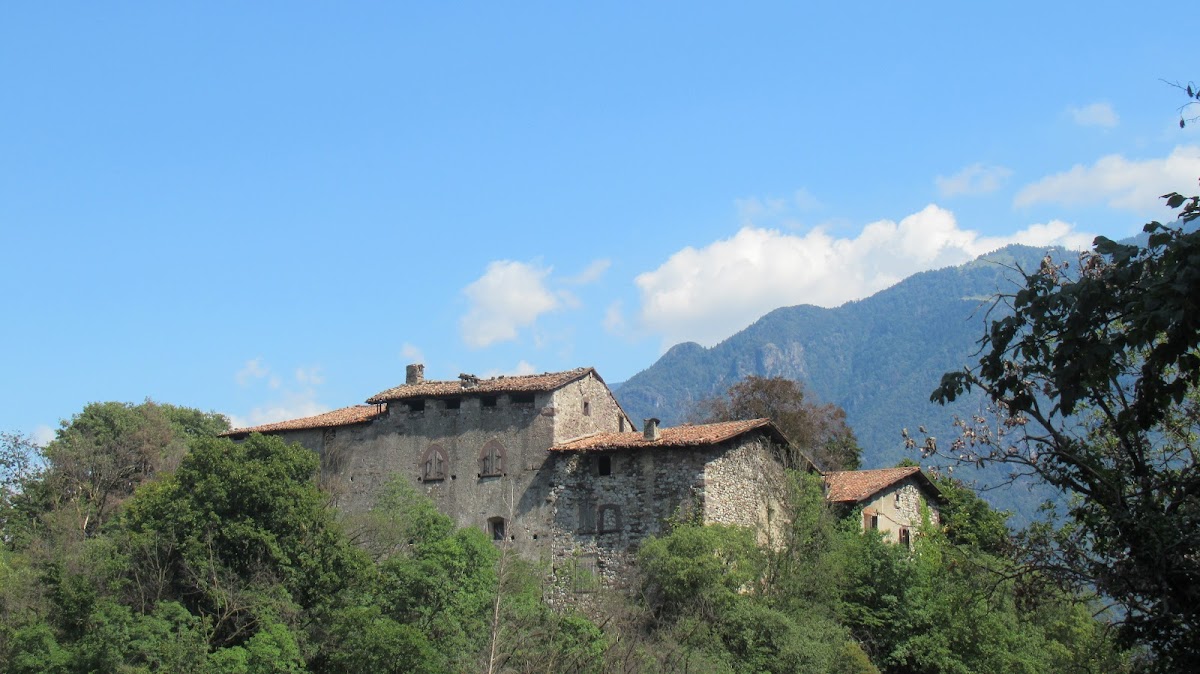
Castello di Gorzone occupies the highest part of the historic settlement, on a rocky spur directly above the gorge cut by the Dezzo stream. The steep southern and western slopes provided natural protection and helped the fortification oversee the road between the Camunian valley floor and Val di Scalve. Its surviving exterior retains the severe character of an Alpine medieval stronghold, with local-stone walls, battered surfaces, and pointed-arch openings.
Fortification and Entrance
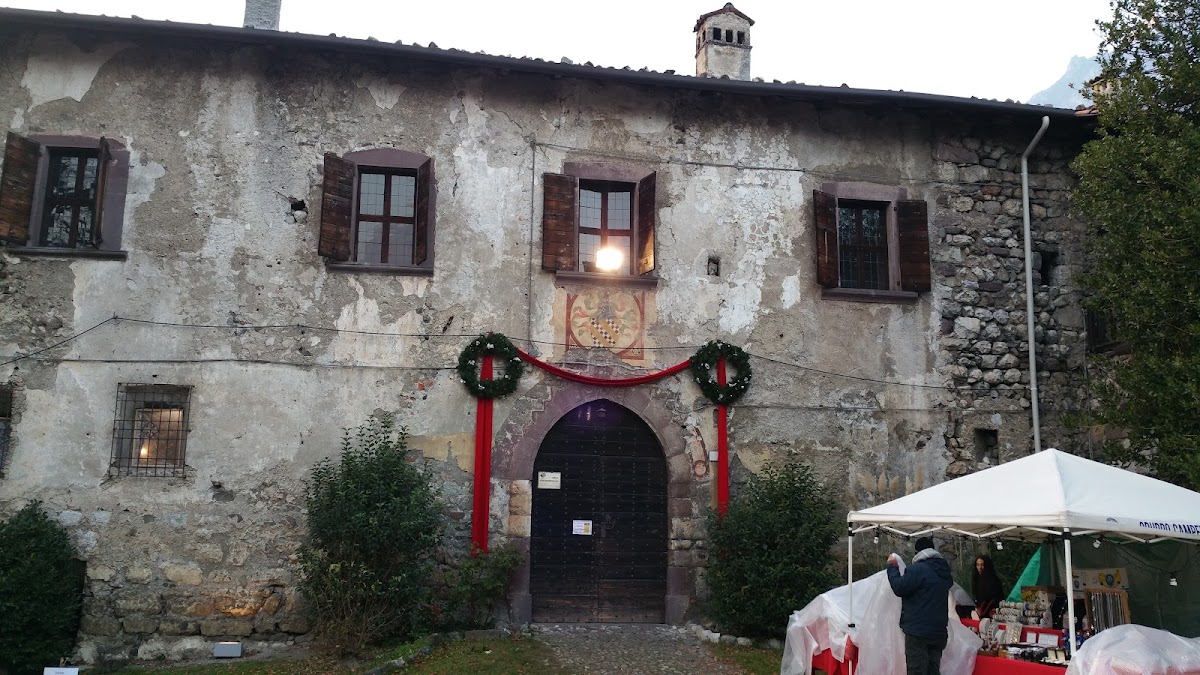
The main entrance is formed by an imposing sandstone portal with a pointed arch. Its heraldic decoration includes an imperial eagle and motifs linked to the Scaliger lordship of Verona, the medieval ruling house that governed Verona and exercised political and military influence in northeastern Italy. Historical photographs from the first decades of the twentieth century show at least one tower associated with the castle. A well in the internal garden collected rainwater, providing an important reserve during possible sieges and supporting the fortress’s self-sufficiency.
Courtyards and Residential Interiors
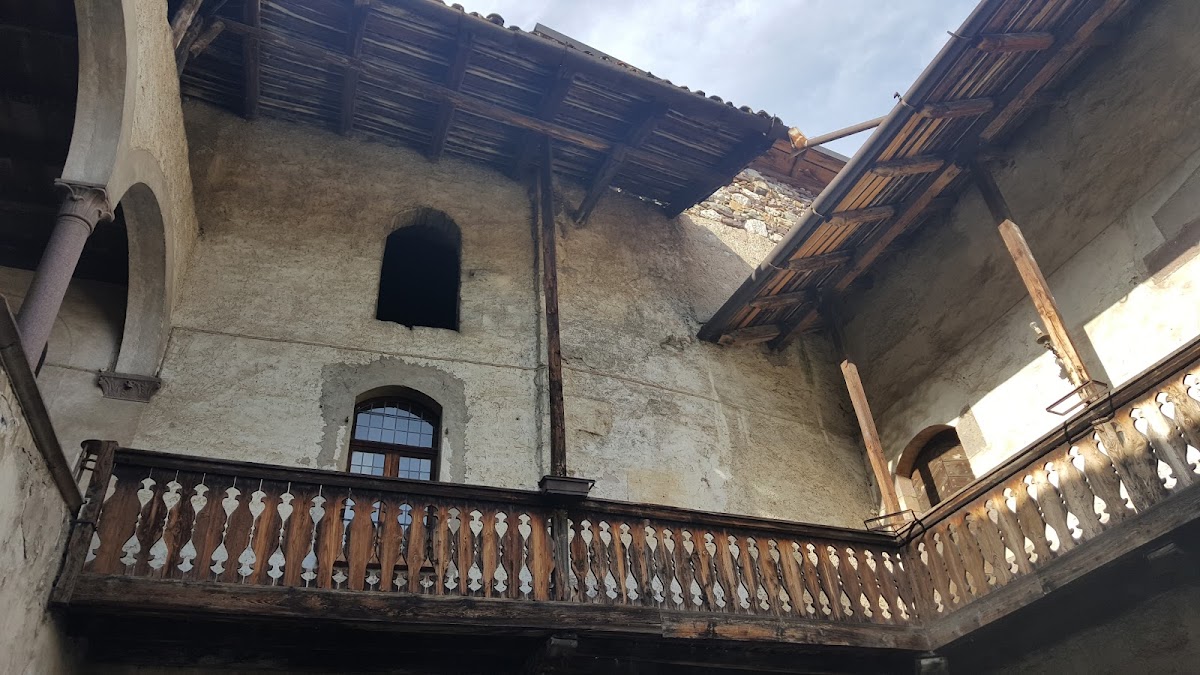
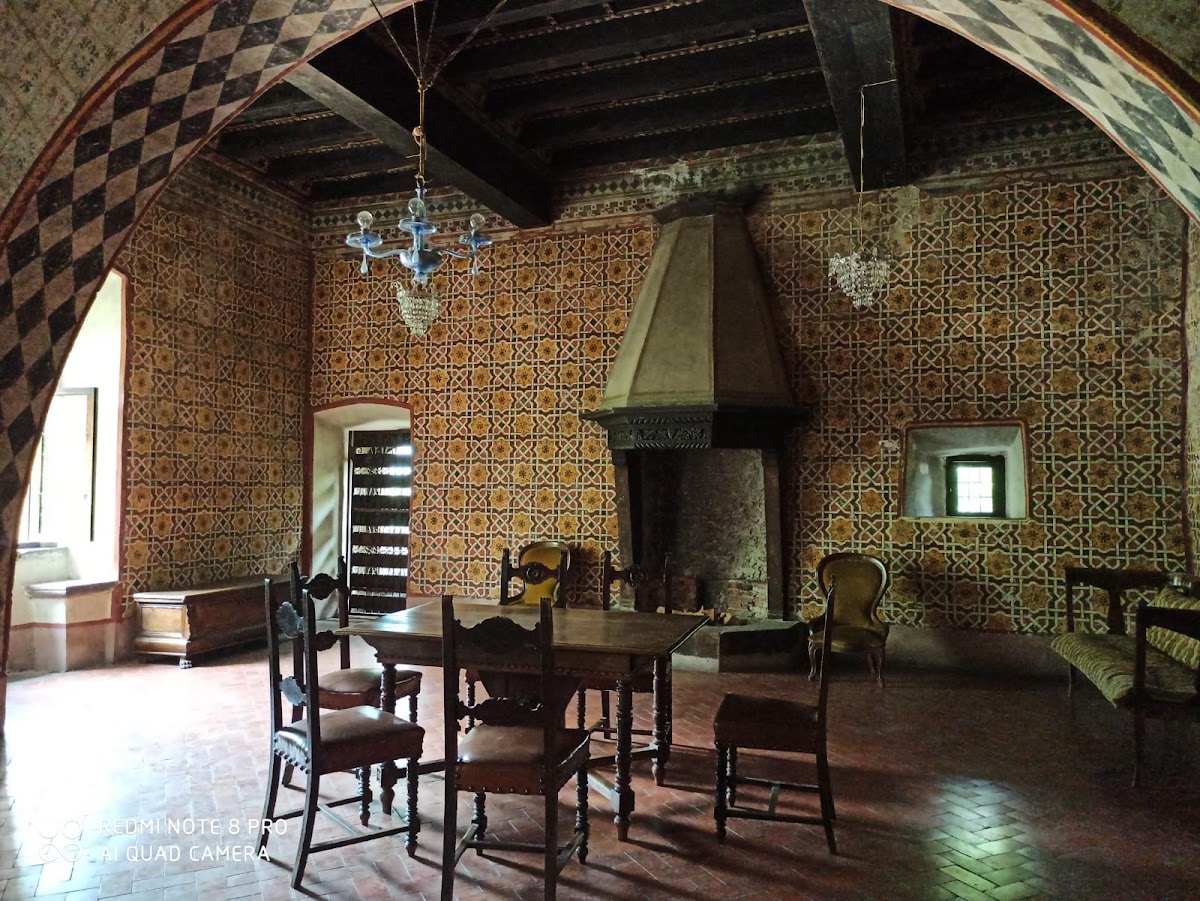
Inside the entrance, courtyards are framed by Renaissance porticoes and loggias, open-sided galleries supported by worked sandstone columns. These spaces belong to the conversion of the military complex into a representative residence. Interior rooms preserve decorated wooden ceilings, frescoed walls, original architectural elements, coffered ceilings divided into recessed panels, and heraldic decoration associated with the Federici family. Traces of Renaissance decorative schemes survive in some rooms.
Chapel and Underground Tradition
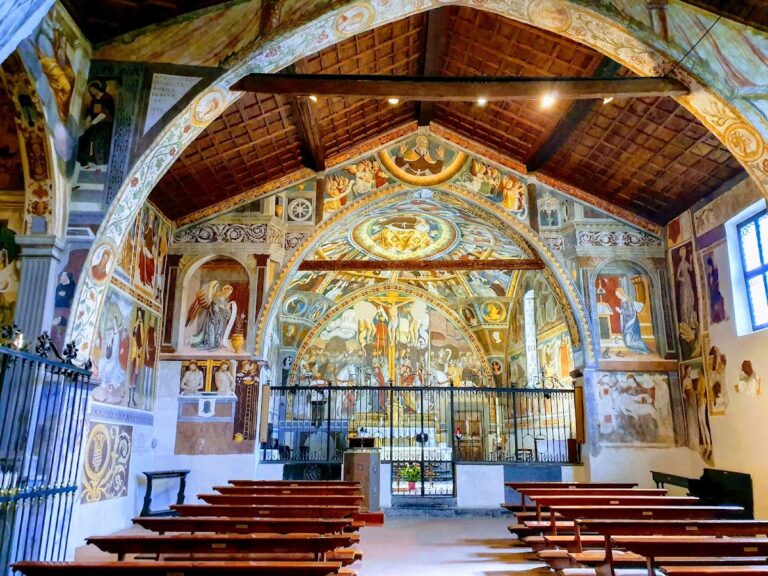
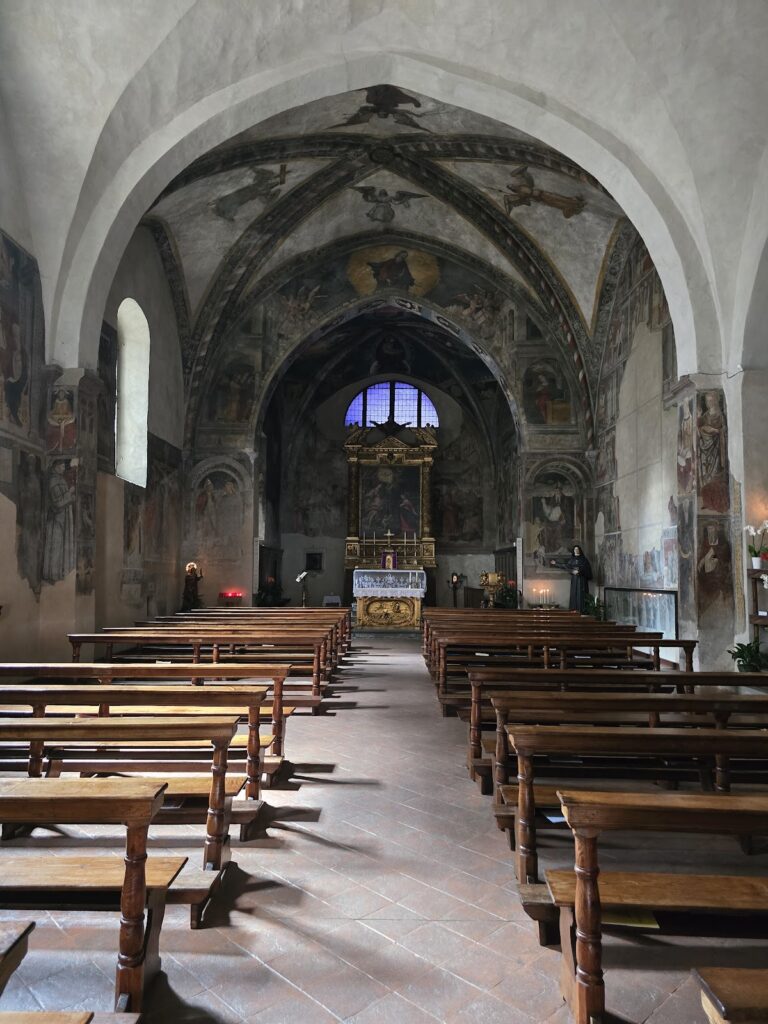
The complex includes a chapel dedicated to St John the Baptist, probably dating from the sixteenth century. Local tradition also describes underground galleries connecting the castle with external Federici buildings. Some passages are said to have collapsed or become buried, while their full extent remains under study.
Sarcophagus of Isonno Federici
Beside the parish church of St Ambrose stands the sarcophagus of Isonno Federici, dated 1336. Isonno was a member of the Federici family, and the monument is regarded as an important example of Lombard Gothic sculpture in Val Camonica. Its pointed forms and commemorative character preserve material evidence of the family’s prominence in the fourteenth century.
Nearby sites