Castle Litice by Plzeň: A Gothic Noble Castle in Czechia


Site at a Glance
- Rating
- 4.5
- Popularity
- Low
- Country
- Czechia
- Primary era
- Medieval
- Eras represented
- Medieval
- Civilizations
- Holy Roman Empire, Kingdom of Bohemia
- Site type
- Military
- Remains
- Castle
On this page6 sections
History
Castle Litice by Plzeň is a thirteenth-century Gothic noble castle in Czechia, established by the Drslavic family during the medieval development of the Czech lands. It is among the oldest noble castles in the country. The castle promontory had already been occupied for centuries before the medieval fortress was built.
Prehistoric settlement and medieval foundation
The outer bailey contained prehistoric hilltop settlements associated with the Schussenried and Cham cultures during the Eneolithic, the later Stone Age period when copper began to be used alongside stone. A hillfort probably arose on the promontory during the Late Bronze Age and still existed at the end of the Hallstatt period, an Early Iron Age phase. These earlier fortifications probably disappeared when the medieval castle was constructed.
The first medieval stronghold was probably a wooden castle built in the first third of the thirteenth century by the Drslavics, a noble family whose members held important regional offices connected with Plzeň Castle. Oldřich of Litice, the first recorded member of the family, appears in a document from 1212. He may then have lived at a manor in the village rather than at the castle itself. During the middle of the thirteenth century, the wooden stronghold was rebuilt in stone.
Royal intervention and monastic ownership
King Wenceslaus II temporarily held half of the castle from 1304. In 1318, the army of King John of Luxembourg captured it after its holders, Rous and Racek, had opposed the monarch. In 1367, the indebted owners sold the castle, together with the settlement, to the Premonstratensians of Chotěšov Monastery. The Premonstratensians belonged to a Catholic religious order founded in the twelfth century. The monastery then leased the castle to different holders.
After the Hussite Wars, fifteenth-century religious and political conflicts in the Bohemian lands associated with the followers of Jan Hus, the Premonstratensians continued to maintain the Litice estate, but the castle itself was abandoned. Its decline and demise are dated to the fifteenth century.
Later ownership and dismantling
Joseph II, the Habsburg emperor whose late-eighteenth-century reforms dissolved or reorganized many monasteries, dissolved Chotěšov Monastery in 1782. The castle consequently passed into the administration of the Religious Fund. In 1822, Prince Karel Alexandr Thurn-Taxis, a member of a European noble house, bought the ruins with the entire Chotěšov estate.
By the beginning of the 1840s, the castle ruins had been dismantled and reused in houses built in the village. Castle Litice by Plzeň is protected as a cultural monument of the Czech Republic.
Remains
Promontory fortifications
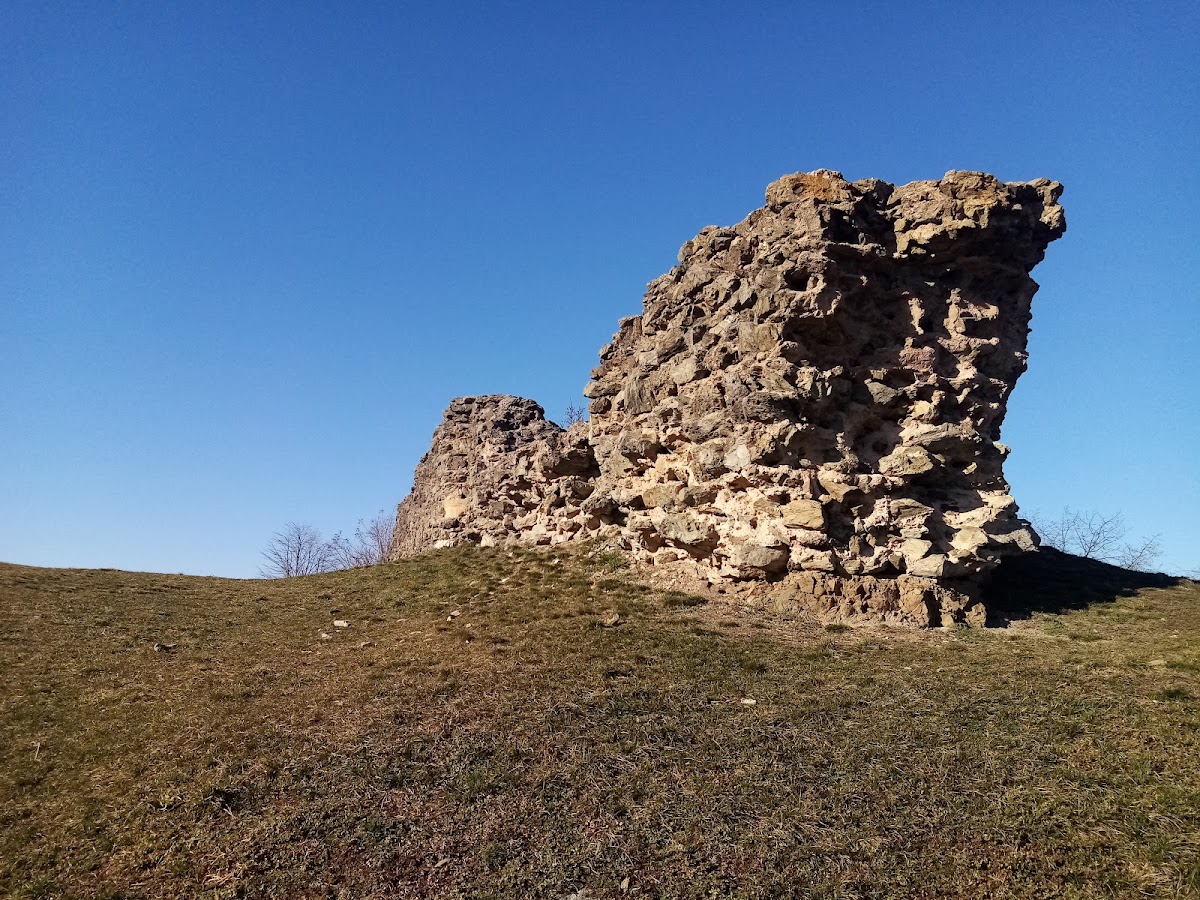
The ruins stand on a promontory above the confluence of the Litice stream and the Radbuza River. The stone rebuilding of the thirteenth century created a Gothic castle of bergfried type, a design centered on a substantial defensive tower and supported by outer defensive works. The main castle was separated from its approach by a ditch approximately 10 metres deep and 30 metres wide. An outer bailey was protected by an earthen rampart and a double ditch. The surviving physical remains consist of this ditch and part of the eastern fortifications, which preserve elements of the castle’s defensive layout.