Château d’Aumelas: Medieval Feudal Fortress in France

Site at a Glance
- Rating
- 4.4
- Popularity
- Low
- Country
- France
- Primary era
- Medieval
- External website
- Open
- Eras represented
- Medieval
- Civilizations
- Crown of Aragon
- Site type
- Military
- Remains
- Castle
On this page10 sections
History
Château d’Aumelas is a medieval feudal fortress in France, near Montpellier, whose construction developed from the eleventh to the fourteenth century. It formed part of the defensive system of the Hérault valley and passed through the hands of abbeys, noble families, the Kingdom of Aragon, and the French Crown.
Early lordship and fortress
The lands of Aumelas appear to have belonged to the domain of Aniane Abbey during the eighth and ninth centuries. An abbey was a monastic institution governed by an abbot or abbess. In the tenth century, the abbey and its lands passed to the Viscounts of Béziers, high-ranking feudal lords who governed a viscounty. Aumelas is mentioned before 1034, and its castellum, meaning a fortified place or castle, is specifically recorded from 1036.
The site developed as a feudal fortress over several centuries. Its construction extended from the eleventh to the fourteenth century, as the stronghold and its associated buildings formed part of the region’s defensive organization.
The lords of Montpellier and Orange
Around 1114, Guilhem V of Montpellier acquired the lordship of Aumelas and adopted the title Lord of Montpellier and Aumelas. At his death, he separated Aumelas Castle and its lands from the lordship of Montpellier and granted them to his younger son, Guilhem d’Omelas. His elder son, Guilhem VI, inherited Montpellier.
Guilhem d’Omelas married Tiburge of Orange, bringing Aumelas into the Orange family. At the end of the twelfth century, the lordship returned to the Lords of Montpellier.
Aragonese and French royal rule
In 1204, Marie of Montpellier married Peter II of Aragon. This marriage incorporated the fief of Aumelas into the Kingdom of Aragon, the medieval monarchy that then governed the territory. The lordships of Aumelas and Montpellier were ultimately purchased by the French Crown in 1349.
Decline and protection
During the sixteenth century, the castle was sold to several private holders. In 1540, it supplied building materials for agricultural structures, although it retained a military role. An obligation to guard the tower was assigned through an adjudication process in 1573. In 1622, an order was issued to dismantle the castle.
The castle became communal property during the French Revolution. The fortified group, including the keep, Saint-Sauveur Chapel, and associated building remains, was entered on the French register of historic monuments on 19 June 1986. The area within the double enclosing wall circuit, the castle ruins, and Notre-Dame Church were classified as historic monuments on 12 June 1989.
Remains
Fortified complex
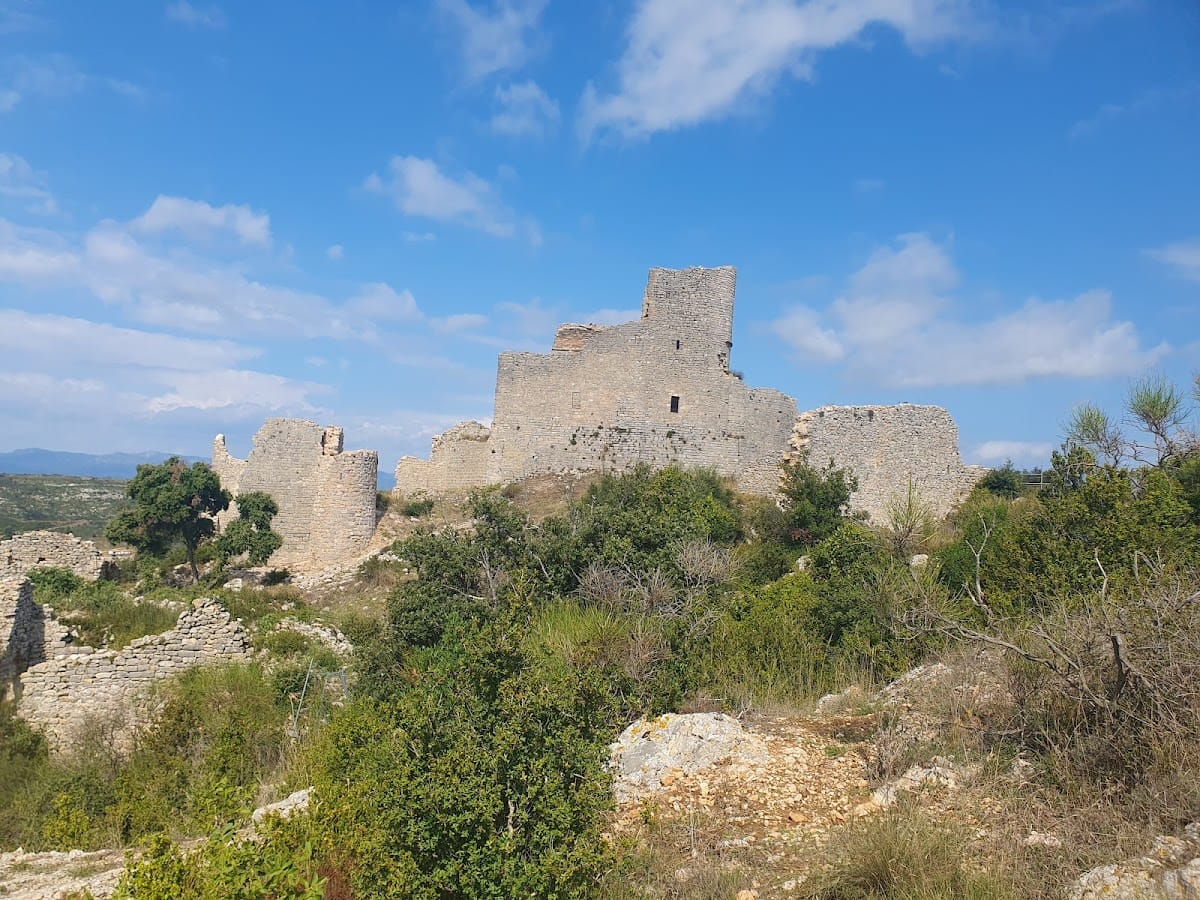
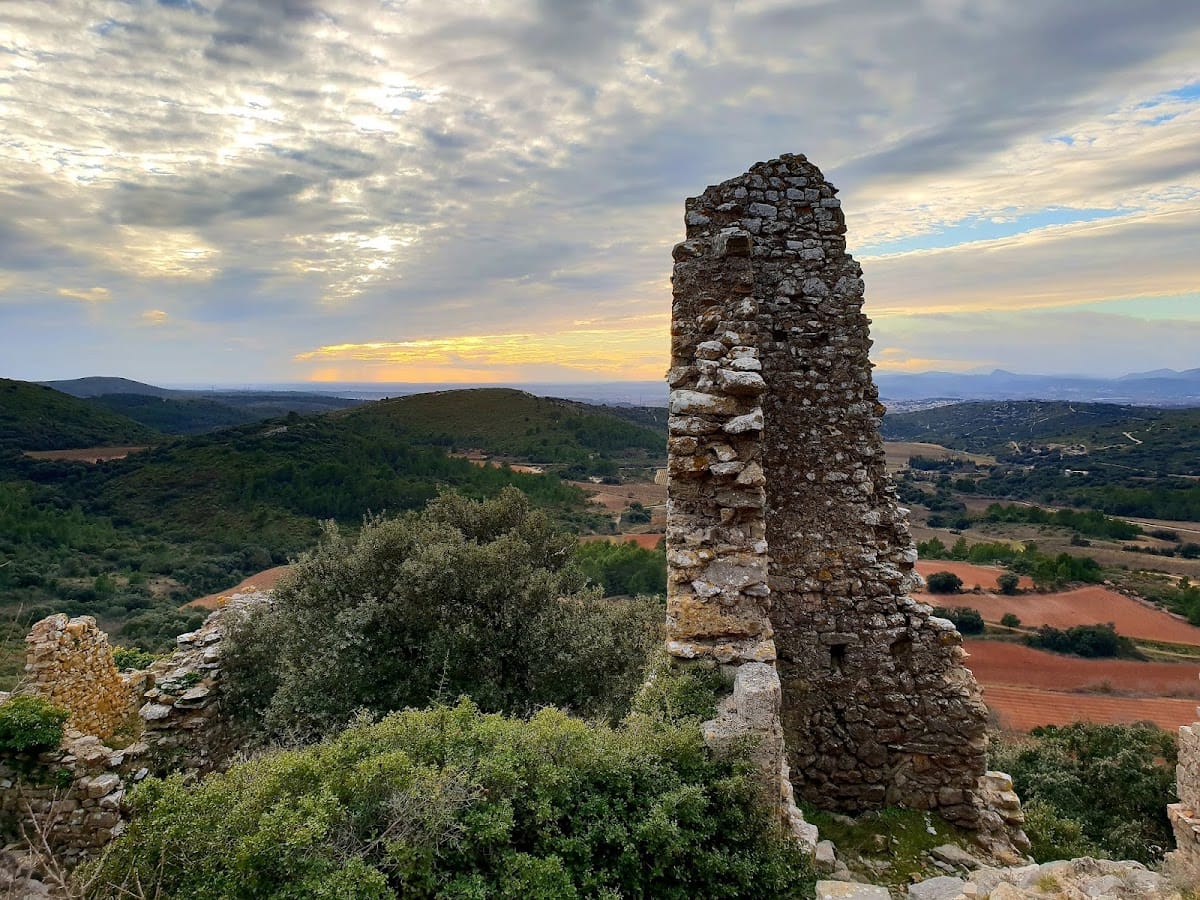
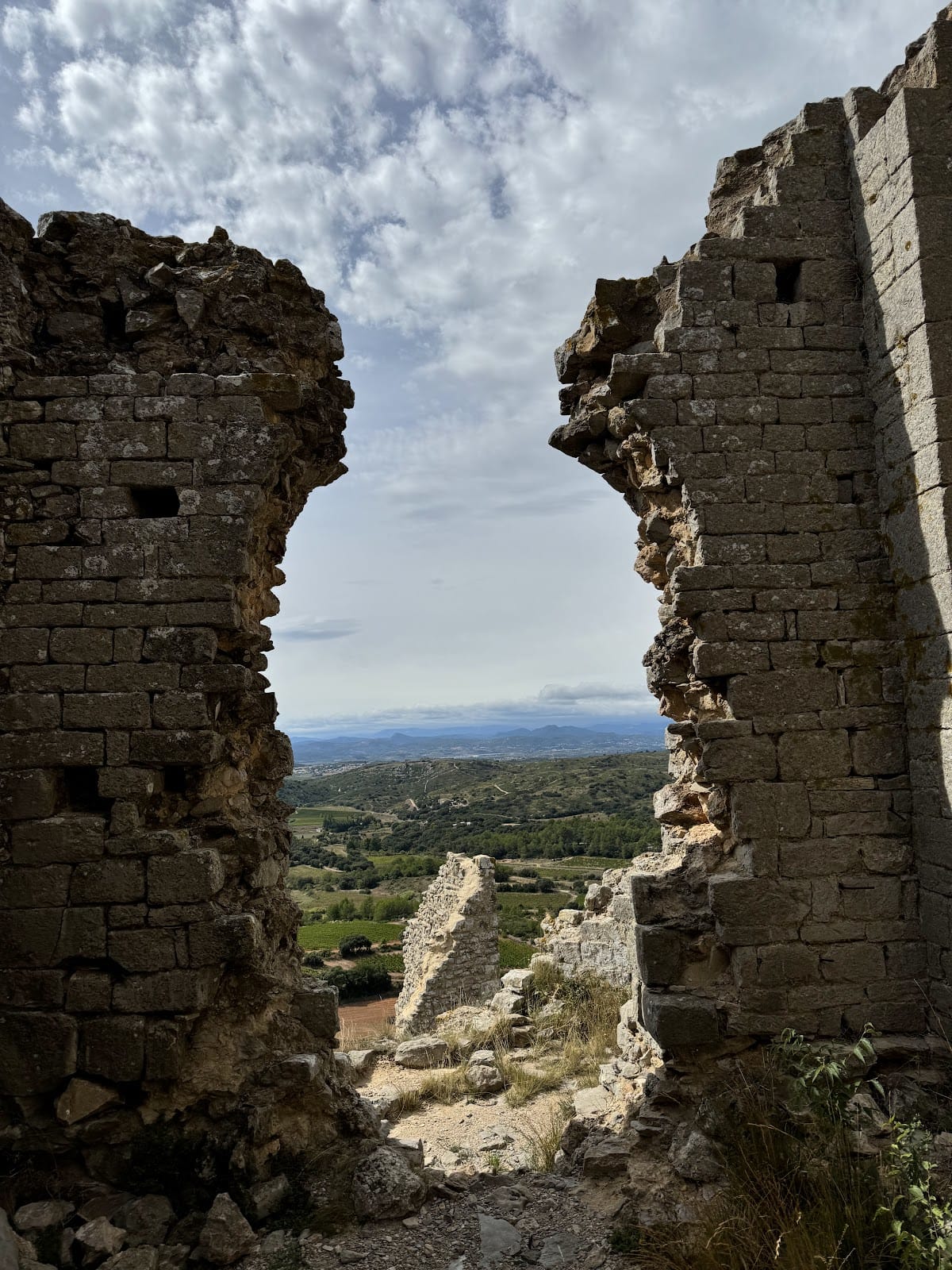
Château d’Aumelas survives as a ruined fortified complex organized around a keep, a double enclosing defensive circuit, religious buildings, and the remains of associated structures. The residential building and Saint-Sauveur Chapel probably date from the late eleventh to the early twelfth century, while other parts of the fortress developed through the fourteenth century.
Keep and enclosing walls
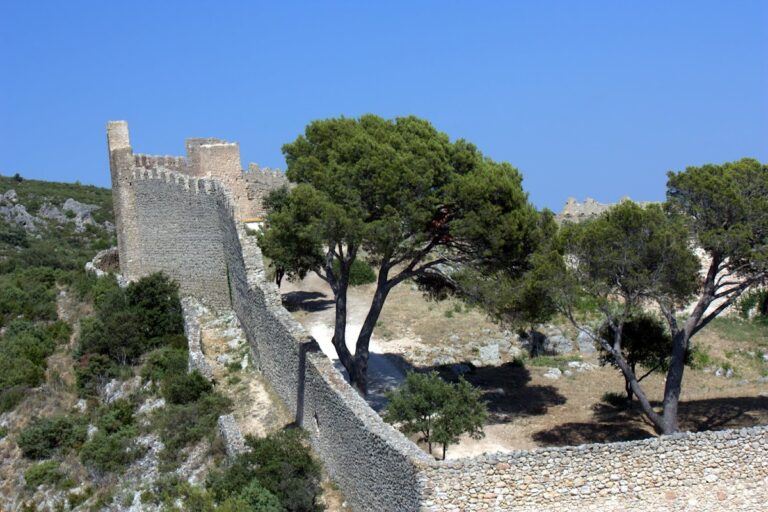
The keep, the principal fortified tower of a medieval castle, forms part of the surviving defensive group. It stands within the double enclosing wall circuit, which defines the protected area of the castle. The wider complex also includes the remains of associated buildings and annexes, preserving the physical outline of the former fortress.
Saint-Sauveur Chapel
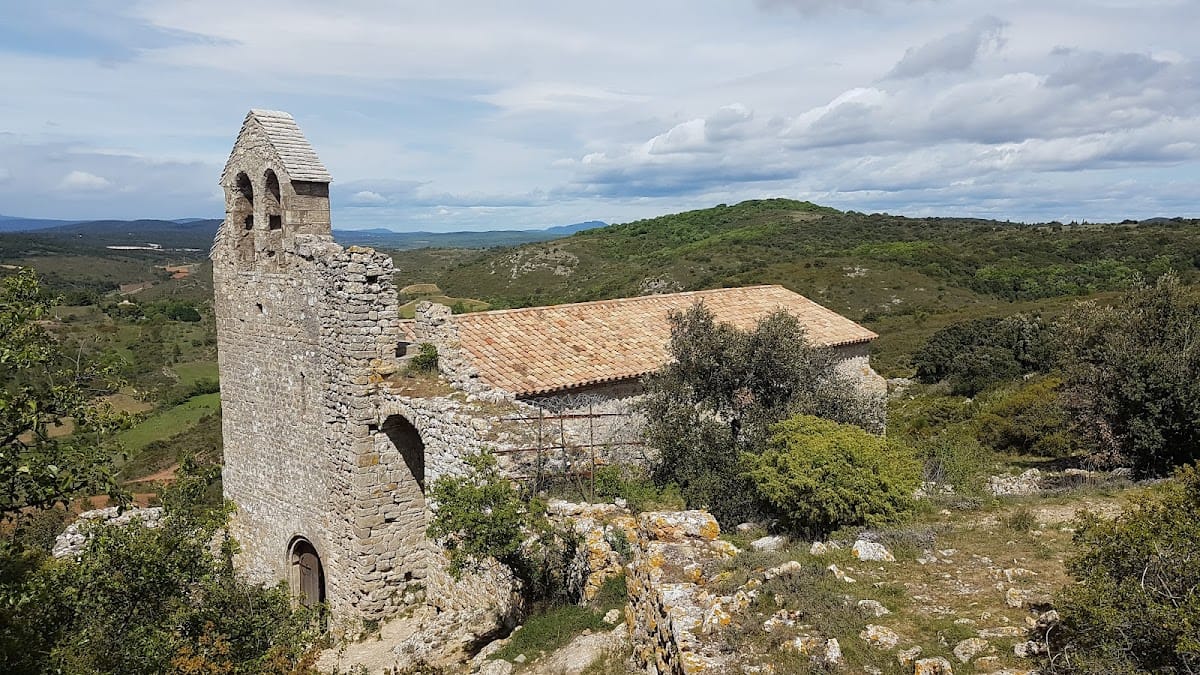
Saint-Sauveur Chapel belongs to the early architectural phase of the site. Along with the residential building, it was probably constructed between the late eleventh and early twelfth centuries. Its remains form part of the fortified group preserved with the keep and other castle structures.
Notre-Dame Church
The former adjoining Notre-Dame Church dates from the late thirteenth to the early fourteenth century. Its ruins remain associated with the castle site and form part of the protected historic complex alongside the castle remains and the area enclosed by the defensive circuit.
Nearby sites