Château de Bélarga: A Fortified Castle and River Crossing in France


Site at a Glance
- Rating
- 5
- Popularity
- Very Low
- Country
- France
- Primary era
- Early Modern
- Eras represented
- Medieval, Early Modern
- Civilizations
- French
- Site type
- Domestic
- Remains
- Castle
On this page7 sections
History
Château de Bélarga is a fortified castle in France, in the commune of Bélarga, whose present form was created in the 17th century around parts of a medieval castle. The site controlled a ford across the Hérault River where travelers paid a toll, giving it both defensive and economic importance.
Medieval fortress and lordship
A fortified castle stood at Bélarga before 1281, when it was associated with the formation of a village. An enclosing defensive circuit was added at the end of the 13th century or the beginning of the 14th century. The earlier fortress occupied a position above the river crossing and formed the centre of a castrum, a fortified settlement or castle-based territorial complex.
Bélarga belonged to the Guilhem family, powerful lords of Clermont-Lodève. Bérenger IV of Guilhem was named lord of the castrum de Belesgario in 1310. His successor, Pierre de Clermont, became involved that year in a case that ended the family’s control of the lordship.
Pierre was convicted by the seneschal of Carcassonne, a royal official responsible for justice and government in his district, for assaulting Fize, a young woman from Puilacher. After she refused his sexual demands, he had her taken to the castle and imprisoned for three days. He then subjected her to further coercion and torture, including suspending her over a beam with baskets of stones attached to her arms and legs. She was released only after falsely admitting that she had had a child. The sentence was confirmed by the Parlement of Paris, the kingdom’s highest royal court for the areas under its jurisdiction, on 29 January 1311. Bélarga was confiscated, and Pierre was fined 500 livres for the king and 100 livres for Fize.
The Mirman château
By the 17th century, the château belonged to the Mirman family, members of the robe nobility, a legal and administrative elite whose position was linked to judicial and governmental offices. In 1654, the knight François de Mirman was baron of Florac and lord of Bélarga. He also served as the king’s councillor and intendant of the salt tax.
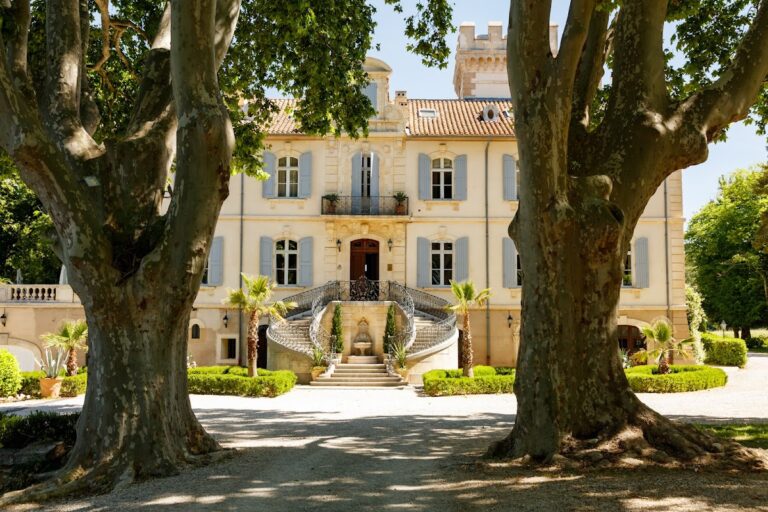
The Mirmans transformed the medieval property into the château seen today. They built a new residence to the north of the earlier castle and embellished it in the rustic style fashionable in 17th-century Montpellier. The building remains privately owned and inhabited by its owners. A survey for the French Ministry of Culture’s General Inventory of Cultural Heritage took place in 1976.
Remains
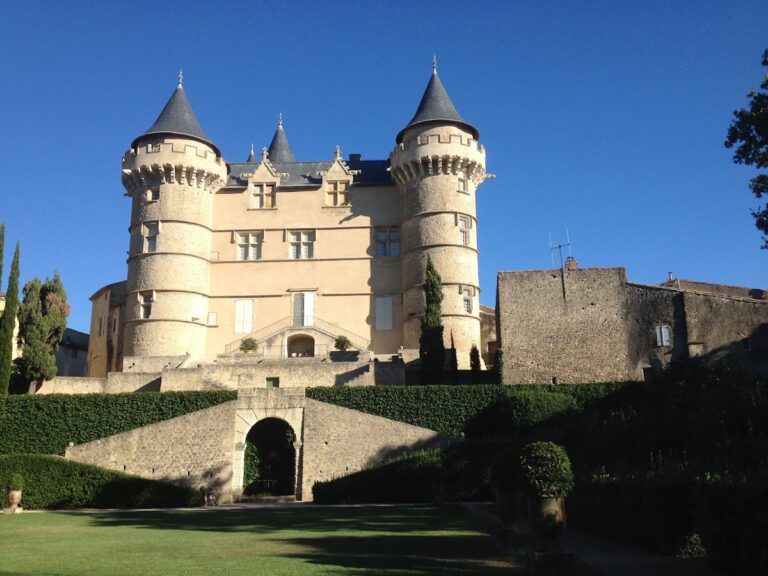
The château stands on the left bank of the Hérault River. Its surviving fabric combines a 17th-century residence with portions of the earlier castle, preserving the physical development of the site from a medieval fortified crossing to a later seigneurial home.
Earlier castle and later residence
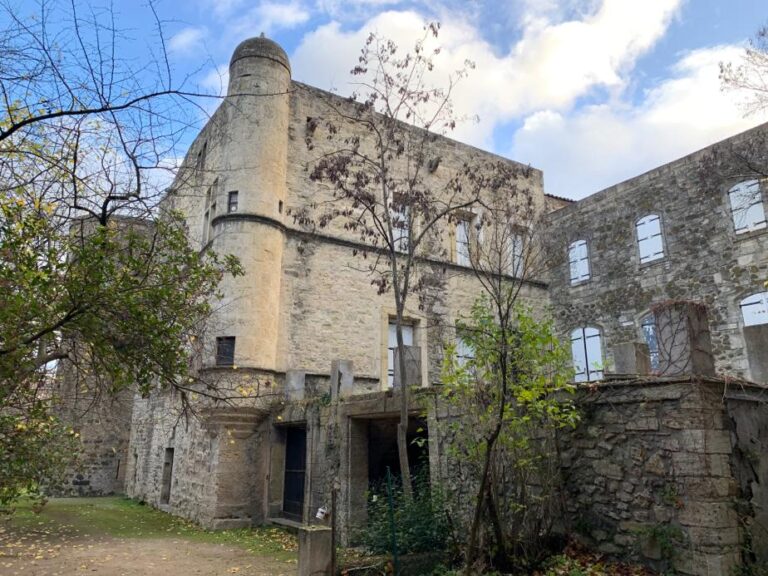
Medieval north wing
The north wing of the present building probably dates from the 14th century and was altered during the 15th century. It forms part of the earlier castle that dominated the tolled ford across the Hérault. Its incorporation into the later building preserves a medieval element within the present château.
Seventeenth-century château
A new château was constructed north of the earlier wing in the 17th century. This addition gave the property its current appearance, with embellishment in the rustic manner associated with 17th-century Montpellier. The present building therefore joins the surviving 14th- and 15th-century fabric to the residence created under the Mirman family.
Nearby sites