Burg Körse: A Medieval Castle and Frontier Fortress in Germany


Site at a Glance
- Rating
- 4.2
- Popularity
- Very Low
- Country
- Germany
- Primary era
- Medieval
- Eras represented
- Medieval
- Civilizations
- Holy Roman Empire, Kingdom of Bohemia
- Site type
- Military
- Remains
- Castle
On this page9 sections
History
Burg Körse is a medieval castle site in Kirschau, Germany, whose origins lie in a Sorbian fortified settlement founded around AD 1000 and whose German castle was built between 1200 and 1250. The early settlement was created by the Sorbs, a West Slavic people whose traditional homeland includes Lusatia in present-day eastern Germany. It was known as Korzym, a name derived from the personal name Korz.
From Sorbian Settlement to German Castle
Around 1100, German-speaking settlers entered the area and destroyed the original Korzym stronghold. A German castle was later constructed on the same site between 1200 and 1250. It became one of the largest and strongest fortifications in Upper Lusatia, a historical region that now lies largely in eastern Germany.
A Frontier and Route-Watching Stronghold
From around 1200, Burg Körse stood where the territory of Budissin, the Kingdom of Bohemia, and the Diocese of Meissen met. This frontier setting is still recalled by the Three-Country Stone, a boundary monument associated with the historic meeting point. The castle also protected the Bohemian Steig, an old route running between Bautzen and Prague that continued through Bohemia as the Old Prague Road.
Near Burg Körse, the Bohemian Steig crossed a west-east salt road connecting Halle and Zittau. Salt roads were long-distance trade routes used especially to transport salt, and this route crossed the Spree by a ford near Kirschau. During the first half of the fourteenth century, however, the castle’s lord probably used the position for road robbery rather than protecting traffic along the route.
Siege and Abandonment
In November 1352, the Upper Lusatian League of Six Cities besieged and captured Burg Körse on the orders of Emperor Charles IV. The league was a medieval alliance of six towns that acted together in regional political and military affairs. Duke Bolko of Schweidnitz commanded the attacking forces. The castle was not rebuilt after its capture. Although 1358 is sometimes given as its destruction date, more recent research does not accept that date.
Archaeological Investigation
Excavation and archaeological investigation began in 1922. The finds recovered from the site are presented in the Burgmuseum Kirschau, which was built at the northern foot of the castle hill in 1995. These investigations have helped clarify the castle’s earlier settlement, construction, and violent end.
Remains
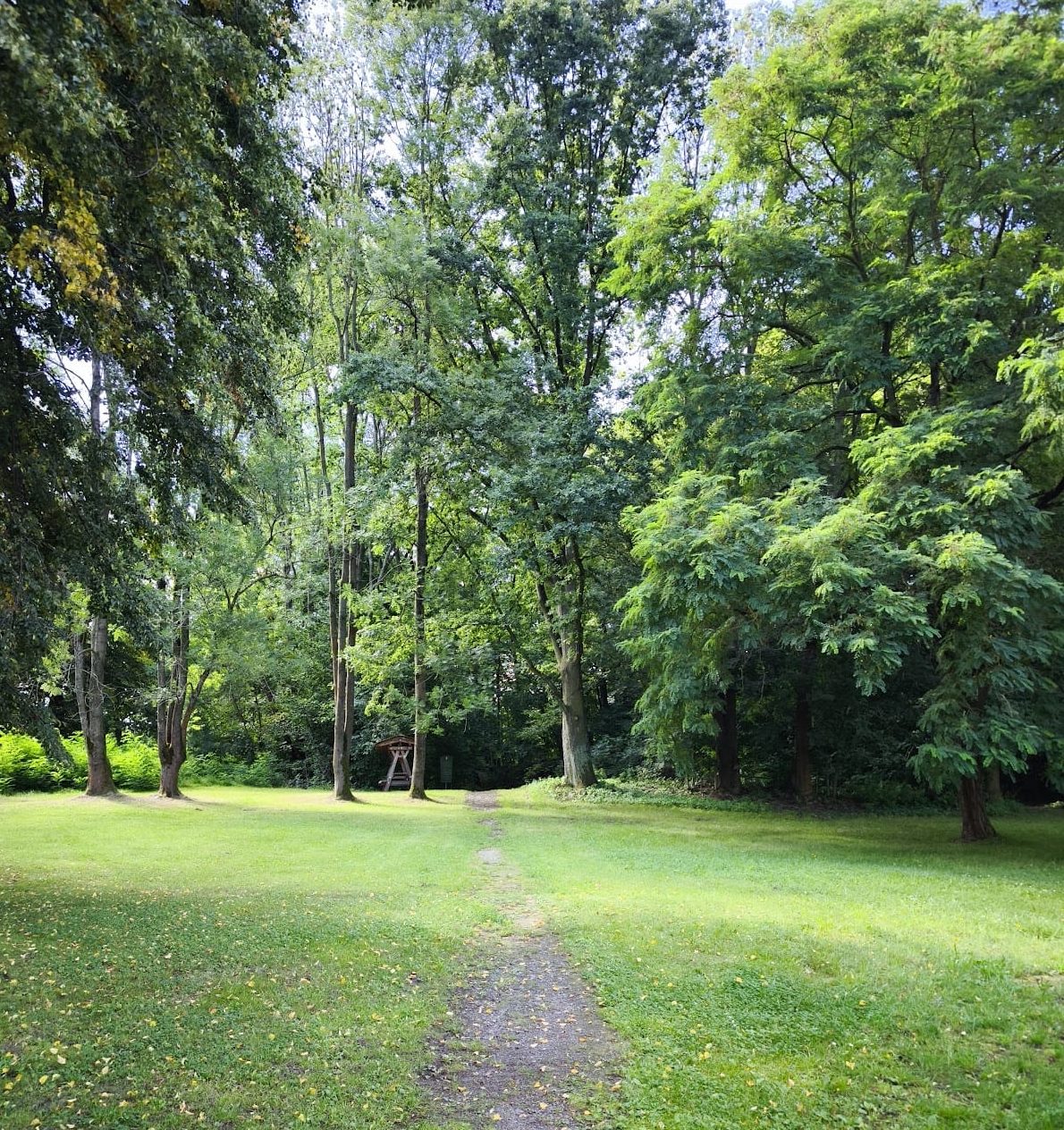
The ruins occupy a rocky spur about 275 metres above sea level in the southeastern part of Kirschau. The Spree flows around the spur on three sides, while the castle hill is wooded. The complex included a main castle with a bergfried, the principal tower of a medieval German castle, a bailey, a drawbridge, four gates, and defensive bastions.
Early Fortifications and Main Castle
The earliest settlement was protected by a section rampart and developed into a burgwall, a fortified settlement or earthwork associated with Slavic societies in Central and Eastern Europe. Its purpose was to protect the settled area from hostile attacks. The later main castle is represented by a semicircular ring wall approximately 100 metres long and about 3 metres high today. The wall is thought to have originally reached 6 to 7 metres. Part of the bailey wall and its arched entrance gate also survive, together with the former castle well.
Materials and Siege Evidence
Burg Körse was built mainly from locally available granite. Basalt used in the construction was quarried at the Horken near Halbendorf. The masonry was laid with sand mortar made from washed, humus-free river sand. Granite stones found inside the ring wall indicate that fire damaged the castle during the siege and assault that led to its capture in 1352.
Burgmuseum Kirschau
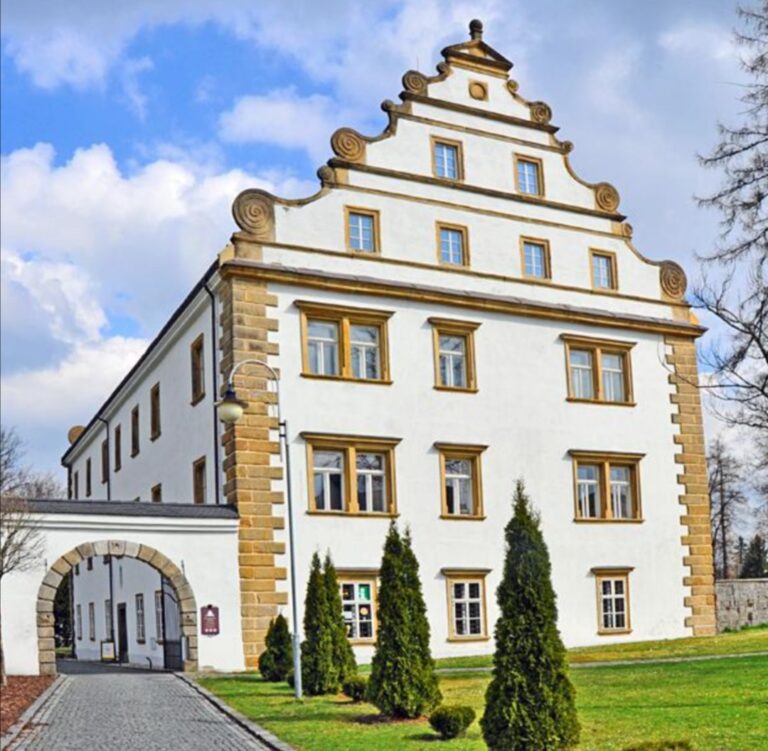
The Burgmuseum Kirschau stands at the northern foot of the castle hill. It contains archaeological finds recovered during investigations of Burg Körse and provides a material record of the site’s earlier fortified settlement and medieval castle.