Michaeliskirche: A Historic Sorbian Protestant Church in Bautzen
Site at a Glance
- Rating
- 4.6
- Popularity
- Very Low
- Country
- Germany
- Primary era
- Medieval
- External website
- Open
- Eras represented
- Medieval, Early Modern
- Civilizations
- Holy Roman Empire, Kingdom of Bohemia
- Site type
- Religious
- Remains
- Church
On this page7 sections
History
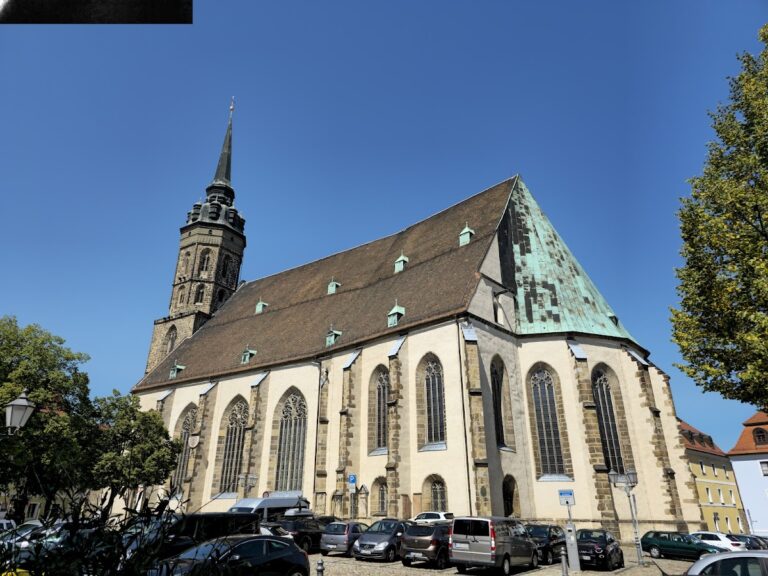
Michaeliskirche is a historic Protestant church in Bautzen, Germany, built in stages from the late fifteenth to the early sixteenth century on the southwest edge of the city’s old town. Its origins are connected with the Hussite Wars, fifteenth-century religious and political conflicts associated with the followers of the Bohemian reformer Jan Hus, and its later history is closely tied to the Sorbs of Lusatia.
Foundation after the Hussite siege
During the Hussite siege of Bautzen in 1429, the attackers camped on a plateau outside a weak point in the city’s earlier fortifications. A local tradition says that the archangel Michael appeared in the sky and helped the defenders repel the assault. In gratitude, the citizens established a chapel dedicated to Saint Michael. The chapel is first mentioned in 1473.
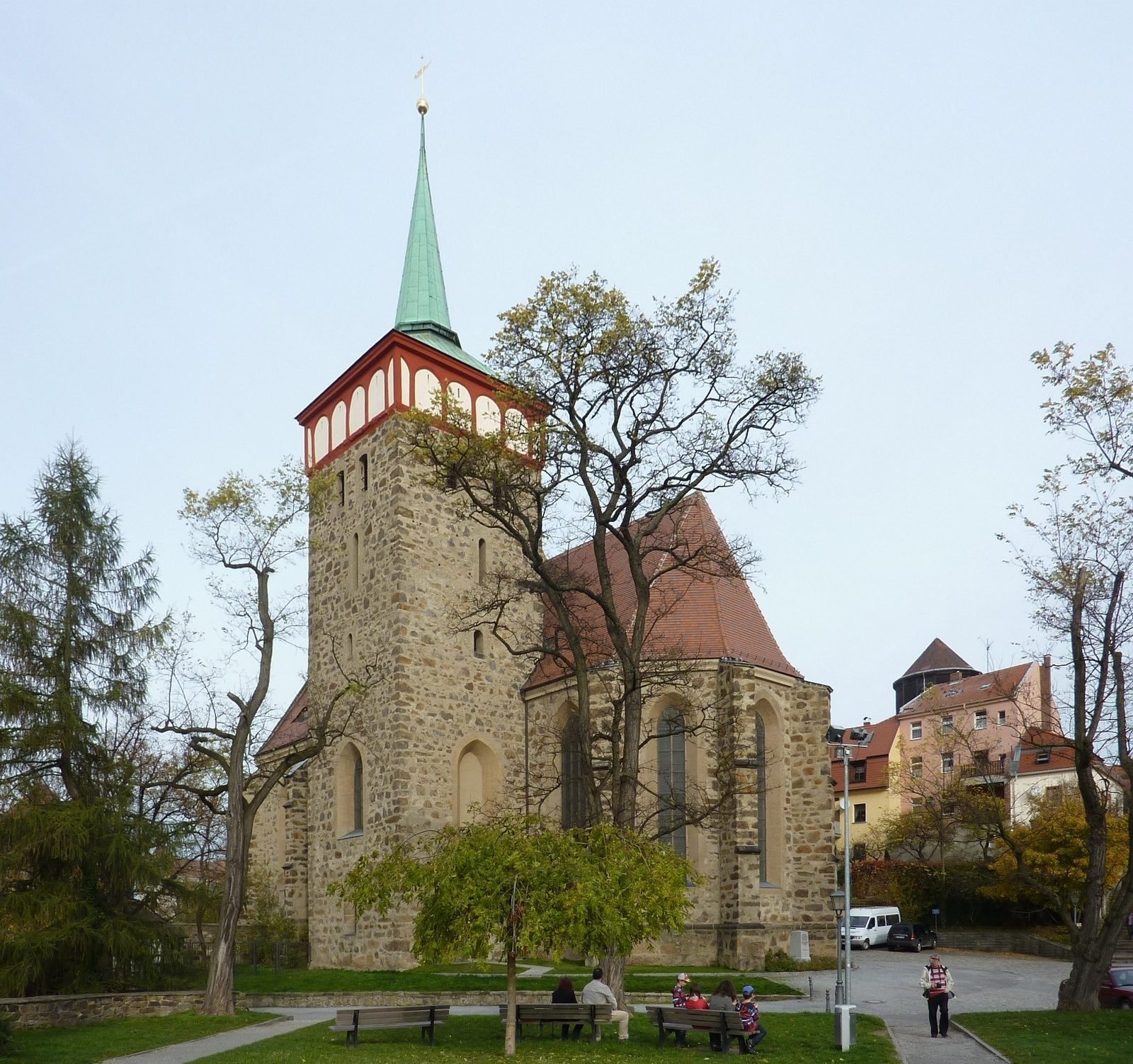
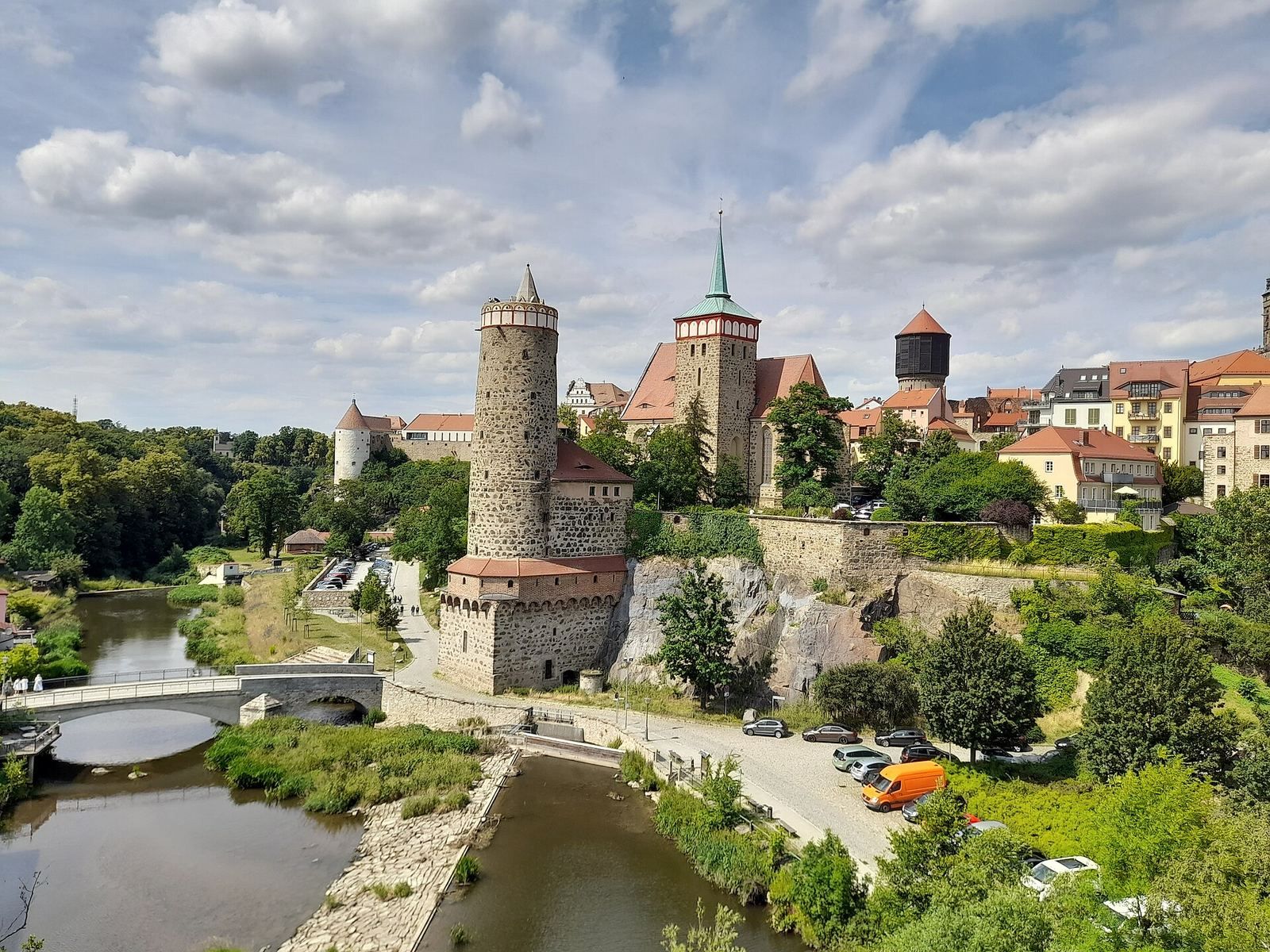
When the city wall was later relocated, the plateau and the area now known as the Wendish Churchyard were brought within the fortified town. The expanded wall adjoined the Old Waterworks, placing the chapel in a strategically defined part of Bautzen’s southwest edge. The chapel eventually became the eastern section of the present church. A tower was added on the south side in 1495, followed by construction of the nave to the west. The vault and roof were completed around 1520, after which the building was known as Michaeliskirche.
Reformation and the Sorbian parish
The Reformation, the sixteenth-century movement that established Protestant churches across western and central Europe, transformed the religious setting of Upper Lusatia. Michaeliskirche held no services for 99 years after Protestantism was introduced in the region.
In summer 1619, Protestant worship in Sorbian was authorized in the Kingdom of Bohemia, which then included Bautzen. The city council subsequently designated Michaeliskirche as the parish church of the Protestant Sorbs, and worship resumed there in September of that year. The parish remained exclusively Sorbian until 1836. German services were then introduced gradually, first once a month and later more often. A Sorbian service continues to be held once a month. During the nineteenth and early twentieth centuries, the congregation also owned a Michaelis School.
Fire, war, and restoration
Michaeliskirche was lightly damaged in Bautzen’s first major city fire in 1634, although its roof burned out. About five tonnes of gunpowder stored inside the church did not ignite. Because it was among the few buildings to survive the fire, the church temporarily served St Peter’s parish after St Peter’s Cathedral was destroyed.
The church was damaged again during the Battle of Bautzen at the end of the Second World War. The tower hood burned out, but a bell cast in 1929 survived. It was the only bell in the city able to ring in the New Year in 1946.
Renovation between 1964 and 1976, financed through a church-building program in the German Democratic Republic, removed external additions and reversed most of the changes made in 1892. The south windows, which had been obstructed, were reopened. The Eule company installed a new organ in 1976. A new set of bells followed in 1992, and conservation of the facade has continued since 2005. Together with the Old Waterworks, Michaeliskirche forms a landmark ensemble used in stylized form on municipal signs and inscriptions.
Remains
Setting and building form
Michaeliskirche occupies the southwest edge of Bautzen’s rocky promontory above the Spree. It stands near the Old Waterworks, between the inner and outer town walls, in the area called the Wendish Churchyard. The church has a recorded height of 45 metres and a ground area of 640 square metres.
The surviving building retains the earlier Michael chapel in its eastern part. The south-side tower and the westward nave belong to the expansion begun in the late fifteenth century, while the vault and roof were completed around 1520. The churchyard formed part of an important route from the Spreetal through the Inner Lauentor and into the old town, so the church had no cemetery attached to it.
Interior and later alterations
An altar made by Stöckel and Kanderbach in 1693 remains inside the church. An organ was consecrated in autumn 1784. The remodeling of 1892 introduced galleries, blocked the south windows, added exterior stair towers, and installed a new Eule organ together with three new church bells.
The stair towers and other external additions were removed during the renovations of 1964 to 1976, and the south windows were reopened. The 1976 Eule organ replaced the earlier instrument associated with the 1892 remodeling. The tower hood still bears the effects of the 1945 fighting, while the bell cast in 1929 survived until the church received its present set of bells in 1992.