Arnstein Ruins: A Medieval Castle above Maria Raisenmarkt, Austria
Site at a Glance
- Rating
- 4.7
- Popularity
- Very Low
- Country
- Austria
- Primary era
- Medieval
- Eras represented
- Medieval
- Civilizations
- Duchy of Austria, Holy Roman Empire
- Site type
- Military
- Remains
- Castle
On this page9 sections
History
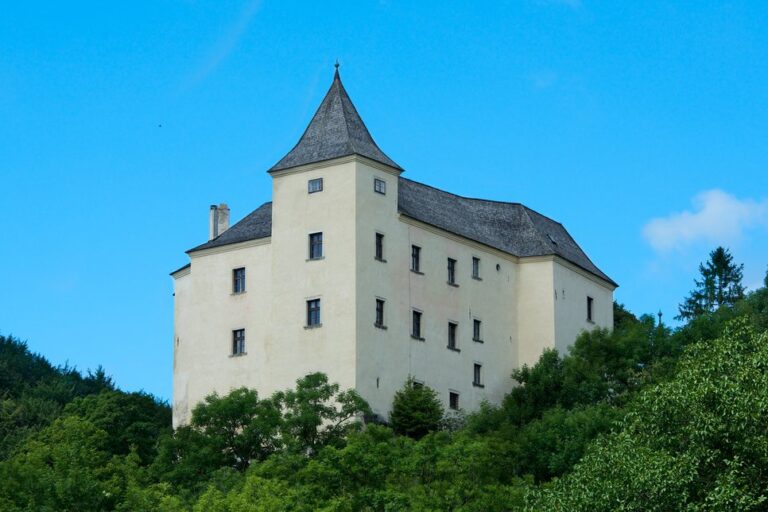
Arnstein Ruins are the remains of a medieval hilltop castle above Maria Raisenmarkt in Austria. The fortress originated in the twelfth century and was first mentioned in 1170. Its builder and first lord was Wichard von Arnstein, a nobleman who also held the feudal lordships of Hohen Lindkogel and Peilstein.
The Arnstein family and later ownership
The Arnstein family retained the castle until the fourteenth century. From 1329 onward, ownership changed repeatedly. During the seventeenth century, the Wolzogen family held the estate before selling it to Ferdinand II, the Habsburg emperor of the Holy Roman Empire. Among the owners in the nineteenth century were the Sima family and the Counts of Wimpffen.
Destruction and later traditions
The castle was probably destroyed by Ottoman forces during the First Siege of Vienna in 1529, an important conflict between the Ottoman and Habsburg powers. It was not rebuilt. In later centuries, residents took usable stone from the ruins, including material used to build the church at Raisenmarkt.
The name Arnstein is generally interpreted as a combination of Arn, from Aar, an old word for an eagle, and Stein, a medieval term broadly applied to castles. The resulting meaning is “Eagle Castle.” A local legend tells of the cruel wife of the castle lord, who mistreated her subjects and drowned her deformed child while her husband was away on crusade. After his return, the story says, he locked her in a barrel lined with nails and rolled it down the hill. The place where it stopped became associated in tradition with the church of Maria Raisenmarkt, which later developed into a pilgrimage site.
Archaeology and folklore
Excavations in Arnstein Cave at the end of the nineteenth century gave rise to rumors of a buried gold treasure. Local people subsequently dug in the cave and around the castle ruins in search of it. Human bones found in the remains of the castle dungeon inspired the amateur researcher Carl Kryspin to publish an account connecting them with a local man who allegedly fell from the castle rock while confronting the Wild Hunt, a folkloric procession of supernatural riders associated with storms, death, and otherworldly events.
Remains
Castle structures
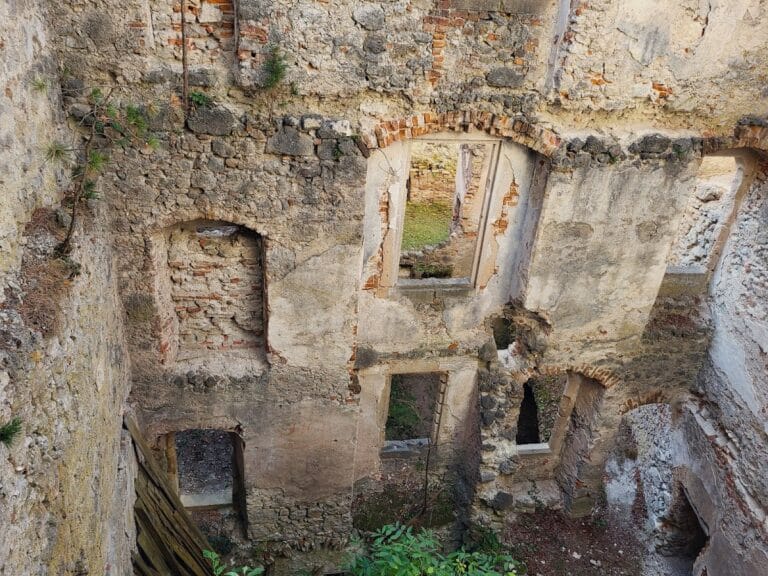
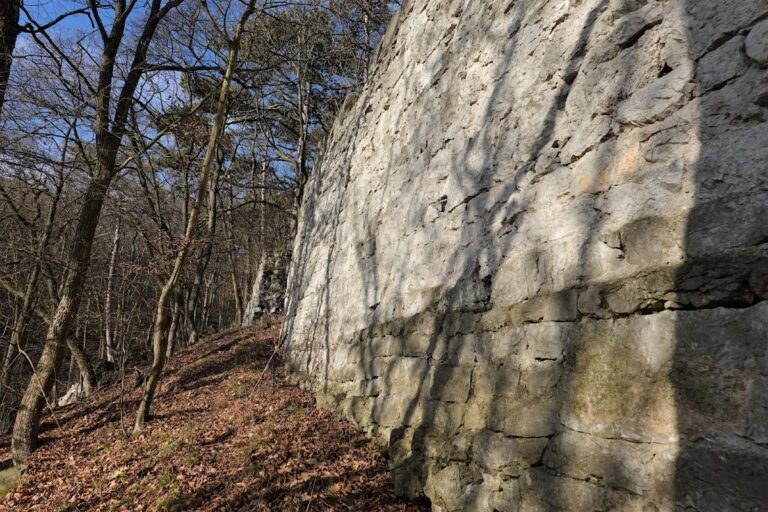
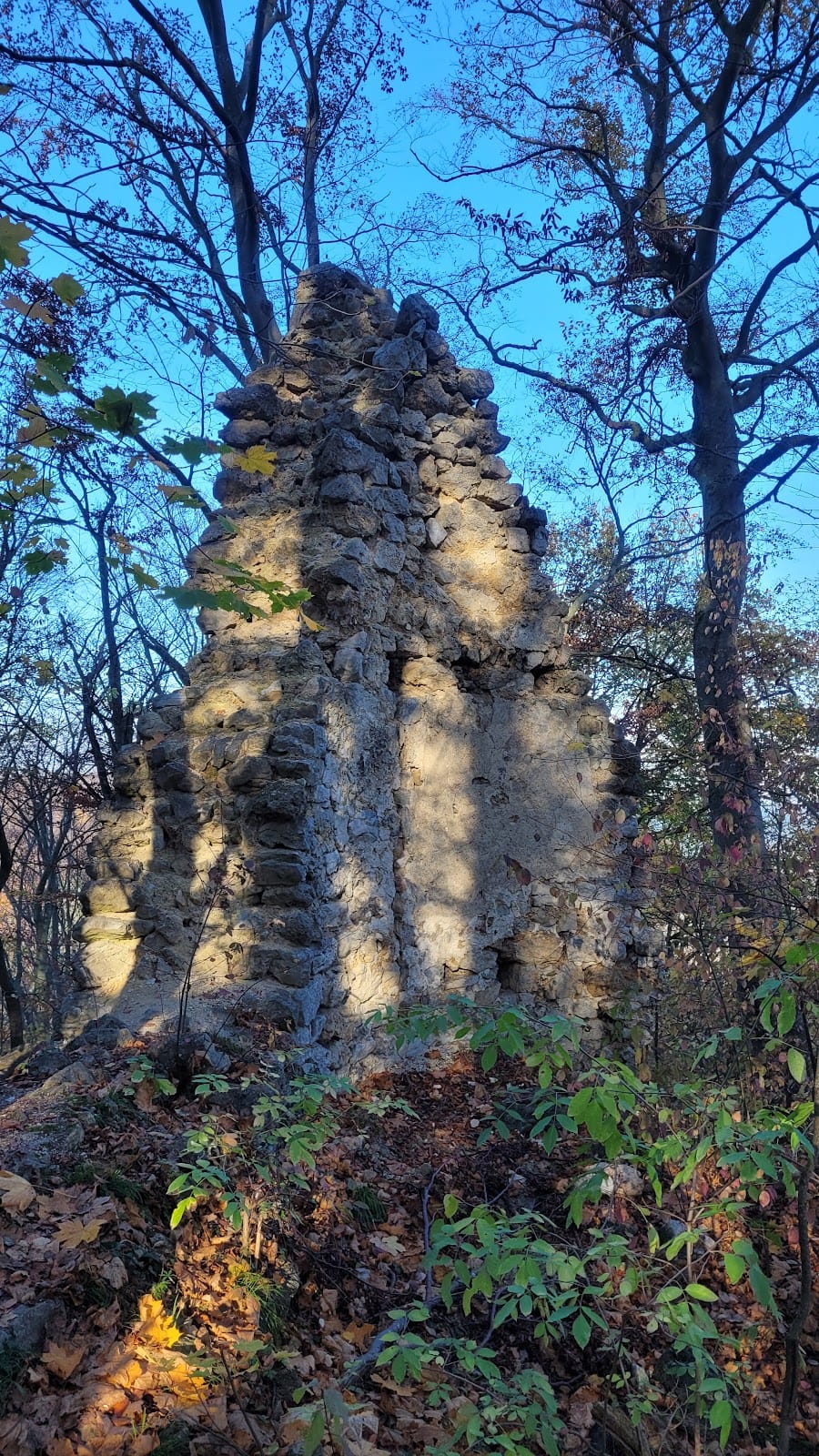
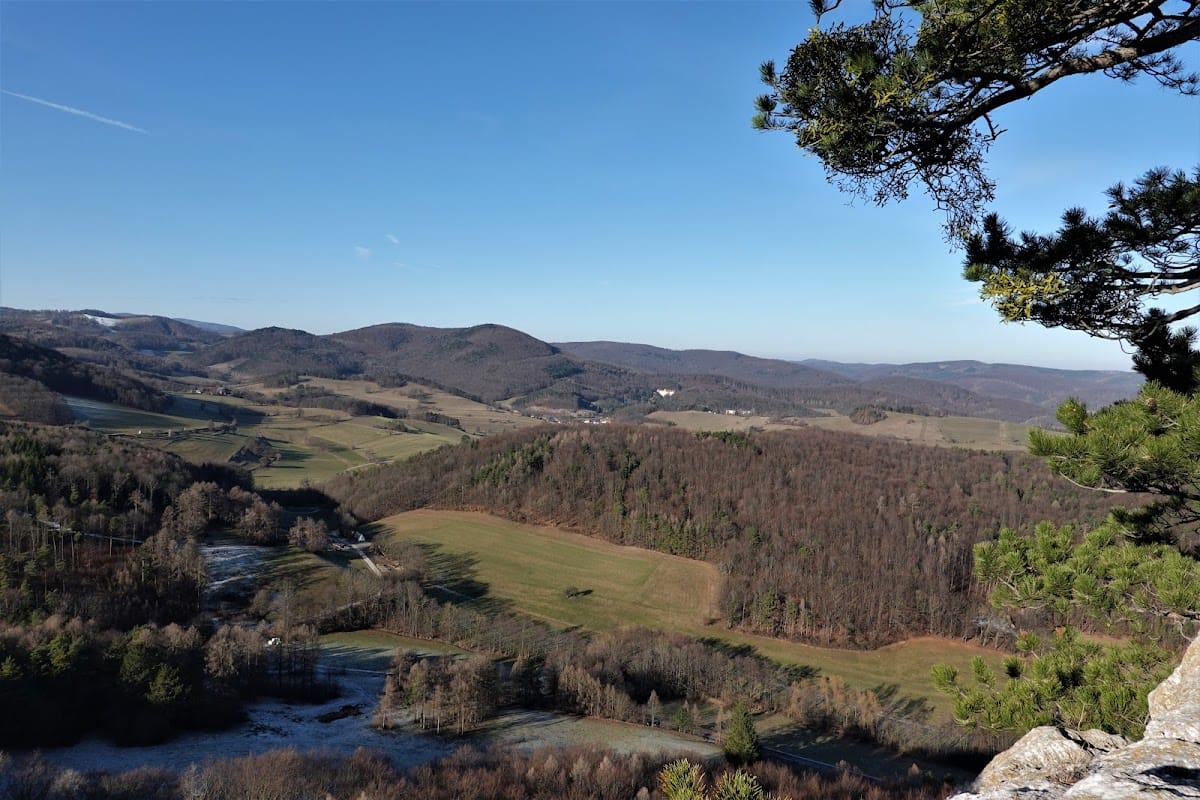
The castle occupied a spur of Peilstein at an elevation of about 520 metres. Its surviving masonry includes parts of a round tower, a castle gate, and the palas, the principal residential and representative building in a medieval castle. The ruins are partly overgrown by trees and other vegetation, preserving fragments of the former fortress rather than a complete complex.
Subterranean and rock features
Arnstein Cave
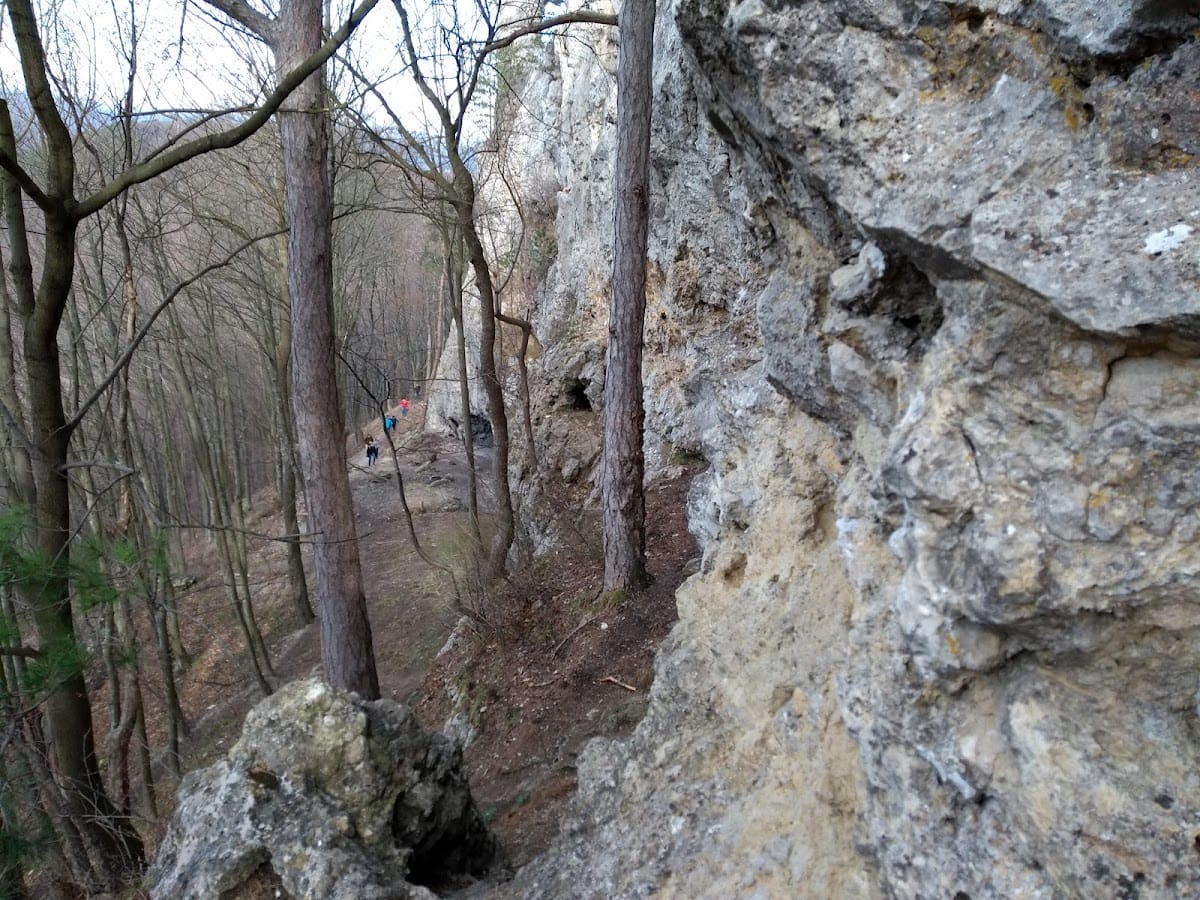
Arnstein Cave lies below the castle ruins and is 128 metres long. Its entrance retains remnants of earlier masonry. The cave may have served the castle inhabitants as a livestock stable, although that use remains uncertain. Late-nineteenth-century finds included bones of cave bears, cave hyenas, and reindeer. The cave and the rock beneath the ruins are now used by the Austrian Mountain Association as a training area.
Arnsteinnadel
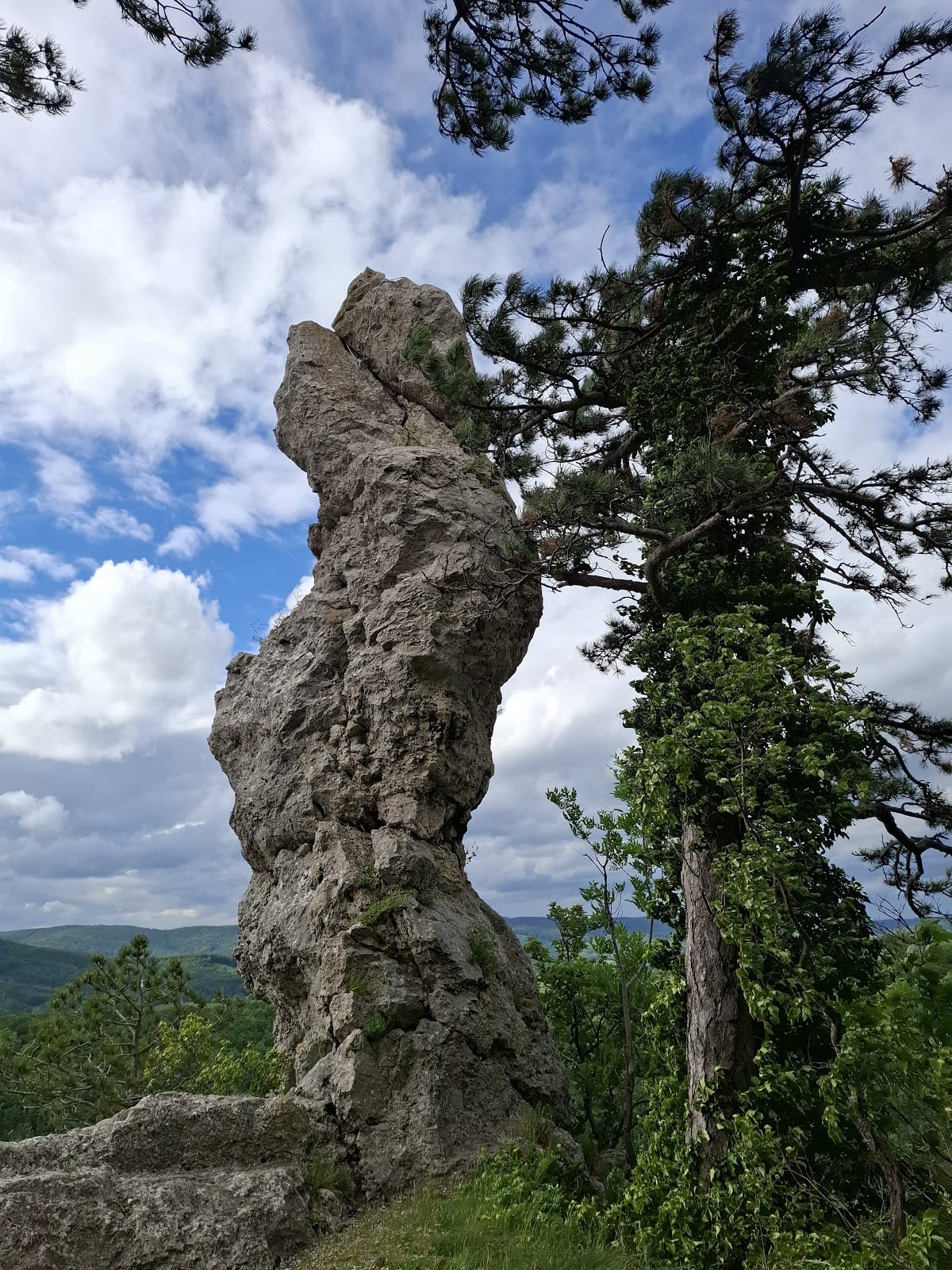
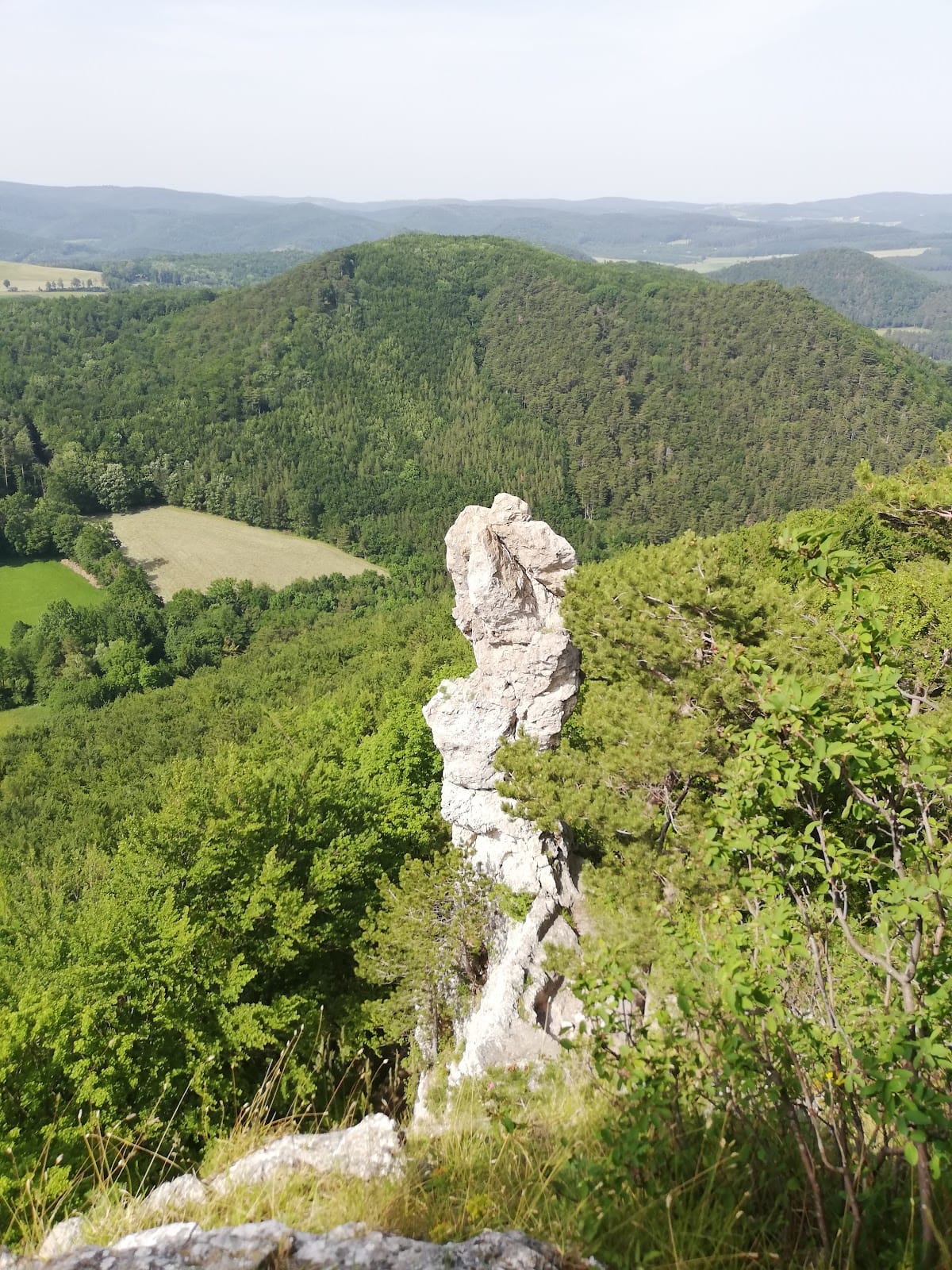
The approximately 13-metre-high Arnsteinnadel is the most conspicuous rock formation at the ruins. It is classified as a natural monument, meaning that it receives legal protection as a natural feature valued for its geological, ecological, or landscape qualities. The rock was once substantially higher, but part of it was removed for safety after sections became unstable. The formation is considered at risk of collapse, and its first ascent is recorded as having taken place in 1899. Some local historians have suggested that it was a pagan cult site, while others have interpreted it as a fertility symbol.