Mackworth Castle: A Medieval and Tudor Gatehouse in the United Kingdom

Site at a Glance
- Rating
- 3.7
- Popularity
- Very Low
- Country
- United Kingdom
- Primary era
- Medieval
- Eras represented
- Medieval
- Civilizations
- English
- Site type
- Military
- Remains
- Castle
On this page7 sections
History
The Mackworth Family
Mackworth Castle is a ruined medieval and Tudor residence in Mackworth, United Kingdom. Its construction date is uncertain, with proposed dates ranging from the early fourteenth to the late fifteenth century. The site served as the residence of the Mackworth family for several centuries.
Henry du Mackworth, an early recorded member of the family, appears in the 1254 Pipe Rolls, the English Crown’s records of royal financial obligations. The Mackworth lineage can be traced from the early fifteenth century, although the surviving castle cannot be assigned securely to a single phase within that history.
Decline and Sale
The castle remained with the Mackworth family until 1655 or 1656. Sir Thomas Mackworth, 3rd Baronet, a hereditary title-holder ranking below a baron, sold it to Sir John Curzon, 1st Baronet, after moving to Normanton in Rutland.
Local tradition attributes the castle’s destruction to artillery or other ordnance fired from a nearby hill during the English Civil War, the conflicts of the 1640s between supporters of Parliament and King Charles I. Rev. Charles Kerry questioned this explanation and proposed that the castle may already have been declining before Curzon acquired it.
The castle’s earlier condition has also been connected with a journey made in 1584 by Sir Ralph Sadler while escorting Mary, Queen of Scots, who was being held in English custody, to Tutbury Castle. Sadler lodged Mary at Tutbury and, in a letter to Elizabeth I dated 5 February 1584, stated that no suitable house was available nearby. This has been taken as an indication that the area offered limited accommodation at the time, while the castle’s precise condition remains uncertain.
Tudor Alterations and Protection
The gatehouse was added during the Tudor period, the era of the Tudor dynasty from 1485 to 1603. Rev. Charles Kerry dated its construction to shortly before 1500. The surviving gatehouse forms part of the scheduled monument called the medieval settlement of Mackworth, a nationally protected archaeological and historic site that also includes part of the medieval open-field system and a pinfold, an enclosure for stray or impounded livestock. The monument was designated on 3 July 1933, and the gatehouse was separately listed at Grade I, a category for buildings of exceptional historical or architectural interest, on 13 February 1967.
Remains
Gatehouse and Courtyards
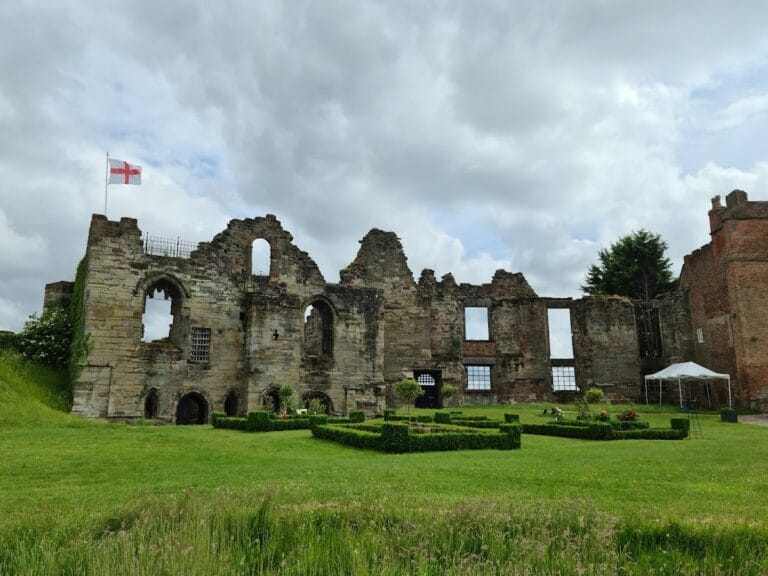
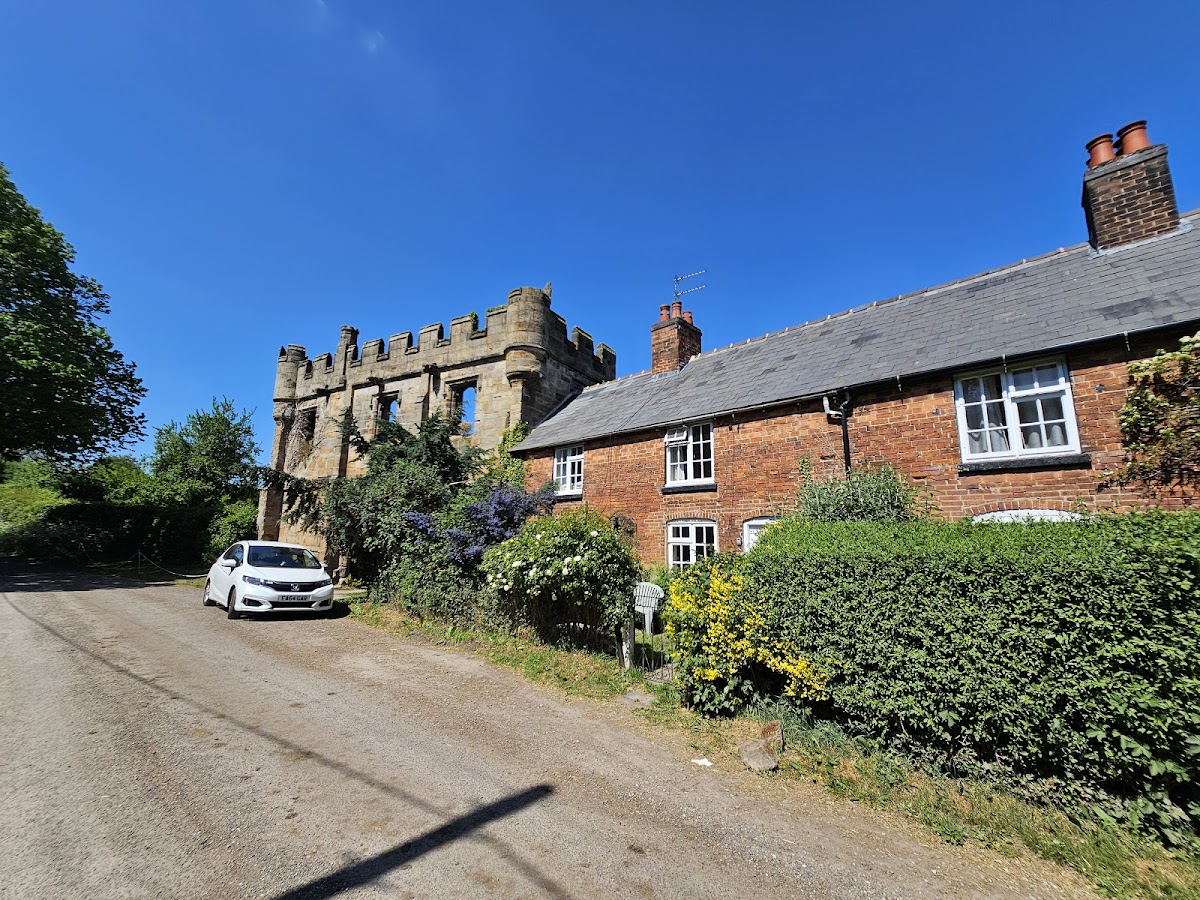
The principal surviving structure is a ruined square gatehouse with substantial battlements. Its imposing form suggests a formerly grand castle, although the building could also have stood independently. Added during the Tudor period, it may have expressed an idealized chivalric and romantic image rather than serving as evidence that every part of the wider complex was exceptionally elaborate.
Rectangular spaces to the west mark the former courtyards and help define the arrangement of the lost buildings. A 1911 survey suggested that the structures beyond the gatehouse may have been relatively modest. Their enclosing walls were probably built in timber framing on low rubble walls, a construction method comparable to that of the nearby fourteenth-century house associated with the Tuchet family, for whom the Mackworths served as stewards.
Medieval Settlement Landscape
The surviving gatehouse is set within a wider medieval settlement landscape that includes part of the open-field system and a pinfold. Together, these remains place the castle within an environment of domestic, agricultural, and communal features rather than as an isolated building. The gatehouse and the rectangular courtyard spaces preserve the clearest physical evidence for the form of the former castle complex.