Burg Elmendorf: A Medieval Motte Castle in Germany

Site at a Glance
- Rating
- 4.2
- Popularity
- Very Low
- Country
- Germany
- Primary era
- Medieval
- Eras represented
- Medieval
- Civilizations
- Holy Roman Empire
- Site type
- Military
- Remains
- Castle
On this page10 sections
History
Burg Elmendorf is a medieval lowland motte castle in Germany, near Bad Zwischenahn, probably founded in the ninth century and associated with counts. A motte is a castle centered on a raised mound, usually carrying a tower or defensive residence and surrounded by a ditch. The site developed through several phases before becoming a residence of the nobleman Friedrich von Anvorde and later passing to the Counts of Oldenburg.
Early Settlement and Castle Formation
During the ninth century, a palisaded farmstead occupied the area later used as the outer bailey, an enclosed part of a castle used for additional buildings and activities. Several small buildings stood there, and evidence of specialized crafts distinguished the settlement from an ordinary rural farming community. The farmstead was destroyed at the end of the tenth century and replaced by a new one around 1000.
In the eleventh century, a first motte was raised beside the farmstead. It was only slightly elevated and surrounded by a ditch, but it burned around 1100. After its destruction, the castle was rebuilt in the twelfth century. The two larger castle mounds and the smaller outer-bailey mound were completed by the middle of that century, creating an enclosed complex of about 1.2 hectares surrounded by several ditches.
Counts, Lords, and Ecclesiastical Connections
After the rebuilding, Burg Elmendorf was held by Count Egilmar I, who was first mentioned in 1091 and became an ancestor of the House of Oldenburg, a German comital and later dynastic family that became a major ruling house in northern Europe. Around 1130–1140, Count Egilmar II married his daughter to Friedrich von Anvorde, a nobleman traditionally said to have disappeared during a crusade. A charter of 1134 explicitly identifies Burg Elmendorf as Friedrich’s residence.
The castle chapel was consecrated in the same year by Archbishop Siwar. Dedicated to St. Bartholomew, a Christian apostle traditionally associated with the early spread of Christianity, the chapel stood between the castle mounds and the lake later known as the Zwischenahner Meer. The name refers to a lake in Lower Saxony, since Meer means “lake” in this geographical name.
In later centuries, the Lords of Elmendorff occupied the castle as ministerials. In the medieval German territories, ministerials were service nobles who served secular or ecclesiastical lords in administrative, military, and estate-related roles. Diederich von Elmendorpe appears as a witness in a 1287 charter issued by Rastede Monastery. In 1331, the castle and its associated manorial farm passed to the Counts of Oldenburg in exchange for possessions on the Hase River.
Archaeological Investigation and Later Disturbance
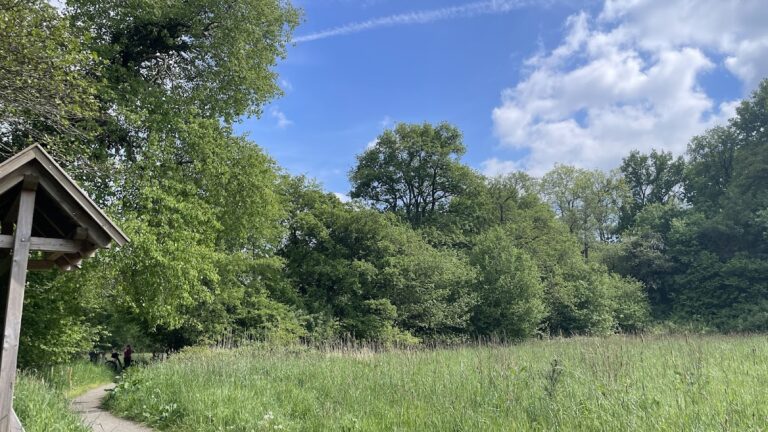
Excavations directed by the archaeologist Dieter Zoller from 1966 to 1968 established that the three mounds formed a motte complex rather than prehistoric burial mounds. The eastern mound had already been severely disturbed in 1943, when an air-raid shelter was installed. Burg Elmendorf now survives as an archaeological castle ruin within the Dreibergen nature reserve on the northern shore of the Zwischenahner Meer, at Elmendorf in the municipality of Bad Zwischenahn.
Remains
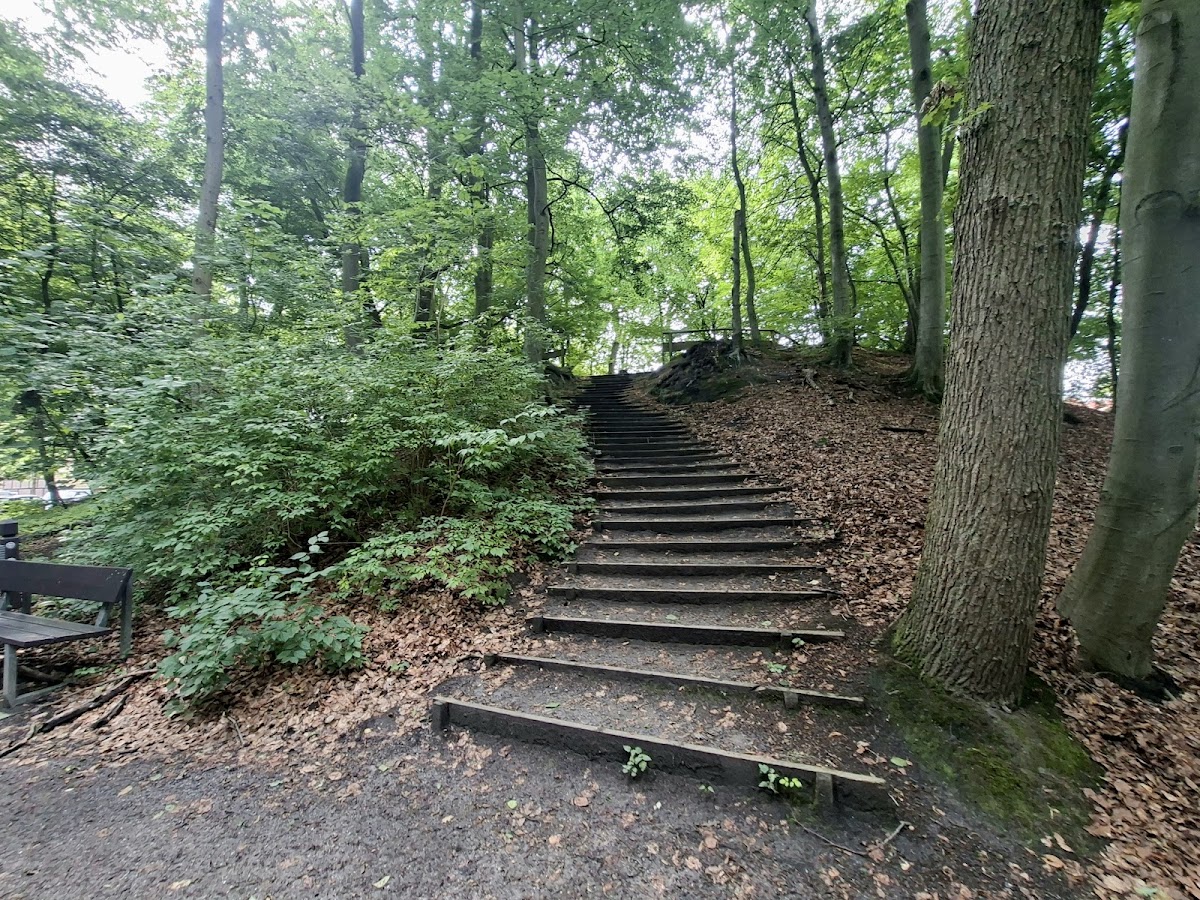
The surviving site is organized around three castle mounds, two high mounds for the main castle buildings and a smaller mound that served as the outer bailey. The mounds were made through a complex timber-and-earth construction and were enclosed by banks and a system of ditches. The former castle survives as an archaeological landscape rather than as standing castle architecture.
Castle Mounds and Towers
Western Mound
The western mound measures approximately 50–55 meters across and rises seven meters above its surroundings. Its present plateau measures about 22 by 25 meters. A twelve-sided wooden tower, approximately 12 meters in diameter, stood on the mound, while a palisade followed the edge of the plateau. During the second quarter of the thirteenth century, a half-timbered house with a hearth was built there.
Eastern Mound
The eastern mound measures approximately 35–45 meters in diameter and is five meters high. Its present plateau measures about 12 by 20 meters. A tower comparable to the one on the western mound stood on it. The mound was severely disrupted by the insertion of an air-raid shelter in 1943.
Outer-Bailey Mound
The smaller third mound served as the outer bailey, the enclosed working area associated with the main castle. It formed part of the three-mound complex completed in the mid-twelfth century and remained within the wider system of banks and ditches.
Chapel and Enclosure
The castle chapel of St. Bartholomew stood between the two principal mounds and the Zwischenahner Meer. Its position formed part of the central arrangement of the castle, while the surviving banks and ditches preserve elements of the enclosure that surrounded the complex. Together with the three mounds, these earthworks define the archaeological remains of Burg Elmendorf.
Nearby sites