Breadsall Priory: An Augustinian Religious House and Later Residence
Site at a Glance
- Popularity
- Very Low
- Country
- United Kingdom
- Primary era
- Early Modern
- Eras represented
- Medieval, Early Modern, Modern
- Civilizations
- British, English
- Site type
- Domestic
- Remains
- Elite Residence
On this page7 sections
History
Breadsall Priory, formally the Priory of the Holy Trinity, Breadsall, was an Augustinian house of canons in Ilkeston, United Kingdom, founded before 1266. Its founder belonged to the Curzon family, but the evidence does not establish whether he was Richard, Henry, or Sir Robert Curzon, three successive generations of the family. Augustinian canons were clergy who lived in a religious community under the Rule of St Augustine. A mistaken reading in a 1266 Patent Roll sometimes led the priory to be described as a house of Augustinian Friars, a distinct order whose members relied on alms rather than holding extensive lands. A grant by Henry III of 20 acres at Horsley and Horston supports the identification of Breadsall as a house of canons.
The community and its patrons
The priory was small. It generally had a prior, the head of the house, and two canons, though at times it had only one canon or the prior alone. Its recorded annual income in 1291 was £5 19s. With so few members, the community could not elect its own prior. Members of the Curzon family, hereditary patrons who held the lordship of Breadsall Overhall for eight generations, often chose the head of the priory.
Recorded appointments include Hugh de Mackworth in 1306 and Hamund de Merston in 1309, both selected under Richard Curzon’s patronage. William de Repyndon, formerly a canon at Breadsall, resigned in October 1347, and Thomas de Castello became prior that year on the advice of the Abbot of Darley Abbey. Thomas de London was appointed in 1365 after the office had stood vacant for several years; he had previously been a monk at Burton Abbey. Geoffrey de Stafford resigned in 1370, when Thomas Lewes was appointed, and Roger Upton became prior in 1384.
During Richard II’s reign (1377–1399), the manor passed to the Dethick family through the marriage of Cecilia Curzon and William Dethick. Their patronage was not consistent: Sir Thomas Wendesley acted as patron for Roger Upton’s appointment in 1384, and several other priors were chosen by the Bishop of Lichfield. In 1456, the bishop confirmed Sir William Dethick’s right to the first licence to choose or provide a superior when the priory fell vacant.
Late medieval affairs
In 1402, William Dethick gave the priory half of the rectory of Mugginton, a church benefice carrying rights and income. Because he had not followed the required process for transferring the property, the Crown imposed a heavy fine on his executors and trustees after his death. In 1444, the Collegiate Church of St Mary in Leicester, served by a community of clergy, brought a dispute over tithes, payments owed to the Church, from Hethfield, a field near Mugginton. St Mary’s maintained that the field belonged to Duffield parish, which it controlled, rather than Mugginton parish, controlled by the priory. The court decided in St Mary’s favour. The rector of Mugginton was also found in contempt of the Court of Arches, an ecclesiastical court, and ordered to pay the church 40 shillings.
In 1448, Prior Thomas Breadsall reported that documents concerning William Dethick’s interests had been stolen. The Bishop of Lichfield instructed local priests to announce the theft during high mass and warn that those responsible would face excommunication, or exclusion from the Church, unless the papers were returned within 15 days. It is not known whether they were recovered. In 1453, John Statham of Morley promised funds to repair the church roof and the glazing in its high upper wall. In return, the priory agreed to hold an annual mass for the souls of Goditha, Thomas, Elizabeth, Cecilia, and John Statham on the feast of the Eleven Thousand Virgins, associated with the legend of St Ursula and her companions. The following year, canon John Derby, apparently known for his preaching, received permission from the Bishop of Coventry and Lichfield to preach in parish churches across the diocese.
Thomas Holand, also known as Thomas Bakster, served as prior from 1431 to 1442; Thomas Beadsall, also rendered Breadsall, followed from 1442 to 1456. Sir William Dethick selected Robert Burton, formerly a canon at Repton Priory, in October 1456, and Burton remained in office until 1487. Henry Halom was appointed that year. John Alton died in office in 1519, when Thomas Beyston became prior. William Pendylton’s appointment date is unknown; by 1535 he was the priory’s only resident.
Dissolution and later residence
The 1535 Valor Ecclesiasticus, a survey of the income of England’s religious institutions under Henry VIII, assessed the priory’s annual income after expenses at £10 17s. 9d. Breadsall controlled churches in Breadsall, Duffield, Horsley, Mugginton, and Windley. The priory was dissolved in 1536, and Pendylton received an annual pension of five marks. Some of its lands went to Darley Abbey, which was dissolved soon afterward, and then passed to the Crown. By September 1536 the Crown had leased the site to Lawrence Holland of Belper, who farmed it. A later grant of the site to the Duke of Suffolk has been claimed, but remains uncertain.
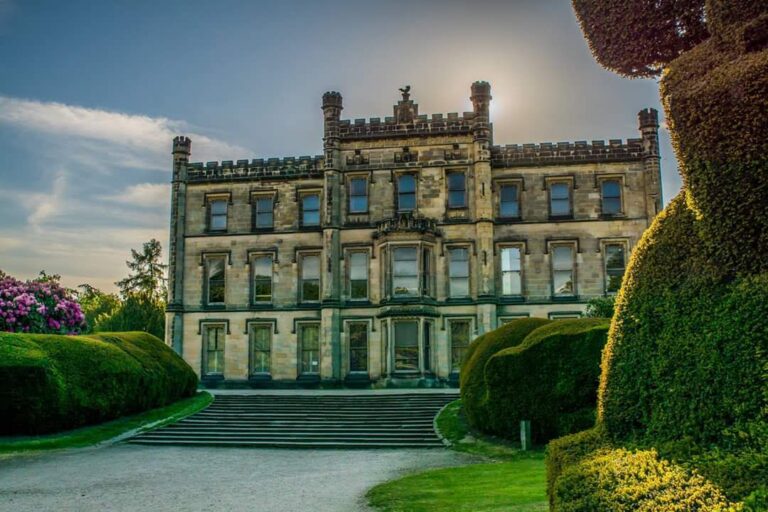
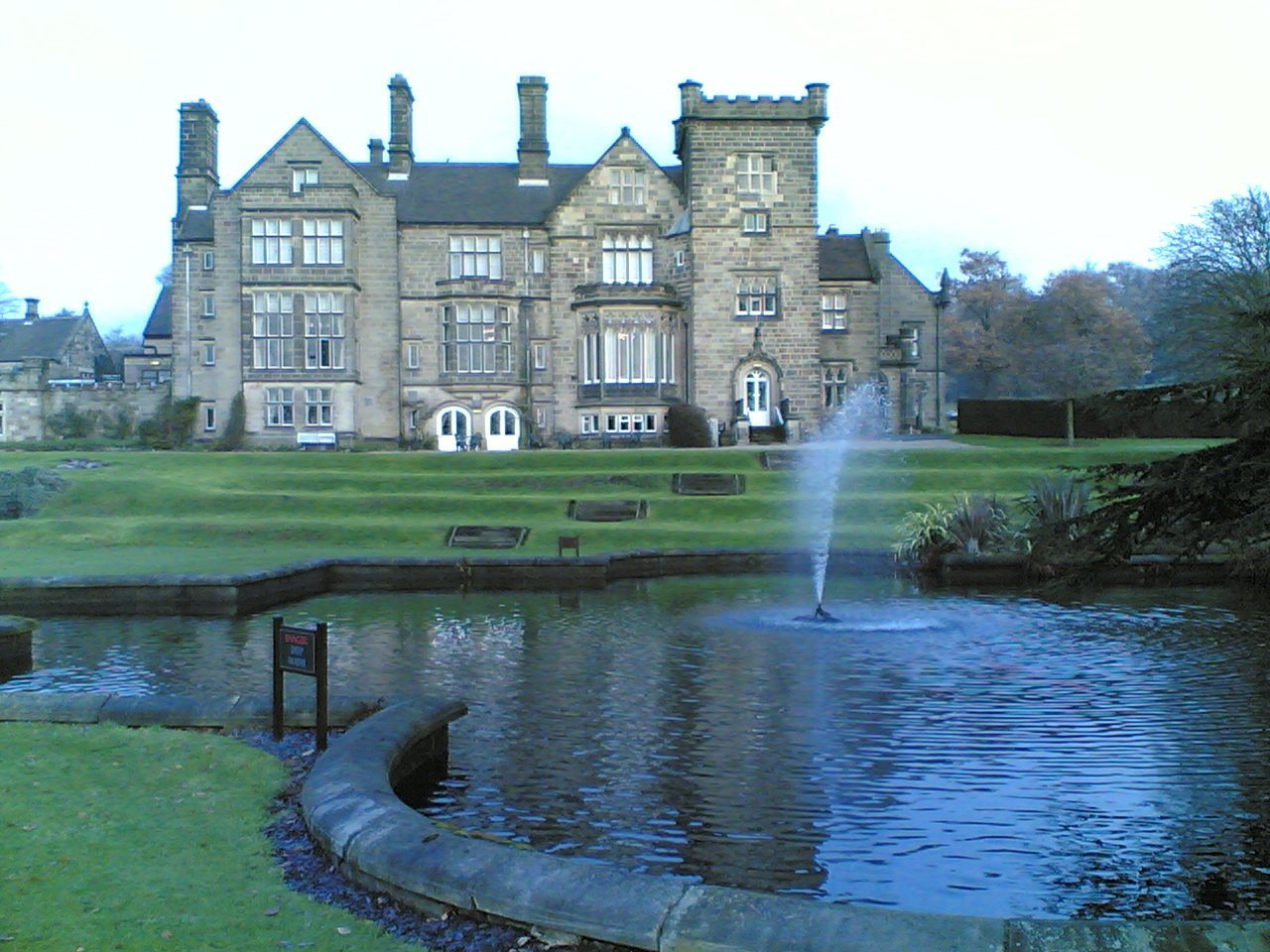
The priory buildings were demolished after the dissolution, and a private house was built on the site. An Elizabethan house was constructed there in the late 16th century. Erasmus Darwin settled at Breadsall shortly before his death in 1802; the house later became the home of his son, Sir Francis Sacheverel Darwin. Sir Francis’s son Edward Levett Darwin learned natural history in the grounds. The property was later acquired by Derby industrialist Sir Alfred Seale Haslam. It now operates as Delta Hotels by Marriott Breadsall Priory Country Club. The house is used as a hotel, while the stables are in residential use.
Remains
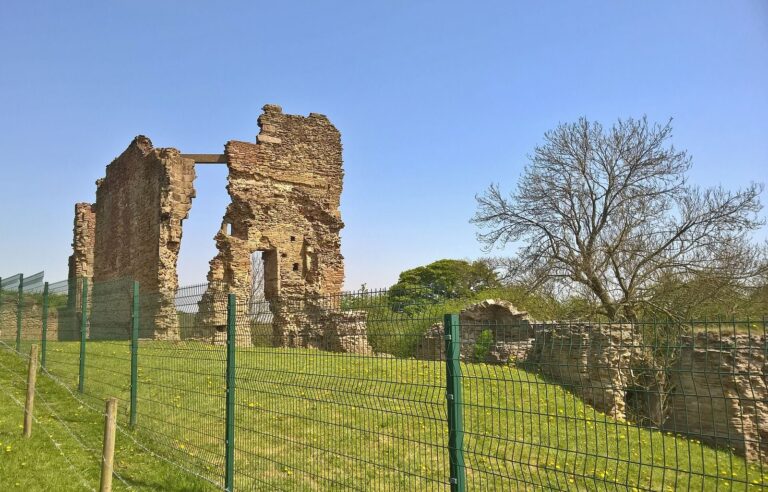
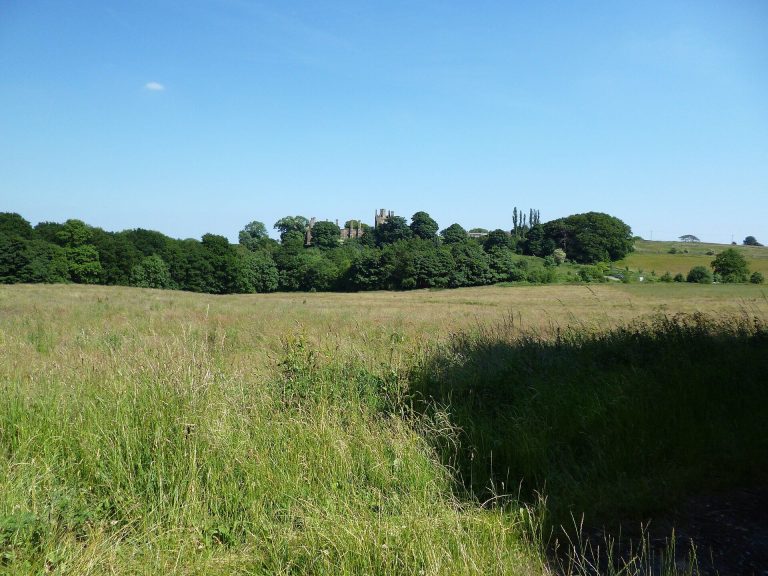
The site lies about two kilometres north of Breadsall and two kilometres east of Little Eaton. Its surviving layout brings together a later house, a separate stable building, and a fragment of the medieval priory incorporated in the house’s cellars.
Medieval remains
A single arch from the original priory buildings survives in the cellars of the later house. The arch dates to the 13th century and is the surviving remnant of the medieval complex.
Later house and stables
The house has an Elizabethan E-plan, with projecting wings forming the shape of the letter E. It was altered and extended around 1861, and a further wing was added in 1906. The associated stables are a separate building dating to the mid-19th century.