Château-Chalon Castle: A Medieval Fortress in France


Site at a Glance
- Rating
- 4.2
- Popularity
- Very Low
- Country
- France
- Primary era
- Medieval
- Eras represented
- Medieval
- Civilizations
- Holy Roman Empire
- Site type
- Military
- Remains
- Castle
On this page5 sections
History
Early and Carolingian fortification
Château-Chalon Castle is a former fortress in France, strengthened under Carolingian rule during the ninth century on a rocky escarpment at the edge of the Jura’s first plateau. The site had been fortified from the Gallo-Roman period. In the ninth century, Charles II the Bald, a Carolingian emperor and grandson of Charlemagne, commissioned a substantial fortress there. Its position helped protect the Carolingian Empire, the dynasty founded by Charlemagne’s family, against Viking and Saracen invasions.
Thirteenth-century expansion
During the thirteenth century, John I of Chalon commissioned new fortifications at Château-Chalon. A count of Chalon who founded the Chalon-Arlay branch of the House of Chalon, he pursued a wider program that included about thirty fortified castles in the Jura. These works transformed the site’s earlier defenses while preserving its role as a stronghold above the surrounding landscape.
Destruction in 1595
The fortress was destroyed in 1595 by artillery used by troops serving King Henry IV of France. The attack took place during the wars between the French kingdom and the Spanish Habsburgs, a wider struggle between France and the Habsburg monarchy. Château-Chalon Castle was not rebuilt, and the former feudal fortress survives only through scattered remains of its defensive works and keep.
Remains
Château-Chalon’s fortress occupied a rocky escarpment at the entrance to the Baume-les-Messieurs reculée, a steep-sided, blind-ended valley characteristic of the Jura. Cliffs provided substantial natural defenses, while the position commanded the surrounding slopes, the Haute-Seille valley, and the course of the Seille. The ninth-century Carolingian fortress had a square plan with four corner towers. Its walls were approximately 2 metres thick and were enclosed by ditches about 15 metres wide.
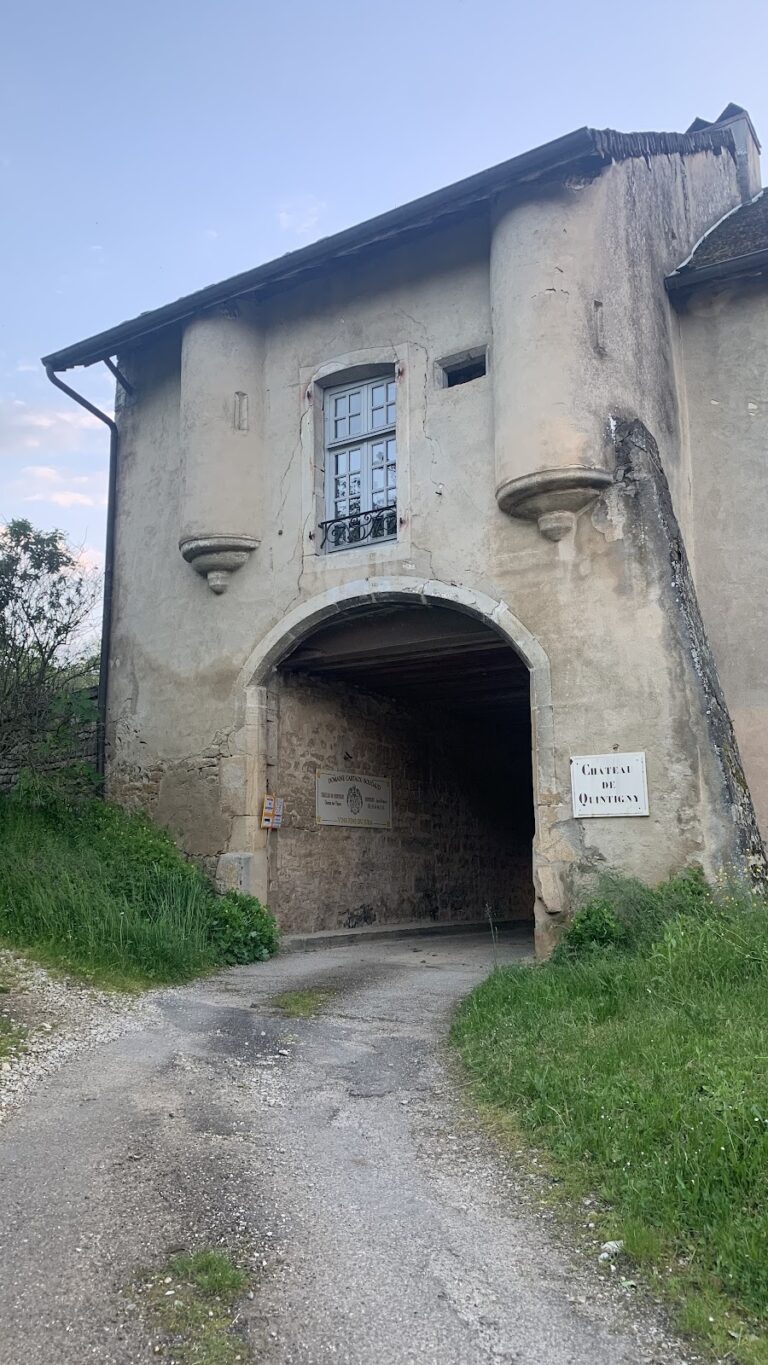
The surviving castle-related fabric includes sections of the thirteenth-century fortifications and the ruins of the fifteenth-century keep. Known as the Charlemagne or Charles the Bald Tower, the keep was built on one of the original Carolingian corner towers. A keep was the principal fortified tower of a medieval castle, often combining defensive and residential functions. The wider historic settlement also preserves an ancient fortified gate, several remains of the former abbey, medieval and vintners’ houses, and cellars sometimes excavated directly into the rock.