Hartshill Castle: A Medieval Motte-and-Bailey and Stone Castle


Site at a Glance
- Rating
- 4.1
- Popularity
- Very Low
- Country
- United Kingdom
- Primary era
- Medieval
- Eras represented
- Medieval, Early Modern
- Civilizations
- English
- Site type
- Military
- Remains
- Castle
On this page10 sections
History
Hartshill Castle is a ruined medieval castle in the United Kingdom, at Hartshill on the outskirts of Nuneaton in Warwickshire. Hugh de Hadreshull built its first motte-and-bailey castle in 1125, creating a fortified residence and lookout above the surrounding landscape near Atherstone.
The early timber castle
The first fortification consisted mainly of timber. Palisades enclosed a raised earth mound, or motte, on which stood a wooden tower. The adjoining enclosed court was the bailey. The tower served as the lord of the manor’s residence and family home, while also providing a lookout post. During the reign of King John, who ruled England from 1199 to 1216, William de Hadreshull repaired the timber castle.
By the late thirteenth century, the castle belonged to Robert de Hartshill. He was killed at the Battle of Evesham on 4 August 1265, during England’s thirteenth-century baronial wars. After his death, Hartshill Castle was abandoned and fell into disrepair. During Robert’s ownership, the chapel became the first stone structure on the site.
Stone rebuilding and later abandonment
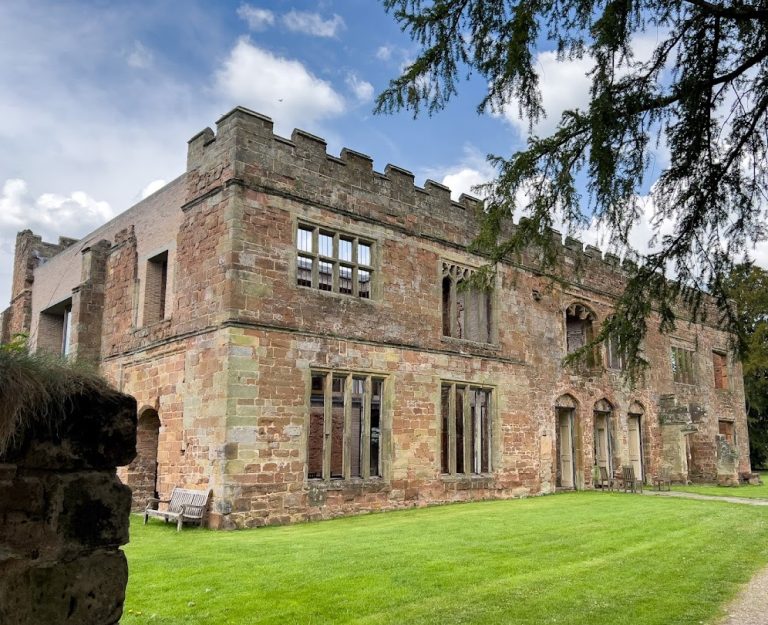
John de Hartshill replaced the timber fortification with a stone castle, beginning construction in 1330. The later building retained the site’s defensive character through its curtain walls, a fortified enclosure wall, together with a tower, chapel, and surrounding ditches.
The castle had been abandoned by the early sixteenth century. Sir Anthony Cooke purchased it around 1550, and Michael and Edmund Parker built a manor house in the north-eastern corner of the castle enclosure in 1560. The castle and manor house were leased in 1567. The manor house later collapsed sometime after 1927 and was mostly demolished during the 1950s.
Archaeology and preservation
Hartshill Castle was excavated in 2000 without archaeological supervision. Repeated vandalism has damaged the ruins, including damage to and theft of sections of the curtain walls on 2 October 2016. Erosion and structural problems have also affected the site, which is privately owned and listed on Historic England’s Heritage at Risk Register.
Remains
Hartshill Castle stands on elevated ground at approximately 140 metres above sea level, within a predominantly flat agricultural landscape associated with Hartshill Ridge and the River Anker. The surviving remains combine the stone castle enclosure with fragments of its defensive earthworks and the later manor house, while the site’s recorded materials include stone, timber, and wattle and daub.
Stone castle enclosure
Curtain walls and chapel
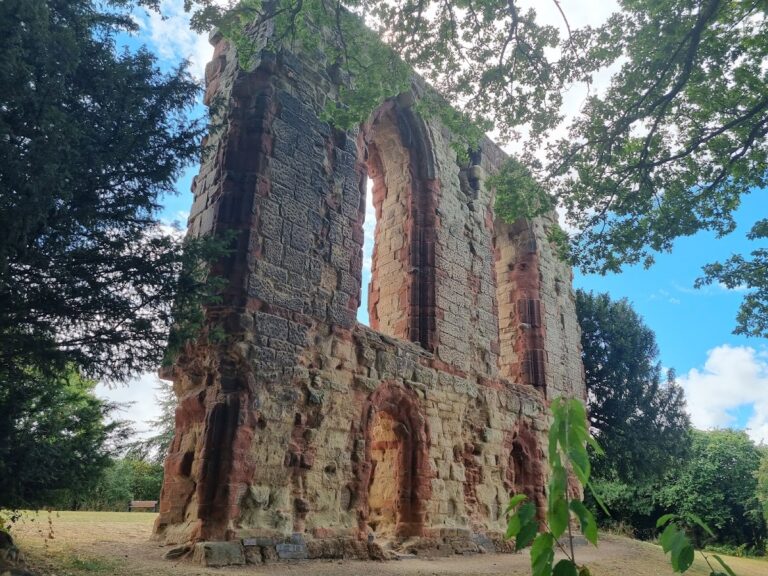
Most of the stone castle’s curtain walls survive around the enclosure. Parts of a tower and the chapel also remain, preserving elements of the castle’s later medieval defensive and religious buildings. The chapel was the site’s first stone structure, before John de Hartshill began replacing the timber castle with a stone fortification in 1330.
Moat and ditches
Part of the moat survives on the western side of the castle. A moat was a defensive ditch that was not necessarily filled with water. Sections of the eastern ditch also remain, although twentieth-century dumping of waste materials has substantially damaged and obscured them.
Sixteenth-century manor house
The manor house occupied the north-eastern corner of the castle enclosure and was built using wattle and daub, a woven framework covered with a hardened mixture commonly containing earth or clay. Its chimney stack is the surviving part of the building, and the fireplace is also preserved.
Earlier landscape evidence
Stone Age flints and animal bones have been found in sand and gravel near the River Anker at Witherley, close to Hartshill Castle. The animal remains include red deer and woolly rhinoceroses. The flints are associated with nomadic Stone Age groups that returned to the area to obtain material for tools and weapons.