Astley Castle: A Moated Fortified Manor House in England

Site at a Glance
- Rating
- 4.5
- Popularity
- Low
- Country
- United Kingdom
- Primary era
- Early Modern
- External website
- Open
- Eras represented
- Early Modern, Modern
- Civilizations
- English
- Site type
- Domestic
- Remains
- Castle
On this page8 sections
History
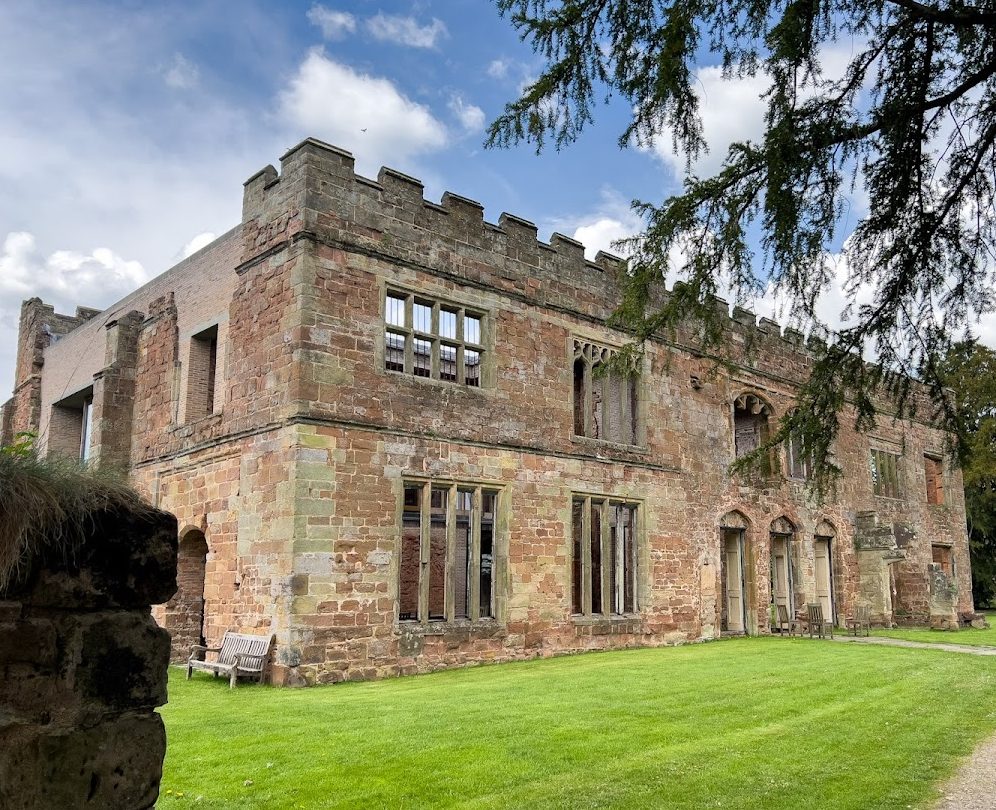
Astley Castle is a ruinous, moated fortified manor house in Astley, United Kingdom, rebuilt in 1555 in the Renaissance period. The Astley family held the manor from the twelfth century, and the building later became associated with the Grey dynasty, the English Civil War, and a major modern restoration that joined historic ruins with contemporary accommodation.
The Astley and Grey Families
A royal licence to crenellate, meaning permission to add defensive features such as battlements, was granted for the manor house in 1266. Astley was probably never a true military castle, however, and instead functioned as a fortified house. Sir William Astley died in 1420 and left the estate to his daughter, who had married Reginald Grey, 3rd Baron Grey de Ruthyn, in 1415.
The Grey family were marcher lords, nobles responsible for controlling and defending the medieval borderlands between England and Wales. They rebuilt the manor house in 1555. During Grey ownership in the fifteenth and sixteenth centuries, Astley was linked to several major events in the English succession. Sir John Grey married Elizabeth Woodville, who later became queen after marrying Edward IV following Grey’s death in 1461. Their daughter, Elizabeth of York, became queen in 1486 through her marriage to Henry VII.
Elizabeth of York’s granddaughter Frances Brandon married Henry Grey, Duke of Suffolk. Their daughter, Lady Jane Grey, was proclaimed queen in 1553. Jane Grey, her husband, and her father were executed in 1554, after which the family fell into disgrace. Astley Castle was then slighted, forfeited to the Crown, and sold to Edward Chamberlain. Chamberlain restored the building and altered its fabric extensively.
The English Civil War
Astley became a Parliamentary stronghold during the English Civil War, the conflict of the 1640s between supporters of Parliament and forces loyal to King Charles I. It formed part of a network of small Parliamentary garrisons opposing Royalist forces in the English Midlands. These local military strongholds drew support from nearby villages and served for scouting, collecting levies, raids, and sieges. Troops were moved between them at short notice.
In July 1644, Captain Hunt and Lieutenant Goodere Hunt commanded about thirty-five soldiers at Astley. A muster of 9 July 1645 recorded 79 officers and 462 horse troops under Major Hawkswell. This unusually large gathering resulted from the arrival of troops from surrounding garrisons, including Edgbaston and Tamworth. Most cavalry were probably quartered in the village, while some officers and Goodere Hunt’s foot soldiers occupied the castle.
Newdigate Ownership and Decline
In 1674, the castle was sold to the Newdigate family of Arbury Hall and became their secondary residence. It was the home of Lieutenant-General Edward Newdigate Newdegate until his death in 1902. During the twentieth century, the property was leased out and became a hotel in the early 1960s.
A major fire in 1978 severely damaged Astley Castle. The building was then neglected and deteriorated, and it was officially regarded as a Building at Risk. In the early 2000s, English Heritage, the local authority, the owners, and the Landmark Trust planned a restoration that was completed in 2012. The work introduced modern accommodation while retaining the ruins and pursued the idea of a “Landmark for the 21st Century.”
The restored property reopened for holiday rental in 2012. Astley Castle has been a Grade II* listed building since 1952, a designation for buildings of particularly important historic or architectural interest in England. The wider moated site, including its fishponds, garden remains, and Astley College, has been a Scheduled Monument since 1994. The restoration received the 2013 Royal Institute of British Architects Stirling Prize, an award for a building judged to have made a major contribution to British architecture.
Remains
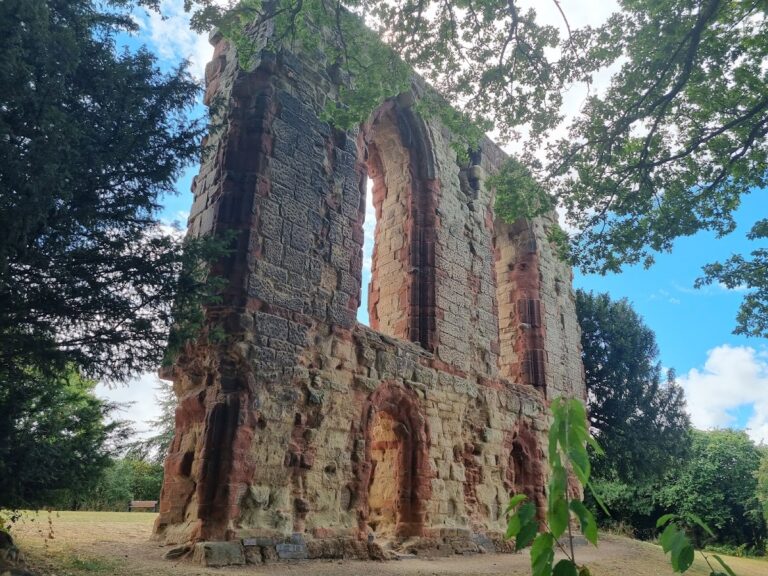
The surviving site combines the ruins of a sixteenth-century moated manor house with its surrounding water management, garden, entrance, and collegiate remains. The principal building was rectangular, two storeys high, and provided with attics concealed behind embattled parapets, which are battlemented walls with alternating raised sections and openings. Most of the visible fabric dates from 1555 or later.
Moated Site and Enclosure
A moat surrounds the manor site, with a bridge providing access across the water. The remains of a gatehouse mark the entrance, while sections of curtain wall survive as enclosing defensive walls. The wider area includes fishponds and garden remains, together with Astley College, forming part of the archaeological layout associated with the manor.
Manor House
The ruinous manor house preserves elements of the rectangular building created during the Grey rebuilding of 1555. Its two-storey arrangement and concealed attics were set behind embattled parapets, giving the residence a fortified appearance. The surviving structure has been incorporated into the restored property rather than replaced.
Contemporary Restoration
The 2012 work by Witherford Watson Mann Architects, with consulting engineers Mann Williams and Price & Myers, inserted contemporary accommodation into the surviving Renaissance-era ruins. The intervention retained the historic fabric while adapting the building for modern use, creating the combination of ancient monument and new architecture recognized by the 2013 RIBA Stirling Prize.