Jévar Castle: A Frontier Fortress near Antequera
Site at a Glance
- Rating
- 3.6
- Popularity
- Very Low
- Country
- Spain
- Primary era
- Medieval
- Eras represented
- Medieval
- Civilizations
- Almohad
- Site type
- Military
- Remains
- Castle
On this page7 sections
History
Jévar Castle is a small fortress near Antequera in Málaga, Spain, which formed part of the Islamic defensive belt of Antequera at the beginning of the fifteenth century. Together with the castles of Aznalmara and Cauche, it surrendered when Antequera fell in 1410. Its history reflects the changing relationship between the city, rural fortifications, and farming communities along the frontier between Castile and the Emirate of Granada.
Conquest and Castilian control
After attackers captured the outer enclosure in 1410, the Muslim defenders withdrew into the keep. They inflicted heavy casualties before the attackers permitted them to leave during the night and abandoned the tower. Infante Fernando, a member of the Castilian royal family who led campaigns during the conquest of Antequera, then appointed Pero Sánchez Escobar as alcalde, a local judicial or administrative official. He also provided pay for a garrison of six knights and thirty foot soldiers.
The Nasrids, the ruling dynasty of the Emirate of Granada, later recovered Jévar. They subsequently abandoned the castle after destroying it. Rodrigo de Narváez, the military official who served as alcalde of Antequera, eventually repaired the fortress and installed a much larger garrison of 100 knights and 100 foot soldiers. From that time, Jévar functioned as a frontier stronghold under the military authority of the castellan of Antequera, the commander responsible for the castle.
Siege, decline, and rural purpose
On 20 March 1442, Juan II, king of Castile from 1406 to 1454, granted Jévar, Cauche, and Aznalmara to the city of Antequera. During the almost continuous siege of Antequera’s fortress between 1443 and 1446, the three outlying strongholds faced severe difficulties. They became deserted and were almost certainly captured by forces from Granada.
Following the Granada War, the late-fifteenth-century conflict that ended Nasrid rule in Granada, Jévar lost its military importance and deteriorated into ruin. The castle is also understood as a fortified rural settlement probably associated with peasant communities. Its precise origin and ownership remain uncertain. It may have been a state-controlled enclosure, or it may have developed from a network of rural farmsteads. Its function may likewise have ranged from a refuge during periods of danger to a permanent settlement.
This type of fortification belonged to a wider relationship between the city, the rural castle, and the farmstead from the eleventh to the fifteenth century. Such sites could protect rural populations from fiscal predation or help concentrate and administer farming communities. Jévar is protected in Spain as a Property of Cultural Interest classified as an archaeological zone, under Decree 312/2010 of 15 June.
Remains
Fortress layout and construction
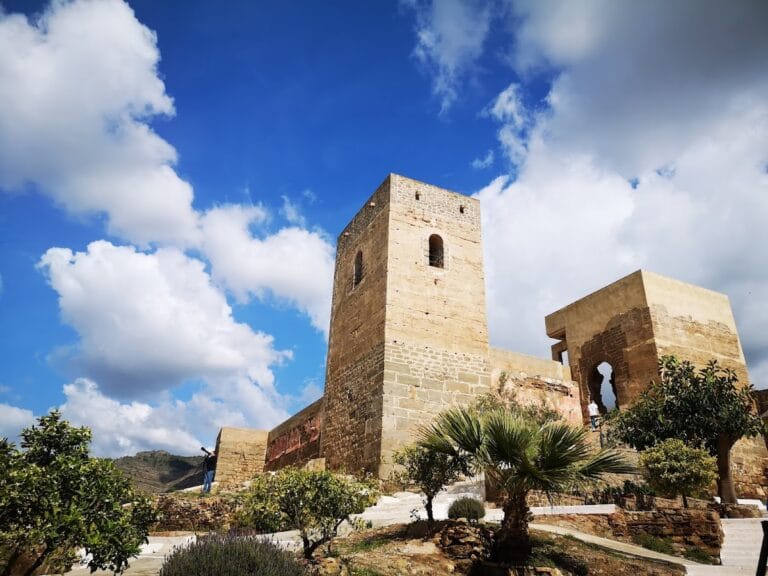
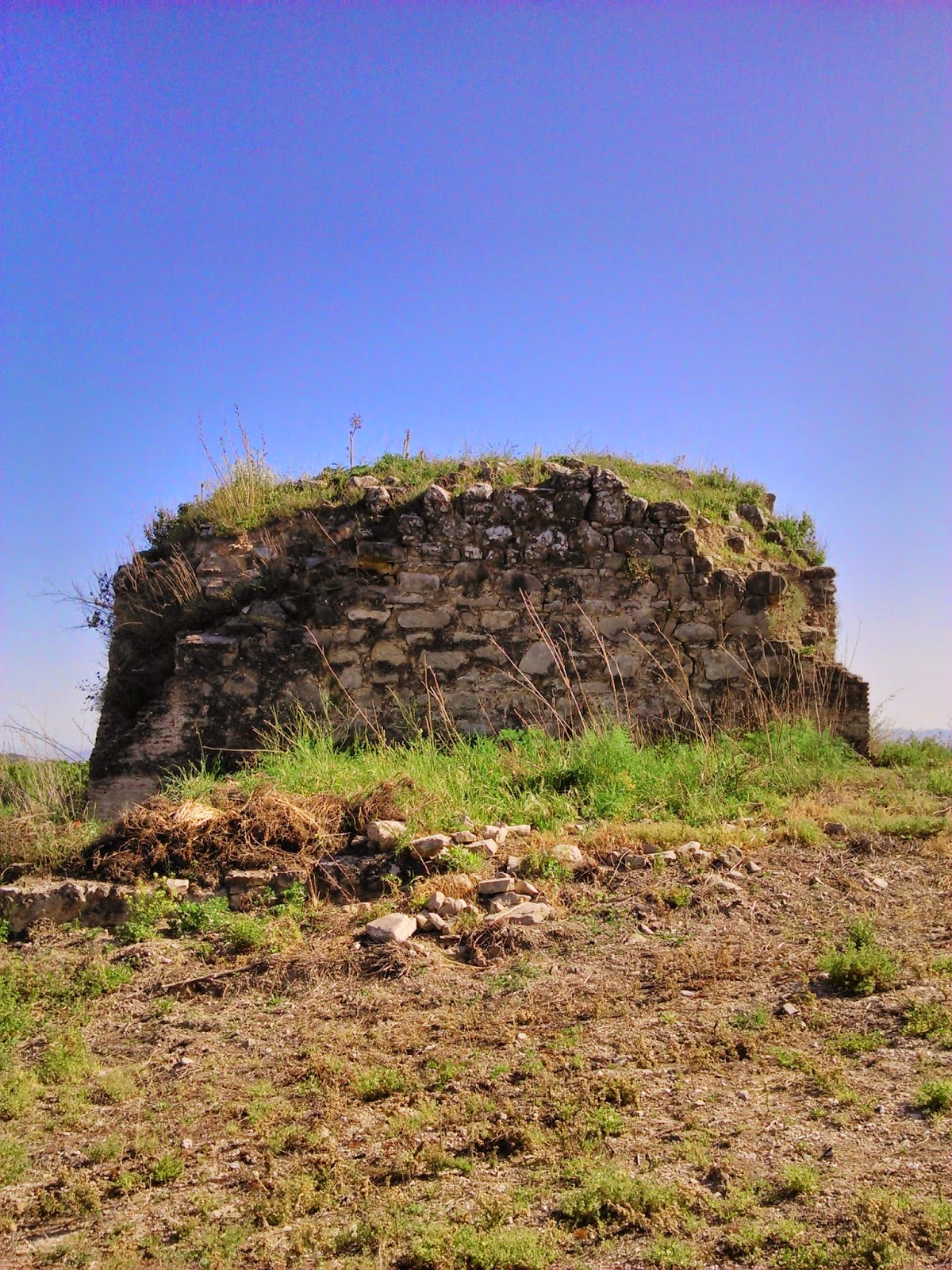
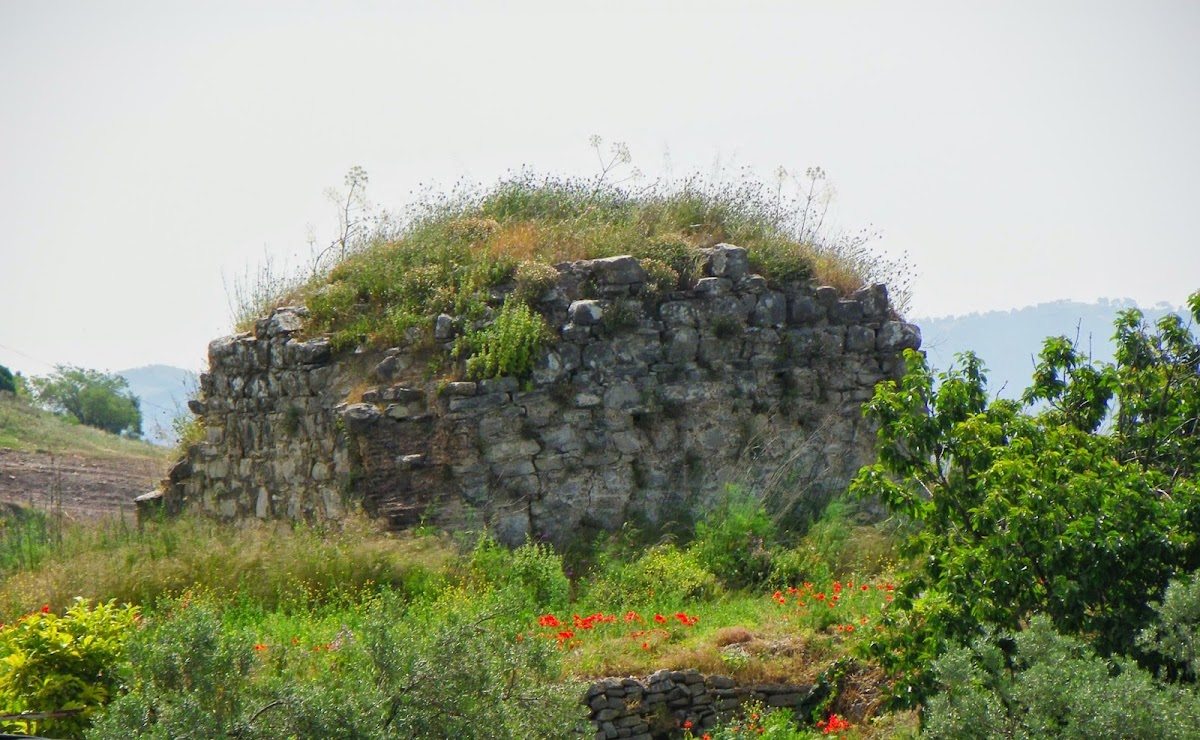
Jévar Castle occupies a low hill in a distinctly rural setting. Its relatively small plan consists of two irregular enclosures, enclosed by walls built from regularly laid limestone rubble. Large cyclopean stones, meaning very large stones used in substantial masonry, reinforce the lower parts of the construction. Higher sections contain smaller stones, and surviving masonry preserves traces of a whitish render, much of which has been lost.
Principal tower
The principal tower is solid at its base and connects with the wall-walk, the protected passage along the top of a fortification. It probably contained a chamber in its upper part. Its outer wall uses the same limestone masonry as the rest of the fortress. One side has battered, or deliberately sloping, walls and includes an entrance into the enclosure. This sloping form was intended to make the tower easier to defend.
Outer walls and entrance
The surviving outer walls use similar masonry, although the joints between the stones are less tightly filled and leave gaps of varying size. The entrance followed an angled, elbow-shaped plan rather than a straight passage. By forcing an approaching attacker to turn, this arrangement reduced the force of cavalry charges and reflects an entrance practice used during the Almohad period.