Berg Castle: The Grand Ducal Residence of Luxembourg


Site at a Glance
- Rating
- 4.3
- Popularity
- Low
- Country
- Luxembourg
- Primary era
- Modern
- Eras represented
- Medieval, Early Modern, Modern
- Civilizations
- Holy Roman Empire
- Site type
- Domestic
- Remains
- Palace
On this page12 sections
History
Berg Castle is a Grand Ducal residence in Luxembourg, located at Colmar-Berg. Its history reaches back to a lord of Berghe, associated with the site in 1311, and the estate later passed through several owners before entering the possession of the Grand Ducal family.
From medieval estate to Grand Ducal property
In 1845, Grand Duke William II bought Berg Castle and the Colmar forge from Baron du Pasquier. He wanted a suitable residence in Luxembourg that could strengthen the connection between the Grand Ducal institution and the country’s predominantly Roman Catholic population after Luxembourg separated from the Netherlands.
Luxembourg’s Constitution of 1848 recognized Berg Castle as the exclusive residence of the Grand Duke. After the Dutch royal house and Luxembourg’s Grand Ducal house became separate dynasties, Grand Duke Adolphe purchased the castle in 1891 to preserve the Colmar-Berg estate.
The present castle
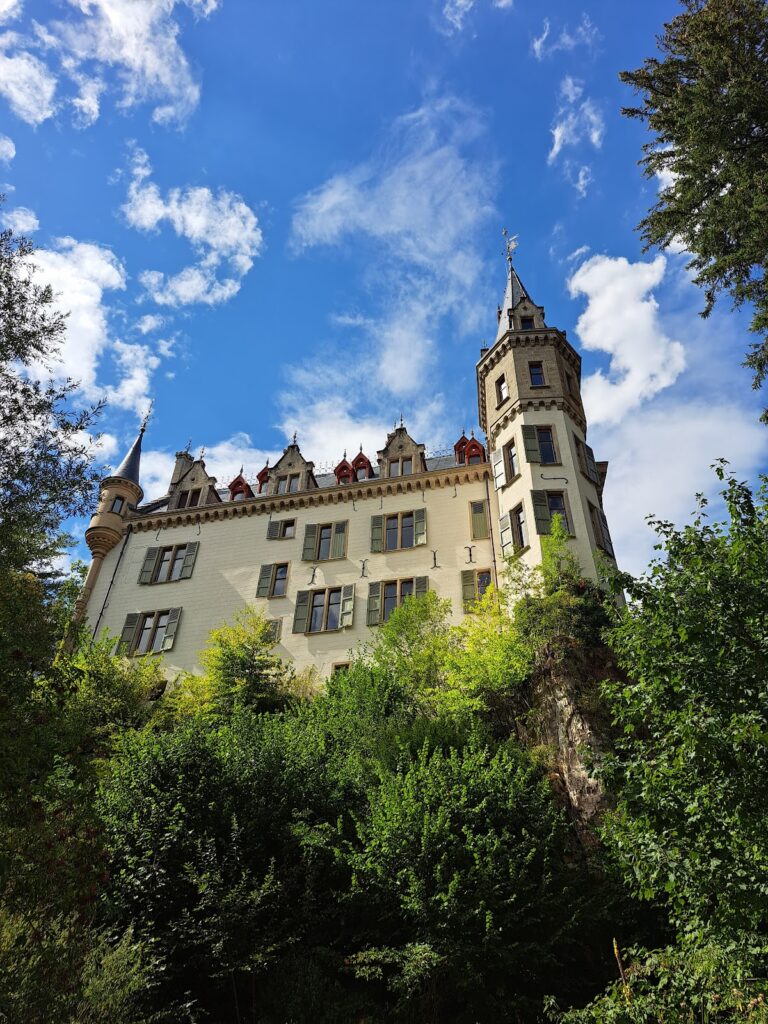
Under Grand Duke William III, the castle was remodeled in the Neo-Gothic style. Grand Duke William IV later ordered the old building demolished in 1906 and commissioned a replacement. Construction took place from 1907 to 1911 under the Munich architect Max Ostenrieder, supervised by the local architect Pierre Funck-Eydt. The new castle was completed on 9 September 1911 and became the principal residence of the Grand Ducal family.
Grand Duchess Marie-Adélaïde and Grand Duchess Charlotte lived at Berg Castle. Five of William IV’s six daughters were born there, as were three of Luxembourg’s five preceding monarchs, Marie-Adélaïde, Charlotte, and Grand Duke Jean.
State ownership and wartime occupation
During the Great Depression, Grand Duchess Charlotte negotiated the transfer of personal Grand Ducal property to the Luxembourg state while retaining the family’s right to use Berg Castle as an official residence. In 1934, the state acquired the castle and much of the Grünewald forest for 40 million francs. Of that amount, 20 million francs was assigned to the castle, although the government considered both properties undervalued. The castle has since remained available as a Grand Ducal residence, and Article 44 of Luxembourg’s Constitution protects the right of the Grand Dukes to reside there.
During the German occupation from 1941 to 1944, Berg Castle housed a Nationalpolitische Erziehungsanstalt, or Napola, a Nazi state institution intended to educate and politically indoctrinate selected young people for service to the regime. The occupiers substantially altered the building for this purpose, while most of its valuable artworks and furniture disappeared during the occupation.
Restoration and continuing use
Postwar restoration continued for several years. Grand Duchess Charlotte lived at Fischbach Castle until 1964, when her son Jean became Grand Duke and moved to Berg Castle with his wife and children. After becoming Grand Duke in 2000 and completing further renovation work, Grand Duke Henri established his residence there with his family in 2002.
In July 2024, Hereditary Grand Duke Guillaume announced plans agreed with the Grand Duke and the government to build a privately financed family residence on the castle grounds. The planned cottage is intended to provide a more family-oriented living arrangement. Construction began in May 2025 and is scheduled to continue until 2027. Guillaume has said that he plans to move temporarily into Berg Castle in 2026 while the cottage is completed, while the castle remains the residence of former Grand Duke Henri and Grand Duchess Maria Teresa until then.
Remains
Castle and estate
Main building
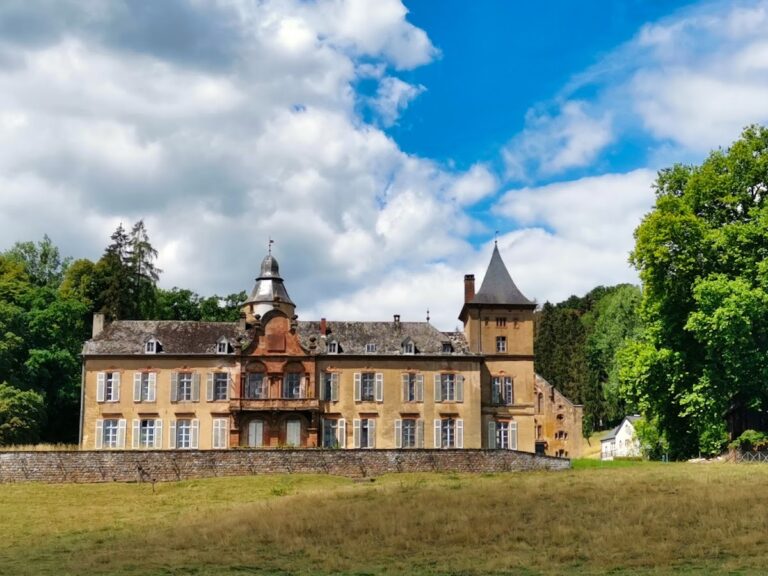
The present Berg Castle occupies a valley in central Luxembourg near the confluence of the Alzette and Attert rivers, at approximately 230 metres above sea level. Built between 1907 and 1911, it was designed by Max Ostenrieder and Pierre Funck-Eydt. Its main tower rises about 65 metres and forms an especially imposing part of the building.
Grounds and service buildings
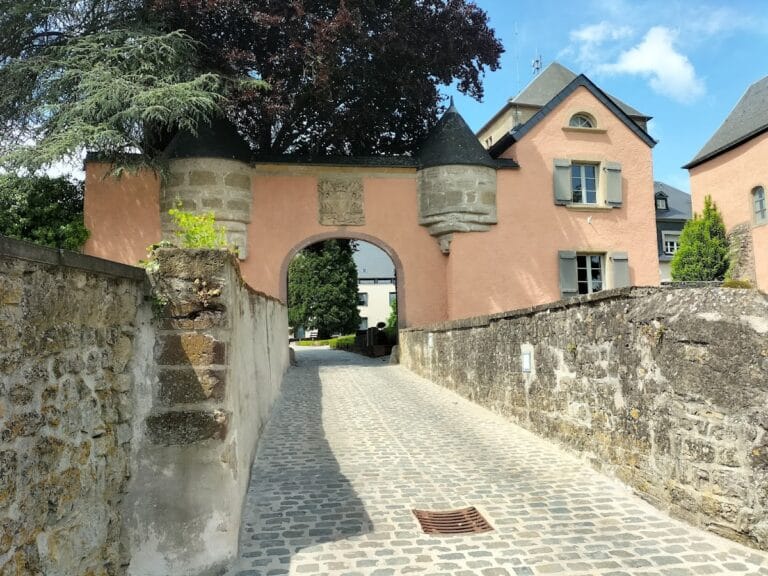
The estate covers 10.32 hectares. Its grounds include the castle and park, sheds, stables, heated greenhouses, two garages, laundry buildings with drying rooms, an orangery with cold greenhouses, a diesel-powered electrical generating station, and 14 staff houses. Together, these structures formed the supporting estate of the Grand Ducal residence.
Earlier buildings and collections
Predecessor castles
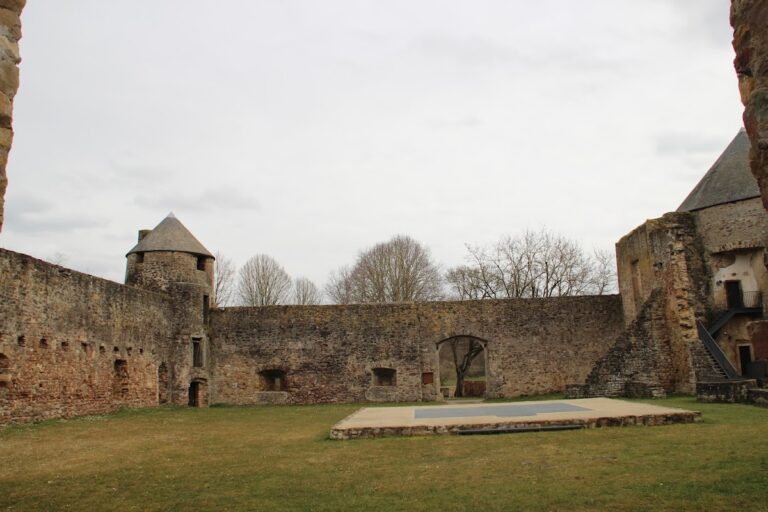
Several buildings occupied the site before the current castle. A first castle existed in the fourteenth century, followed by a Baroque replacement in the eighteenth century. A larger Neo-Gothic castle stood on the site from approximately 1850 to 1879 before the later rebuilding. Very few elements of these earlier structures survive.
Court Library
Berg Castle houses the Luxembourg Court Library, the library associated with the Grand Ducal household and court administration. It contains approximately 30,000 books.