Hama Castle: The Ancient Citadel of Hama, Syria



Site at a Glance
- Rating
- 4.4
- Popularity
- Low
- Country
- Syria
- Primary era
- Medieval
- Eras represented
- Stone Age, Classical, Medieval
- Civilizations
- Ayyubid, Mamluk, Seleucid
- Site type
- Military
- Remains
- Castle
On this page9 sections
History
Hama Castle is a ruined citadel in Hama, Syria, built initially by the Seleucids on the large mound beside the west bank of the Orontes River. The mound was Hama’s earliest population center and later became the site of the Seleucid city of Epiphaneia, an urban foundation established by the Hellenistic dynasty that ruled much of Alexander the Great’s former empire. Roman forces subsequently occupied Hama and took control of the fortress.
Early Islamic and Medieval Rule
During the early Islamic conquests, Abu Ubaidah ibn al-Jarrah captured Hama. A leading companion of the Prophet Muhammad and a commander in those conquests, he was followed in the administration of the castle by Abdullah ibn al-Samit.
In the Abbasid period, the Qarmatians seized the stronghold. This revolutionary Ismaili Shi’i movement held political power in parts of the Middle East during the medieval period. The Abbasid caliph al-Mustakfi later recovered the castle, after which it passed to Salih ibn Mirdas, the ruler of Aleppo. Salih began rebuilding and reinforcing the fortress. Control later shifted to Khalaf ibn Mala’ab, ruler of Homs, Toghtekin, governor of Damascus, and Imad al-Din Zengi.
An earthquake destroyed the castle in 1157. Nur al-Din Zengi then restored it and strengthened Hama’s city walls. The Ayyubids, the dynasty founded by Saladin, took control later in the twelfth century, when Hama was governed by the emir Shihab al-Din Mahmud, Saladin’s maternal uncle. They rebuilt collapsed sections of the walls and towers and reinforced the defenses during attacks by the Mongols.
Destruction and Later History
The Mongols destroyed Hama and its castle in 1258. Sultan Baibars later rebuilt both the city and the fortress, restoring their political and military importance under Mamluk rule. In 1401, local notables surrendered Hama to Timur and sought his protection. Timur instead ordered the castle demolished.
After that destruction, the site remained largely ruined, although houses, standing wall sections, and other traces survived. A government prison also continued to occupy part of the mound. Under Ottoman rule, the castle lost its military importance and deteriorated until little of its built structure remained.
Archaeological Investigation
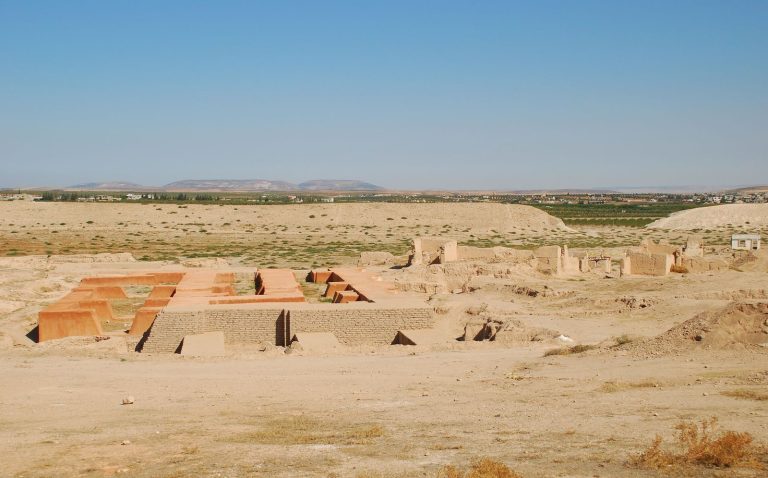
A Danish expedition led by Harold Ingholt excavated the mound from 1931 to 1938. The work identified 13 archaeological layers, with the earliest dating to the fifth millennium BC and the latest belonging to the Mamluk period. Finds from the central and southern areas revealed the extent of Hama’s urban development and industrial advancement across successive periods. The surviving ruins and accumulated archaeological evidence therefore preserve the history of Hama’s ancient urban center over a very long span.
Remains
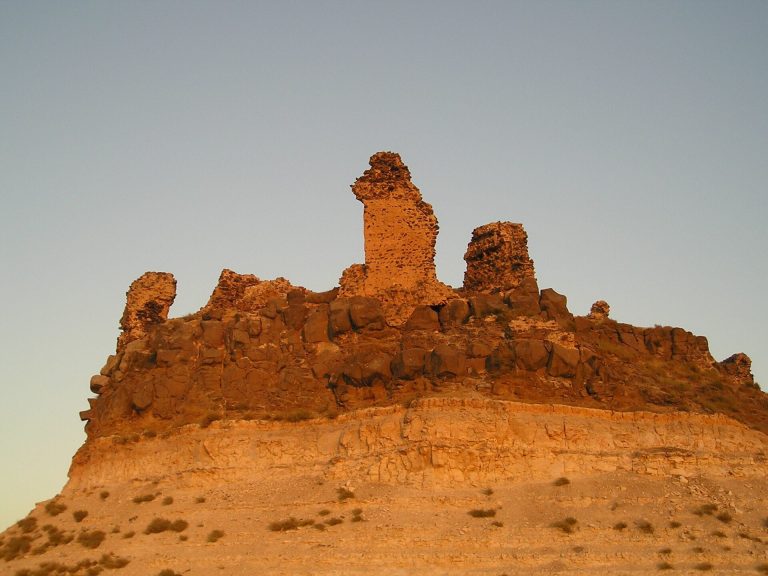
The physical site consists of a large raised mound on the west bank of the Orontes River. Its surviving fortress fabric is concentrated in the stone facing, or revetment, that once protected and supported the mound’s surface. Some sections of this lining remain visible, while the mound itself contains archaeological deposits from 13 successive periods, extending from the fifth millennium BC to the Mamluk era.
Mound and Fortress Fabric
Raised Mound
The mound formed the core of ancient Hama and later carried the Seleucid fortress. An ancient geographer compared the castle closely with the Citadel of Aleppo and described the two as having the same design. The surviving stone revetment provides the clearest physical indication of the fortified mound and its construction.
Archaeological Layers
Excavation exposed a deep sequence of settlement remains representing the civilizations that occupied Hama in turn. Among the discoveries were a staircase flanked by lions and an altar made of basalt stone. Numerous jars and pieces of jewelry were also recovered, reflecting the successive communities that used the site.
Summit Landscape
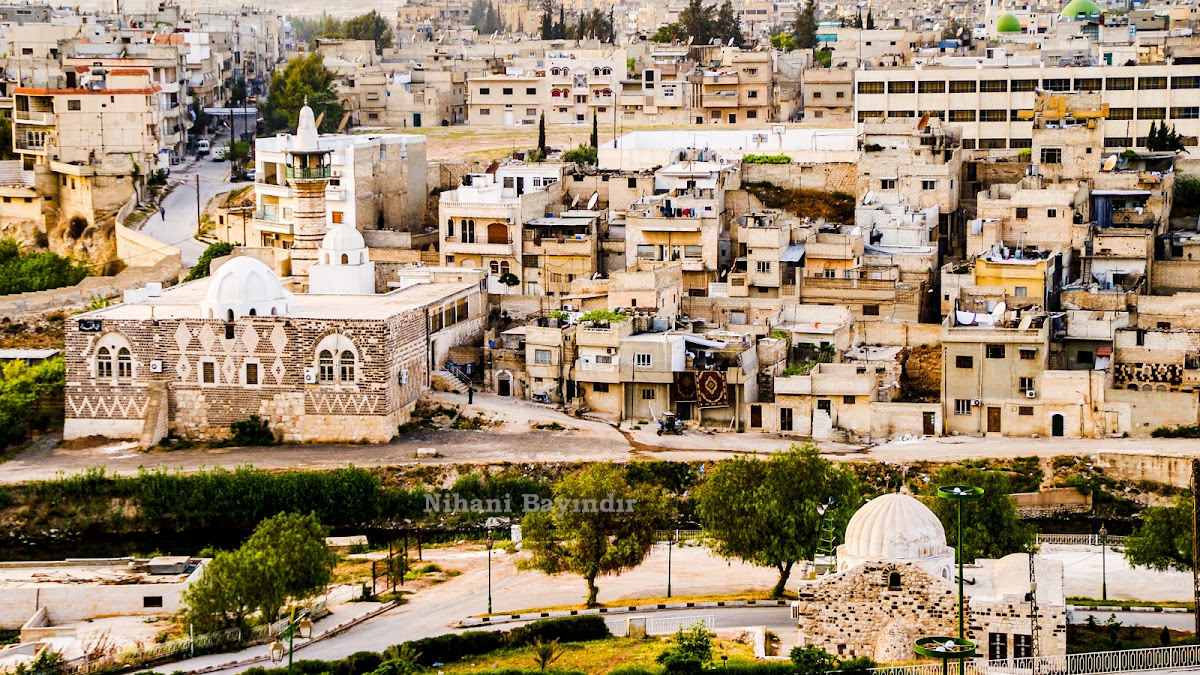
Trees now cover the summit, which serves as a public park and landscaped recreational area. This present landscape occupies the top of the mound above the surviving stone facing and the archaeological deposits beneath it.