Château de Langoiran: A Medieval Hilltop Fortress in France

Site at a Glance
- Rating
- 4.2
- Popularity
- Low
- Country
- France
- Primary era
- Medieval
- External website
- Open
- Eras represented
- Medieval, Early Modern
- Civilizations
- Duchy of Aquitaine, English, French
- Site type
- Military
- Remains
- Castle
On this page9 sections
History
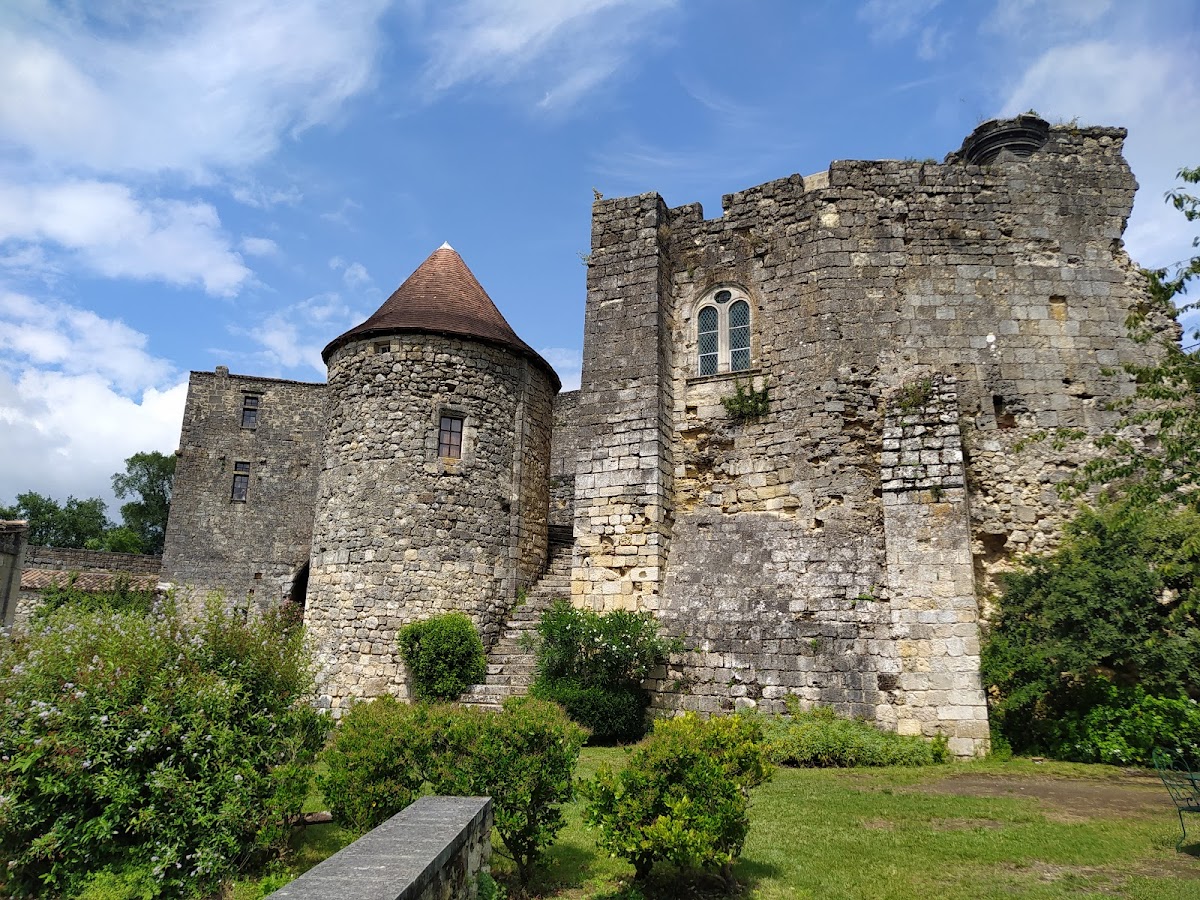
Château de Langoiran is a medieval hilltop fortress in France, built by the Seguin d’Escoussans family during the thirteenth and fourteenth centuries above the right bank of the Garonne in Gironde. Its lords are mentioned from the eleventh century, while the oldest surviving fabric dates from the thirteenth century. The lordship became one of the most prestigious and powerful in the Duchy of Aquitaine, a territory whose rulers also held the English crown for long periods.
The Seguin d’Escoussans and the English Crown
The Seguin d’Escoussans family originated as lords of Escoussans. Before establishing themselves at Langoiran, its members were milites, medieval military landholders broadly equivalent to knights, and held their lands as vassals of the lords of Benauges. They constructed the present castle over the thirteenth and fourteenth centuries.
In 1345, the family formed an alliance with the Albret dynasty through the marriage of Amanieu d’Albret and Mabille Seguin d’Escoussans. Around the same time, the Seguins became directly dependent on the king of England for some lands, including Langoiran, rather than on the lords of Benauges. The castle therefore stood within the political world of the “king-duke,” the English king acting in his capacity as Duke of Aquitaine. Its lords generally supported that authority, although Bérard d’Albret later swore allegiance to the king of France after being captured at Eymet. He died after being wounded beneath the walls of Cadillac.
Albret and Montferrand Lordship
The Albret family held Langoiran during the second half of the fourteenth century. The Montferrands then possessed it from the late fourteenth century until the early seventeenth century. Other owners included the Arnoul family, whose members were ennobled Bordeaux bourgeois, and the Daffis family, a powerful lineage of parliamentary officials.
Bertrand III de Montferrand was a knight and baron of Montferrand and Langoiran, as well as lord of several other places. His marriage to Isabelle de Preissac, heiress of the Trau and daughter of Arnaud Bernard de Preissac, connected the family to Pierre II de Montferrand. Pierre became Soudan of La Trau, a medieval noble title, and lord of Lesparre. He married Marie of Bedford, an illegitimate daughter of the Duke of Bedford.
War, Confiscation, and Religious Conflict
Langoiran became involved in the conflicts between the kings of England and France. After Bordeaux capitulated in 1453, Charles VII ordered twenty leading Gascon lords to surrender. A Montferrand lord of Langoiran fled to England, and the castle was confiscated, absorbed into the royal domain, and granted to the Armagnac bastard, a marshal of France. Louis XI later pardoned the Montferrands and restored part of their possessions, including Langoiran.
During the French Wars of Religion, a series of conflicts between Catholics and Protestants in sixteenth-century France, the castle changed hands between two opposing brothers. Charles de Montferrand led the Catholic party in Bordeaux and governed the city, while Guy de Montferrand was one of the leading Protestant figures in Guyenne. The Montferrands later sold the castle and barony to the Arnoul family.
Destruction and Modern Restoration
In the early seventeenth century, Langoiran belonged to the Daffis family. In 1649, Guillaume Daffis, president of the Parliament of Bordeaux, led the parliamentary Fronde in the Bordelais. The Fronde was a series of rebellions against royal government during the minority of Louis XIV and the ministry of Cardinal Mazarin. The Duke of Épernon, governor of Guyenne, seized the castle after his troops suffered a defeat, then burned it and blew up the keep. Langoiran declined into ruin from the 1650s or 1660s.
During the eighteenth century, the lordship belonged to the Jumilhac family and was administered by a sergeant acting for the marquises of Jumilhac. The surviving remains were classified as a French historic monument on 19 May 1892. In 1944, elements of the Druilhe column camped at Langoiran. On 26 August, Commander Rougés met Colonels Druilhe and Adeline at the castle and handed them the convention for Bordeaux’s surrender, signed by Korvettenkapitän z.V. Kühnemann, the military port commander of Bordeaux since 1941.
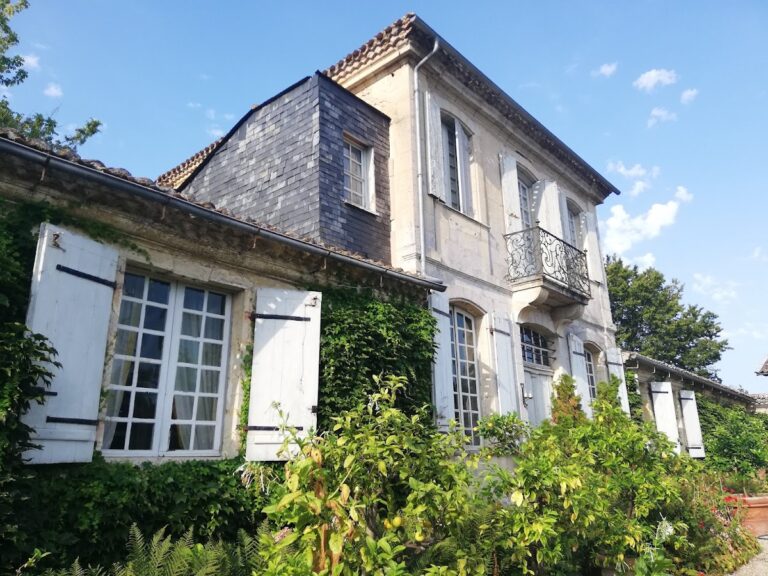
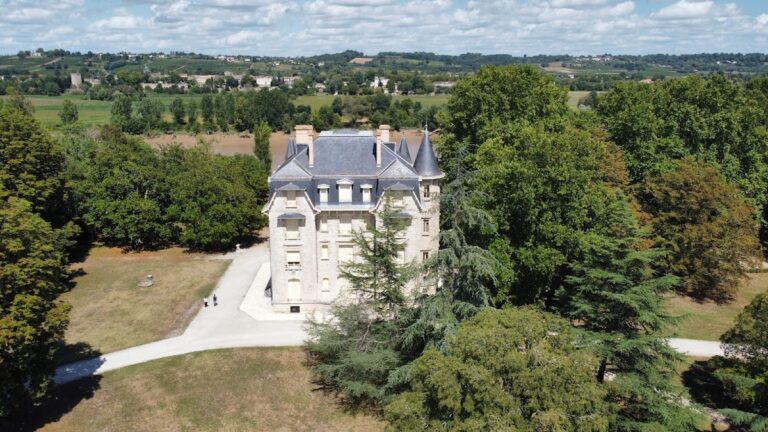
Mr and Mrs Bibonne bought the castle in 1972 and organized restoration through the association Les Amis du château de Langoiran. The association has continued to promote the repair of the medieval remains and activities intended to revive the character of the site. An informal tradition also holds that the Prussian Crown Prince Wilhelm visited Château Langoiran during the 1920s or 1930s, apparently in the nineteenth-century building below the medieval fortress rather than in the castle itself.
Remains
Setting and Defensive Layout
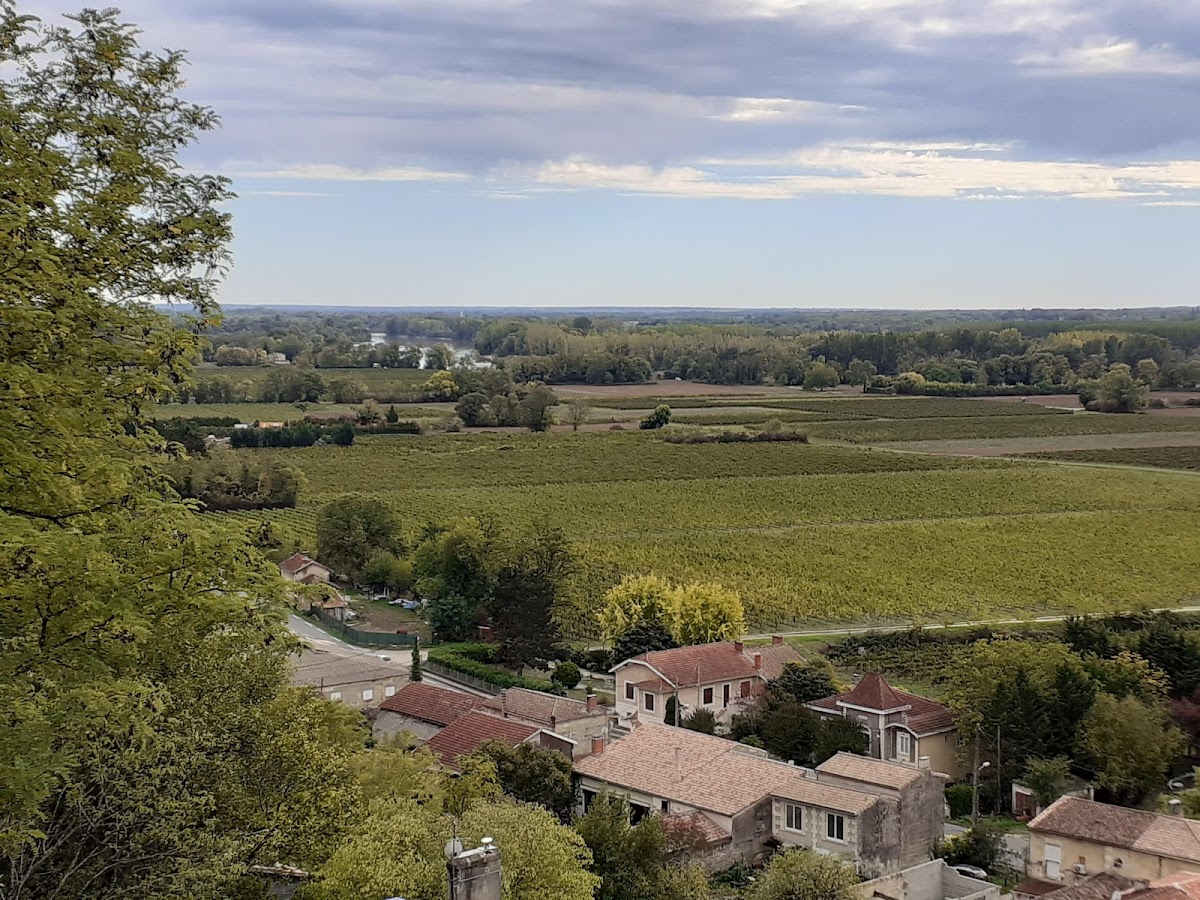
The castle occupies a projecting corner of the plateau above the Garonne and a small valley running at right angles to it. More than 80 metres above the Garonne valley, the site uses the valley and a smaller ravine as natural defenses. On the plateau side, an arc-shaped ditch connects the valley with the ravine. The enclosing walls meet this ditch at both ends.
The interior follows a stepped arrangement. Beneath the keep, the principal fortified tower, lies a first courtyard, followed by a lower bailey, an enclosed courtyard or ward adjoining the stronghold. Each area is surrounded by walls forming an approximately right-angled enclosure, with its ends reaching the surrounding ditch.
The Fourteenth-Century Keep
The cylindrical keep dates from the fourteenth century and has exceptionally thick walls. It is described as one of the widest keeps in France and forms the dominant surviving element of the ruin. Its position gives views across a radius of about 50 kilometres.
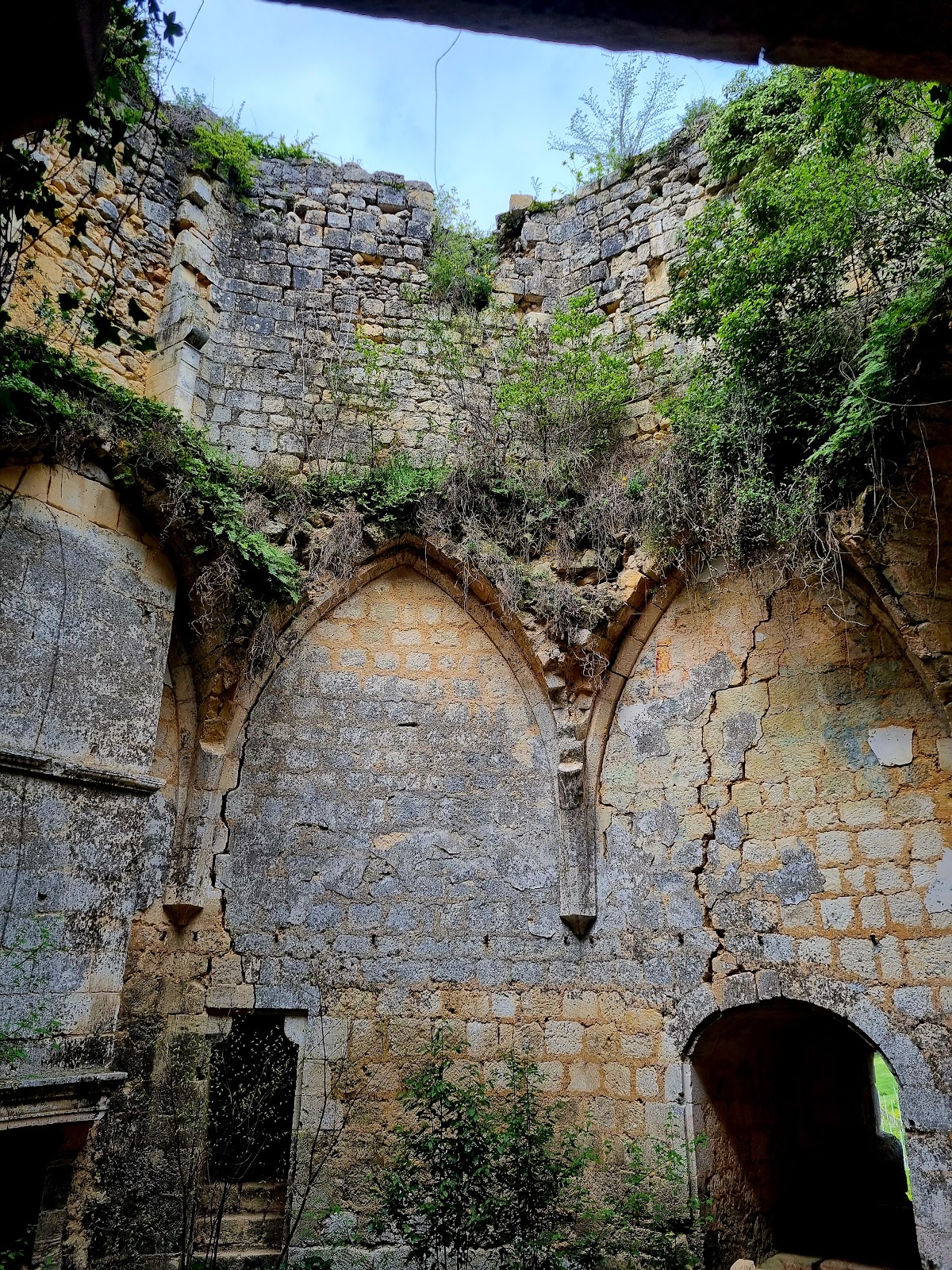
Inside, three octagonal rooms occupy two original vaulted storeys connected by a surviving spiral staircase. The first storey rises eight metres to the keystone of its vault, which has been preserved near the well. Its former floor carries tiles decorated with the arms of the lords of Escoussan and with floral and geometric patterns. The vaults bear gold leopards on a red ground, reflecting the family heraldry, while the ribs carry the coats of arms of successive collateral families.
The ground-floor guard room contains a very large fireplace built into the wall and a stone sink set into the cavity of an arrow slit. On the first storey, cruciform arrow slits, narrow openings for observation or weapons, lie beneath niche-like recesses. Two frescoes from the keep’s construction also survive there. One shows Saint Michael holding a balance and a lance while overturning a demon, expressing the triumph of good works over bad works before divine judgment. The other represents Saint Peter holding the keys to paradise.
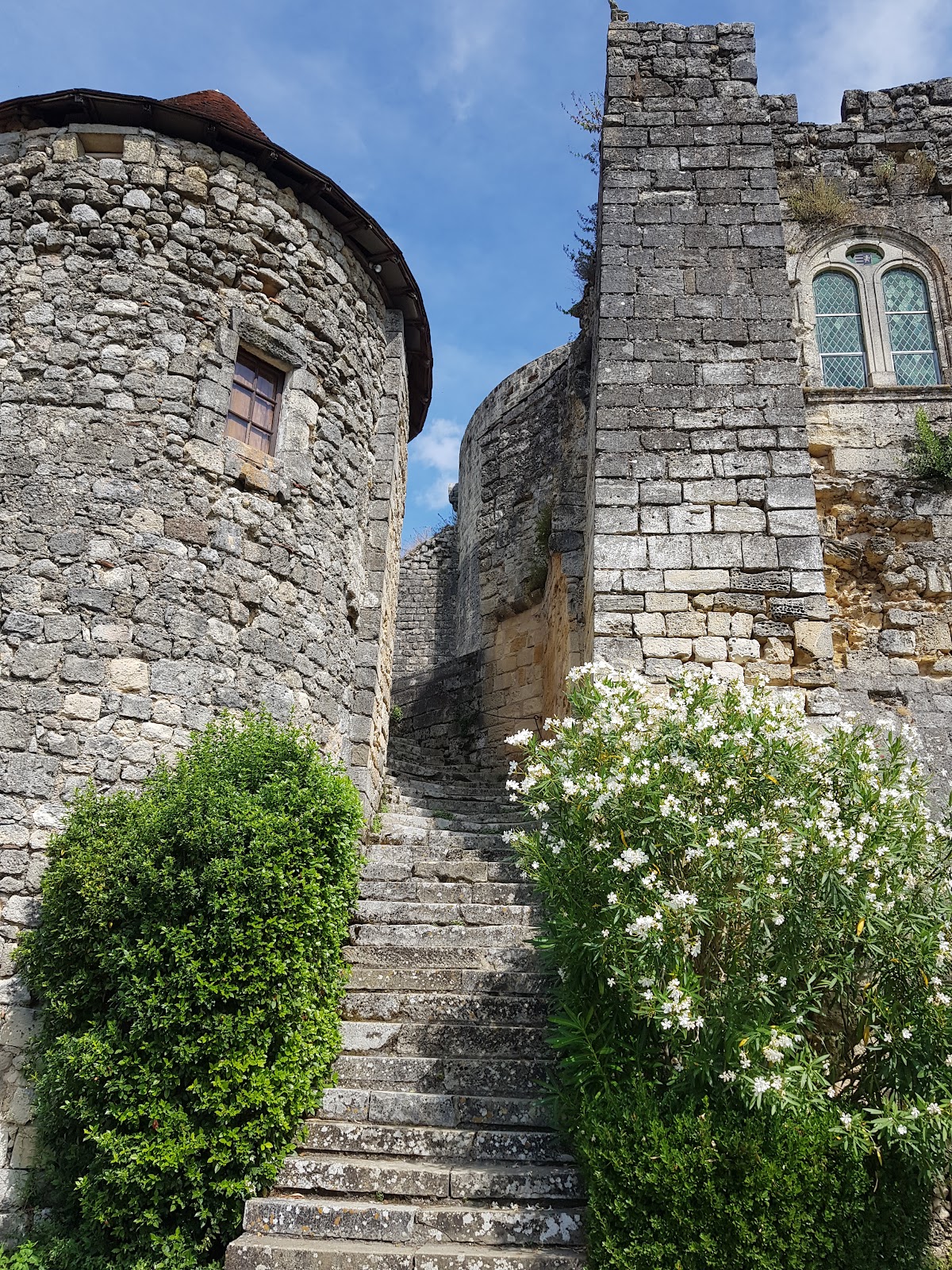
The second storey served as accommodation for the lord, his family, and guests. It was not vaulted. A large beam and joist structure probably supported either a roof-level storey or a terrace, depending on the period. Toward the end of the fourteenth century, builders added a large Gothic trefoil window, an opening shaped with three lobes, with stone benches inside. A relatively rare Gothic fireplace was built into the wall, and the sixteenth century brought another fireplace and a large opening.
Courtyards and Later Structures
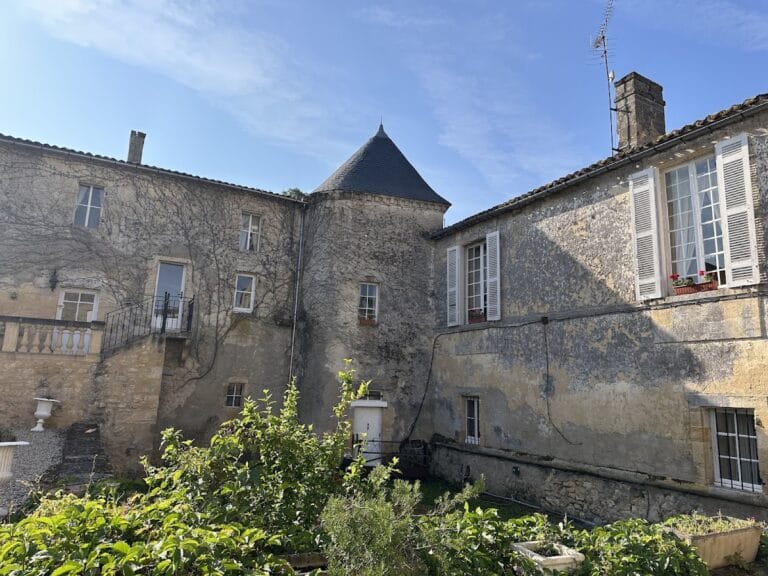
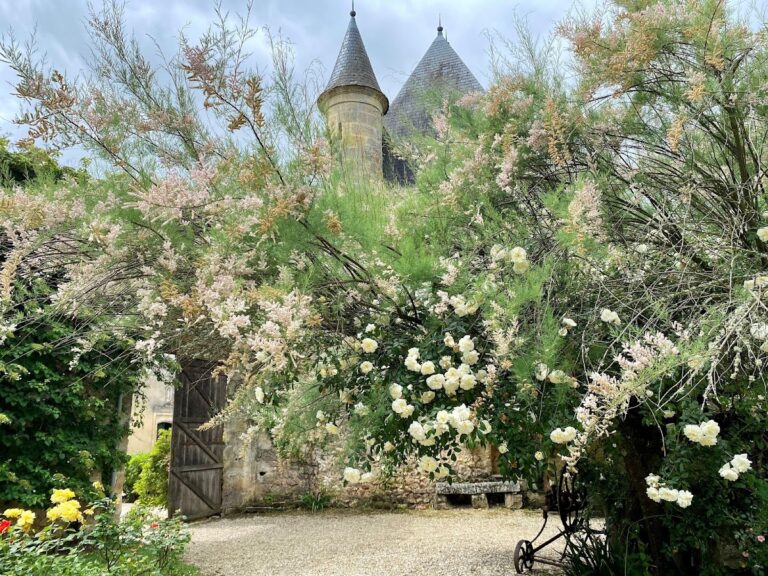
A roughly built angle tower belongs to the sixteenth or seventeenth century, a troubled period in the castle’s history. Its gun loops were designed for firearms. The wider complex also includes a sixteenth-century tower, a chapel, and a gatehouse. Within the third line of fortification, the former lower bailey now contains Château Langoiran, a 23-hectare wine property producing under the Cadillac and Côtes de Bordeaux appellations and owned by the Gonfrier family.