Château de Mongenan: An Eighteenth-Century Château, Garden, and Museum in France


Site at a Glance
- Rating
- 4
- Popularity
- Very Low
- Country
- France
- Primary era
- Early Modern
- External website
- Open
- Eras represented
- Early Modern
- Civilizations
- French
- Site type
- Domestic
- Remains
- Elite Residence
On this page10 sections
History
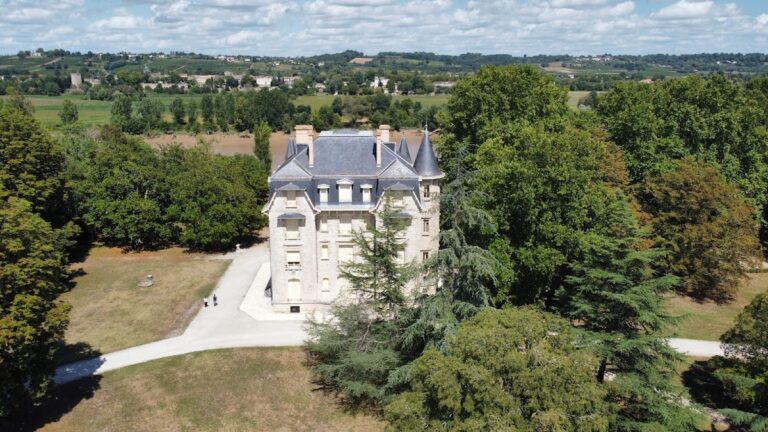
Château de Mongenan is an eighteenth-century château, botanical garden, and museum in Portets, France, built in 1736 in the neoclassical style. The architect Le Herissey designed it for Baron Antoine de Gascq, a founder of the Academy of Sciences, Letters and Arts of Bordeaux and president of the Parliament of Guyenne, the regional high court of southwestern France under the monarchy.
The Gascq Family and Claude Antoine de Valdec de Lessart
The château was the birthplace of Claude Antoine de Valdec de Lessart, Baron de Gascq’s illegitimate son. Lessart later directed the Compagnie des Indes, served as a minister under Louis XVI, and acted as a conciliator among the three estates at the Estates-General, the assembly representing the clergy, nobility, and commoners.
The Botanical Garden and Masonic Use
Baron de Gascq established the botanical garden in 1741. Its design drew inspiration from his friend and music teacher Jean-Jacques Rousseau, an eighteenth-century Genevan philosopher and writer whose ideas influenced European thinking about nature and landscape design. It also reflected Carl Linnaeus’s view that ornamental, medicinal, wild, and food-producing plants all possessed value. The garden therefore joined beauty, cultivation, and practical knowledge within the estate.
From the middle of the eighteenth century until 1898, the château served as a Masonic temple, a ceremonial meeting space for a Freemasons’ lodge. It is the only surviving eighteenth-century Masonic temple in France. The building remains inhabited by the same family and also operates as a museum devoted to the reign of Louis XVI, king of France from 1774 until the monarchy was abolished during the French Revolution, and to the Revolution’s first years.
Protection and Continuing Use
Château de Mongenan was listed as a French historic monument in 1986. Protection was extended in 2003 to the service buildings, gardens, and rose garden. The gardens received the Jardin Remarquable designation in 2003, while the estate is also recognized as a Graves wine property.
Remains
The surviving complex combines a neoclassical residential château with a preserved eighteenth-century garden, a Masonic temple, and museum spaces. The garden covers approximately 1.50 hectares, while the château and its associated buildings retain elements connected with the estate’s domestic, botanical, ceremonial, and cultural uses.
Château and Masonic Temple
Neoclassical Château
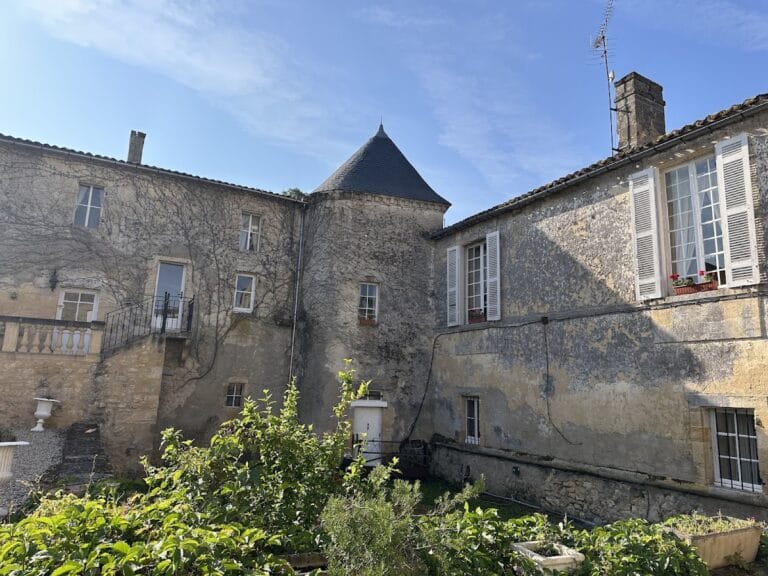
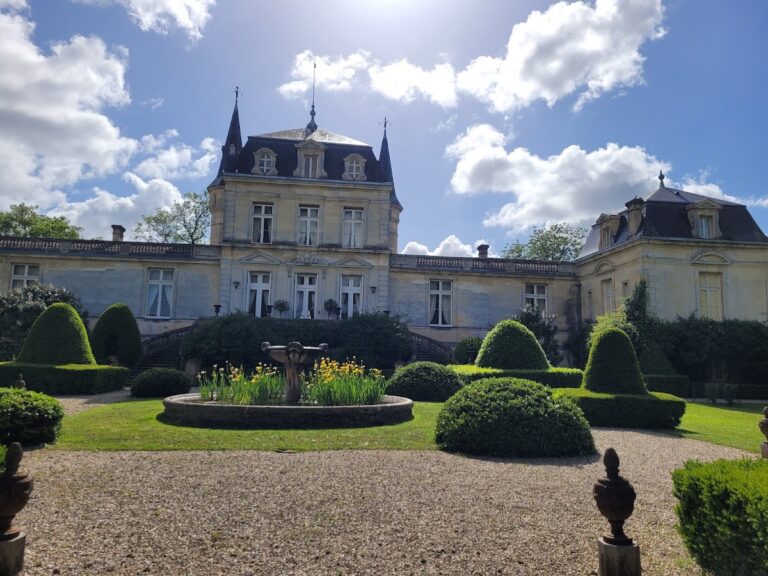
The château is a neoclassical residential building, reflecting the eighteenth-century architectural interest in forms and principles derived from ancient Greece and Rome. It remains in good condition and continues to be inhabited by the family associated with the property.
Preserved Masonic Temple
Inside the château, the Masonic temple retains its original decoration and period furnishings. An eighteenth-century collection of Masonic objects is displayed on the temple forecourt, preserving material evidence of the building’s long ceremonial use.
Botanical Garden
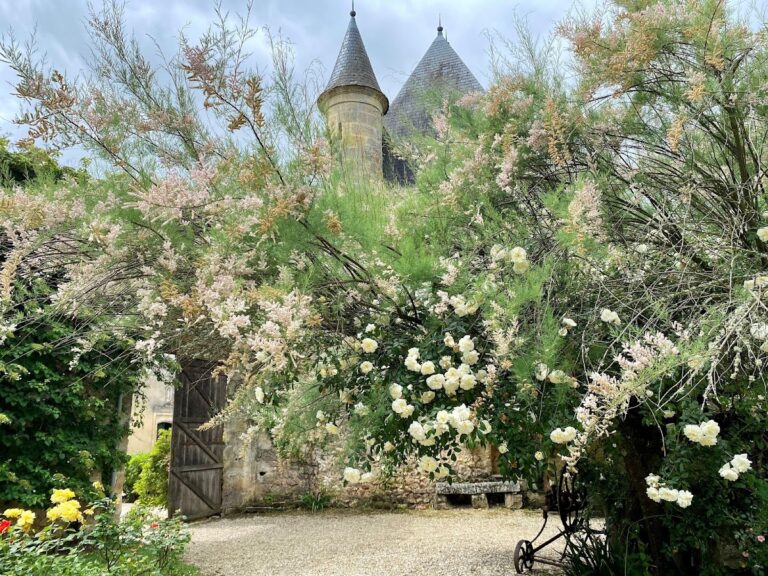
The botanical garden preserves the character of an ideal pre-Romantic garden, the type associated with Rousseau’s descriptions in Julie, or the New Heloise. Its arrangement emphasizes scents and colors. More than 1,000 varieties of dye and medicinal plants grow there alongside eighteenth-century vegetables, local fruit-tree varieties, eighteenth-century roses, asters, irises, dahlias, aromatic plants, and plants once used in perfume production. Tuberoses and jasmines are also cultivated in the park.
Museum Collections
The museum presents painted works, manuscripts, furniture, porcelain, faience, and numerous eighteenth-century costumes. Together, these collections support the château’s interpretation of the reign of Louis XVI and the early years of the French Revolution.