Château de Bagnols: A Fortified Castle and Historic Estate in France
Site at a Glance
- Rating
- 4.4
- Popularity
- Low
- Country
- France
- Primary era
- Medieval
- External website
- Open
- Eras represented
- Medieval, Early Modern, Modern
- Civilizations
- French
- Site type
- Military
- Remains
- Castle
On this page11 sections
History
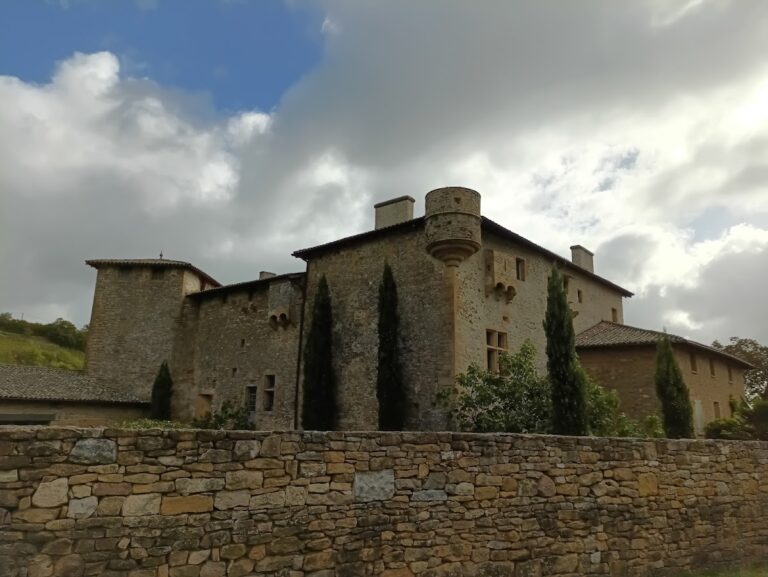
Château de Bagnols is a former fortified castle in Bagnols, France, built between 1217 and 1221 in the Beaujolais area of the Rhône region. It began as a château fort, a fortified aristocratic residence combining domestic buildings with defensive walls, towers, moats, and controlled entrances. The castle stands south of the village on a hillside among the vineyards and golden-stone buildings associated with Beaujolais.
Foundation and medieval lordship
Guichard d’Oingt, co-lord of Châtillon, built the first castle after obtaining an 11,000-sous-forts loan from the archbishop of Lyon in 1217 to fortify Bagnols. The estate initially belonged to the Oingt family. In 1288, Éléonore d’Oingt, Lady of Bagnols, married Guillaume d’Albon, transferring the castle to the Albon family.
The castle remained connected to the political and military hierarchy of the region. In 1362, the knight Thibaud d’Albon rendered homage for it to the archbishop and chapter of Lyon. Jeanne d’Albon’s marriage to Rauffet de Balsac in 1453 transferred the estate to the senior branch of the Balsac family, during whose ownership the castle was extensively remodeled.
The Balsac and Camus periods
Roffec III de Balsac succeeded to the estate in 1473, followed by his brother Geoffroy de Balsac. Geoffroy received King Charles VIII at Bagnols on 30 October 1490 and probably commissioned further embellishment. Charles VIII was king of France from 1483 to 1498, and his visit was later commemorated within the castle.
The wealthy merchant Jean Camus acquired the domain in 1566. His son Claude succeeded him in 1568, and his grandson Charles inherited it in 1585. During the Camus family’s ownership, additional defensive works were added to the complex.
From fortified residence to country estate
Gaspard Dugué, Treasurer of France, settled at Bagnols in 1619. The office was a royal financial position, and Dugué transformed the castle into a comfortable and richly decorated residence. His son François Dugué, Intendant of Lyon, received Madame de Sévigné there in 1673. She was a seventeenth-century French aristocrat known for her celebrated letters.
Joseph Barthélemy Hessler succeeded the Dugués in 1711. He had the roofs rebuilt and the guards’ room redecorated. Jean-Baptiste Croppet de Varissan acquired the property in 1751. His daughter and heir, Claudine Barthélemy Croppet de Varissan, married Jean Giraud de Saint-Trys in 1782, and their son Georges Marie Giraud de Saint-Trys inherited the estate in 1786.
Revolutionary and modern ownership
Claude-Marie Chavanis, a doctor of law, lawyer, and former administrator of the Rhône-et-Loire department, bought the castle in 1796. He introduced decoration in the First Empire style and adopted the name “Chavanis de Bagnols.” His son Jean François Auguste Chavanis de Bagnols succeeded him in 1820 and organized Bagnols as a wine estate. This phase included the construction of a wine-making building and a belvedere for monitoring the vineyards.
Through marriage, ownership later passed to Antoine Morand de Jouffrey, husband of Julie Chavanis, a descendant of the family. The property passed to Jules Lucien Chevalard in 1881. In 1899, Antoinette Souchon du Chevalard married Joseph Boutechoux de Chavannes, who restored a fireplace. Marie Antoinette inherited the property in 1928.
The estate then entered a period of decline. It was subdivided, poorly maintained, and converted into an agricultural holding. M. Roche bought the domain in 1980 and sold it in 1987 to the English philanthropist Paul Hamlyn. Hamlyn’s second wife, Helen Guest, converted the castle into a luxury hotel. Lady Hamlyn sold it to the Von Essen hotel group on 1 January 2007, and the Lyon businessman Jean-Claude Lavorel acquired it for the Lavorel Hôtels group in 2012.
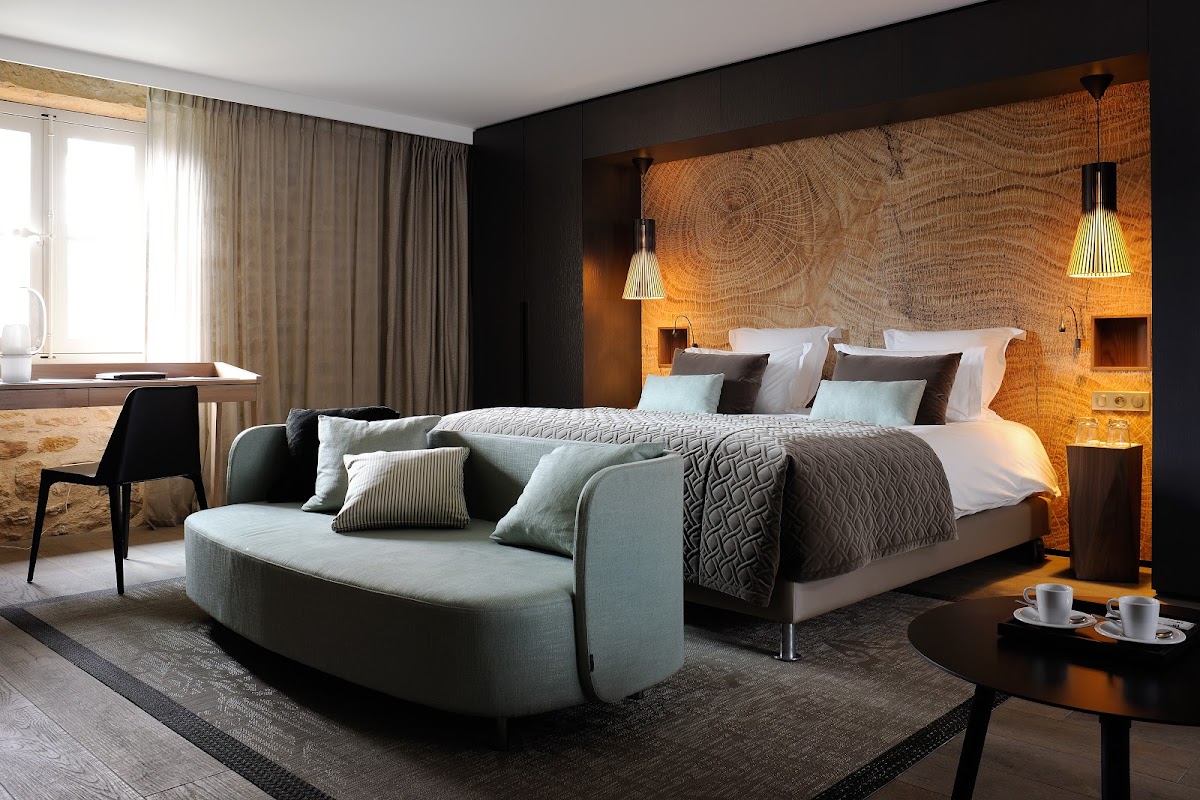
Château de Bagnols is now used as a luxury hotel. Its heritage protection began with registration as a French historic monument in 1926 and 1974, followed by classification in 1984. The protected complex includes the castle and specified interior rooms, the dovecote, moats, terraces and loggias, enclosure and retaining walls, bridges, façades and roofs, outbuildings, boundary towers, and pavilions.
Remains
Enclosure and towers
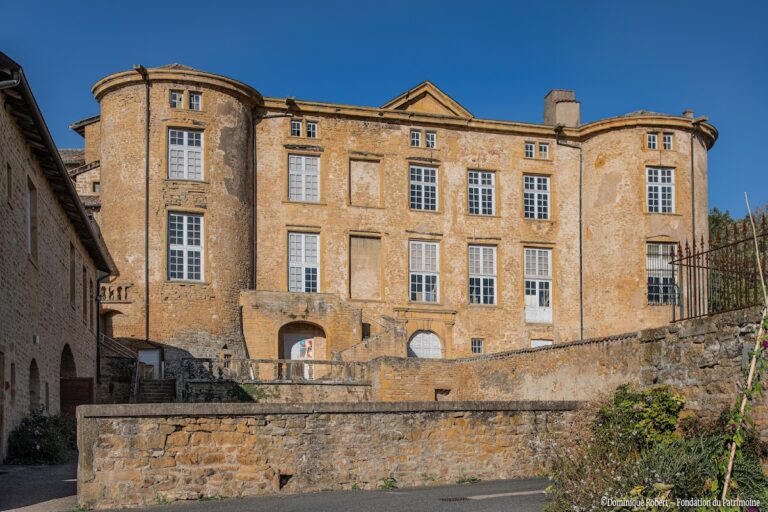
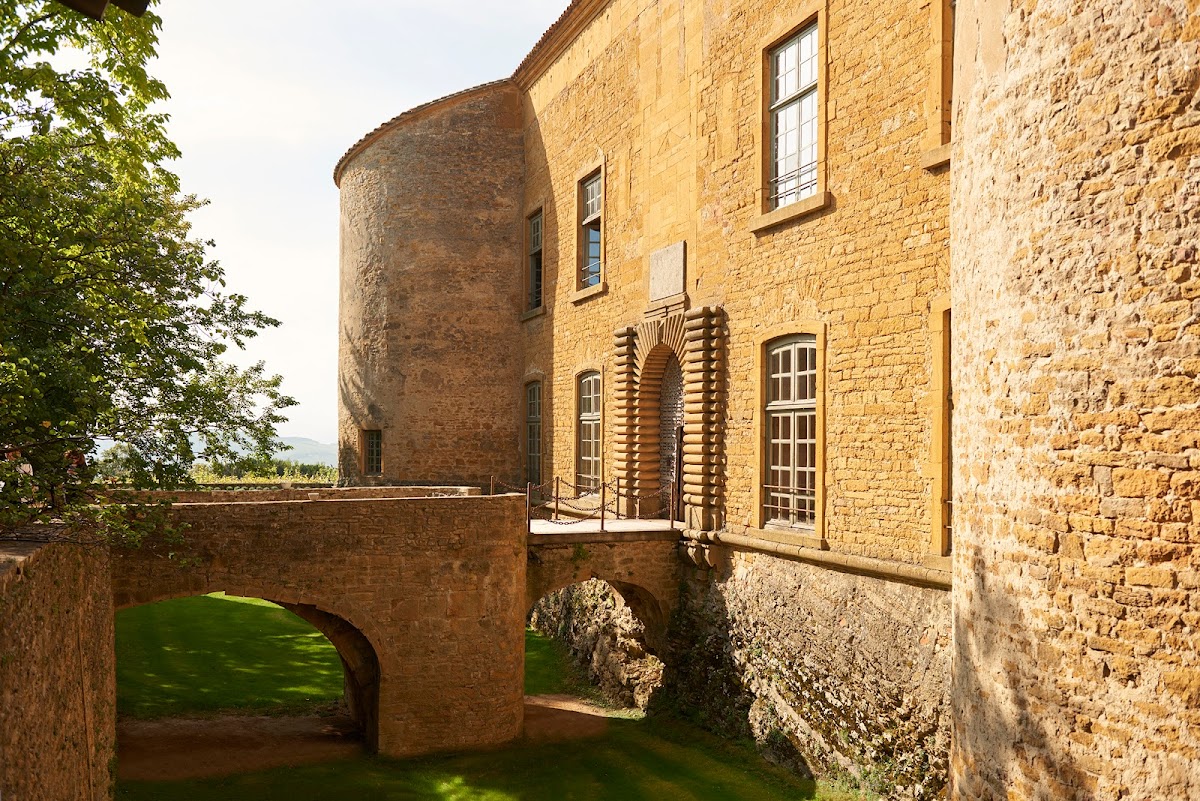
The castle is organized around a small, paved interior courtyard within a pentagonal enclosure. Four residential buildings form the sides of the enclosure, and their courtyard-facing elevations are lit by mullioned windows. Five round towers flank its corners. The top of the enclosure has been leveled, but corbels arranged in three successive projecting tiers survive from a former machicolation crown. Machicolations are projecting defensive galleries or parapets with openings used to attack people directly below the walls.
Interior rooms and decoration
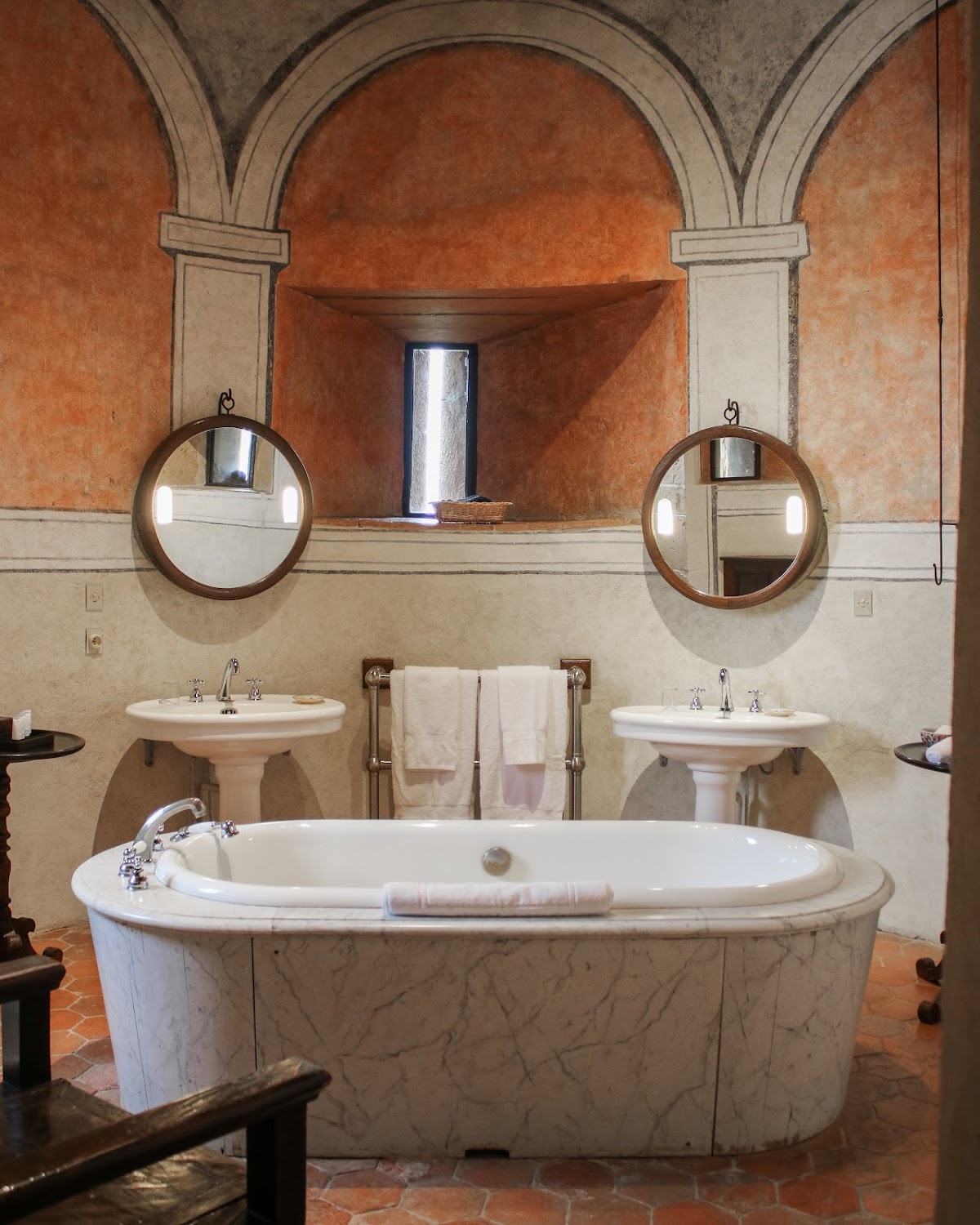
The interior contains mural paintings and richly treated architectural details. In the guards’ room, a shield above the monumental fireplace commemorates the visit of Charles VIII in 1490. Much of the decorative ornament came from the Grande Fabrique de Lyon, the city’s historic silk-manufacturing industry, whose products included luxury textiles and decorative furnishings.
Gardens and medieval features
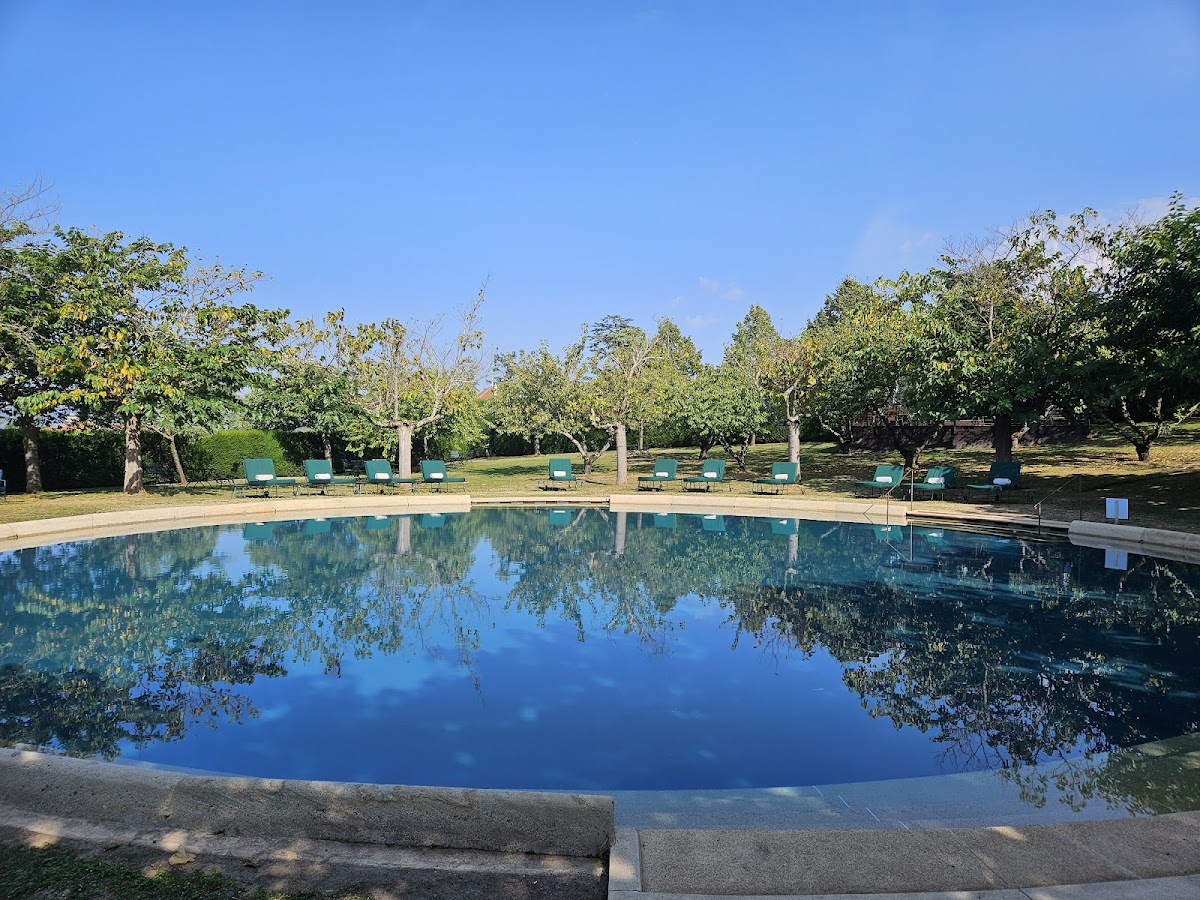
The garden, the terrace overlooking it, and the icehouse date from the thirteenth century. An icehouse, or glacière, was used to store ice for preservation and cooling. These elements belong to the early development of the estate and form part of the grounds associated with the castle.
Sixteenth-century outer works
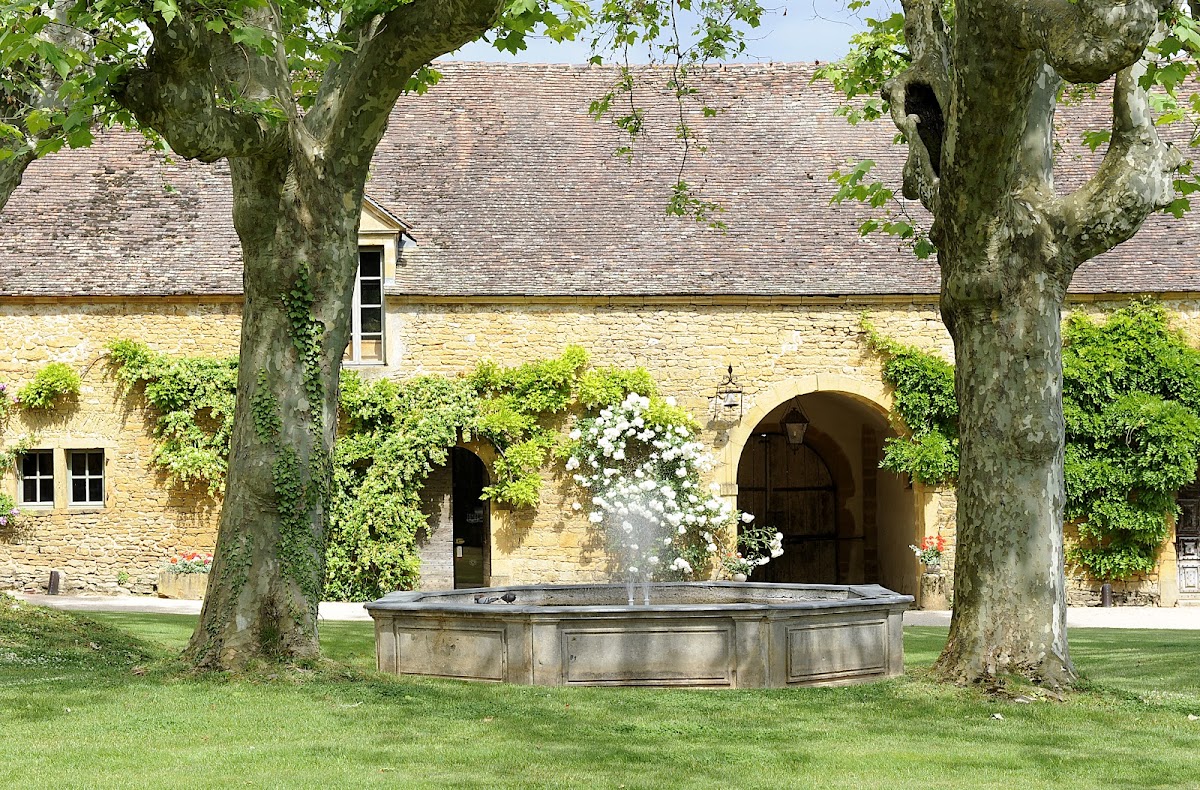
The outbuildings, bridges crossing the now-dry moats, small pavilions at the corners of the gardens, and walls connecting them were built in the sixteenth century. The complex also includes a dovecote, which forms part of the castle grounds and its associated estate buildings.
Courtyard roof
In 2014, a glass roof was installed over the interior courtyard in the spirit of the Louvre’s Great Pyramid. The intervention added a modern covering to the central space while retaining the courtyard’s place within the historic enclosure.
Nearby sites