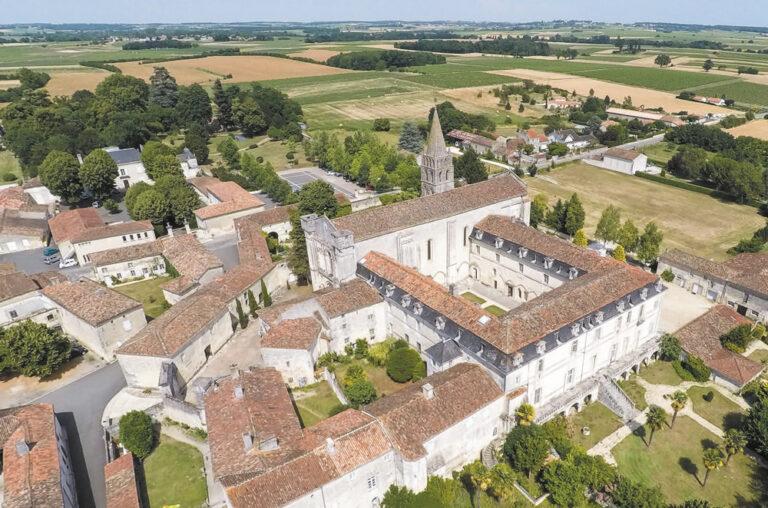
Castle of Cognac: Medieval Fortress and Renaissance Residence in France


Site at a Glance
- Rating
- 4.4
- Popularity
- Medium
- Country
- France
- Primary era
- Medieval
- External website
- Open
- Eras represented
- Medieval, Early Modern
- Civilizations
- French
- Site type
- Military
- Remains
- Castle
On this page14 sections
History
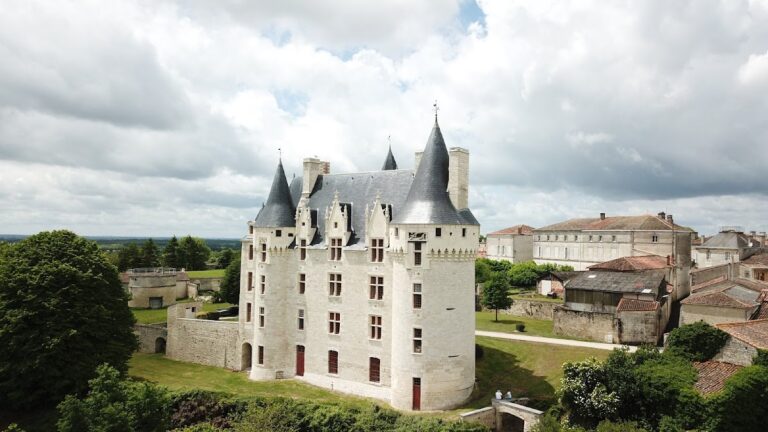
The Castle of Cognac, also known as the Castle of Valois or the Castle of Francis I, stands in Cognac, France, beside the Charente River. Its history reaches back to the tenth century, and its surviving fabric combines medieval fortification with Renaissance architecture. The castle developed from a stronghold into a residence of the Valois-Angoulême family, before becoming part of the modern Cognac Otard cellars.
The Early Stronghold and Medieval Lordship
Around 950, Hélie de Villebois, regarded as the first lord of Cognac, established a castrum, a fortified settlement or stronghold that could become the nucleus of a town. Around 1000, Itier and Arnaud de Villebois settled there and founded their dynasty. A charter of 1030 records the early fort, while documents concerning Saint-Léger Church and its adjoining convent buildings describe Benedictine construction begun in 1031. A small settlement formed around the fort and priory.
Around 1200, the Taillefer counts of Angoulême rebuilt the castle in stone beside the Charente, facing the river quays. They also established an initial fortification around the developing settlement. Cognac later came under Plantagenet control, the Plantagenets being the English royal dynasty whose continental possessions included territories in western France.
Richard I of England arranged the marriage of Amélie of Jarnac, heiress to the lordship of Cognac, to his illegitimate son Philippe de Falcombridge. Philippe later sold the lordship to John, King of England. In 1202, John entrusted the castle and its dependencies to Renaud II de Pons, Pons de Mirebeau, and Robert de Torneham, then seneschal of Poitou. The territory remained contested because it belonged by right to the count of Angoulême while being controlled by the count of Poitou.
After John died in 1216, Hubert de Burgh seized Cognac, provoking a conflict with Renaud II de Pons. John’s widow, Isabella of Angoulême, reasserted her rights and granted Cognac to her new husband, Hugh X of Lusignan. Hugh took the castle despite threats that included excommunication by Pope Honorius III, and the Lusignans enlarged it during the thirteenth century.
Royal Control and the Valois Rebuilding
In the fourteenth century, Philip IV of France attached the lordship of Cognac and Angoumois to the French crown. During the Hundred Years’ War, the prolonged conflict between the English and French crowns from 1337 to 1453, military campaigns, sieges, and treaties repeatedly changed the castle’s allegiance.
From 1366 to 1370, Cognac Castle and Angoulême Castle served as principal residences of Edward, Prince of Aquitaine and Wales, known as the Black Prince and the son of Edward III of England. Later, Jean de Valois, count of Angoulême, returned from captivity in England to find Cognac Castle abandoned and in very poor condition. He settled at Cognac with Marguerite of Rohan and began rebuilding the castle around 1450, initiating the period associated with the Valois.
Charles of Valois, count of Angoulême, and Louise of Savoy developed Cognac as an intellectual and artistic centre. Their daughter, Marguerite of Navarre, and their son, Francis I, maintained their connection with the town. Francis I, who became king of France in 1515 and supported Renaissance architecture and the arts, was born at Cognac in 1494. Around 1517, he enlarged the castle with a new residential wing along the river.
Decline, Industrial Reuse, and Protection
Neglect caused the castle to deteriorate during the late seventeenth and eighteenth centuries. From 1756 to 1757, it served as a prison for foreign prisoners during the Seven Years’ War, an international conflict fought from 1756 to 1763 that involved Britain, France, and other European powers. The prisoners’ graffiti has since been studied. The count of Artois, later Charles X and then the castle’s owner, sold some of its buildings in 1772.
After the French Revolution, the castle became national property and was designated for demolition. In 1795, the brandy merchants Otard and Dupuy purchased it and installed storage cellars. Nineteenth-century alterations changed parts of the historic fabric, while the Otard company also undertook extensive conservation and restoration. The castle has held French Monument historique status since 1925, a legal designation protecting historic buildings and sites. It is now used as the Cognac Otard cellars.
Remains
The castle occupies the town entrance beside the Charente and faces the quays. Its visible fabric is principally associated with the Valois rebuilding, although medieval towers, walls, and interior elements remain alongside the Renaissance river façade. The surviving layout brings together the former town defences, residential buildings, vaulted cellar spaces, and features connected with the castle’s later use for storing brandy.
Town Defences and Medieval Towers
River Towers and Curtain Walls
A medieval bridge formerly crossed the Charente from the Saint-Jacques district toward the castle. The bridge was demolished in 1855. Facing its approach are two round towers joined by curtain walls, or defensive walls between towers. Built in 1499 and 1500 to replace square towers, they have trilobed machicolations, projecting structures with openings through which defenders could attack people below. They remain among the principal surviving elements of Cognac’s town fortifications.
Count Jean Tower
The Count Jean Tower stands to the left after the town gates and dates from the thirteenth century. Since the fifteenth century, it has contained an internal well with stone rims at every level. Its first floor has two rooms with fireplaces and mullioned windows, which are windows divided into separate sections by vertical stone bars. The tower also preserves a rare medieval steam-bath system.
River Façade and External Features
Renaissance River Façade
Built around 1517, the river façade is austere and imposing. It has a long frontage with rectangular windows and was raised around 1852. A prominent feature known as the King’s Balcony contains sculpted medallions, including a profile of Francis I. The balcony rests on two salamanders that flank a coat of arms. The strict Renaissance treatment reflects Francis I’s interest in Italian architecture, while its restrained appearance differs from his Loire castles.
Francis I Fountain
In front of the castle, at the King’s Balcony, stands the feature known as the Francis I Fountain. Its predecessor is traditionally attributed to Francis I, but the fountain was completely renewed in the seventeenth century using a mixture of classical and Baroque forms. It was moved several metres during the nineteenth century. A watch turret is also associated with the fountain.
Other surviving features include the Saint-Jacques Gate on the Charente, the castle fountain, the entrance portal to the Otard cellars, and a lintel decorated with Francis I’s monogram.
Residential and Service Areas
Governor’s Lodging
The Governor’s Lodging has a Gothic doorway and a small turret containing a spiral staircase, a stair that winds around a central axis. Its principal hall, called the Salle du Casque and also described as a guards’ hall, contains a monumental fireplace decorated with a plumed helmet, the reclining arms of the Valois-Angoulême family, and three fleurs-de-lis. The vaulted space around the fireplace has a complex ribbed vault.
Part of the lodging’s north wall dates from the twelfth century. Its east wall incorporates thirteenth-century remains, including Gothic arcades, capitals decorated with palmettes, and columns and capitals from the castle chapel. A small vaulted room follows the hall through a doorway bearing the count’s arms beside the fireplace.
Vaulted Cellars
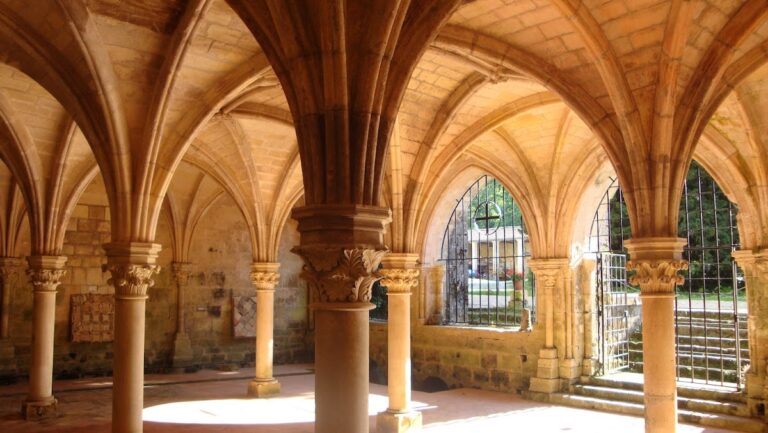
The cellars contain two vaulted rooms, a small passage, and a paved floor associated with the castle’s twelfth-century fabric. Later use for Cognac storage altered the interior arrangement. Vaulted cellars and rooms were adapted for brandy barrels, and the guards’ hall still held Cognac barrels until the middle of the twentieth century.